

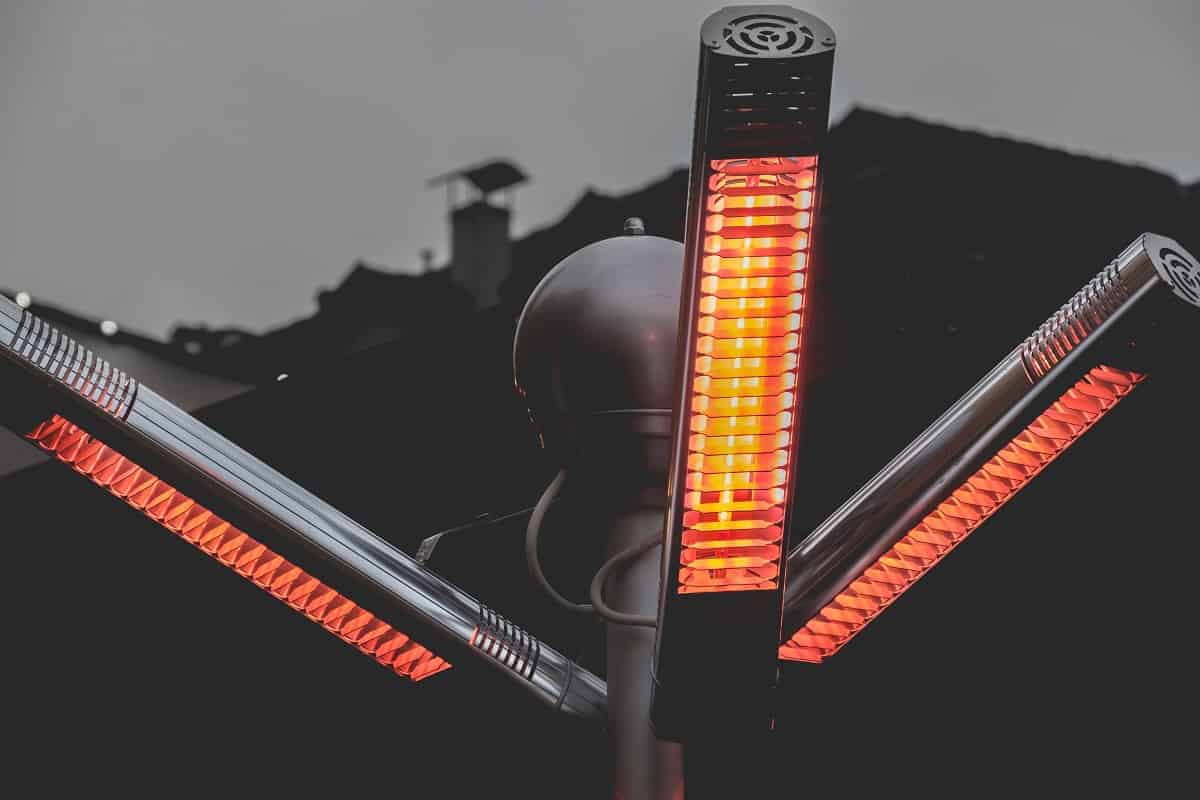
Overview of what’s best
Electric Infrared heat is best when heating from overhead down, and close to an electrical source. Propane patio heater is best when heating an open area. Electric is limited to the size wire and service, while propane heater is self contained and limits only from design. So we have the broad overview, now let’s get specific on how to determine for yourself what is best.Can You Answer These Questions?
By answering the following questions you are enabling yourself to determine your need. Here’s the questions…- What are you heating?
- Can you mount the heater from above?
- Is there a close electrical service?
How Did You Answer; What Are You Heating?
The point we are getting at here is, but probably answered better by stating the following statements. I want to heat our table area, I want to heat the sitting area, or I just want to heat a chair or two. So, heating over your Tiki Bar or heating over a gathering area are different beast for example. So, we’ll move on, but remember your answer!Can We Mount That Infrared Patio Heater to Any Thing?
This now starts to get into the areas of your specific needs. As the example above of a Tiki BAr was used; you could mount a small heater from the roof. Maybe you have a Gazebo, a Pargula that could allow mounting of a heater? By having a place to mount a heater it opens up the possibility of having easy to mount and take little space electric infrared heaters. The next question dives into the electric needs of a heater, or heaters needed.Do You Have an Electric Source Close, and What Power is it?
Yep, it always gets tougher along the way. We will simplify it for you though. This kind of eliminates the maybes here. If you patio is away from the house, and you want electric infrared heaters, you will need to run an electric service. Where as, propane is up and running because of its self contained nature. They do make table-top propane heaters or a regular tall patio heater with an add on reflector could do the trick to. However, lets look into electrical requirements. For example, your question 1 was heat the outside eating area that sits under a Pargula twenty feet from the house. The average electric infrared heater for a patio needs a typical 15A outlet. That is 1500W x 110VAC = 13.64A. The normal US electrical code is 20A circuits that have 15A outlets. These 20A circuits are ran on 12 gauge wire. The problem arrives if you want 2 heaters you would not be able to run two of them on high at the same time on one normal circuit. The only way around two electrical infrared heaters is to run, or have a 220VAC 20A circuit with a neutral and a ground, or a 30A 110VAC line ran that requires it to be 10 gauge wire.What Types of Patio Heaters Available
They are essentially four types of patio heaters: electric infrared, propane, natural gas and wood pellet. Each type has its own pros and cons. However, the two most common and popular types of patio heaters found in North America are infrared electric and propane-powered patio heaters. These two types of patio heaters have gained so much popularity in the North American market because of price and ease of use.Electric vs Propane Patio Heater
Electric Patio Heater
Electric heaters use powerful lamps, placed behind glass protection, that emit heat and are powered by electricity. Electric infrared heaters offer an efficient, safe, and convenient way of dealing with your outdoor heating problems as long as you have access to an electrical source close by. Depending on the size of the outdoor space you need heating during cooler weather, an electric patio heater might just be adequate for the job. Electric heaters generally have less heating power than propane patio heaters but this isn’t necessarily a bad thing. Infrared is an invisible light like the warmth from the sun that warms what is contacts. This way you are not heating the air like with traditional electric space heaters but making a little bit of sunshine you can’t really see. If you only need a small area heated than why not invest in an electric heater? They are a lot more cost-effective to buy and run. They are safer as there is no need for the burning of flammable materials and also no flames to worry about. Electric patio heaters also tend to be a lot more portable, lightweight, and compact as compared to propane patio heaters. The heater is also easy to use and easy to set up. All you have to do is insert the plug into an electric outlet, set the temperature you want, and let the heater take care of the rest!Propane Patio Heater
Propane patio heaters, on the other hand, have considerable heating power and can keep an area of up to 20 square feet relatively toasty, even on the coldest of winter days. By burning liquified petroleum gas (LPG) a lot more heat is generated, up to 60,000 BTU and in some cases, even more, which is far greater than the heating output of any electric patio heater. Propane patio heaters also tend to be heavier and longer than electric heaters. By emitting heat from a height they are able to cover a much larger area and offer a more even heat distribution as compared to electric heaters. This makes them the ideal choice for heating up outdoor spaces such as patios, decks, and more. With a propane patio heater, you aren’t dependent on electricity for power. Simply connect a 20 lb. propane tank to the unit and, using an electronic switch, ignite the burner. In no time, the area around you will begin to feel considerably warmer, making for a cozy and relaxing evening outdoors. Propane patio heaters also have safety features that prevent them from exploding or catching fire. Safety shut-off features ensure that in case the patio heater is tilted by high winds or by accident, the igniter automatically shuts-off, meaning that there is no chance of your patio or deck catching fire. Propane-powered patio heaters have also become increasingly affordable, making them suitable not just for commercial use but also for residential purposes. The only down-side to owning a propane-powered patio heater is the need to constantly change propane tanks, especially if you plan on using the heater a lot during winter. A 20 lb. propane tank will last for about 10 hours of heating before needing to be replaced. This can make constantly using one of these patio heaters not only a hassle but also expensive in the long-run. Check our patio heater propane tank calculator here .
.
Which Is Better – Electric or Propane? A Final Thought
Now that we have looked at the advantages and disadvantages of each, it’s time to answer the main question: which is best – electric vs propane patio heater? The answer to this question lies solely on your needs. If you are seeking a heater that can be used both indoors and outdoors, and in most instances used to warm up only a small area, then investing in an electric heater is most likely the most suitable option. Since electric heaters do not emit any toxic or polluting emissions, they are safe to use indoors, unlike, propane or natural gas heaters, even though they deliver low carbon Monoxide, they still use up the oxygen in the room. Electric heaters also don’t have a pilot flame system that can be tricky to get used to and almost impossible to pull off on windy and rainy days. With an electric heater, all you have to do is simply plug it in, turn on the switch, sit back, and bask in glorious warmth. However, if what you seek is a heater that is able to offer much more powerful heating power, near-instant heat generation, and a beautiful flame to look at for the pyramid models, then a propane patio heater is just what you need!Frequently Asked Questions
Which is better, an electric or propane patio heater?
It depends on your space. Propane puts out far more heat (around 40,000 BTUs) and needs no wiring, so it suits large, open patios. Electric infrared is cleaner, quieter, and safe for covered or enclosed areas like balconies and porches.
Are electric patio heaters cheaper to run than propane?
Usually yes per hour. A 1,500-watt electric heater costs about 25 to 30 cents an hour, while a 40,000-BTU propane heater runs roughly $1.15 to $2.00 an hour — though propane heats a much larger area for that cost.
Does an electric patio heater give off as much heat as propane?
No. A 1,500-watt electric heater makes about 5,100 BTUs versus roughly 40,000 BTUs for a freestanding propane heater, so electric warms people directly in a smaller zone while propane heats a wide area.
Can you use a propane patio heater on a covered porch?
Only with plenty of overhead clearance and ventilation — propane gives off carbon monoxide and should never be used in an enclosed space. Electric infrared is the safer choice for covered or tight areas.
Which patio heater is better for a balcony or apartment?
Electric infrared. It has no open flame, no fuel tank, and no fumes, and most propane heaters are banned on apartment balconies by leases and fire codes.
Will Montgomery brings an engineer’s eye and hands-on experience with both electric and propane heaters, weighing them on heat, cost, and safety — so you can match the right type to your patio, porch, or balcony.