

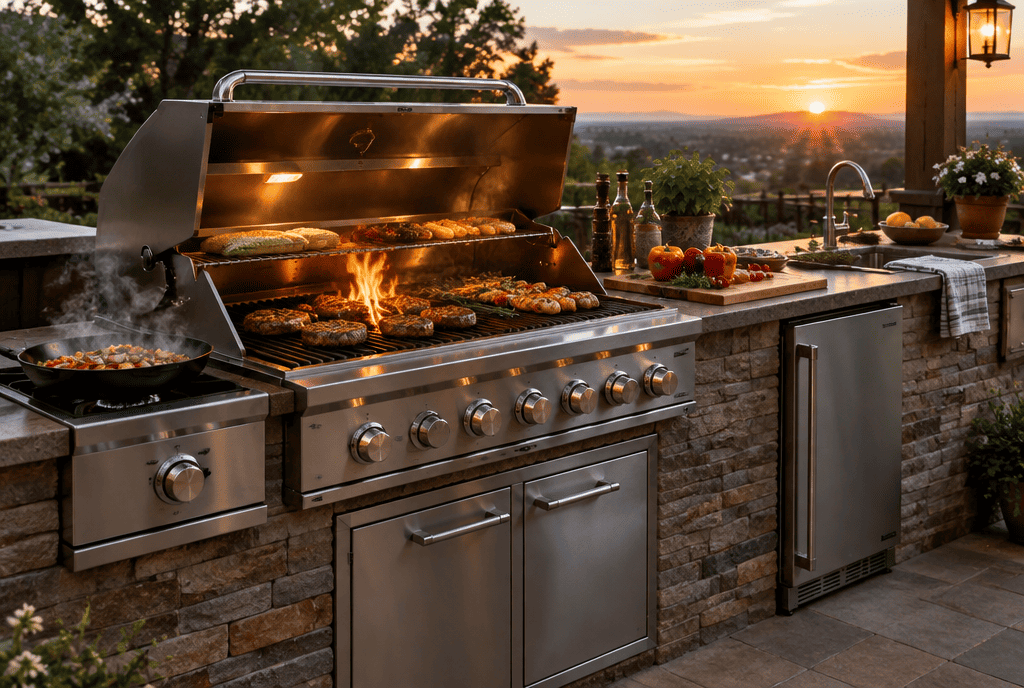
Quick Answer: Choose a gas grill if you want convenience and consistent heat for weeknight cooking, a charcoal grill if you prioritize flavor and don’t mind the extra time, and a pellet grill if you want smoker-quality results with less hands-on effort. For most first-time buyers, a mid-range gas grill (30,000–40,000 BTU, 3–4 burners, $300–$600) is the easiest entry point.
Grilling is the single most-used piece of outdoor gear in most backyards, and it’s also where people overspend or underbuy most often. This pillar guide covers every major grill type, how to size one correctly, and links out to our deeper guides on maintenance, troubleshooting, and specific buying decisions.
Last Updated: October 2026 | Will Montgomery, an electro-mechanical engineer, has hands-on experience grilling and maintaining gas, charcoal and pellet grills while hosting backyard events with his wife Kim.
Grill Types Compared
| Type | Flavor | Convenience | Learning Curve | Typical Cost |
|---|---|---|---|---|
| Gas | Good | Excellent — push-button start | Low | $200–$1,500+ |
| Charcoal | Best (classic smoky flavor) | Fair — 20-30 min to reach temp | Medium | $100–$800 |
| Pellet | Very good (real wood smoke) | Very good — set-and-forget temp control | Low-Medium | $400–$1,800 |
| Electric | Fair | Excellent — apartment-friendly | Low | $60–$300 |
| Griddle | Different (seared, not grilled) | Excellent | Low | $100–$600 |
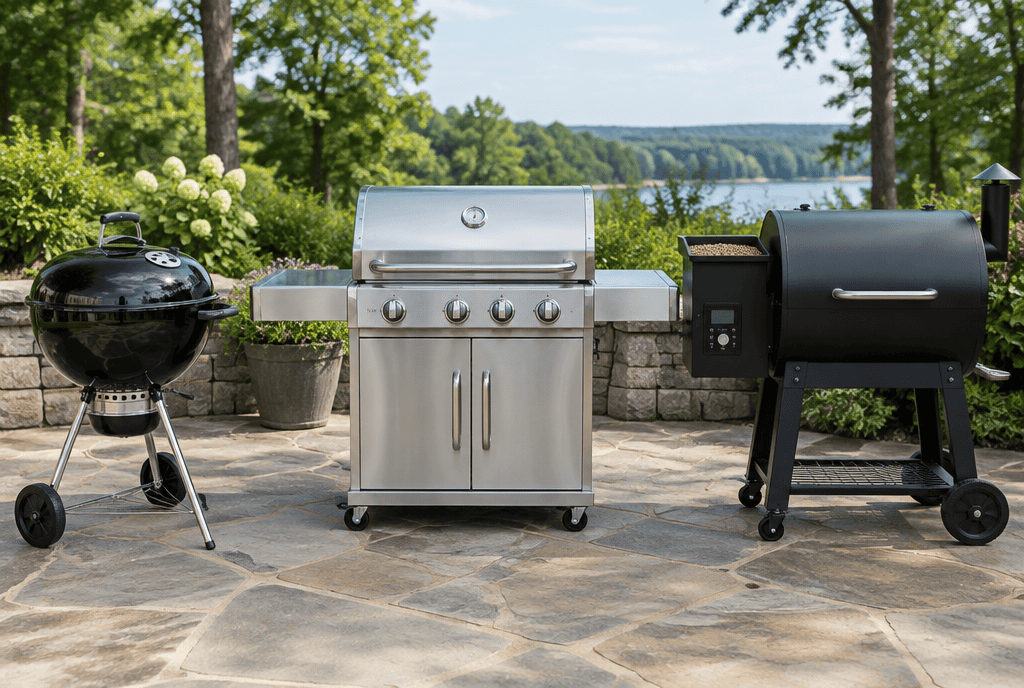
For a full head-to-head, see Charcoal vs. Gas vs. Pellet Grills: Which Is Right for You?
Gas Grills: The Convenience Default
Direct answer: A 3-4 burner gas grill in the 30,000-40,000 total BTU range covers most households — enough heat to sear and cook multiple dishes at once, without the excess BTU that just burns fuel faster on a grill you’ll rarely run at full blast.
From experience: When Kim and I have people over, I use a 4-burner propane grill. It gives me room to run different heat zones and cook burgers, steaks, chicken and vegetables without constantly shuffling food around. If I could change one thing, it would be a dedicated sear burner. The regular burners do the job, but a separate high-heat section would let me put a quick hard sear on steaks without heating the whole grill.
A mainstream three-burner example is the Weber Spirit E-310 propane gas grill at Lowe’s. It is also sold at Home Depot .
.
Stainless steel burners and a cast-iron or stainless cooking grate last longest; painted or chrome-plated grates rust within a season or two of regular use. If budget is tight, see our Best Budget Gas Grills Under $500 picks.
Charcoal Grills: Best Flavor, More Time
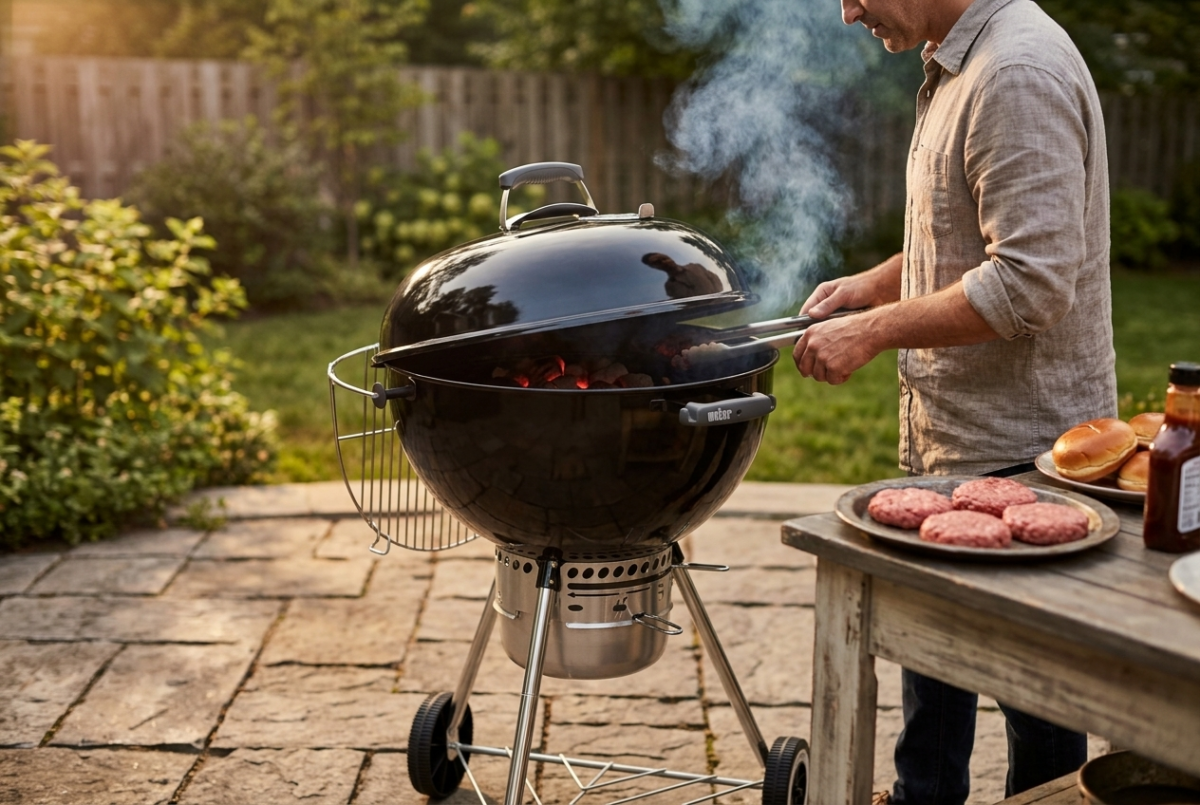
Direct answer: Charcoal remains the top choice for pure flavor because the combusting charcoal itself (not just wood chips) imparts a smokiness gas can’t replicate, but expect 20-30 minutes of setup time before you’re ready to cook, plus ash cleanup after.
The classic reference point here is the Weber Original Kettle 22-inch charcoal grill. You can also find it at Walmart.
Pellet Grills: Smoker Flavor, Less Effort
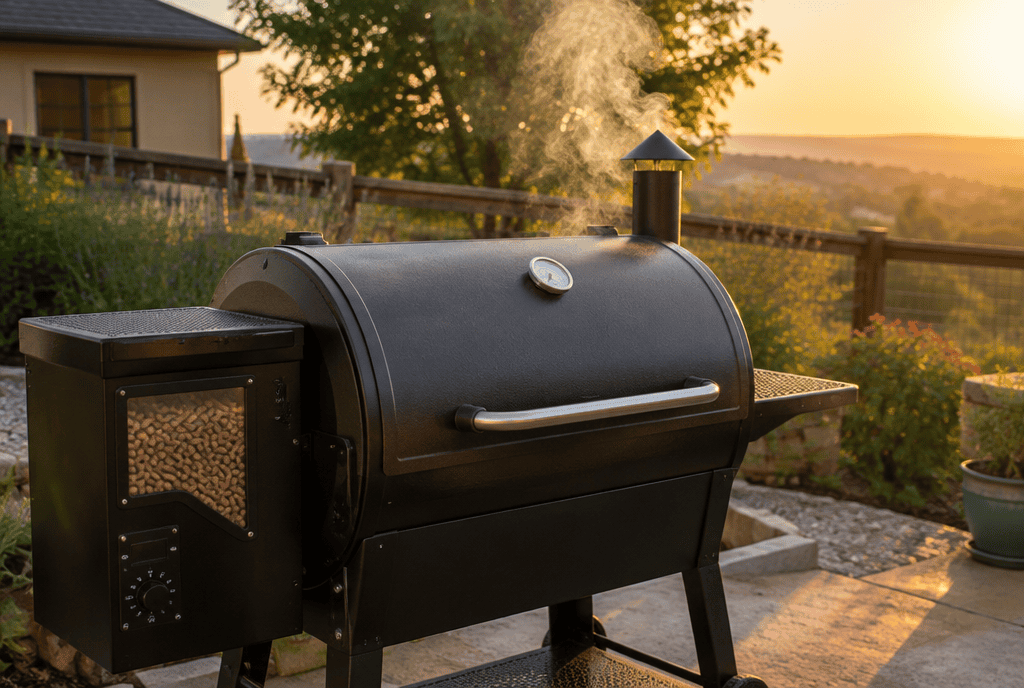
Direct answer: Pellet grills use an auger-fed hopper and digital thermostat to hold a precise temperature automatically, giving you real wood-smoke flavor with far less hands-on management than a traditional offset smoker — the tradeoff is they need electricity to run, so they’re not an option during a power outage.
For a current pellet example, see the Traeger Woodridge pellet grill (860 sq in).
What Size Grill Do You Need?
- 1-2 people: 250-350 sq in of cooking surface, 2 burners, $150-$300
- 3-5 people: 400-500 sq in, 3-4 burners, $300-$600
- 6+ people / frequent entertaining: 550+ sq in, 4-6 burners plus a side burner, $600-$1,500+
Maintenance Keeps Any Grill Running Longer
Direct answer: A quick grate scrape after every use and a deep clean (burners, grease tray, interior) once a season is enough to prevent the two most common failures — clogged burner ports and grease fires from buildup.
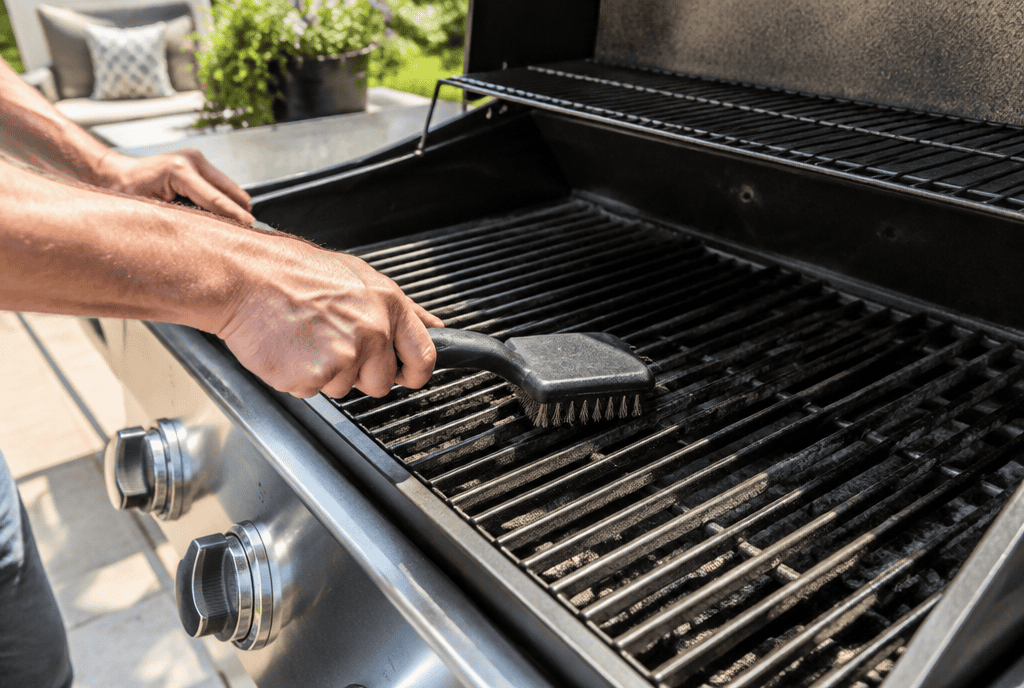
Full walkthrough in How to Clean and Maintain a Gas Grill (Season-by-Season Guide).
Bottom Line
Most people should start with a mid-range 3-4 burner gas grill — it’s the lowest-friction way to grill well on weeknights. Add a pellet smoker later if you get into low-and-slow cooking, or go charcoal-only if flavor matters more to you than convenience. Whatever you buy, budget for basic maintenance tools from day one.
Explore More in Outdoor Kitchen & Grills
- Best Outdoor Grills 2026
- Charcoal vs. Gas vs. Pellet Grills
- Best Budget Gas Grills Under $500
- How to Clean and Maintain a Gas Grill
- Best Electric & Smokeless Grills for Apartments/Balconies
- Outdoor Kitchen Planning Guide
- How Much Does an Outdoor Kitchen Cost?
FAQ
What’s the best type of grill for a beginner?
A mid-range 3-4 burner gas grill — it’s the easiest to start and stay consistent with, without the learning curve of charcoal or the upfront cost of pellet.
Is charcoal really tastier than gas?
Most people notice a real difference — the combusting charcoal itself adds smokiness gas can’t replicate — but it costs you 20-30 minutes of setup time per use.
Do pellet grills work during a power outage?
No — pellet grills need electricity to run the auger and fan, so they’re not usable without power, unlike gas or charcoal.
What size grill do I need for a family of four?
Look for 400-500 square inches of cooking surface and 3-4 burners, typically in the $300-$600 range.
How often should I clean my grill?
Scrape the grates after every use, and do a deep clean of the burners and grease tray once a season to prevent clogs and grease fires.
How much should I spend on my first grill?
$300-$600 covers a solid mid-range gas grill that will last 8-10+ years with basic maintenance.
Will Montgomery, an electro-mechanical engineer, has hands-on experience grilling and maintaining gas, charcoal and pellet grills while hosting backyard events with his wife Kim.