

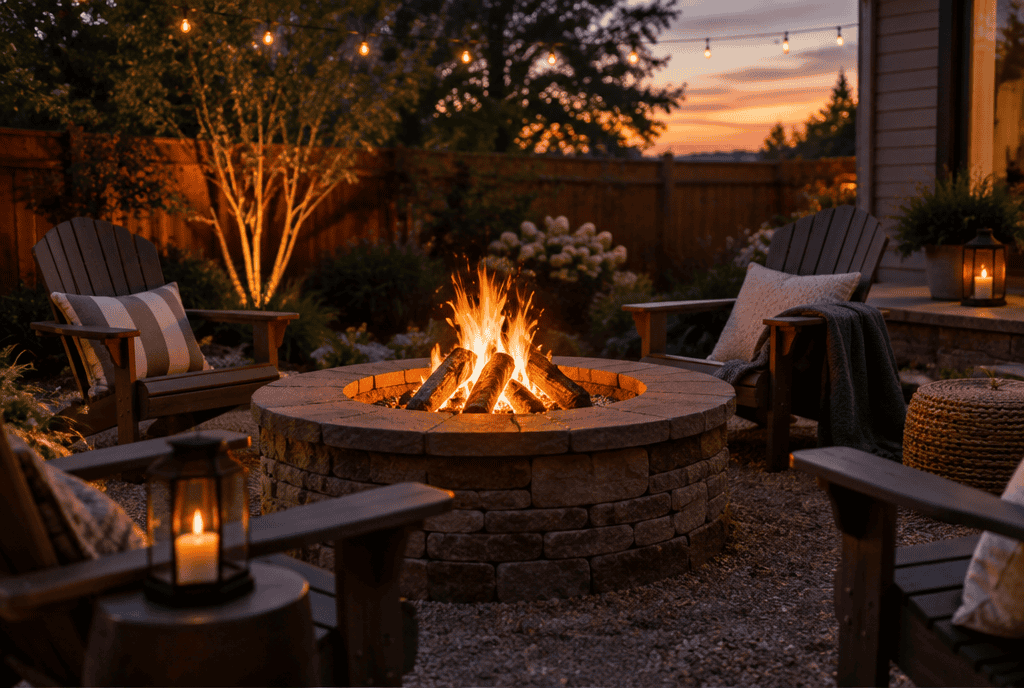
Quick Answer: Wood is the cheapest fire pit to buy ($100-$1,000) and gives the most authentic crackling-fire experience, but it’s the most work and is often restricted by local burn bans. Propane costs more upfront ($800-$3,000) but lights instantly, produces no smoke, and works anywhere gas isn’t already restricted. Natural gas is the most economical to run long-term if you already have a gas line nearby, but installation adds $200-$800+ to the project.
This is one of the most common questions we get after Fire Pits 101 — which fuel actually makes sense for your yard? Here’s a direct comparison across cost, convenience, and regulations.
Last Updated: October 2026 | Will Montgomery, an electro-mechanical engineer, has hands-on experience with fire pits and outdoor heating in his own yard, which he and his wife Kim use for hosting.
Cost Comparison
| Fuel Type | Upfront Cost | Fuel Cost Per Use | Installation |
|---|---|---|---|
| Wood | $100–$1,000 | $5–$15 (firewood bundle) | None — assemble and go |
| Propane | $800–$3,000 | $3–$8 per evening (tank refill) | None — connect tank |
| Natural Gas | $800–$3,000 + line install | Under $1 per evening (billed by therm) | $200–$800+ (licensed contractor, permit) |
Wood: Cheapest and Most Authentic
Direct answer: Wood fire pits win on upfront cost and atmosphere — the crackle, the smell, and the flexibility to burn any dry hardwood you have on hand — but they require 15-20 minutes to build and light a fire properly and leave ash to clean up afterward.
You can also pick up a Solo Stove 27-in portable wood-burning fire pit at Lowe’s if you want a smokeless-style design. The same size is also at Home Depot .
.
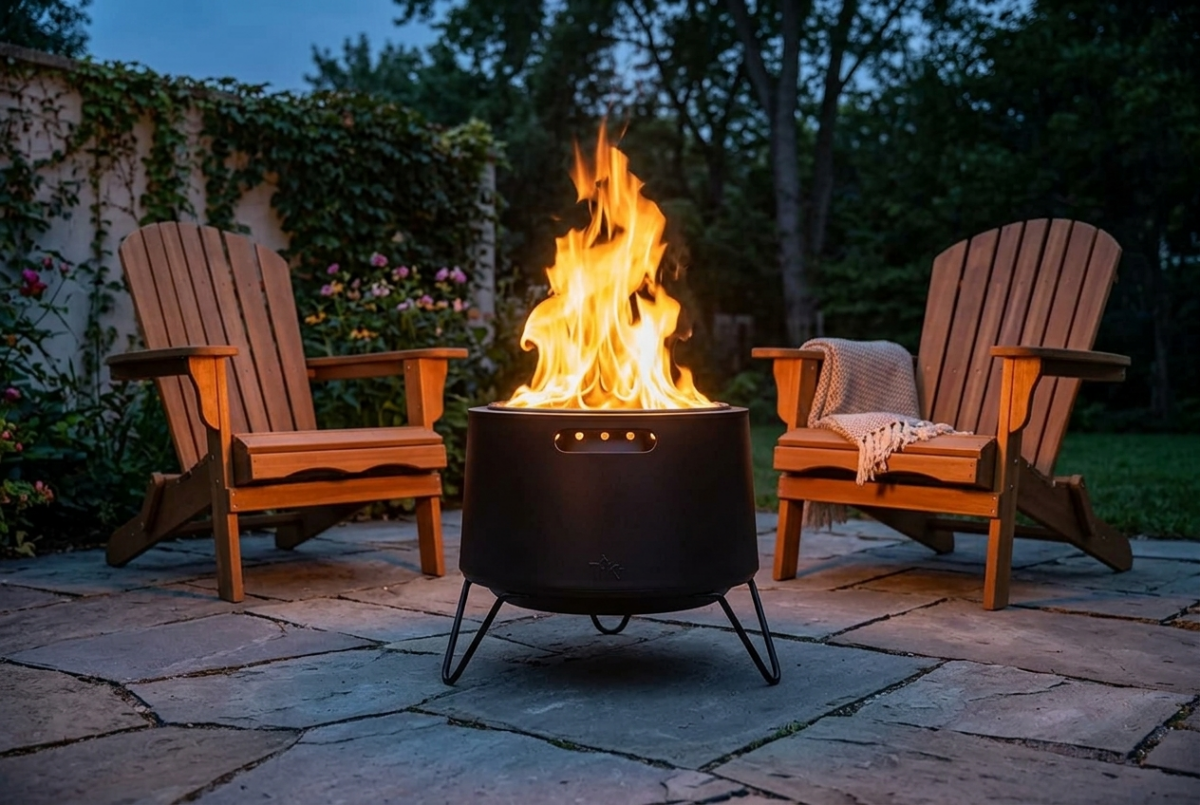
If smoke is your concern, a smokeless design like the TIKI Social 20-inch smokeless wood fire pit burns cleaner than an open bowl.
- Check local burn bans before every use, especially during dry seasons — many municipalities restrict or ban open wood fires seasonally.
- Season your firewood (dried 6+ months) — wet wood smokes heavily and burns inefficiently.
- Keep a metal ash bucket nearby; embers can stay hot for 24+ hours after the fire looks out.
Propane: Instant, Portable, Smoke-Free
Direct answer: Propane fire pits light with the push of a button, produce no smoke or ash, and the tank makes them portable — you can move the whole setup to a different spot in the yard, which isn’t possible with a natural gas line.
A popular self-contained propane example is the Outland Living Firebowl 870 propane fire pit.
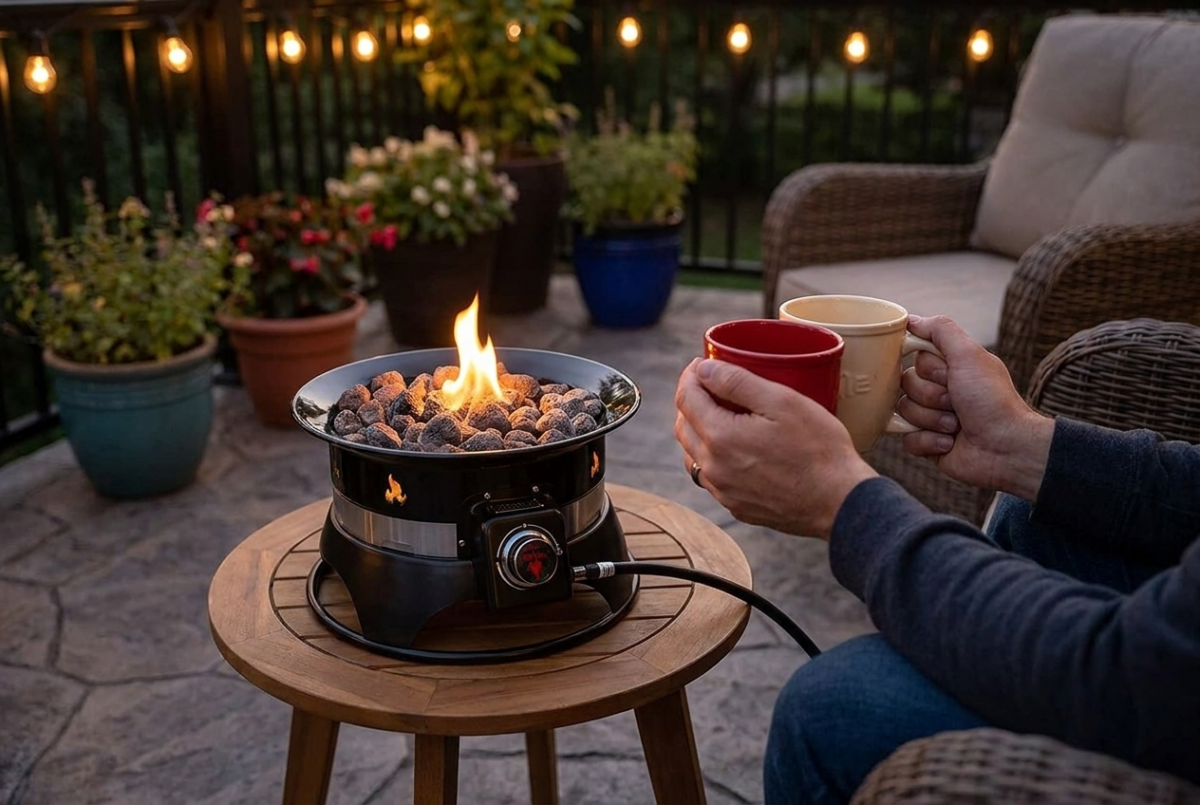
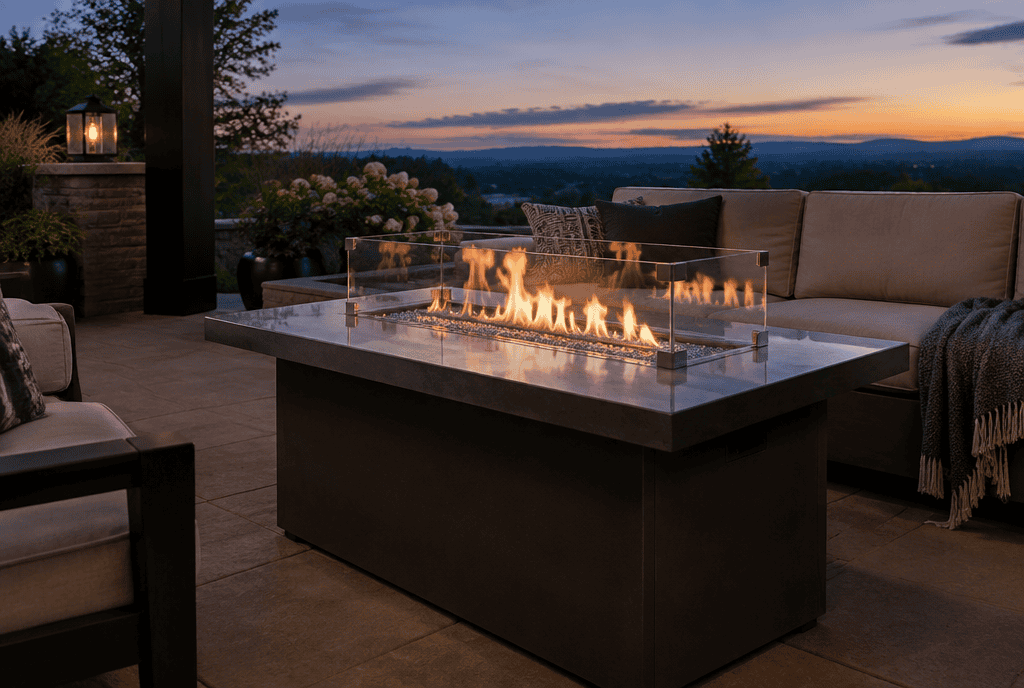
A standard 20 lb propane tank runs a mid-size fire pit (40,000 BTU) for roughly 8-10 hours total, meaning most households get 3-4 evenings per tank. Refills run $20-$30, or slightly less if you exchange rather than refill.
Natural Gas: Cheapest to Run, Priciest to Install
Direct answer: Natural gas is the most economical fuel per use — billed by the therm, it typically costs under a dollar per evening — but only makes financial sense if you already have gas service to your house, since running a new line requires a licensed contractor, trenching, and permits that can add $200-$800 or more to the project.
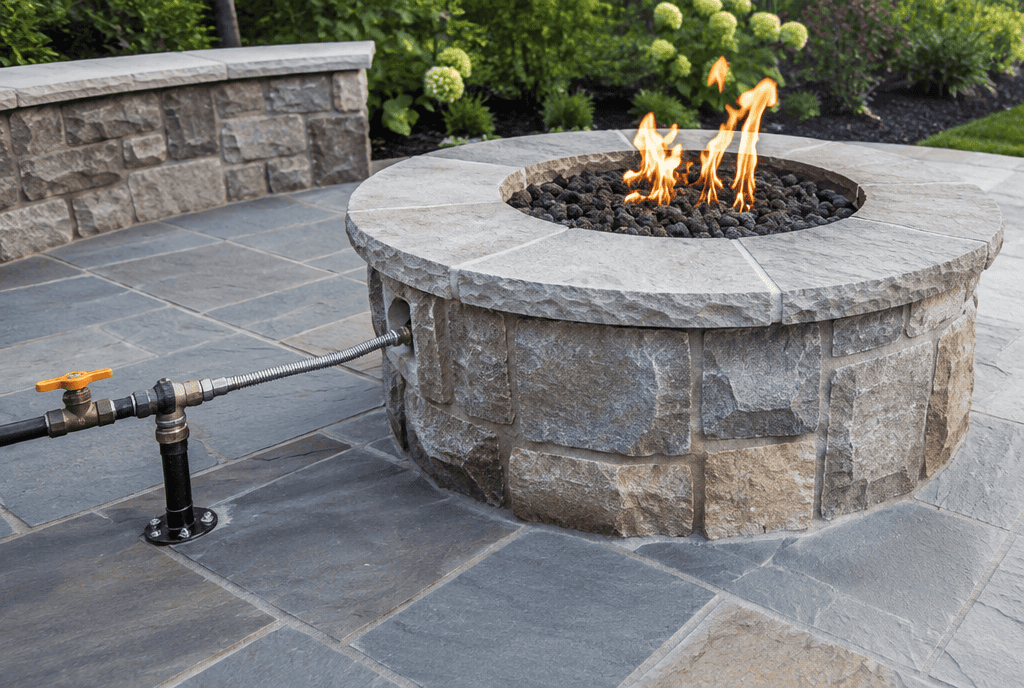
Unlike propane, a natural gas fire pit is a permanent installation — you can’t relocate it later without another trenching job, so plan your patio layout carefully before committing.
Which Should You Choose?
- Want the lowest upfront cost and don’t mind the work? Wood.
- Want instant on/off, no smoke, and the option to move it later? Propane.
- Already have a gas line and plan to use it multiple times a week for years? Natural gas — the install cost pays for itself over time.
- Live somewhere with frequent burn bans or HOA restrictions on open flame? Propane or natural gas — check our clearance and safety guide either way.
Bottom Line
There’s no universally “best” fuel — it comes down to whether you value low upfront cost and authentic atmosphere (wood), convenience and portability (propane), or the lowest per-use cost with a permanent setup (natural gas). Most suburban households land on propane as the best balance of the three.
From experience: I prefer wood, but we use propane at home because it is more about looks than heat. You cannot beat wood for a real fire, even for marshmallows. If you go propane, a well-kept setup lasts: see our guide to cleaning and maintaining a gas grill for how to get 10+ years out of propane gear.
Explore More in Fire Pits
- Fire Pits 101: The Complete Buying & Safety Guide
- Best Fire Pit Tables 2026
- Fire Pit Table vs. Standalone Fire Pit
- Are Fire Pits Safe on a Deck or Patio?
- Can Propane Fire Pits Use Natural Gas?
- Smokeless Fire Pit Review: Do They Really Work?
FAQ
Which fire pit fuel is cheapest to run?
Natural gas, billed by the therm at under a dollar per evening — but only if you already have a gas line, since installation adds significant upfront cost.
Can I convert a propane fire pit to natural gas?
Some models support a conversion kit, but many don’t — check the manufacturer’s specs before buying if you might switch fuels later.
How long does a propane tank last in a fire pit?
A standard 20 lb tank runs a 40,000 BTU fire pit for roughly 8-10 hours total, or about 3-4 typical evenings.
Are wood fire pits legal everywhere?
No — many municipalities restrict or ban open wood burning seasonally or during drought conditions; always check local burn ban status before lighting one.
Do gas fire pits give off real heat like wood?
Yes, comparably-sized gas and wood fire pits produce similar heat output, though wood’s radiant heat can feel slightly more intense at close range.
Is it cheaper to install natural gas or just use propane long-term?
If you use your fire pit multiple times a week for years, natural gas installation typically pays for itself; for occasional weekend use, propane is usually cheaper overall.
Will Montgomery, an electro-mechanical engineer, has hands-on experience with fire pits and outdoor heating in his own yard, which he and his wife Kim use for hosting.