

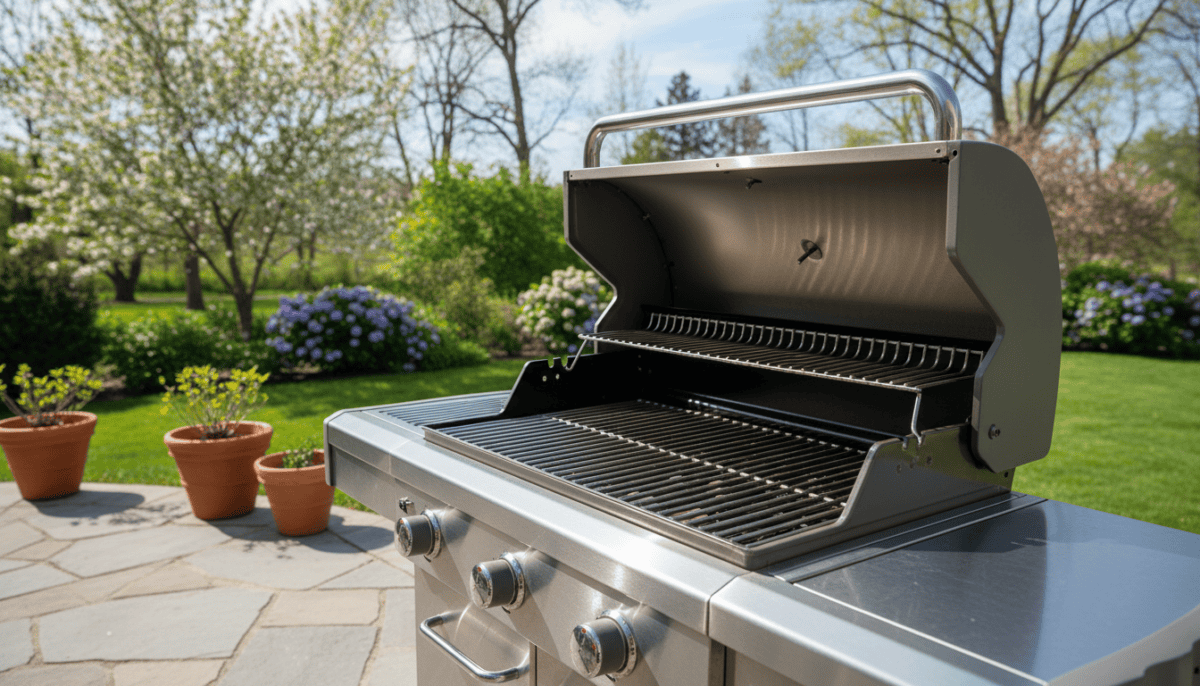
Quick Answer: Clean your gas grill after every cook (grates + drip tray), deep-clean it twice a year — once at the start of grilling season and once before winter storage — and inspect burners, hoses, and the ignition system each spring. Skipping the seasonal deep clean is the #1 cause of flare-ups, clogged burners, and grills that die after 3–4 years instead of 10+.
A gas grill isn’t maintenance-free just because it skips the ash and charcoal mess. Grease builds up in the drip tray, spiders nest in the burner tubes over winter, and grates rust if they’re left dirty and wet. We break the job into three simple passes — after every cook, at the start of the season, and before winter storage — so you’re never facing a multi-hour deep clean you’ve been putting off for years.
Gas grill maintenance is the routine of brushing grates, emptying the grease tray, clearing the burner tubes, and leak-testing the gas connections — a 5-minute habit after each cook plus two 45-minute deep cleans a year.
Last Updated: September 2026 | Will Montgomery is an electro-mechanical engineer and hands-on homeowner who keeps a propane grill running on the patio where he and his wife Kim host backyard cookouts — including the spring he found a funnel-web spider nest blocking a burner tube.
The 3-Pass Maintenance Schedule
| When | Time Needed | What You’re Doing |
|---|---|---|
| After every cook | 5 minutes | Brush grates while warm, empty drip tray |
| Start of season (spring) | 45–60 minutes | Full deep clean, burner + ignition check, leak test |
| End of season (fall/winter) | 45–60 minutes | Deep clean, disconnect gas, cover or store |
After Every Cook (5 Minutes)
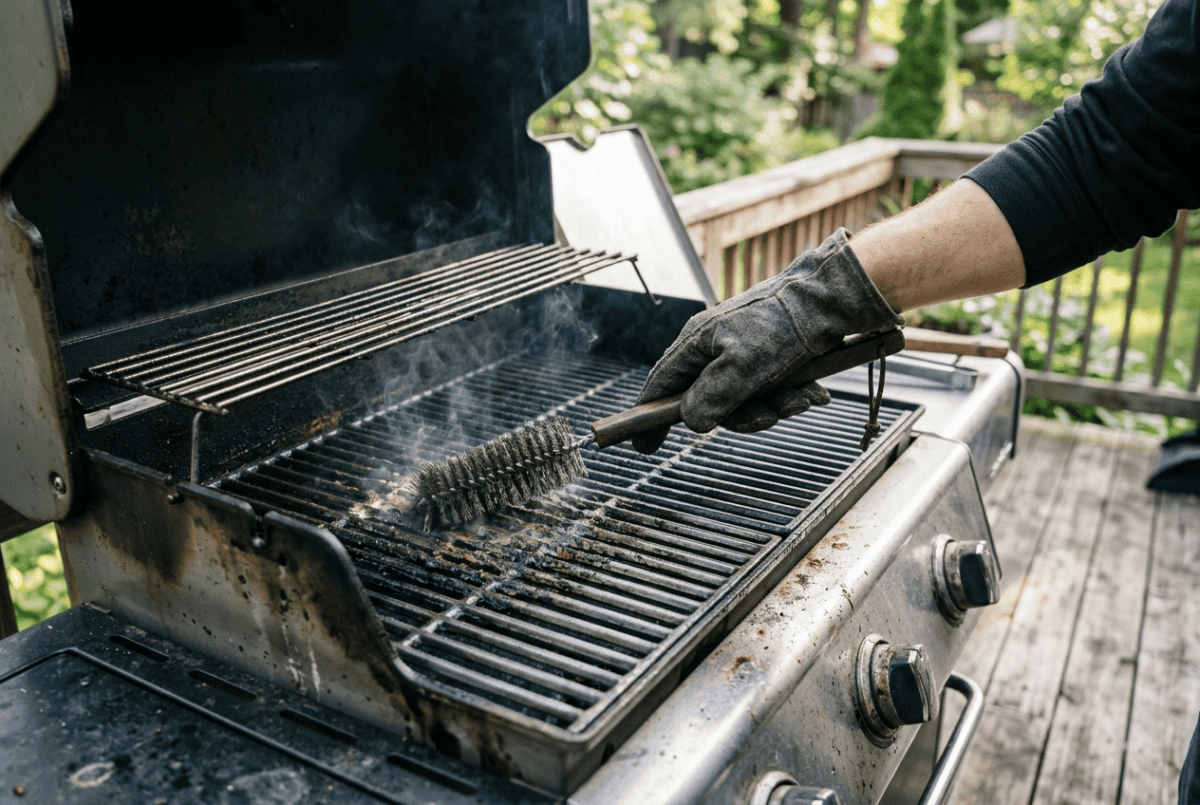
Direct answer: brush the grates while they’re still warm from a 10–15 minute preheat, then empty the grease tray — this single habit prevents most flare-up and rust problems before they start.
The brush matters more than people think: the GRILLART 18-Inch Stainless Steel Grill Brush and Scraper (woven stainless wire, about $17) cleans porcelain and cast-iron grates without shedding loose bristles the way cheap wire brushes do.
- After cooking, close the lid and let the grill run on high for 10–15 minutes. Heat turns leftover food debris to ash that brushes off easily.
- Turn off the burners and scrub the grates with a stainless steel or brass-bristle brush.
- Once cool, pull the drip tray or grease cup and empty it — a full tray is the #1 cause of grease fires.
- Wipe down the exterior with a damp cloth to keep grease from baking onto the lid and cart.
Start-of-Season Deep Clean (Spring)
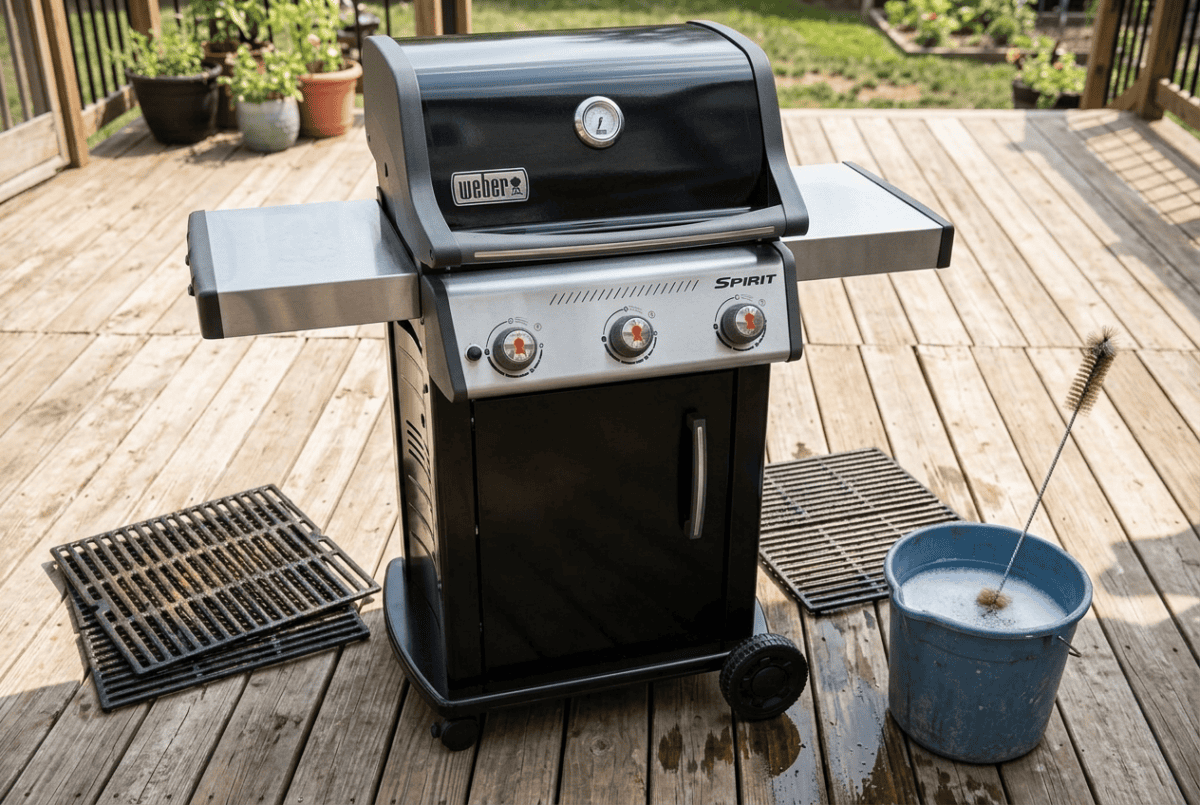
Direct answer: before your first cookout of the year, disassemble the grill down to the burner tubes, clear out any nests or debris, and pressure-test the gas connections — insects nesting in burner tubes over winter is the most common reason grills won’t light properly in spring.
Two cheap tools do most of this job: a spring-stem venturi brush like the Brushtech 15.5-Inch Gas Grill Venturi Brush (about $13) reaches all the way through the burner tube, and a bottle of RectorSeal Better Bubble leak detector (about $9) makes the soapy-water leak test faster and more obvious than dish soap.
From experience: what I found in my burner tube was a funnel-web spider nest. It blocks the gas flow, and that gas has to go somewhere — you get flames outside the burn chamber, which is dangerous. A grill cover seems to keep them out. To clear a tube without a brush, a length of solid copper wire pulled from Romex cable works great, or an unfolded metal coat hanger if you don’t mind it being a little stiffer.
- Check for spiders and debris first. Spider webs and nests inside burner tubes are a leading cause of dangerous flare-ups — clear tubes with a pipe cleaner or dedicated burner brush before lighting.
- Remove and wash grates, flavorizer bars/heat deflectors, and the drip pan with warm soapy water.
- Reconnect the propane tank (or check the natural gas line) and test every connection with a soapy-water leak test — bubbles mean a leak; do not light the grill until it’s fixed.
- Clean and check the ignition system — igniter button, electrode, and wiring — and replace the battery if it’s a battery-powered igniter.
- Season the grates with a light coat of high-smoke-point oil before the first cook to prevent sticking and rust.
- Inspect hoses and regulators for cracking, and replace any hose older than 5–7 years regardless of appearance.
End-of-Season Storage (Fall/Winter)
Direct answer: deep clean the grill the same way you did in spring, then disconnect and store the propane tank outdoors and away from the house, dry every surface completely, and use a breathable cover — sealing a wet grill under plastic is what causes rust and mold over winter.
If your grill did not come with a cover, a heavy-duty fabric cover such as the GrillTough 58-Inch Heavy Duty BBQ Grill Cover (about $34, fits most 3–4 burner carts) sheds rain while still letting the grill breathe — measure your grill’s width before ordering.
- Run the same deep-clean pass as spring: grates, flavorizer bars, drip tray, and burner tubes.
- Disconnect the propane tank and store it outdoors, upright, away from the house and any ignition source — never store a propane tank indoors or in an attached garage.
- Let every part fully air dry before covering; trapped moisture under a cover is what causes rust and mildew over winter.
- Use a breathable, fitted grill cover rather than a sealed tarp so condensation can escape.
- If storing indoors (detached garage or shed), remove the propane tank first — regulations and safety both require this.
Common Mistakes That Shorten a Grill’s Life
- Letting the drip tray overflow: grease pooling under the grill is a fire hazard and rusts the cart from underneath.
- Never checking burner tubes: clogged or nested burner tubes cause uneven heat and can lead to dangerous flare-ups.
- Storing a wet grill under a sealed cover: traps moisture against the metal and accelerates rust far faster than leaving it uncovered.
- Ignoring the hose and regulator: a cracked hose is a gas-leak risk — inspect it every spring, not just when something smells off.
- Using metal scrapers on porcelain-coated grates: this chips the coating and exposes bare metal to rust; use a brush rated for the grate material.
Bottom line: five minutes after every cook plus two 45-minute deep cleans a year is all it takes to keep a gas grill running well past the typical 5-year lifespan. Pair this with our charcoal vs. gas vs. pellet grill comparison if you’re still deciding what to buy, or check our best budget gas grills guide for models that are easy to maintain.
Frequently Asked Questions
How often should I deep clean my gas grill?
Twice a year at minimum — once at the start of grilling season and once before winter storage. Heavy users (grilling multiple times a week) benefit from a light deep clean mid-season too.
Can I pressure-wash my gas grill?
Avoid it on the burner tubes and control knobs — high-pressure water can force moisture into the ignition system and valves. Hand-washing with warm soapy water is safer for those components.
Why won’t my grill light after winter storage?
The most common cause is a spider or debris nest blocking the burner tube. Clear the tubes with a pipe cleaner, check the igniter battery, and confirm the propane tank valve is fully open.
How do I know if my grill hose is leaking?
Mix dish soap with water, brush it onto every connection with the gas on and burners off, and watch for bubbles. Bubbling means a leak — replace the hose or tighten the connection before using the grill.
Should I remove the propane tank for winter storage?
Yes. Disconnect it and store it outdoors, upright, away from the house. Never store a propane tank inside a garage or basement.
The Takeaway
Treat grill maintenance as three simple habits — a 5-minute brush-down after every cook, and two 45-minute deep cleans a year — and you’ll avoid the flare-ups, rust, and dead burners that send most grills to the curb after a few seasons. For buying advice on your next grill, see our best outdoor grills guide or outdoor kitchen planning guide.
Will Montgomery is an electro-mechanical engineer and hands-on homeowner who keeps a propane grill running on the patio where he and his wife Kim host backyard cookouts — including the spring he found a funnel-web spider nest blocking a burner tube.