

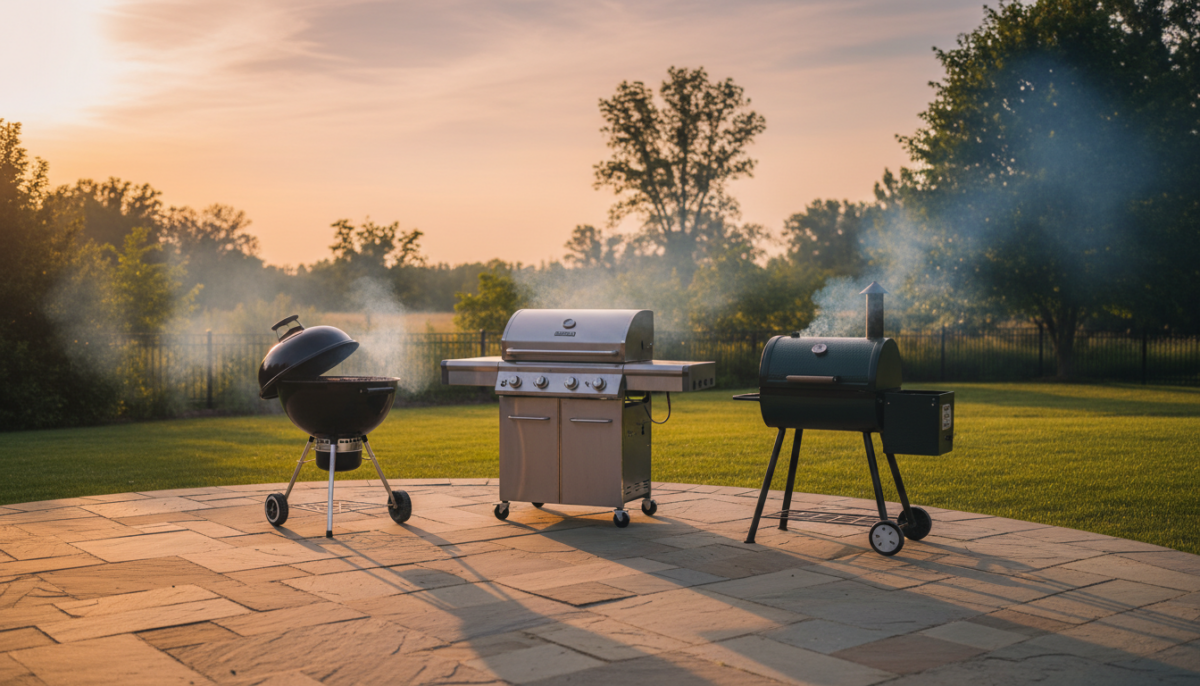
Quick answer: Choose gas if you value convenience, fast startup, and clean everyday cooking. Choose charcoal if you want the highest heat for searing and that classic smoky, fire-grilled flavor — and don’t mind managing a fire. Choose a pellet grill if you want hands-off “set it and forget it” wood-smoke flavor with digital temperature control, ideal for low-and-slow barbecue. Gas is easiest, charcoal is hottest and most flavorful per dollar, pellet is the most versatile smoker.
Every backyard cook eventually stands at this three-way crossroads. We’ve run all three on our own patio, and the “best” grill really does depend on how you cook and how much fuss you’ll tolerate. Here’s the straight comparison — flavor, heat, cost, and convenience — so you can buy the one you’ll actually use every weekend.
A grill’s fuel type — charcoal, gas, or wood pellets — sets its flavor, heat ceiling, and how hands-on the cook is: charcoal burns hottest, gas lights fastest, and pellet grills use an automated auger for low-and-slow smoking.
Last Updated: August 2026 | Will Montgomery has cooked on charcoal, gas, and pellet grills for years and knows the real tradeoffs between flavor, convenience, and cost that show up once you actually live with each one.
The three grills at a glance
| Factor | Gas | Charcoal | Pellet |
|---|---|---|---|
| Flavor | Clean, neutral | Bold, smoky, seared | Light, consistent wood smoke |
| Max temperature | ~500–550°F | 700°F+ | ~450–700°F |
| Temp control | Instant dial | Manual vents & fuel | Digital / Wi-Fi, set & forget |
| Startup time | ~5 min | 15–30 min | ~10–15 min |
| Best at | Weeknight cooking | Searing & live-fire flavor | Low-and-slow barbecue |
| Typical price | $400–$700 (3-burner) | $100–$500 | $350–$2,500 |
| Effort / cleanup | Low | High (ash) | Low-medium |
| Needs power? | No | No | Yes (auger/fan) |
Flavor: charcoal leads, pellet refines, gas stays neutral
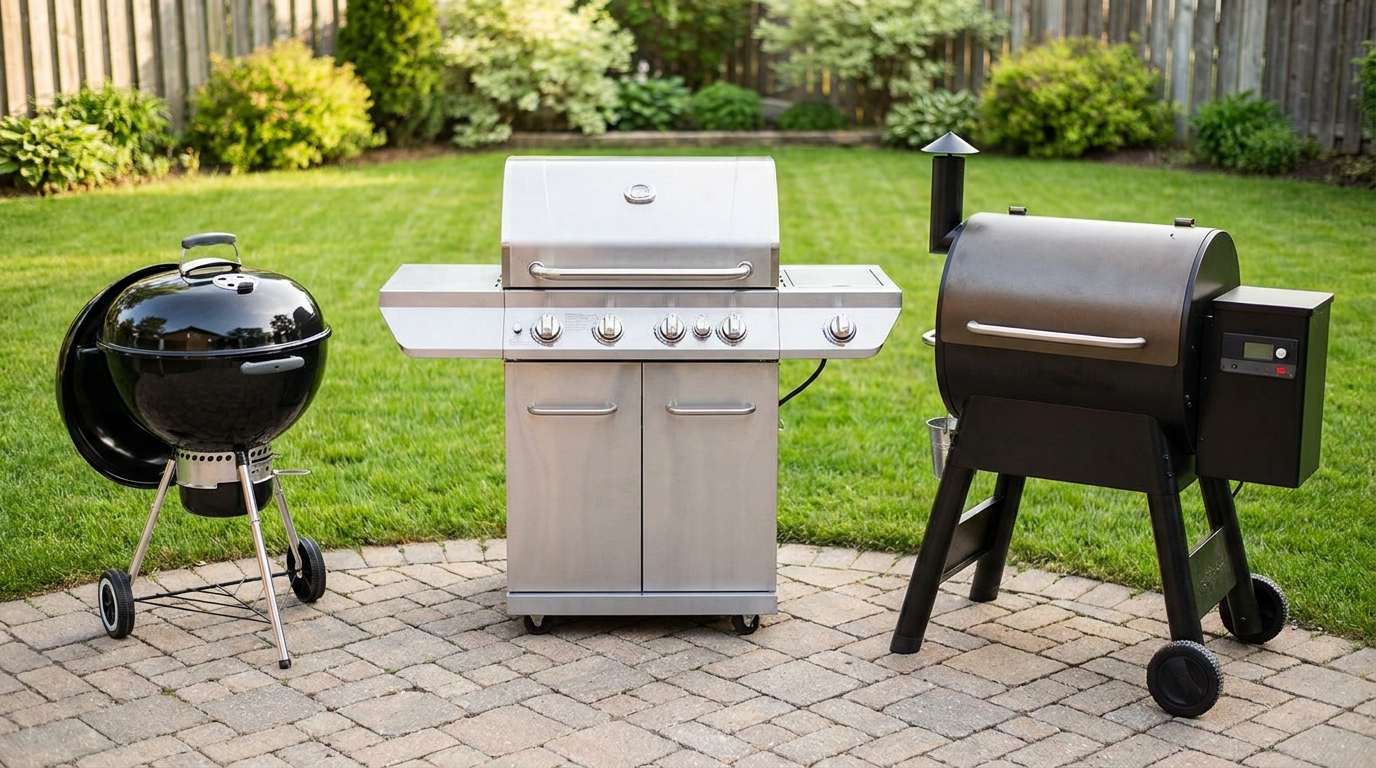
Flavor is where these three truly diverge. Charcoal produces the boldest result: the burning coals create aromatic compounds, and fat drippings hit the coals, vaporize, and rise back up to season the food. It’s the classic cookout taste. Pellet grills burn real hardwood in a controlled chamber, so the smoke is lighter, cleaner, and more consistent than charcoal — refinement over intensity. Gas ranks lowest for smoke influence but highest for clean, neutral cooking, which is exactly what a lot of weeknight cooks want. If chasing flavor is your whole reason for grilling, charcoal or pellet will satisfy you more than gas.
Heat and temperature control
Charcoal gets the hottest — well past 700°F — which makes it the king of searing and easy two-zone cooking (hot side, cool side). The catch is that you control it by hand, adjusting vents and adding fuel. Pellet grills are the opposite experience: a digital controller feeds pellets to hold a set temperature, often with Wi-Fi monitoring, so they’re brilliant for long, steady low-and-slow cooks from around 180°F up to 650–700°F. Gas gives you instant, dial-in control and quick heat changes, but tops out lower than charcoal, so hard searing takes more effort.
Convenience and cleanup
From experience: I cook on gas because my family won’t wait — the grandkids want hot dogs, burgers and chicken now. My son runs a pellet grill for smoking (his smoked mac and cheese is unreal), and my brother-in-law only cooks charcoal, buying special briquettes for the flavor. Each fuel really does pull a different kind of cook.
Gas is the convenience champion: turn the knob, hit ignition, and you’re cooking in about five minutes with almost no cleanup. Pellet grills are nearly as easy to start and mostly hands-off while cooking, though you manage a hopper of pellets and empty ash periodically — and they need an electrical outlet for the auger and fan. Charcoal is the most work: 15–30 minutes to light and get to temperature, active fire management, and ash cleanup afterward. None of that is hard, but it’s the difference between a quick weeknight dinner and a weekend ritual.
Cost
Charcoal grills have the lowest entry price — a quality kettle can be had for around $100–$200, though premium ceramic kamados climb much higher. A solid 3-burner gas grill runs about $400–$700. Pellet grills start near $350 for entry models from brands like Pit Boss and Z Grills, while premium units from Traeger, Recteq, and Yoder run $800–$2,500. Factor in fuel too: charcoal and pellets are ongoing consumables, while a propane tank lasts many cooks. If you’re building a whole cooking area around the grill, our outdoor kitchen planning guide helps you budget the surroundings.
Which grill should you buy?
- Buy gas if: you grill on weeknights, want to cook in five minutes, hate cleanup, and prefer clean flavor over heavy smoke.
- Buy charcoal if: you love the classic smoky, seared taste, want the highest heat for steaks, and enjoy the hands-on ritual of managing a fire.
- Buy pellet if: you want real wood smoke with zero babysitting, plan to do ribs, brisket, and low-and-slow cooks, and like digital or app-based control.
- Still torn? Many households keep a gas grill for weeknights and a charcoal or pellet unit for weekend flavor. It’s the most-satisfying combo if you have the space.
Bottom line: Gas for convenience, charcoal for heat and flavor, pellet for hands-off smoking versatility. Pick based on how you cook most weeks — then see current models in our best outdoor grills roundup.
Frequently asked questions
Which grill has the best flavor?
Charcoal delivers the boldest, smokiest, seared flavor. Pellet grills give lighter, more consistent real-wood smoke. Gas is the most neutral. For pure flavor, charcoal or pellet beat gas.
Which grill is easiest to use?
Gas, by a wide margin — about five minutes to ignition, instant temperature control, and minimal cleanup. Pellet grills are a close second for hands-off cooking, while charcoal takes the most effort.
Can a pellet grill sear like charcoal?
Higher-end pellet grills reach 650–700°F and can sear well, but charcoal still hits higher temperatures for the hardest sear. Some cooks finish pellet-smoked steaks on a hot charcoal or gas grill for the best of both.
Do pellet grills need electricity?
Yes. Pellet grills use an electric auger and fan to feed pellets and control temperature, so they need a nearby outlet. Gas and charcoal grills need no power.
Which grill is cheapest to buy and run?
Charcoal grills are cheapest to buy (a quality kettle is around $100–$200). Running costs favor gas long-term since a propane tank lasts many cooks, while charcoal and pellets are ongoing consumables.
Is a pellet grill a smoker?
Essentially, yes — a pellet grill excels at low-and-slow smoking with steady digital temperature control, and it can also grill at higher heat. It’s the most versatile single unit for barbecue.
Ready to shop specific models? See our best outdoor grills picks, and plan the whole cooking space with our outdoor kitchen planning guide.