

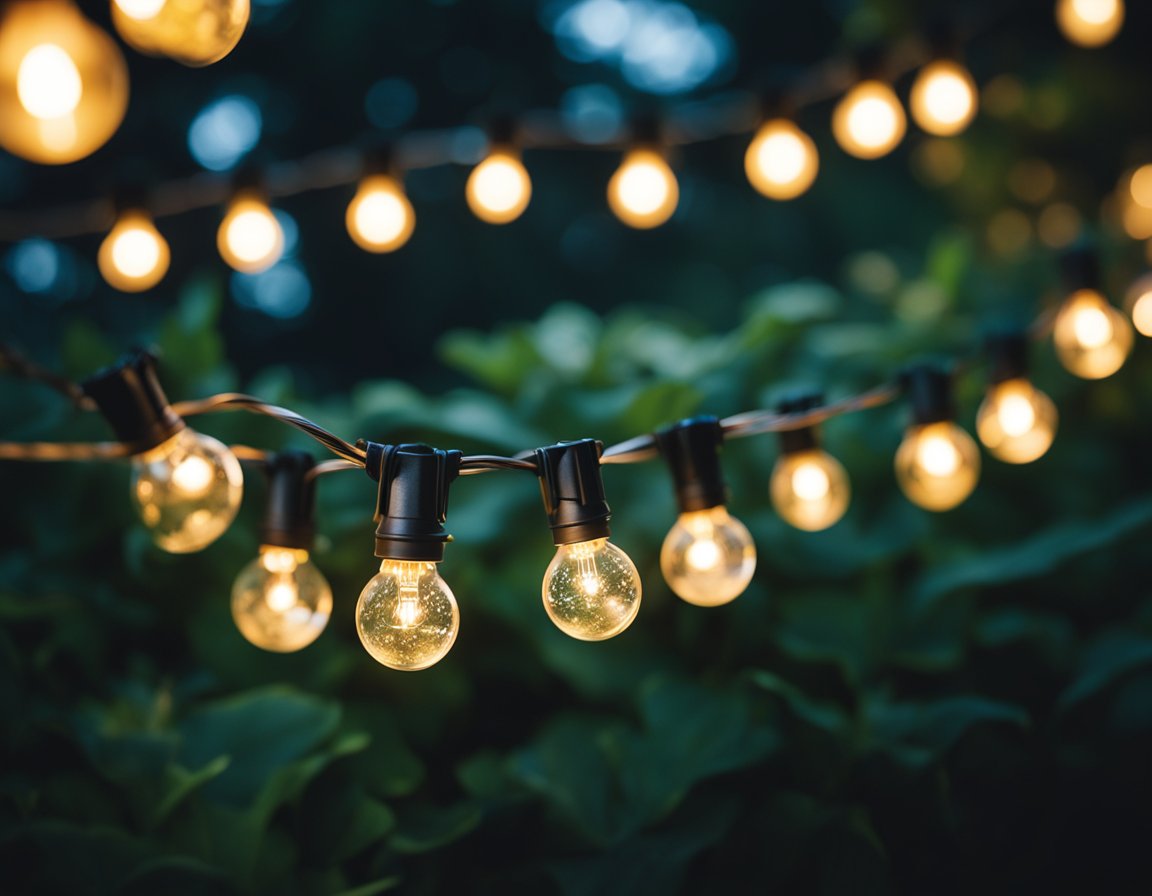
As the sun sets and the evening settles in, patio string lights have become a popular addition to many outdoor spaces, offering a warm and inviting atmosphere. While these charming lights help set the mood for a pleasant night outdoors, there is a question that may be lingering in the minds of homeowners: What about the bugs?
Opting for warmer, yellow-toned bulbs or LED in your patio string lights can reduce bug attraction. This choice makes outdoor gatherings more comfortable by attracting fewer bugs. Insects are typically drawn to bright, especially blue or ultraviolet, light and bulbs that emits heat.
The answer to this question can be crucial for those who love spending time outdoors and want to enjoy their patios without the annoying presence of insects. Let’s face it there are a lot of species of insects and some like different colors and or temperature a bulb may give off.
Various factors, including the type of light, the color temperature, and the location of the lights, can play a role in determining whether or not your patio string lights will become a hub for unwelcome insects. In the following paragraphs, we will delve deeper into all the aspects that contribute to this phenomenon and suggest ways to minimize bug attraction.
Understanding Light Attraction in Bugs
In this section, we’ll explore the science behind why bugs seem to be attracted to patio string lights, including the effects of color and wavelengths, and heat emission on bug behavior.
Color and Wavelengths
When it comes to understanding bug attraction, the electromagnetic spectrum plays a vital role. The visible light spectrum, which includes colors like blue, red, and yellow, have different wavelengths that can affect bug behavior.
| Color | Wavelength (approx.) |
|---|---|
| Blue | 450-495 nm |
| Red | 620-750 nm |
| Yellow | 570-590 nm |
Studies have shown that bugs are more attracted to shorter wavelengths in the visible light spectrum. Specifically, UV (ultraviolet) light, which has a wavelength of about 100-400 nm, seems to be a primary attractant. This explains why LED lights, which emit less UV light when compared to halogen bulbs, tend to be less attractive to bugs. Read this to deep dive into what light colors DON’T attract bugs.
Heat Emission and Bug Behavior
Another factor that influences bug attraction is heat emission. Insects that exhibit positive phototaxis are drawn towards sources of light and warmth. Halogen bulbs, which emit a higher intensity of heat and light wavelengths, may attract more insects than LED lights which are characterized by lower heat production.
In contrast, bugs that experience negative phototaxis are repelled by light and seek darkness. Understanding these behaviors can help determine the types of lights that minimize bug attraction.
In conclusion, by taking into account factors like color, wavelength, and heat emission, it becomes easier to comprehend the reasoning behind bugs being attracted to certain types of lights. Selecting patio string lights based on these factors can help to minimize the presence of bugs and create a more enjoyable outdoor environment.
Simply put, a yellow or warm white LED is your best bet to make the numbers of bugs fewer
Choosing the Right Patio String Lights
When selecting the perfect patio string lights for your outdoor space, it’s important to consider how they may attract bugs and make your experience less enjoyable. In this section, we’ll discuss the types of bulbs you should look for and the design and functionality considerations to keep in mind.
Types of Bulbs and Their Effects
LED Bulbs – LED light bulbs are energy-efficient, durable, and emit a lower amount of heat compared to other bulbs. These factors make them less attractive to bugs. Additionally, you can find LED bulbs in various color temperatures. Opting for yellow light or “bug lights” can further minimize the attraction of bugs, as they cannot see this part of the light spectrum as well.
- Yellow Bug Lights – Specifically designed to minimize bug attraction, these LED bulbs emit a warm yellow hue that creates a cozy ambiance while discouraging insects from approaching your patio.
- CFLs – Although Compact Fluorescent Lights (CFLs) are also energy-efficient, they can emit more heat than LEDs. This heat can attract bugs, making them a less ideal choice for patios and outdoor spaces.
Design and Functionality Considerations
Brightness – Aim for a well-balanced level of brightness in your outdoor lighting. An overly bright patio may attract more bugs, while overly dim lighting may not provide enough visibility for you and your guests.
Outdoor Lighting Types – Different types of outdoor lights can serve various purposes and fit with various patio designs. Some popular options include:
- Fairy Lights – Delicate, small LED bulbs on thin wires, perfect for a whimsical touch to patios, flowers, or fan areas.
- LED Lantern Lights – Larger, more prominent bulbs, often housed within a decorative casing. These add a touch of elegance to your outdoor space and may look nice hanging around patios or walkways.
- Rope Lights – Encased in a flexible, durable tube, these versatile lights can be shaped and molded around outdoor furniture, railings, or intertwined with plants. They’re ideal for outlining specific areas or features of your patio.
To make your patio an inviting and enjoyable space for everyone, take the time to research and carefully choose the right patio string lights. Keeping in mind the types of bulbs and their effects on bugs, as well as the design and functionality considerations, can help ensure a beautiful, functional, and bug-free outdoor oasis.
Frequently Asked Questions
How can I prevent bugs from gathering around my outdoor string lights?
To prevent bugs from gathering around your outdoor string lights, consider using bug-repellent lights or yellow-toned bulbs, which are less attractive to insects. Keep the surrounding area clean and free of standing water, as this can be a breeding ground for bugs. You can also turn off the lights when they are not in use or use a timer to minimize the time they are on.
What color of outdoor lighting is less likely to attract bugs?
The color of outdoor lighting that is less likely to attract bugs is yellow. Bugs are typically attracted to shorter wavelength lights, like blue or white. Yellow-toned bulbs have a longer wavelength, making them less appealing to insects. So, using warm-colored lights can help you reduce bug attraction.
Are there specific patio light types that bugs avoid?
Ceramic or yellow-toned bulbs are less likely to attract bugs compared to other types of patio lights. LED and incandescent bulbs in warmer colors, like yellow or orange, may also be less attractive to insects. It’s important to choose the right type and color of patio light to minimize bug attraction.
Do LED outdoor lights attract fewer bugs compared to other light bulbs?
LED outdoor lights can attract fewer bugs compared to other light bulbs, such as incandescent or CFLs, because they emit less heat, which is often attractive to insects. Additionally, LED lights offer a wide range of color temperatures, allowing you to choose warmer-colored bulbs, which are less appealing to bugs.
Is it possible to enjoy summer outdoor lighting without inviting insects?
Yes, it is possible to enjoy summer outdoor lighting without inviting insects. Choosing the right type of lighting, like LED or ceramic yellow-toned bulbs, can help reduce bug attraction. Additionally, practice good outdoor hygiene by eliminating standing water and using bug zappers or repellents to keep insects at bay.
What features should I look for in porch lights to minimize bug attraction?
To minimize bug attraction, look for porch lights with the following features:
- Yellow or warm-colored bulbs that emit longer wavelength light.
- LED or ceramic bulbs that produce less heat.
- Dimmable lights that allow you to adjust the brightness, as lower levels of light may attract fewer insects.
- Timers to minimize the time your lights are on, especially during peak bug activity hours.
Will Montgomery draws on hands-on outdoor-lighting experience to explain whether patio string lights attract bugs — and which bulbs keep them away — so you can enjoy the glow without the swarm.