

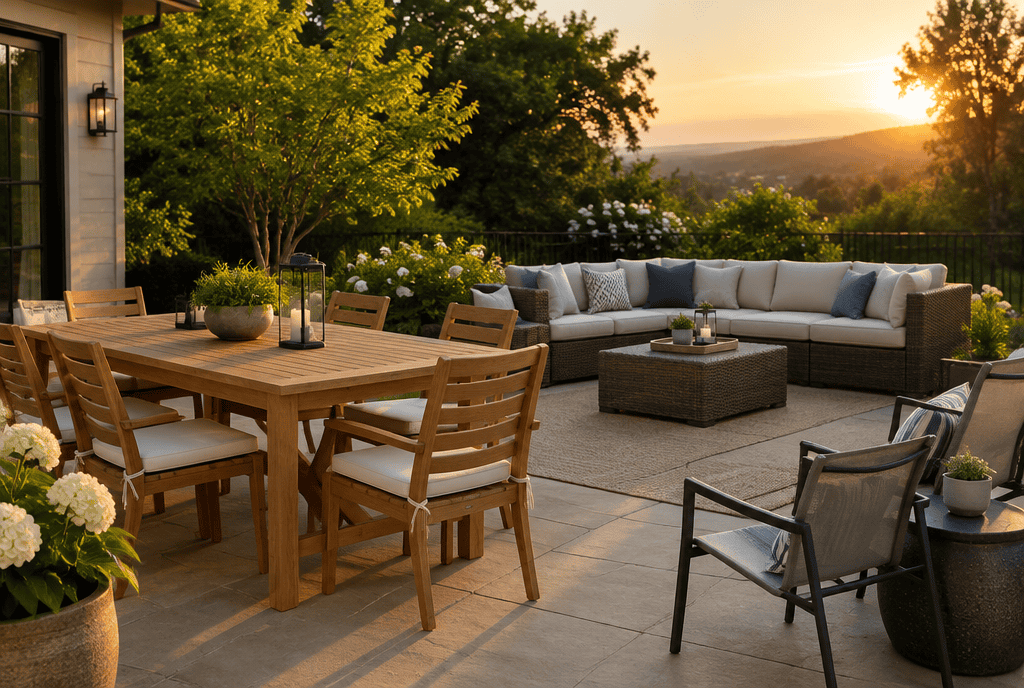
Quick Answer: Aluminum is the best all-around outdoor furniture material for most homeowners — it resists rust, weighs little enough to rearrange solo, and runs $300–$900 per seating piece. Teak is the upgrade pick if you want 20+ years of life and don’t mind it weathering to silver-gray. Resin wicker wins on comfort-per-dollar for sectionals, and if you’re renting or working with a balcony, foldable steel or resin pieces under $150 are the only ones worth buying.
At Outdoor Space Accents, we get the same question in different forms every week: “What’s actually worth buying?” My wife Kim and I have gone through three rounds of patio furniture over the years — one set rusted through in two winters, one faded to chalk in a single Georgia summer, and the current set (aluminum frames, resin wicker weave) is going on year five without a single repair. This guide breaks down exactly what to buy based on your climate, your space, and how much upkeep you’re willing to do.
Last Updated: October 2026 | Will Montgomery, an electro-mechanical engineer, has tested and replaced patio furniture alongside his wife Kim through years of hosting backyard gatherings.
Outdoor Furniture Materials Compared
Every material trades off cost, weight, and lifespan differently. Here’s how the five most common options stack up.
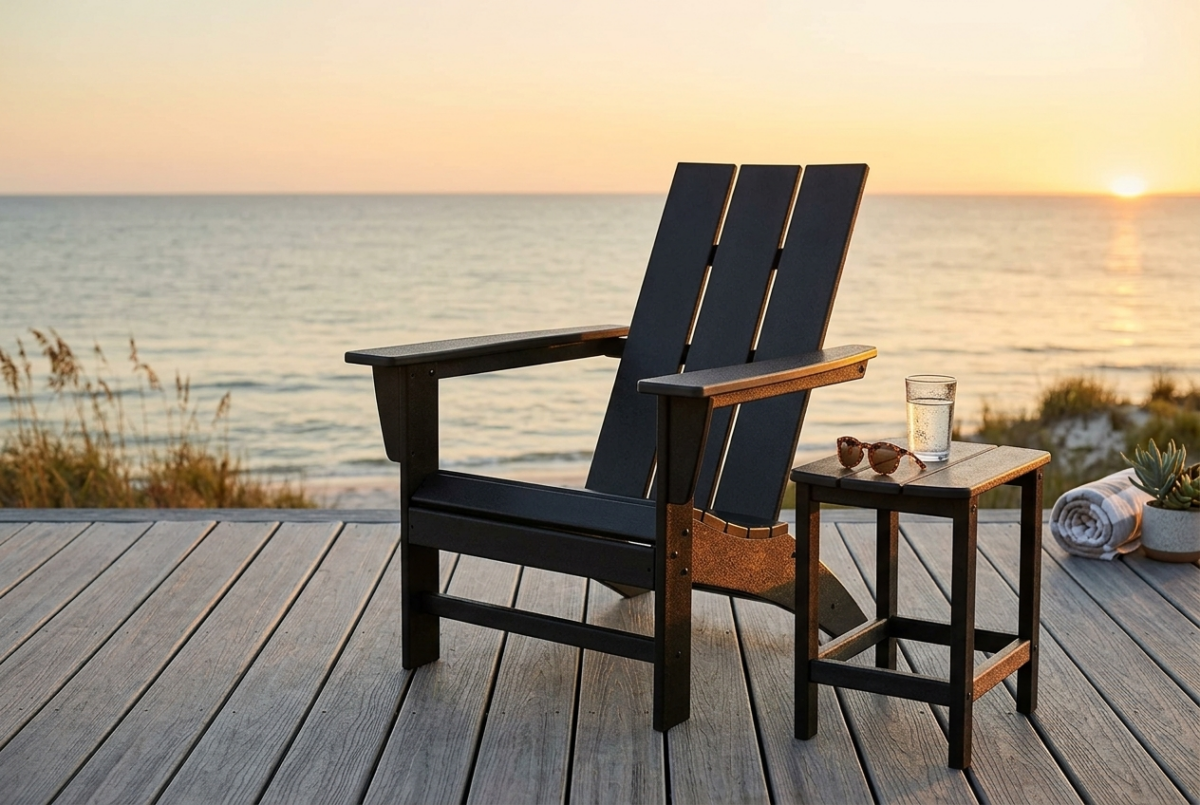
If you want to see solid HDPE in person, the POLYWOOD Modern Adirondack Chair is a widely sold example of fade-resistant, all-weather recycled-plastic furniture.
| Material | Lifespan | Maintenance | Best For | Typical Cost (per chair) |
|---|---|---|---|---|
| Teak (Grade A) | 20–30 years | Oil yearly or let gray naturally | Permanent patios, long-term investment | $250–$600 |
| Aluminum (powder-coated) | 15–25 years | Rinse, occasional touch-up paint | Most climates, easy rearranging | $150–$450 |
| Resin Wicker (over aluminum frame) | 5–10 years (quality-dependent) | Wipe down, cover in winter | Comfort-focused sectionals | $200–$500 |
| HDPE / Polywood | 20+ years | Soap and water | Coastal areas, zero-maintenance buyers | $200–$550 |
| Wrought Iron / Steel | 10–20 years (if coated) | Watch for rust at joints/welds | Classic look, wind-prone areas | $180–$500 |
Teak: The Long-Haul Investment
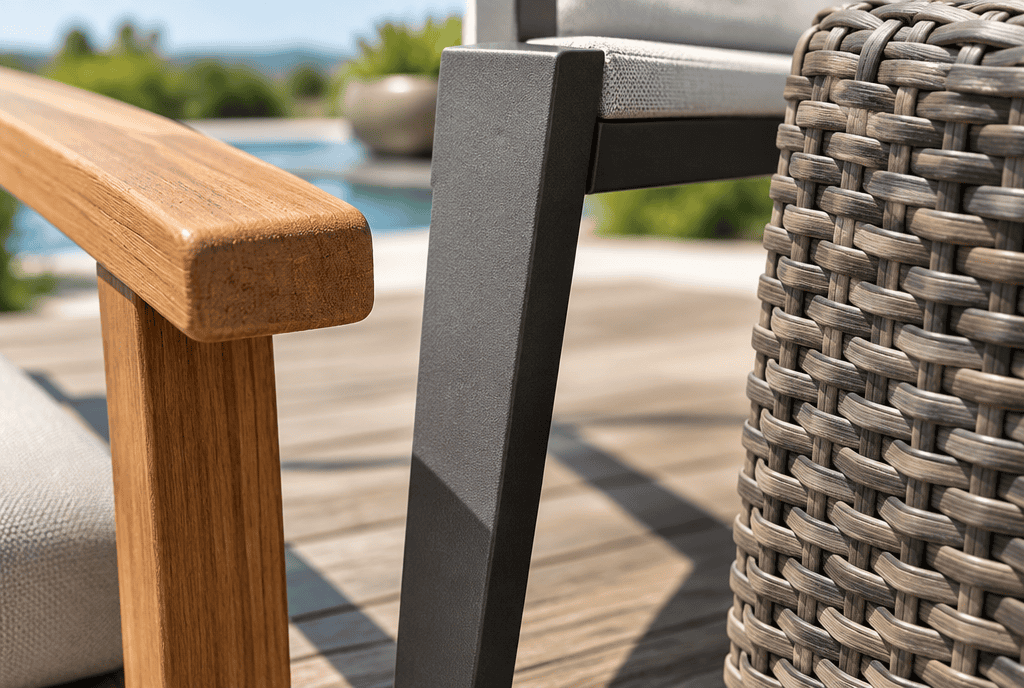
Direct answer: Grade A teak is the only material on this list that regularly outlives the people who buy it — 20 to 30 years is normal with zero structural failure, because its natural oils repel water and insects without any sealant.
Two things trip people up with teak. First, grading matters enormously — Grade A comes from the heartwood and holds up for decades, while Grade B/C (sapwood) cracks and grays unevenly within a few years. If a set is priced suspiciously low, ask for the grade before buying. Second, you have to decide up front whether you want to maintain the honey-brown color (teak oil, 1–2x per year) or let it weather to a silvery patina (do nothing — this is actually the lower-maintenance option and is not a sign of damage).
- Buy Grade A or “Grade A/B mixed” only — avoid unlabeled “teak-style” or “teak-finish” products, which are often rubberwood or acacia.
- Budget roughly double what aluminum costs for the same piece — teak is a 20-year purchase, not a 5-year one.
- Skip teak entirely if you’re in a rental or plan to move in under 3 years; the upfront cost doesn’t pay off on that timeline.
Aluminum: The Best All-Around Choice
Direct answer: Powder-coated aluminum is the best default recommendation for most homeowners because it never rusts, weighs 40–60% less than steel or wrought iron, and holds up in every climate except direct beachfront salt spray without special coating.
The one real downside: bare aluminum gets hot in direct sun and the powder coat can chip if you drag pieces across concrete instead of lifting them. Look for a marine-grade or “coastal” powder coat if you’re within a mile of saltwater — standard coatings will pit within a couple of seasons out there.
Resin Wicker: Comfort Over Longevity
Direct answer: Quality resin wicker (woven synthetic fiber over an aluminum or steel frame) is the most comfortable option for deep-seating sectionals and lounge sets, but it’s also the material most likely to disappoint if you buy cheap — the difference between a $400 loveseat and a $1,200 one is almost entirely in the UV stabilizers baked into the resin.
From experience: Of the four materials, resin wicker (rattan-style) is the one people most often talk about replacing first. The usual failure is UV and weather making the plastic weave brittle. It starts cracking, unraveling or delaminating, and once one section goes it is hard to repair.
Cheap resin wicker without UV stabilizers turns brittle and starts snapping strands within one or two summers. There’s no way to tell by looking at it in the showroom — you have to ask the retailer directly whether the resin is UV-stabilized, or check the warranty length (anything under 3 years on the resin itself is a red flag).
Small Spaces & Apartment Balconies
Direct answer: For balconies and small patios, foldable steel-frame bistro sets and stackable resin chairs under $150 make more sense than investing in teak or premium wicker — you need to move and store furniture more often in tight spaces, and lightweight materials survive that handling better than heavy, precious ones.
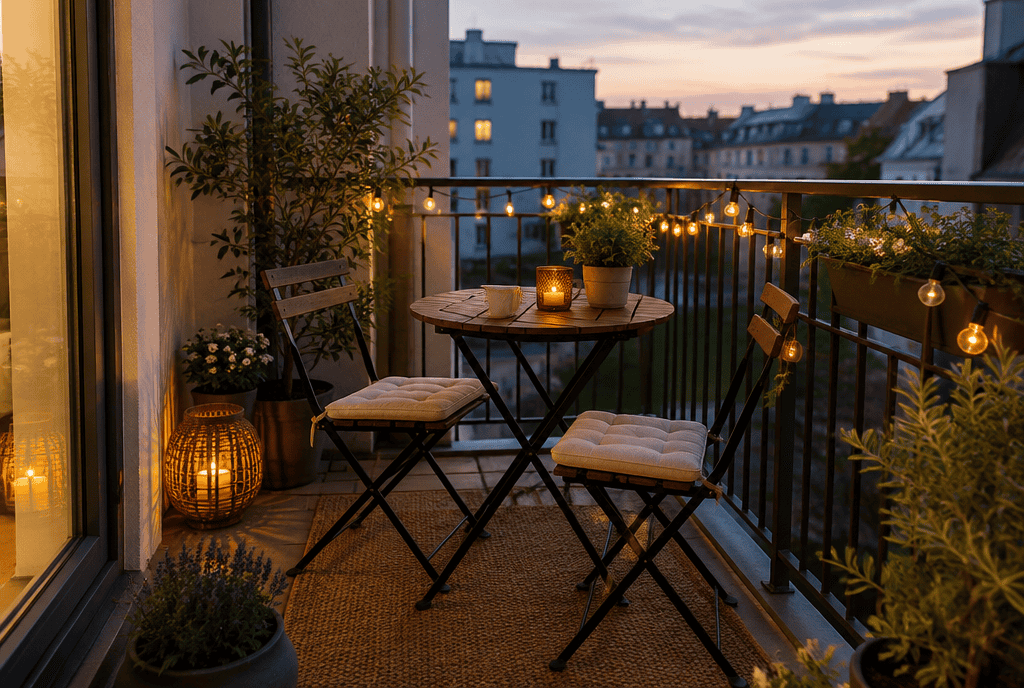
See our full breakdown in Best Outdoor Furniture for Small Spaces & Balconies for specific product picks by square footage.
How to Buy: A 4-Step Framework
- Match the material to your climate first. Coastal = aluminum with marine coating or HDPE. Freeze-thaw winters = aluminum, teak, or resin wicker (avoid wrought iron, which rusts at the joints once coating fails). Intense sun = teak or HDPE, since both resist fading better than dyed resin.
- Decide your maintenance tolerance honestly. If furniture care isn’t going to happen, buy HDPE or aluminum — both survive total neglect. If you enjoy the ritual, teak oiling is genuinely satisfying and extends the wood’s life.
- Set a per-seat budget, not a total budget. A 6-piece “sectional set” for $500 works out to under $85 a seat — that’s cheap-resin territory. Divide total price by seat count to compare apples to apples.
- Buy covers or plan storage before the furniture arrives. Even weather-resistant materials last 2–3x longer with winter covers or off-season storage. See our Deck Box Buying Guide if you need a place to put cushions and covers.
Maintenance by Material
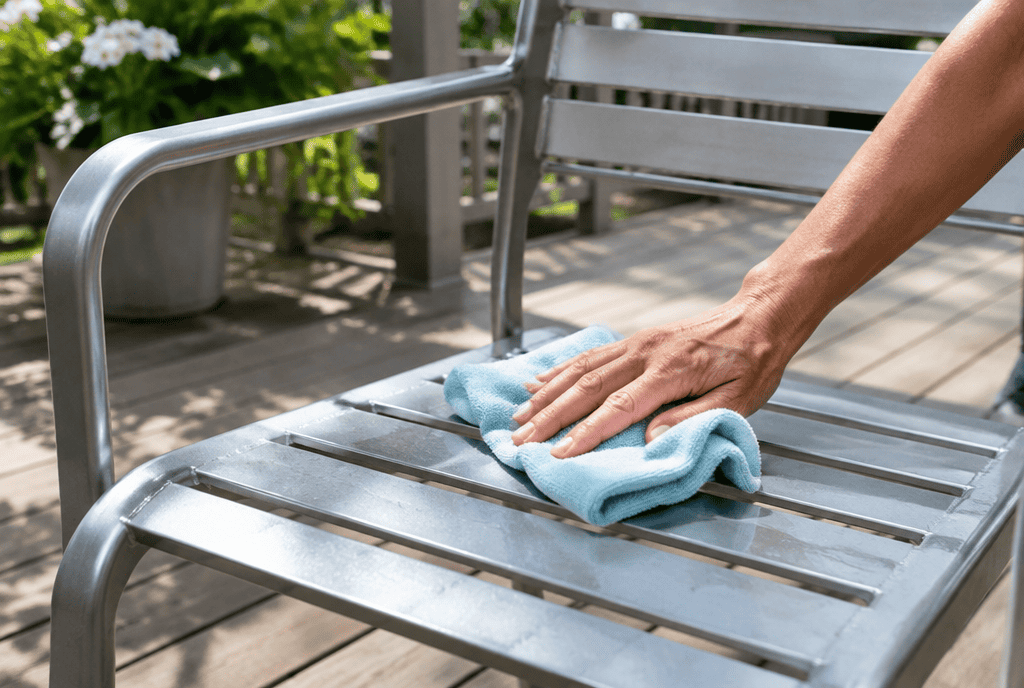
Rust, fading, and mold are the three failure modes that end furniture early — and all three are addressed in more depth in our related guides: How to Protect Patio Furniture From Rust and Winter Damage, What Causes Outdoor Furniture to Fade and Breakdown, and Seat Cushion Covers vs. New Outdoor Cushions.
Whatever you own, a heavy-duty cover helps: these waterproof patio chair covers (2-pack) are an easy way to cut winter UV and moisture wear.
Bottom Line
If you want one answer: buy aluminum-framed pieces for your main seating, add resin wicker where comfort matters most (lounge chairs, sectionals), and reserve teak for a signature piece — a dining table, say — if budget allows. Skip wrought iron unless you love the look and are willing to watch the joints for rust every spring.
Explore More in Furniture & Accents
- Best Outdoor Furniture for Small Spaces & Balconies
- Outdoor Rug Buying Guide
- Best Outdoor Rugs of 2026
- How to Protect Patio Furniture From Rust and Winter Damage
- Seat Cushion Covers vs. New Outdoor Cushions
- What Causes Outdoor Furniture to Fade and Breakdown
FAQ
What is the most durable outdoor furniture material?
Grade A teak lasts the longest overall (20–30 years), but powder-coated aluminum is the most durable option that also stays lightweight and affordable — it’s our default recommendation for most yards.
Is resin wicker furniture worth it?
Yes, if you buy UV-stabilized resin with at least a 3-year warranty on the weave. Cheap, non-stabilized resin wicker can crack and snap within one or two seasons.
Should I let teak turn gray or keep oiling it?
Either is fine structurally. Letting it gray naturally is actually less work and doesn’t shorten the wood’s lifespan — oiling is purely cosmetic, to preserve the honey-brown color.
What outdoor furniture material is best near the ocean?
Marine-grade aluminum or solid HDPE (Polywood-style) furniture — both resist salt corrosion. Standard powder-coated aluminum and any bare steel or wrought iron will corrode faster in salt air.
How much should I budget for a full patio furniture set?
For a 4-person dining set plus a small seating area, expect $800–$2,000 in aluminum or resin wicker, or $1,800–$4,000+ if you go with Grade A teak throughout.
Do I need to cover my outdoor furniture in winter?
It’s not mandatory for aluminum, teak, or HDPE, but covering or storing any material extends its life 2–3x by blocking UV exposure and moisture cycling — especially worthwhile for resin wicker and cushions.
Will Montgomery, an electro-mechanical engineer, has tested and replaced patio furniture alongside his wife Kim through years of hosting backyard gatherings.