

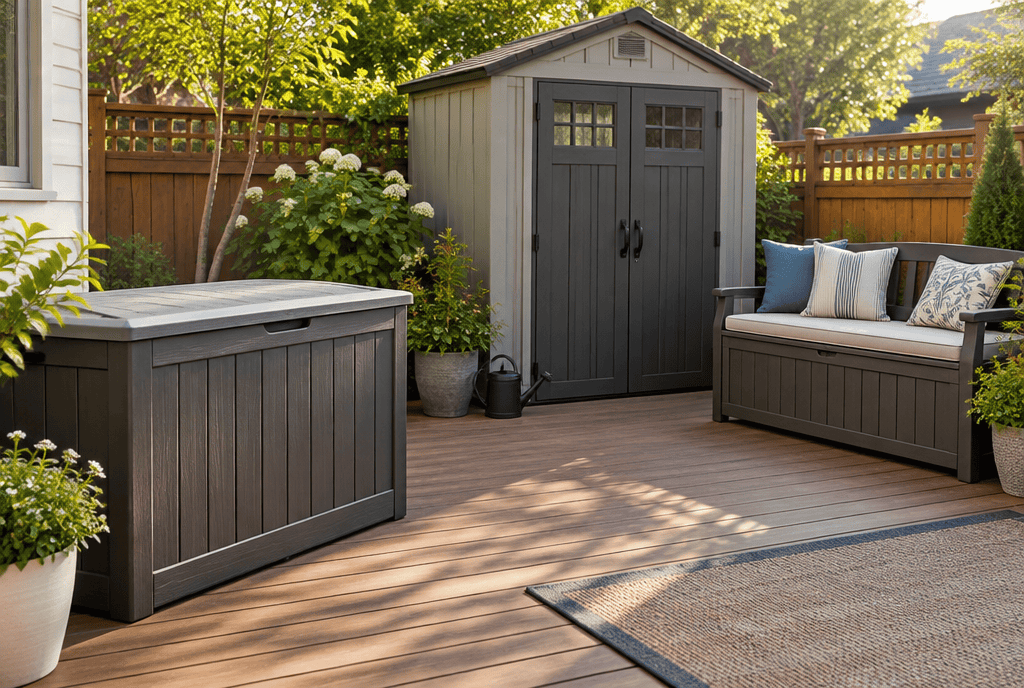
Quick Answer: For most yards, a 100+ gallon resin deck box ($120–$250) handles cushions, pool toys, and garden tools without a permit. Go up to a small storage shed ($400–$1,500) once you need to store a mower, bikes, or seasonal furniture. On a balcony or tiny patio, a vertical cabinet or under-bench storage is the only realistic option — you don’t have the footprint for a full deck box.
Outdoor storage is the most-skipped purchase in backyard planning — most people buy the grill, the furniture, and the lights, then end up with cushions piling up in the garage. This guide breaks down every real storage option by yard size, budget, and what you’re actually trying to store.
Last Updated: October 2026 | Will Montgomery, an electro-mechanical engineer, has hands-on experience organizing and protecting outdoor gear while expanding his own backyard with his wife Kim.
Outdoor Storage Options Compared
| Option | Best For | Typical Capacity | Cost | Permit Needed? |
|---|---|---|---|---|
| Deck box | Cushions, toys, small tools | 50–150 gallons | $80–$300 | No |
| Storage bench | Seating + light storage | 20–60 gallons | $100–$350 | No |
| Vertical cabinet | Balconies, narrow side yards | 10–40 gallons | $60–$200 | No |
| Small shed (under 120 sq ft) | Mower, bikes, seasonal gear | Large | $400–$1,500 | Usually not, but check local code |
| Large shed (120+ sq ft) | Workshop, full equipment storage | Very large | $1,500–$6,000+ | Almost always yes |
Deck Boxes: The Default Choice for Most Yards
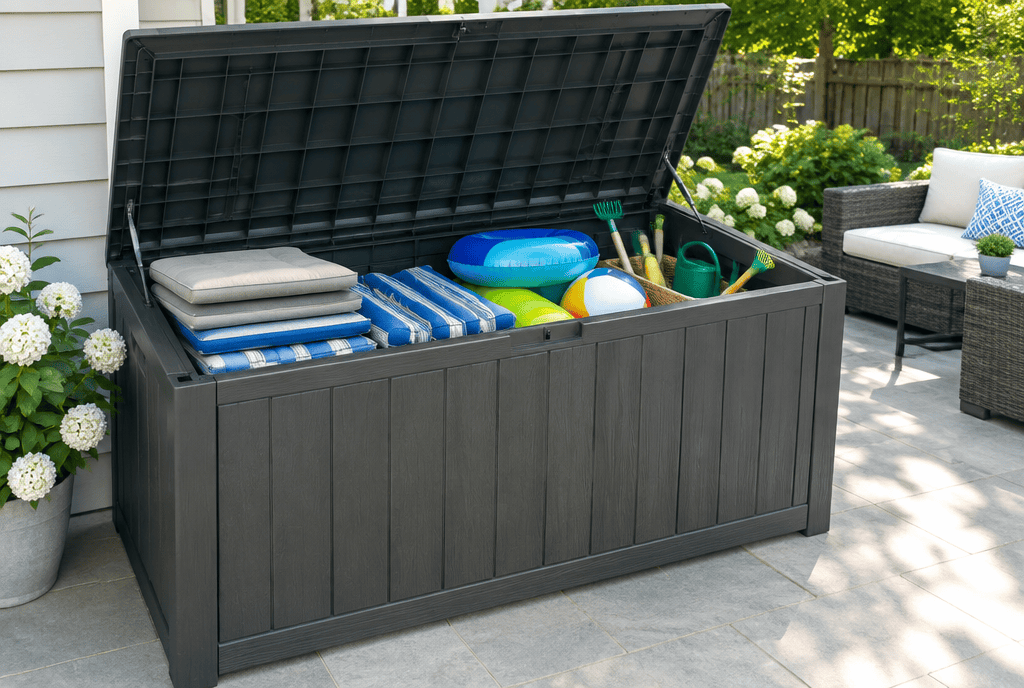
Direct answer: A resin deck box in the 100–150 gallon range covers the storage needs of the average patio or deck — enough for cushions, a few pool toys, and hand tools — without requiring a permit or taking up much visual space.
From experience: We mostly use outdoor storage for patio cushions, a few yard tools and miscellaneous outdoor items. The problems I have seen were with cheaper boxes, where lids warp or let some moisture in after a while outside. That is why I would rather have a decent resin deck box: no wood to rot, no metal to rust, and it keeps cushions drier.
Two popular examples at different sizes: the Suncast 73-gallon deck box (also at Walmart) for a small patio, and the Keter Westwood 150-gallon storage box for bigger cushion sets.
Resin is the material to buy; wood decays and needs yearly sealing, and metal deck boxes rust at the seams within a couple of seasons unless it’s powder-coated aluminum (rare and expensive). Look for a lid that locks in place in wind and drainage holes in the base so standing water doesn’t rot whatever’s inside.
For specific model picks, see our Deck Box Buying Guide and Best Outdoor Deck Storage Boxes 2026. If rust or mold has already gotten to yours, we cover fixes in How to Stop a Deck Box From Rusting or Getting Moldy.
Storage Benches: Seating That Pulls Double Duty
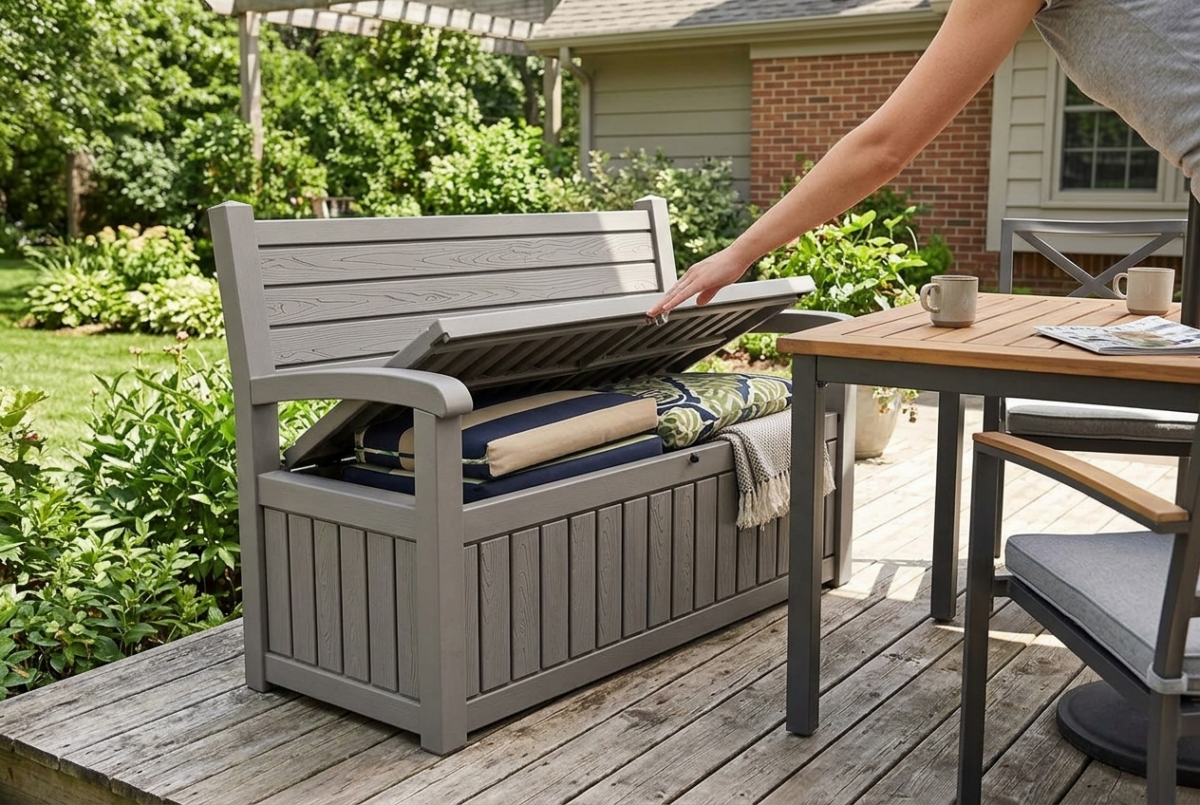
Direct answer: A storage bench makes sense when you need extra seating around a fire pit or dining table anyway — you get 20–60 gallons of hidden capacity for cushions or throw blankets without adding a separate box to the space.
The tradeoff is capacity: benches hold far less than a dedicated deck box, so they work best as a supplement, not your only storage. If you’re placing one directly on grass or dirt rather than a hard patio surface, put a paver or gravel pad underneath — ground contact is what causes the bottom to warp or the resin to discolor over time.
Small Spaces & Apartment Balconies
Direct answer: On a balcony, a vertical storage cabinet (roughly 12–20 inches wide) is almost always the right call — it fits against a rail or wall without eating your walking space, unlike a deck box, which needs floor footprint you probably don’t have.
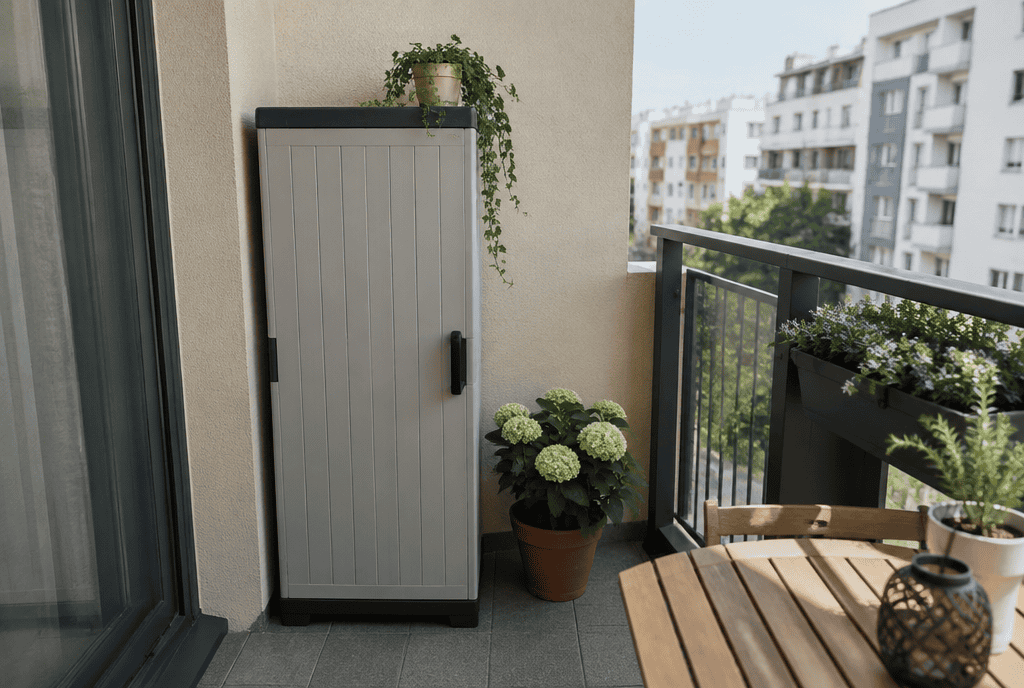
Check your lease before drilling anything into a shared wall or railing — most vertical cabinets are freestanding for exactly this reason. If your unit already has a small deck box that’s failing, this guide also covers placement questions for ground-level units.
When You Need a Shed Instead
Direct answer: Once you’re storing a mower, snowblower, bikes, or a full set of seasonal furniture, a small resin or wood shed under 120 square feet is the right move — most municipalities don’t require a permit under that threshold, but always confirm with your local building department before you buy, since setback and size rules vary block to block.
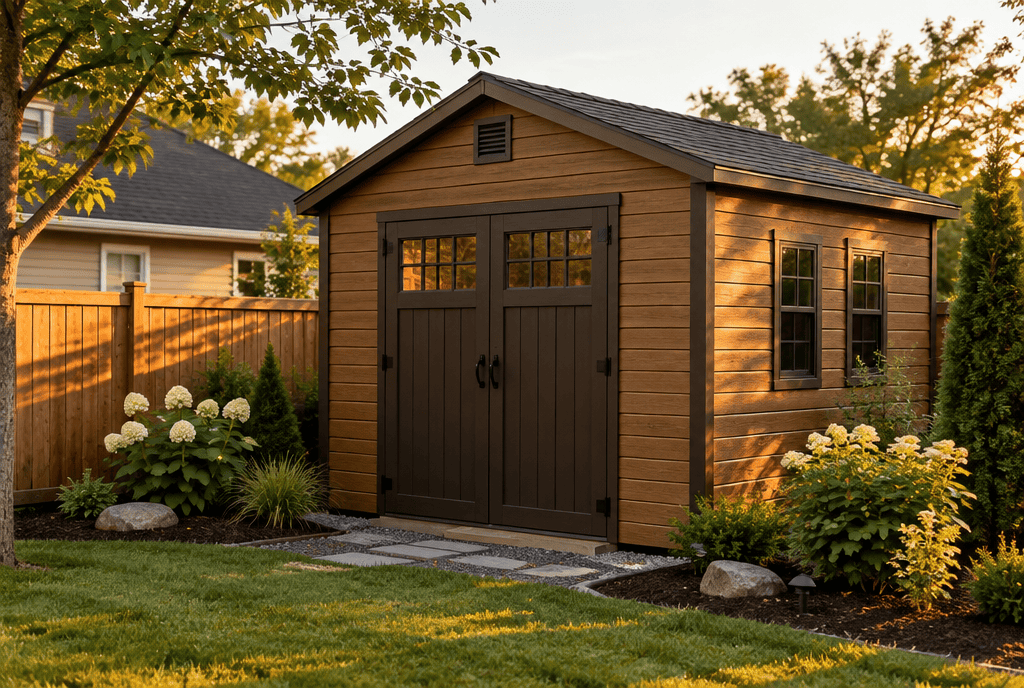
- Resin/plastic sheds need zero maintenance but can fade in direct sun over 8–10 years.
- Wood sheds look better and can be painted to match your house, but need repainting or sealing every 3–5 years.
- Metal sheds are the cheapest option upfront but dent easily and can rust at seams in wet climates.
How to Choose: A Quick Decision Path
- List what you’re actually storing. Cushions and small toys → deck box. Mower or bikes → shed.
- Measure your available footprint, including clearance to open the lid or door fully.
- Check your lease or HOA rules before buying anything larger than a deck box — sheds are the most commonly restricted category.
- Buy resin over wood or metal unless you specifically want the wood look and are willing to maintain it.
Bottom Line
Start with a resin deck box — it solves 80% of outdoor storage needs for under $250. Add a storage bench if you need more seating anyway. Only step up to a shed once you’re storing equipment, not just soft goods, and always check local permit rules first.
Explore More in Storage
- Deck Box Buying Guide
- Best Outdoor Deck Storage Boxes 2026
- How to Stop a Deck Box From Rusting or Getting Moldy
- Will a Deck Box Kill My Grass If Set in the Yard?
FAQ
What size deck box do I actually need?
For a small patio, 50–100 gallons is enough for cushions and a few toys. For a full-size deck with a grill and dining set, go 100–150+ gallons.
Do I need a permit for a backyard storage shed?
Most municipalities don’t require one under 120 square feet, but setback rules and exceptions vary — always check with your local building department before buying.
Is resin or wood better for a deck box?
Resin is better for most people — it needs zero maintenance and won’t rot, while wood requires yearly sealing to avoid decay.
What’s the best storage option for an apartment balcony?
A vertical freestanding cabinet, since it uses wall space instead of floor footprint and doesn’t require drilling into shared structures.
Will a deck box damage my deck or grass?
Not if it has drainage holes and you occasionally move it to let the surface underneath dry and air out — prolonged contact without airflow can trap moisture.
How much does a small backyard shed cost installed?
Budget $400–$1,500 for a small resin or wood shed kit, plus $200–$600 more if you’re paying for professional assembly and a gravel or paver base.
Will Montgomery, an electro-mechanical engineer, has hands-on experience organizing and protecting outdoor gear while expanding his own backyard with his wife Kim.