
Affiliate disclosure: Outdoor Space Accents earns from qualifying purchases made through links on this page.
Quick answer: for fast, affordable shade, get a patio umbrella. For a larger fixed area that handles wind better, get a shade sail. For a permanent, adjustable solution, install a retractable awning or build a pergola. The right pick depends on your budget, how permanent you want it, and your local wind conditions.
This is the hub for every shade option we cover — umbrellas, sails, awnings, pergolas, and the natural and renter-friendly alternatives most guides skip. Every spoke article on shade links back to this page.
Patio shade is any fixed or movable structure — umbrella, sail, awning, pergola, or living canopy — that blocks direct sun over an outdoor seating area; a quality shade fabric blocks 90% or more of UV and can drop the felt temperature underneath by 10–15°F.
Last Updated: September 2026 | Will Montgomery is an electro-mechanical engineer and business owner. Machine design is about loads, leverage, and materials — exactly what decides whether an umbrella base holds in a gust or a sail survives a storm — so the base-weight and wind advice here comes from engineering, not guesswork. He and his wife Kim have built out shade across two backyards on a budget. More on the About page.
How to Choose: A Quick Decision Framework
| Priority | Best Option | Why |
|---|---|---|
| Lowest cost, fastest setup | Patio umbrella | No installation, movable, widely available under $150 |
| Largest coverage area | Shade sail | Covers more square footage per dollar than an umbrella |
| Best in high wind | Retractable awning or pergola | Fixed structures handle gusts umbrellas and sails can’t |
| Want sun AND shade, adjustable | Retractable awning | Extends or retracts on demand |
| Permanent architectural upgrade | Pergola | Adds property value, supports vines/lighting |
| Renting, no drilling allowed | Freestanding umbrella or tension-mounted sail | No permanent attachment to the structure |
Patio Umbrellas: The Fastest, Most Affordable Shade
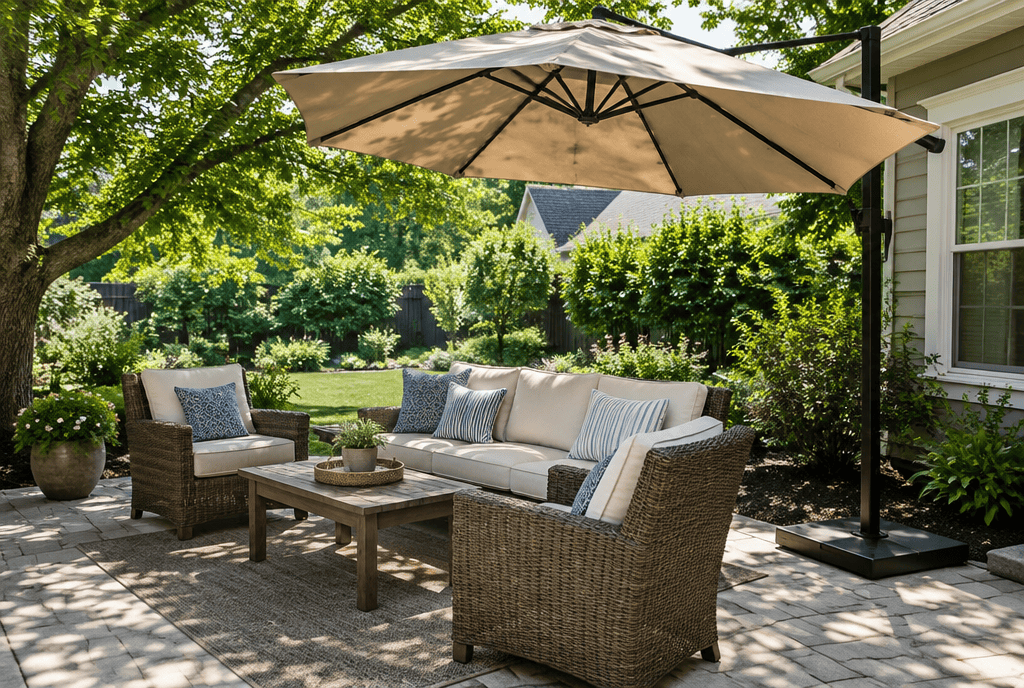
Umbrellas remain the default first shade purchase for good reason — low cost, zero installation, and the flexibility to move them anywhere you need shade that day. The tradeoff is coverage area and wind tolerance: a single umbrella shades roughly one table’s worth of space, and most fold or blow over well before the wind speeds a fixed structure can handle. Getting the size right matters more than people expect — see our guide to sizing a patio umbrella correctly, and if you’re choosing between shapes and mounting styles, we’ve also compared cantilever vs. standard umbrellas and square vs. round umbrellas. For our tested top picks, see the best patio umbrellas of 2026.
Shade Sails vs. Umbrellas: Which Fits Your Space?
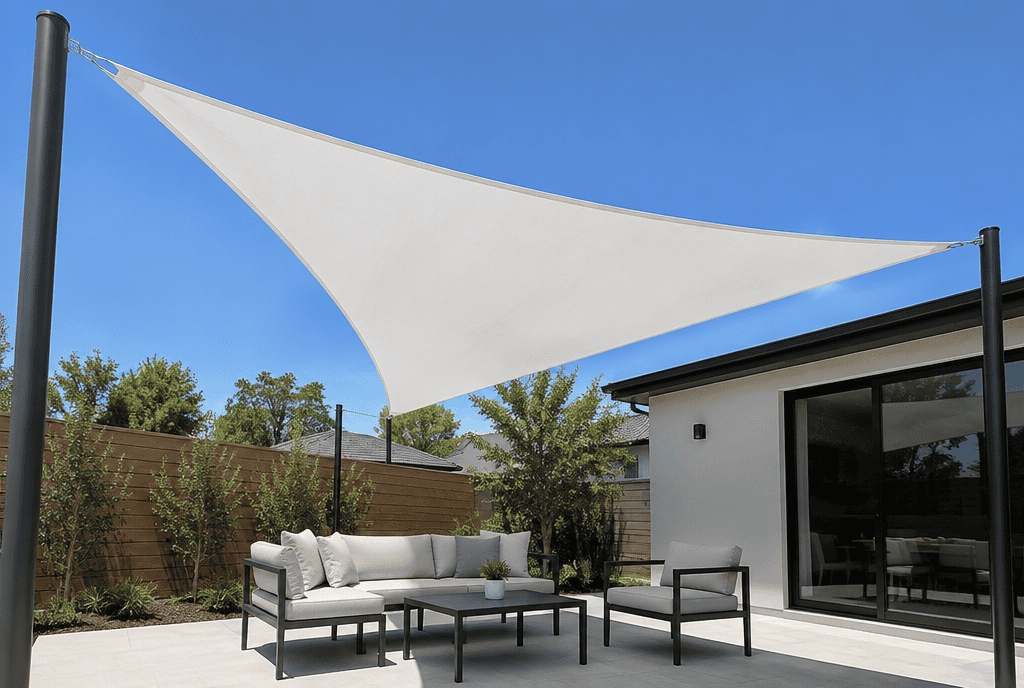
A shade sail is a piece of tensioned fabric stretched between anchor points — posts, a wall, or an existing structure — covering a fixed, usually much larger, area than a single umbrella. Properly installed and tensioned, a sail also handles wind meaningfully better than an umbrella, since the fabric is under tension rather than balanced on a single center pole. The tradeoff is permanence: sails require real anchor points and aren’t something you casually move or fold away for a storm the way you can an umbrella. A ready-to-hang option like the Coolaroo shade sail (90% UV block, breathable knit, pre-attached ropes) is the usual starting point for a first install.
Retractable Awnings: Adjustable Shade Without Losing the Sun
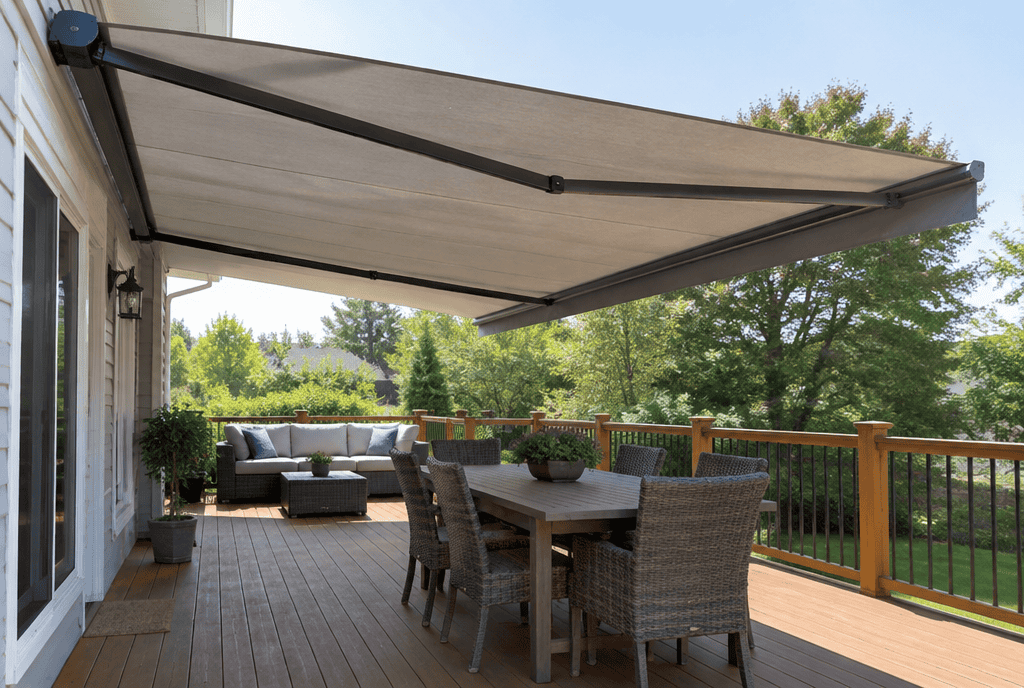
An awning mounts to your house or a freestanding frame and extends over the patio on demand — motorized or hand-cranked — then retracts when you want full sun or need to clear it before a storm. This flexibility is the category’s main selling point: you get shade exactly when you want it without a permanent fixed structure changing your patio’s look year-round. Installed cost typically runs $800–$4,000 depending on size, fabric, and whether it’s motorized, which puts it well above umbrellas and sails but below a full pergola build. At the DIY end, a motorized unit like the ALEKO 16 ft. motorized retractable awning with 10 ft. projection from Home Depot runs about $584 before installation.
Pergolas: The Permanent Upgrade
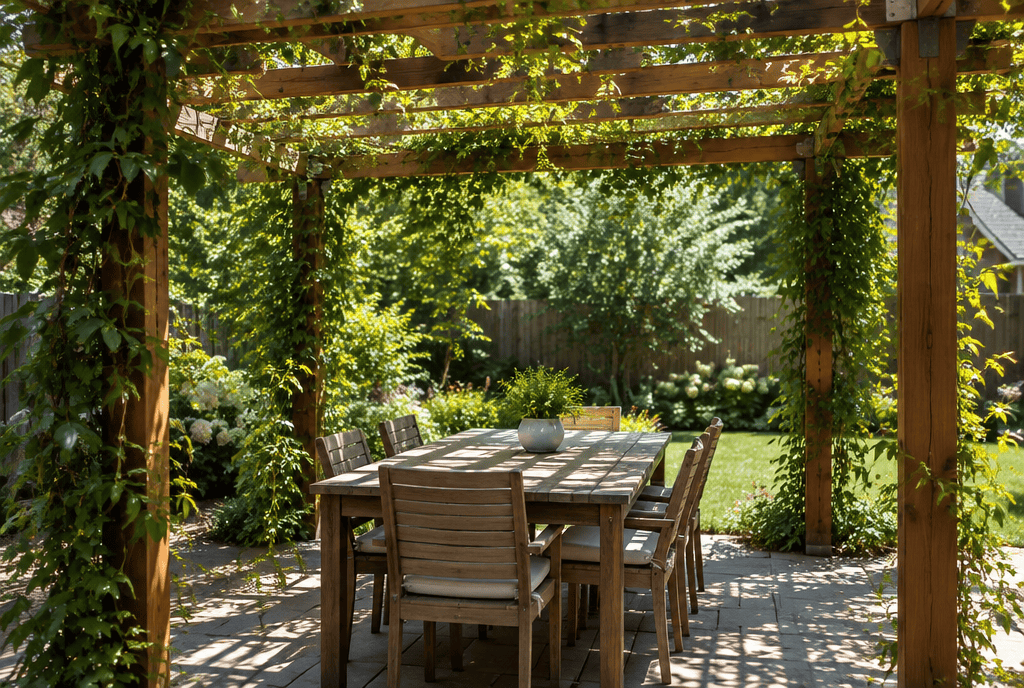
A pergola is a permanent open or semi-open framed structure, often topped with adjustable louvers, a fixed roof panel, or left open for climbing vines to fill in naturally over time. It’s the most expensive and most permanent option on this list, but it also functions as real architecture — adding defined outdoor living space and, in most markets, genuine property value in a way a $100 umbrella never will. A kit like the VEIKOUS 12 ft. x 10 ft. solid wood pergola from Wayfair (around $850) is the usual middle ground between a $100 umbrella and a custom build. If you’re deciding between a pergola and other permanent structures, see our pergola vs. gazebo vs. canopy comparison.
Gazebos, Cabanas & Screened Structures: Full-Coverage Options
Gazebos and cabanas step up from a pergola by adding a solid or fabric roof and often mesh screening on the sides, trading the open-air feel for full sun and bug protection. These make the most sense for households that want a dedicated outdoor room — for dining, lounging, or entertaining — rather than partial shade over an existing patio layout.
Natural Shade: Trees, Vines & Potted Plants
Don’t overlook living shade. A well-placed shade tree is the lowest-cost, longest-term option on this entire list, though it takes years to mature. In the meantime, fast-growing vines trained over a simple trellis or pergola frame, or a cluster of large potted plants positioned to block afternoon sun, can meaningfully cut heat on a patio within a single growing season — and they pair naturally with any of the structures above rather than competing with them.
Budget & Renter-Friendly Shade Ideas (No-Drill Solutions)
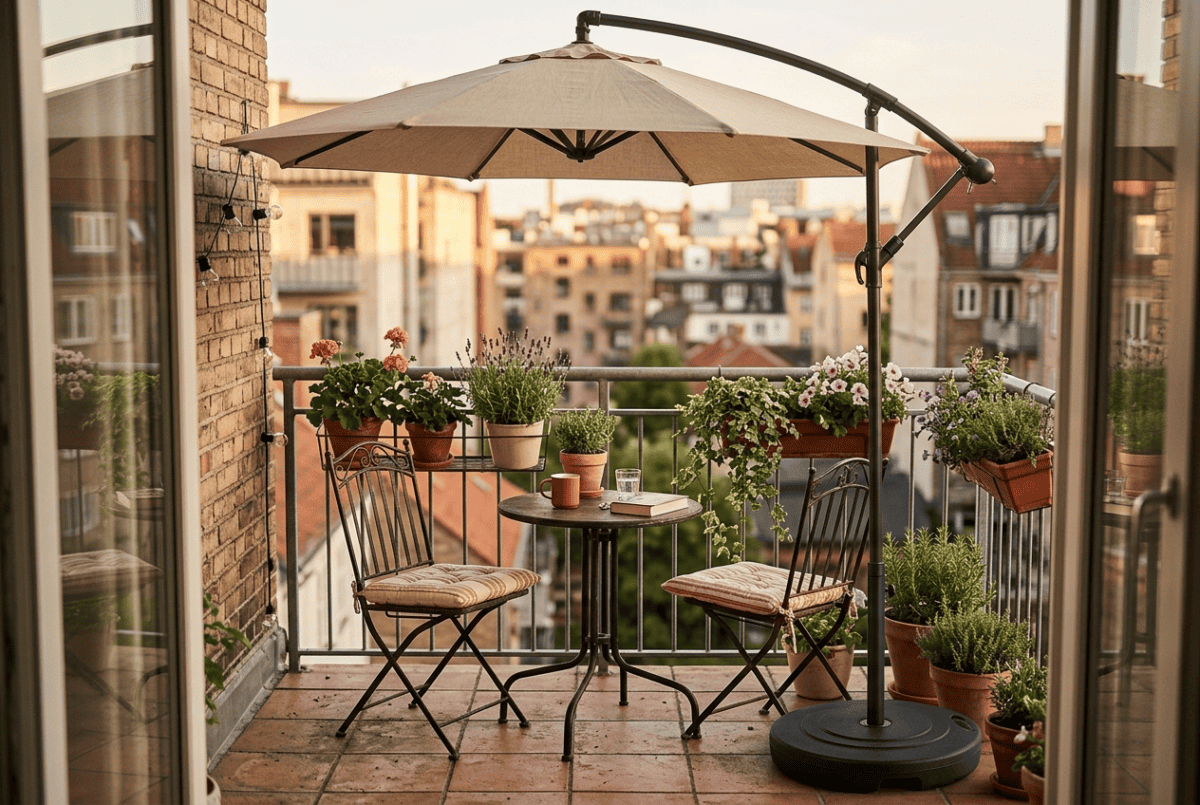
If you’re renting or simply don’t want to drill into railings, siding, or a shared structure, you still have real options: freestanding umbrellas with a weighted base (a US Weight 50 lb fillable umbrella base runs about $23) need no attachment at all, tension-mounted or clamp-on shade sails avoid permanent hardware, and pop-up canopies like the CROWN SHADES 10×10 one-push canopy deliver the most coverage per dollar of anything on this page with zero installation. This is consistently the most under-covered category in shade content — most guides assume you own the structure you’re shading.
Wind & Durability: How to Choose Shade That Survives Storms
Wind is what actually determines whether your shade purchase lasts one season or five. Umbrellas are the most wind-vulnerable — most should be closed above roughly 15 mph, and getting the base weight right matters enormously; see our wind rating breakdown and wind-resistant umbrellas by price range. Properly tensioned shade sails and fixed structures like awnings and pergolas handle far higher wind speeds by design, which is the real reason to upgrade beyond an umbrella if you live somewhere consistently breezy.
From experience: for a standard 9-foot round market umbrella standing on its own, get the base up to 85–90 lb and the flipping stops. Run the pole through a patio table and you can drop to roughly 45–50 lb, because the table is doing part of the work. Base picks are in the “Don’t Forget the Base” section of our Best Patio Umbrellas guide.
How to Combine Shade Types for All-Day Coverage
The sun’s angle changes throughout the day, so no single fixed shade source covers a patio from morning through evening without some gaps. Layering — a pergola or awning over the main seating area, paired with a movable umbrella that follows the afternoon sun, or vines trained to fill in a gap a hard structure leaves open — is how you actually get full-day coverage rather than shade only at noon. If heat itself (not just sun glare) is the bigger problem on your patio, our guide to 11 ways to keep your deck and patio cool covers surface and material choices alongside shade.
Explore More: Your Complete Patio Shade Guide Library
- Best Patio Umbrellas 2026
- What Is the Right Size Patio Umbrella?
- Cantilever vs. Standard Patio Umbrellas
- Square vs. Round Patio Umbrellas
- Rectangle & Oblong Patio Umbrellas
- How Much Wind Can Your Patio Umbrella Take?
- Wind-Resistant Umbrellas by Price Range
- Pergola vs. Gazebo vs. Canopy
- UV-Blocking Umbrella Material Guide
- 11 Ways to Keep Your Deck & Patio Cool
Frequently Asked Questions
What is the cheapest way to add shade to a patio?
A shade sail or pop-up canopy delivers the most coverage per dollar with no permanent installation required.
How do I stop my patio umbrella from flipping over in the wind?
Use a properly weighted base sized to your umbrella (see our base-weight guide) and close it once winds pick up past roughly 15 mph.
What’s the best shade option for renters or balconies?
Tension-mounted sails, clamp-on shades, and freestanding weighted umbrellas provide real shade without drilling into railings or walls.
Are shade sails or umbrellas better for a patio?
Sails cover a larger fixed area and handle wind better when properly anchored; umbrellas offer more flexibility and mobility for smaller zones.
How much does a retractable awning cost installed?
Most homeowners pay $800–$4,000 depending on size, fabric, and whether it’s manual or motorized.
Will Montgomery holds a degree in electro-mechanical engineering and runs his own business. That machine-design background is how he judges what is built well, what is overpriced, and what is safe before it gets recommended here — tested the hard way while building out two backyards on a budget.