

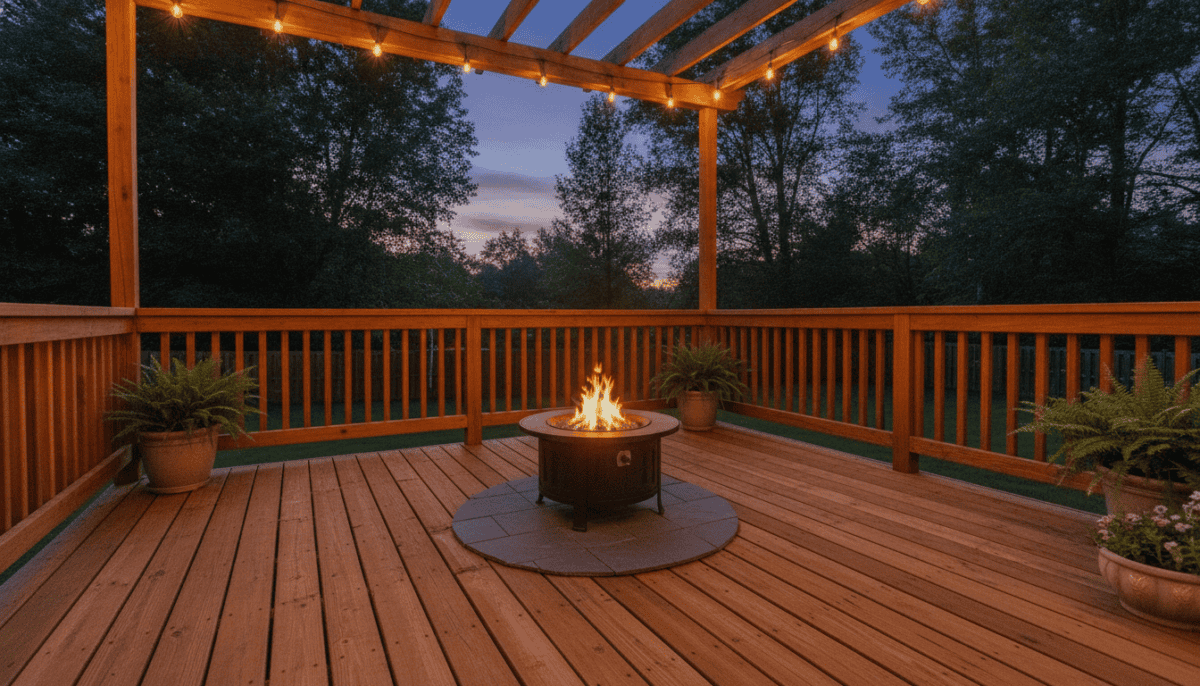
A fire pit is one of the fastest ways to turn a deck into the place everyone wants to be at night — but decks are also wood, and wood burns. Before you set one up, it’s worth five minutes to get the clearances right.
Quick Answer: Yes, a fire pit can be used safely on a wood deck, but never place it directly on the decking — always use a heat-resistant pad or non-combustible base underneath. Keep gas/propane fire pits at least 3 ft from railings, siding, and overhangs; wood-burning fire pits need considerably more, generally 10+ ft from any structure. Check your local fire code and HOA rules first — many restrict or ban open wood-burning fires on decks entirely.
Last Updated: August 2026 | Will Montgomery has spent years building out decks and patios for Outdoor Space Accents, and follows manufacturer clearance specs and local fire codes on every fire feature install.
Why Deck Placement Is Riskier Than Ground Placement
Two things make a deck different from a patio slab: the surface itself is combustible, and heat can build up underneath a fire pit where you can’t see it. Radiant heat from the bottom of a fire pit bowl can scorch or char decking boards for hours without an open flame ever touching the wood — by the time you notice discoloration, damage may already be done. That’s true whether the deck is natural wood or composite; composite decking softens and can deform under sustained heat even though it won’t catch fire as easily as real wood.
Clearance Requirements by Fire Pit Type
| Fire Pit Type | Clearance from Structure/Railing | Overhead Clearance | Deck-Safe? |
|---|---|---|---|
| Gas / propane fire pit | Minimum 3 ft (36″) | Keep clear of overhangs/umbrellas | Yes, with a heat pad underneath |
| Wood-burning fire pit | 10+ ft from the house; most manufacturers require 10-15 ft from any structure | 6-10 ft clear above | Generally not recommended on wood decks |
| Tabletop / portable propane | 3 ft from railings and siding | Clear of any overhang | Yes, on a heat-resistant surface |
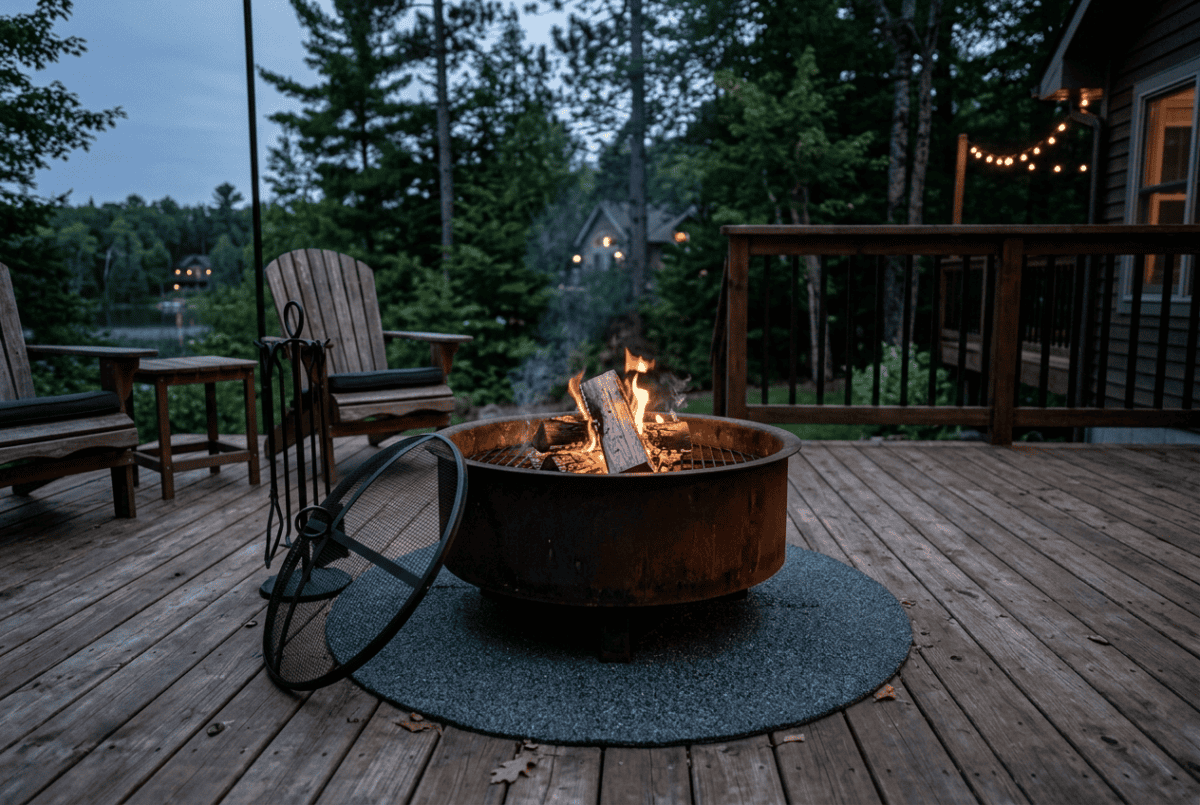
Gas and propane fire pits burn cleaner and cooler at the source than wood, which is why most deck-rated fire pit manufacturers only certify propane or natural gas models for direct deck use — always with a protective pad. Wood-burning fire pits throw embers, produce far more radiant heat, and are the type most local fire codes restrict or prohibit on wooden decks. If you want a wood-burning fire pit, plan on placing it on the ground, on pavers, or on a gravel/paver pad well away from the deck instead.
If deck safety is your main worry, a controlled-flame unit like the Ciays 28-inch propane fire pit table (50,000 BTU, CSA-listed) keeps the fire contained to the burner and lava rocks, making clearances much easier to respect.
What to Put Under the Fire Pit
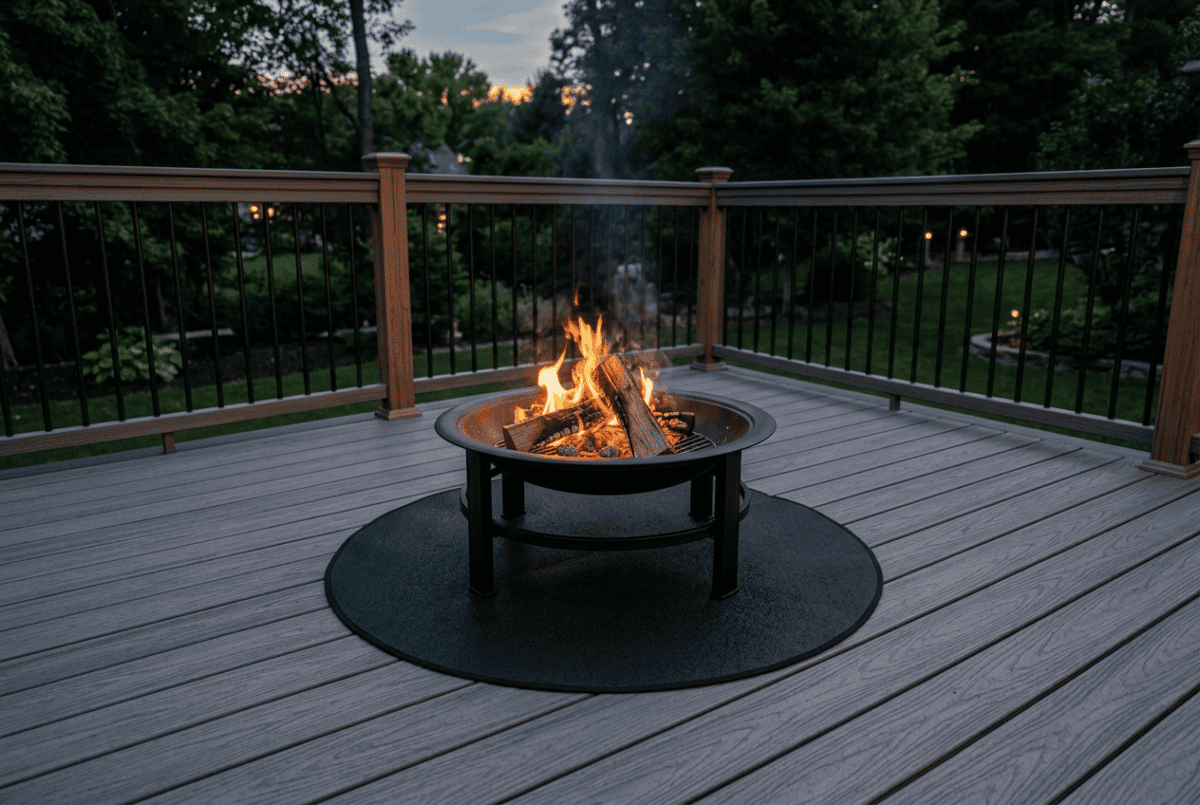
From experience: With my propane fire pit the flame is controlled and only heats the beads or rocks, so I run it with nothing underneath. For a wood-burning pit, though, I’d always lay a fireproof deck mat down before lighting.
For wood burners, a purpose-made pad like the DocSafe 40-inch four-layer fireproof fire pit mat is cheap insurance for your deck boards.
- A manufacturer-rated heat-resistant mat or pad — the single most important purchase if you’re deck-placing a fire pit. Look for one rated to at least the fire pit maker’s minimum temperature spec.
- Paver stones or a fire-resistant hearth pad as a lower-cost alternative, sized generously larger than the fire pit’s base.
- Never bare decking, outdoor rugs, or standard patio pavers not rated for direct heat — they can scorch, melt, or crack.
Additional Deck Safety Steps
- Check local codes and your HOA first. Many municipalities regulate or ban open-flame wood fires on decks; some require a specific distance from property lines regardless of fuel type.
- Keep a fire extinguisher or garden hose within reach any time the fire pit is lit.
- Clear overhead branches, umbrellas, and string lights from directly above the fire pit’s flame path.
- Never leave it unattended — wind can push embers or flame higher than expected, especially with gas fire pits set to a high flame.
- Let it fully cool before covering. A pit that looks “out” can still radiate enough heat to damage a cover or the deck beneath it for an hour or more.
Bottom line: A propane or natural gas fire pit can be used safely on a wood or composite deck with a rated heat pad and 3 ft of clearance from railings and siding. Skip wood-burning fire pits on decks entirely — put those on the ground, gravel, or pavers instead. Check your local fire code before buying either type.
Frequently Asked Questions
Can I put a fire pit directly on a composite deck?
No — even heat-resistant composite decking can scorch, discolor, or soften under sustained radiant heat. Always use a rated heat-resistant pad or fire pit table designed for deck use, regardless of the decking material.
How far does a fire pit need to be from a house?
Gas and propane fire pits generally need a minimum of 3 ft from siding, railings, and other combustible structures. Wood-burning fire pits need considerably more — commonly 10 ft or more from the house — due to higher heat output and the risk of flying embers.
Are wood-burning fire pits allowed on decks?
Usually not recommended, and often restricted by local fire code or HOA rules. The combination of high heat output, open embers, and a combustible deck surface makes wood-burning fire pits a better fit for ground-level placement on gravel or pavers.
Do I need a permit for a fire pit on my deck?
It depends on your city and HOA — some require a permit or inspection for any open-flame feature, gas line, or built-in fire feature, while portable propane fire pits are often exempt. Check with your local building or fire department before installing anything permanent.
What size heat pad do I need under a fire pit?
Size it generously larger than the fire pit’s base — as a rule of thumb, extend the pad at least 6-12 inches beyond the fire pit’s footprint on every side to catch radiant heat spread and any stray sparks.
Is a fire pit table safer than a standalone fire pit on a deck?
Often yes — most fire pit tables are propane-fueled, sit on their own legs (adding an air gap below the flame), and are specifically designed for patio and deck use, which makes them a more deck-friendly choice than an open wood-burning bowl.
Ready to shop? See our picks in Best Smokeless Fire Pits 2026 and our fire pit table buying guide for deck-friendly, propane-fueled options.
Will is an electro-mechanical engineer and hands-on homeowner who has placed and tested fire pits on his own deck and patio while expanding his outdoor space with his wife Kim, who hosts backyard events.