

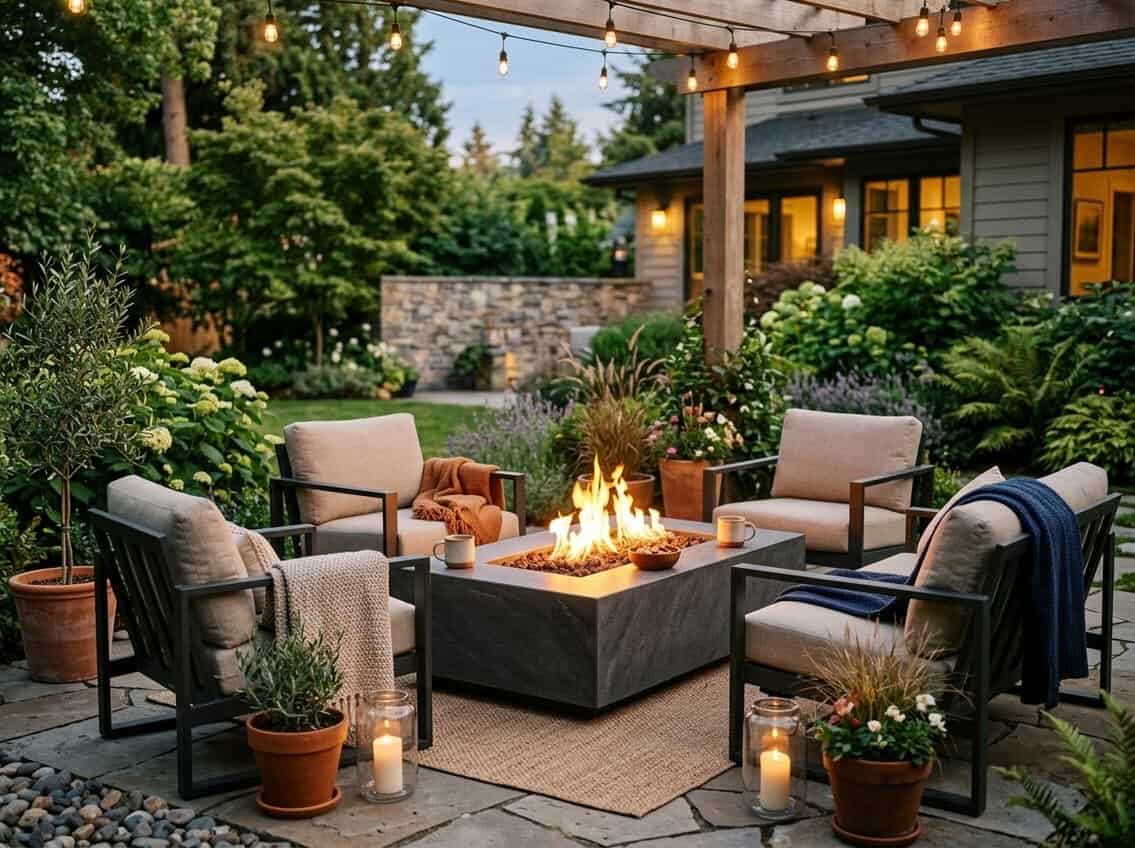
A fire pit table combines the warmth and ambiance of a traditional fire pit with the practical surface area of an outdoor table. These versatile pieces create a central gathering spot where friends and family can enjoy conversation, meals, and drinks while staying warm on cool evenings. Unlike standard fire pits that only provide heat, fire pit tables offer extra space for setting down plates, glasses, and snacks.
Last Updated: May 2026 | Will Montgomery has spent years evaluating outdoor living products for patios, decks, and backyard setups. The product picks and guidance below are based on hands-on research, BTU output, safety certifications, and real-world usability.

The right fire pit table depends on the size of the outdoor space, preferred fuel type, budget, and how the table will be used for entertaining. Buyers need to consider whether they want propane for easy operation, natural gas for permanent installation, or wood-burning for a traditional campfire experience. The table’s height, shape, and materials also play important roles in both function and style.
Fire pit tables have become a popular outdoor trend because they serve multiple purposes in one piece of furniture. Some models include lids that cover the fire bowl to create a full dining surface when the fire isn’t in use. This guide breaks down everything needed to choose the best fire pit table for any backyard or patio.
Best Fire Pit Tables by Budget
The Best Choice Products 52in Wicker Fire Pit Table (ASIN: B07RYJ465V) offers solid value at around $250-300 with 50,000 BTU output. This budget-friendly option works well for smaller patios and provides reliable heat without breaking the bank.
The Outland Living Series 403 44″ Fire Table (ASIN: B07SR7MMF9) stands out as the best overall mid-range choice at $350-450. With 50,000 BTU and quality construction, it balances performance and price for most buyers.
The BALI OUTDOORS Fire Pit Table delivers 60,000 BTU in the mid-range price category. This higher heat output makes it ideal for larger spaces or colder climates where extra warmth matters.
The JAMFLY 50000 BTU Fire Pit Table features a wide table edge that provides more surface area for drinks and food. The expanded tabletop makes it especially practical for entertaining groups.
American Fyre Designs represents the premium category at $800 and up. These high-end fire tables offer superior materials, craftsmanship, and design for buyers who want a statement piece that lasts for years.
Key Takeaways
- Fire pit tables combine heating and surface space, with fuel options including propane, natural gas, and wood-burning designs
- Size, shape, height, and BTU output determine how well a fire table fits the space and meets heating needs
- Material quality and safety features protect the investment and ensure comfortable outdoor gatherings year-round
Types of Fire Pit Tables: Outdoor, Propane, and Dining Designs
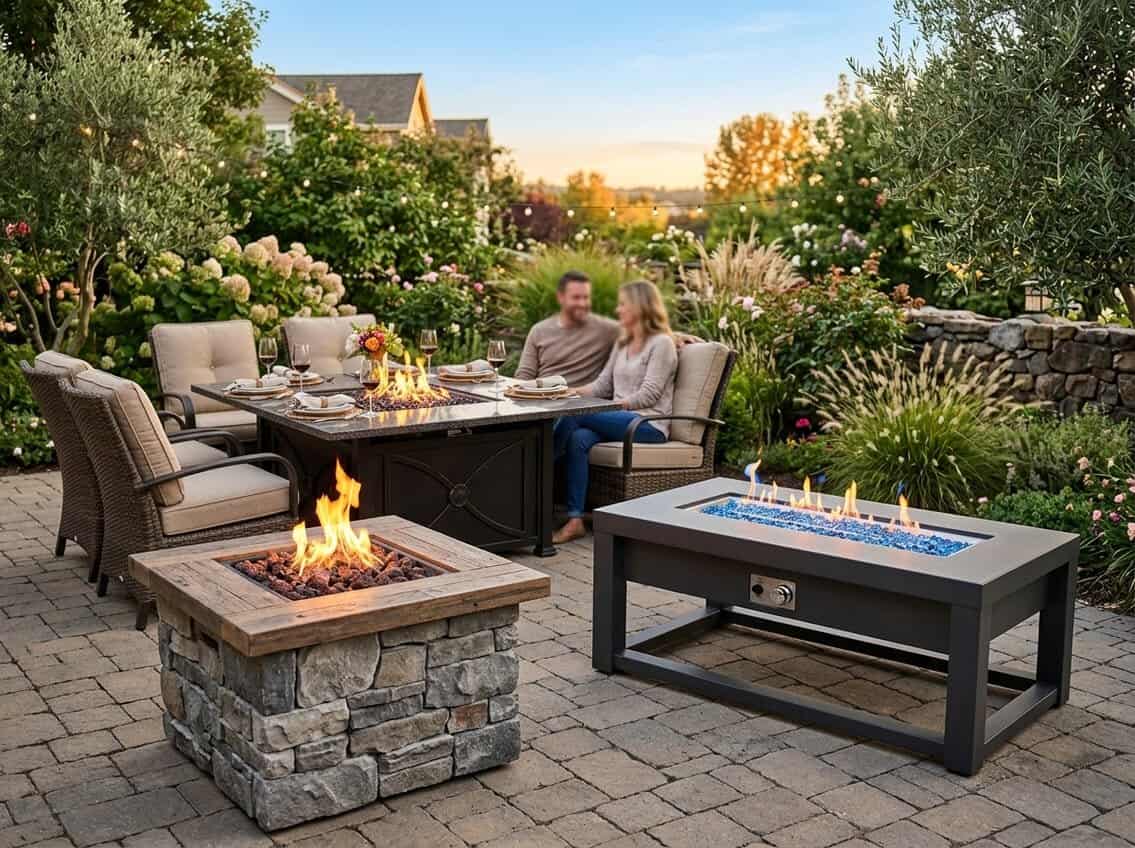
Fire pit tables come in several distinct categories based on their fuel source, design purpose, and placement. Each type offers unique benefits for different outdoor spaces and entertaining needs.
Fire Pit Dining Table Options
A fire pit dining table combines a full-size dining surface with a built-in fire feature at the center. These tables typically stand 28-30 inches tall to match standard dining chair height.
Most dining fire tables include a removable lid that covers the fire pit when not in use. This creates a complete tabletop for serving meals or playing games. The fire element sits in the middle, allowing guests to enjoy warmth while eating or socializing around the table.
Dining fire tables work best for homeowners who want a single piece of furniture that serves multiple purposes. They save space on smaller patios while providing both a fire pit and dining area. The surrounding table surface gives plenty of room for plates, drinks, and serving dishes during outdoor gatherings.
These models come in various shapes including rectangular, square, and round designs. Rectangular versions seat 6-8 people comfortably, while round tables typically accommodate 4-6 guests.
Outdoor Fire Table Styles
Outdoor fire tables range from coffee table height (16-20 inches) to counter height (34-36 inches). The style you choose depends on your seating arrangement and how you plan to use the space.
Coffee table height fire tables pair well with deep-seat patio furniture and Adirondack chairs. They create a casual lounge atmosphere perfect for relaxing conversations. Counter-height models work better with bar stools or standing gatherings.
Materials vary widely among outdoor styles:
- Concrete: Heavy and durable, handles weather well
- Metal: Lightweight aluminum or sturdy steel options
- Wicker/Rattan: Synthetic versions resist moisture
- Wood: Teak and other hardwoods add natural warmth
Modern fire tables feature clean lines and minimalist designs with glass or metal finishes. Traditional styles incorporate stone textures, ornate details, and earth-tone colors. Some models include glass tops that showcase the flame while providing a smooth surface.
Shape selection affects both function and aesthetics. Round tables encourage conversation by seating everyone equally, while rectangular designs fit better along deck railings or in narrow spaces.
Propane Fire Table Models
A propane fire table runs on a standard 20-pound propane tank hidden inside the base or connected separately. These models light with a simple knob turn and don’t require permanent installation.
Heat output for propane models measures in BTUs (British Thermal Units). Most range from 30,000 to 60,000 BTUs, with higher numbers producing more warmth.
Best Choice Products 52in Wicker Fire Pit Table delivers 50,000 BTU at a budget-friendly price point of $250-300. This model features synthetic wicker construction and fits well on medium-sized patios.
Outland Living Series 403 44″ Fire Table stands out as the best overall mid-range option at $350-450. It produces 50,000 BTU and includes a weather-resistant aluminum frame with clean, modern styling.
BALI OUTDOORS Fire Pit Table offers 60,000 BTU output in the mid-range category. The increased heat makes it ideal for cooler climates or larger gathering spaces.
JAMFLY 50000 BTU Fire Pit Table features an extra-wide table edge that provides more surface area for drinks and plates compared to standard models.
American Fyre Designs represents the premium tier at $800+. These handcrafted tables use high-grade materials and custom finishes for upscale outdoor living spaces.
Propane fire tables cost more to operate than natural gas but offer better portability. You can refill tanks at hardware stores or gas stations. Tank storage typically hides beneath a removable panel in the table base.
Choosing the Right Size, Shape, and Placement
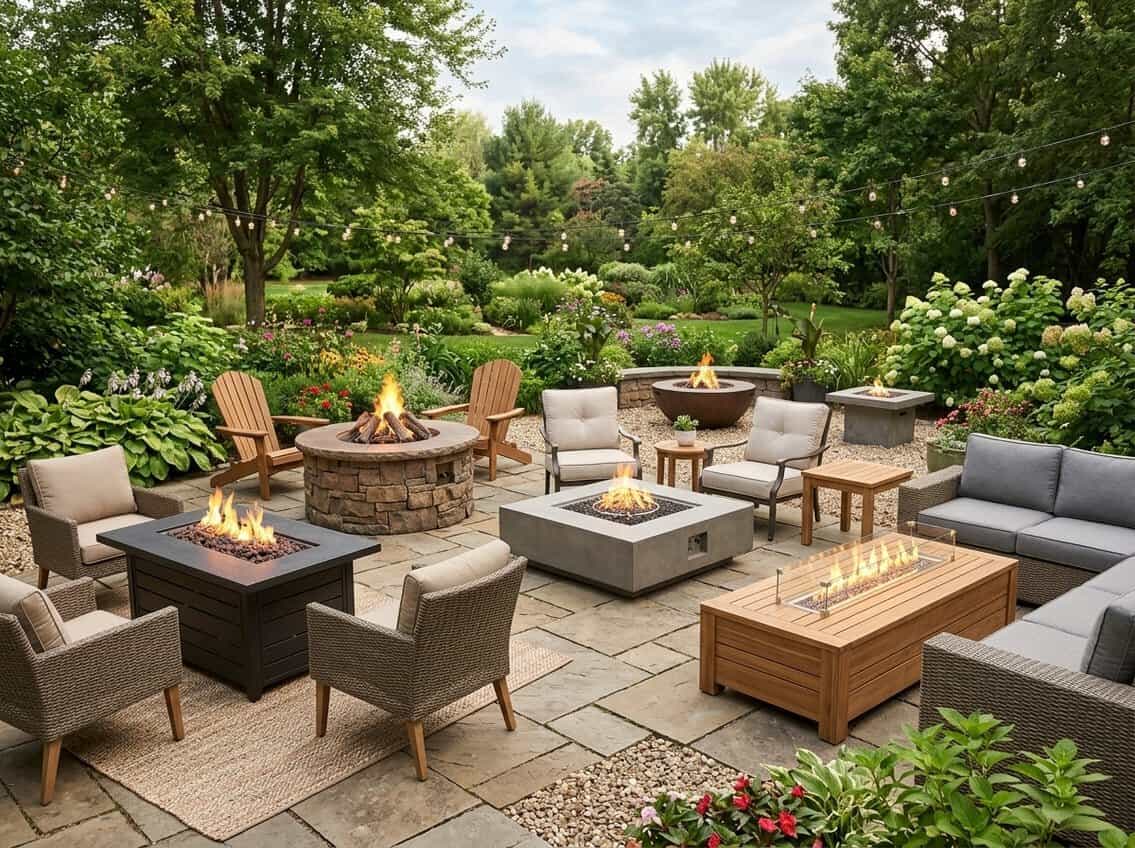
The right fire pit table fits your space without overcrowding, matches your patio layout, and maintains safe distances from structures. Start by measuring your available area, then pick a shape that works with your seating, and plan proper clearances.
Measuring Your Space and Seating Area
Before shopping for a fire pit table, measure the outdoor area where it will sit. A fire pit table needs at least 6 to 7 feet of clearance on all sides for safe and comfortable use.
For small patios under 100 square feet, look for tables between 32 and 42 inches. Mid-sized spaces from 100 to 200 square feet can handle 42 to 52 inch tables. Larger yards over 200 square feet work well with tables 52 inches and up.
Seating capacity matters too. A 36-inch table seats 4 people comfortably. A 44-inch table fits 4 to 6 guests. Tables 52 inches or larger accommodate 6 to 8 people.
Plan for 18 to 24 inches of space per person around the table. This gives everyone room to sit without feeling cramped. For a fire pit dining table setup, add extra space for chairs to slide in and out.
Selecting Table Shape: Round, Square, or Rectangle
The shape of your fire pit table affects how it fits your patio and how people gather around it. Each shape works better in different settings.
Round tables work best in open spaces and create equal distance from everyone to the flame. They typically range from 42 to 48 inches in diameter. Round shapes encourage conversation and fit well in casual, rustic settings.
Square tables measure 36 to 44 inches per side and suit modern, formal patios. They fit neatly into corners and align with geometric patio layouts. Square and rectangular fire pit tables provide more tabletop surface area for drinks and plates.
Rectangular tables range from 48 to 72 inches long and work well on narrow patios or alongside long seating arrangements. They seat more guests and double as an outdoor fire table for dining.
Match the shape to your existing furniture. Round tables pair with curved seating. Square and rectangular tables align with straight bench seating or sectional sofas.
Clearance and Safety Considerations
Safety clearances prevent accidents and meet fire codes. Keep the fire pit table at least 10 feet from structures, overhangs, fences, and trees. Gas models need a minimum of 5 to 10 feet from buildings.
Place the table only on non-flammable surfaces like concrete, pavers, stone, or gravel. Avoid wood decks unless the manufacturer approves deck use with proper protection underneath.
Leave walking paths around the table. People need room to move without getting too close to the flame. A 3-foot walkway around all sides works for most setups.
Check local fire codes before installation. Some areas require permits for permanent installations or have restrictions on outdoor fire table use during dry seasons.
Gas fire pit tables need proper ventilation when installed in covered areas. Built-in models require at least 18 square inches of ventilation on opposite sides. Never use a fire pit table in a fully enclosed space.
Fuel Sources: Propane, Natural Gas, Wood, and Alternatives
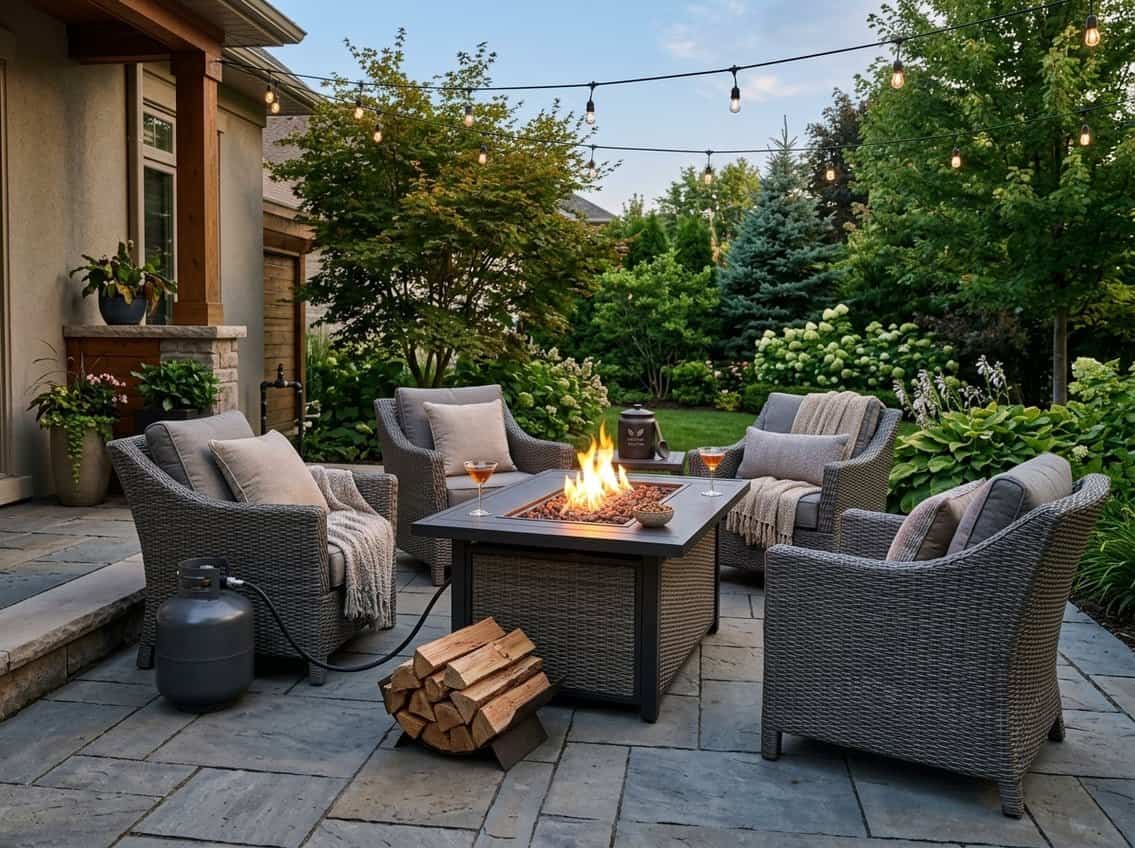
Choosing the right fuel type affects your fire pit table’s convenience, operating costs, and maintenance requirements. Propane tanks offer portability with costs around $2-4 per hour, natural gas provides unlimited fuel through home lines at $1-3 per hour, and wood delivers traditional ambiance with $3-6 hourly costs.
Pros and Cons of Propane Fire Tables
Propane fire tables deliver excellent portability since they don’t require permanent installation. Users can move them around the patio or store them during winter months. The Best Choice Products 52in Wicker Fire Pit Table produces 50,000 BTU and costs around $250-300, making it an affordable entry point.
Standard 20-pound propane tanks cost $15-25 to refill and provide 8-12 hours of burn time. The Outland Living Series 403 44″ Fire Table offers 50,000 BTU output with a reliable ignition system at $350-450.
However, propane struggles in temperatures below 20°F. Tank pressure drops significantly in cold weather, reducing heat output by up to 50% at 0°F. The BALI OUTDOORS Fire Pit Table addresses this with 60,000 BTU capacity for better cold weather performance.
The JAMFLY 50000 BTU Fire Pit Table features a wide table edge for drinks and plates. This design combines heating and entertaining functions in one piece.
Comparing Natural Gas and Wood-Burning Tables
Natural gas fire tables require professional installation and permanent gas line connection. Installation costs range from $1,200-$5,000 including permits and labor. Properties without utility gas service need propane instead.
Once installed, natural gas provides unlimited fuel without tank refills. Operating costs stay consistent at $1-3 per hour regardless of weather conditions. Users simply turn a dial for instant flame control.
Wood-burning tables cost $500-$1,900 upfront with no installation needed. They create authentic crackling sounds and smoky aromas that gas alternatives cannot replicate.
Wood requires constant attention to maintain flames. Users must add logs every 45-90 minutes and clean ash after each use. Wind speeds above 10 mph scatter sparks up to 100 feet, creating fire hazards. Storage space for firewood adds another requirement.
Other Fuel Options for Outdoor Use
Gel fuel and bioethanol offer flameless alternatives for tabletop fire features. Individual gel cans cost $3-6 and burn for 2-3 hours, making them expensive at $8-15 per hour. Heat output reaches only 3,000-13,000 BTU, providing ambiance rather than warmth.
Wood pellets burn cleaner than traditional logs with more consistent heat. Pellet fire pits use compressed sawdust that produces less smoke and ash. Users pour pellets into a hopper for easier fuel management than splitting and stacking logs.
American Fyre Designs creates premium fire tables starting at $800 with custom fuel configurations. These high-end options accommodate natural gas, propane, or specialized burner systems.
Bioethanol provides eco-friendly combustion without smoke or emissions. These systems work well in covered patios where ventilation concerns limit other fuel types. Cost per hour exceeds propane significantly while heat output remains minimal.
Materials and Construction for Durability
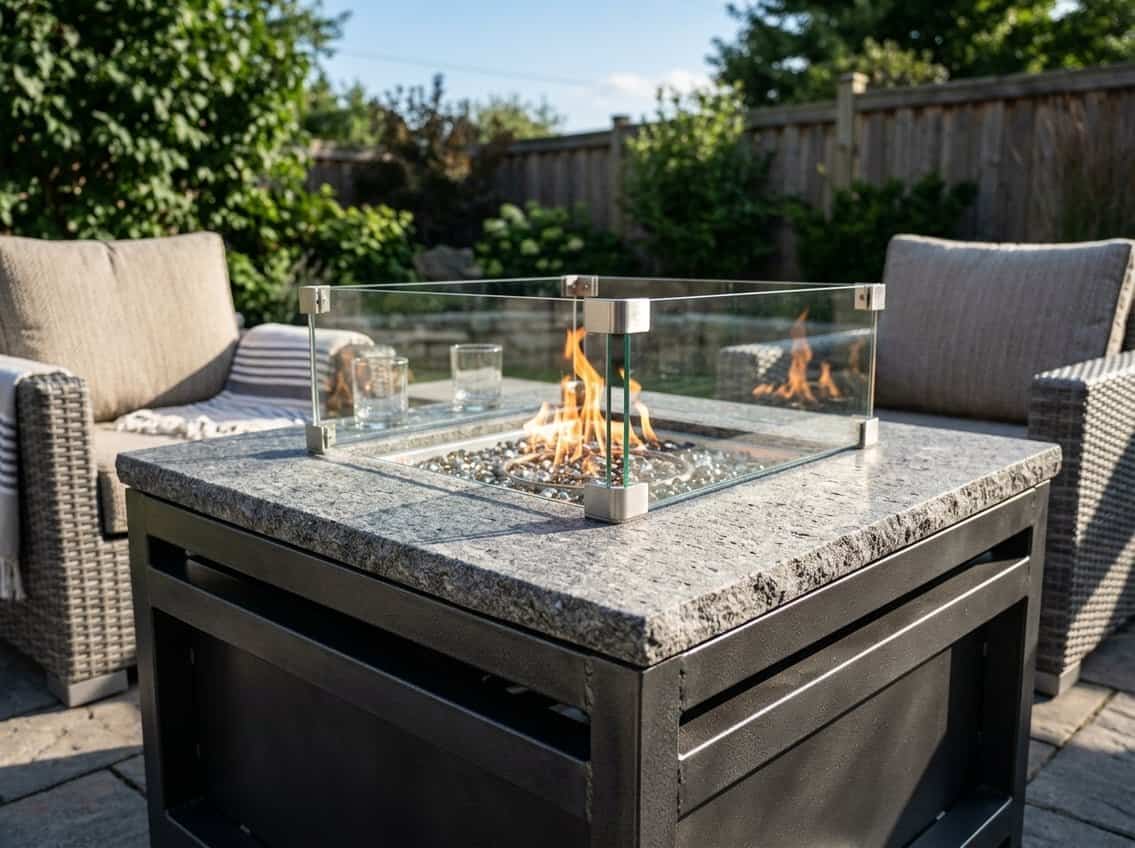
The materials used in an outdoor fire table determine how long it lasts and how much care it needs. Heat resistance, weather durability, and structural strength all depend on choosing the right construction materials for frames, tabletops, and burner components.
Metal and Aluminum Fire Tables
Steel frames offer the strongest support for propane fire tables but require protective coatings to prevent rust. Powder-coated steel provides excellent durability at $200-300 for a standard frame and can last 15-20 years with proper care. Stainless steel costs more but resists corrosion better in humid or coastal environments.
Aluminum frames weigh about one-third less than steel while naturally resisting rust. This makes aluminum fire tables easier to move and maintain. The material handles temperatures up to 1,200°F without warping. Many manufacturers use aluminum for both frames and decorative panels because it holds up well in rain and snow without needing extra protective finishes.
Cast aluminum allows for more detailed designs than welded steel. The casting process creates seamless construction that eliminates weak points where water might collect and cause damage.
Stone, Concrete, and Composite Surfaces
Natural stone surrounds like granite and bluestone handle extreme heat without cracking or discoloring. Granite absorbs only 0.2% water and withstands temperatures up to 2,000°F, making it one of the most durable options. These materials cost $10-20 per square foot but last decades with minimal maintenance.
Concrete offers a budget-friendly alternative at $2-3 per square foot for the raw material. Fiber-reinforced concrete prevents cracking from temperature changes and can be finished to look like natural stone. The material needs to cure for 28 days and should be sealed to resist moisture absorption.
Composite materials blend recycled plastics with wood fibers to create weather-resistant surfaces. They cost around $6 per square foot and resist warping better than natural wood. Composites work well for decorative edges and non-heated areas but should not be placed directly adjacent to flames.
Weather Resistance and Maintenance
Metal fire tables need protective finishes to survive outdoor conditions. Galvanized steel with powder coating resists rust for 10-15 years in most climates. Stainless steel grades 304 and 316 provide the best protection against salt air and humidity without additional coatings.
Stone surfaces require annual sealing with penetrating sealers to prevent water absorption and staining. Apply the sealer at a 1:1 mix ratio, brush it on, wipe excess, and allow 24 hours to cure. Unsealed limestone and sandstone can absorb up to 5% water and may crack during freeze-thaw cycles.
Aluminum needs no special treatment but benefits from occasional washing with mild soap. Check burner components yearly for debris buildup. Store protective covers on tables during winter months to extend the life of all materials and prevent water from pooling around gas connections.
Table Heights and How They Influence Outdoor Gatherings
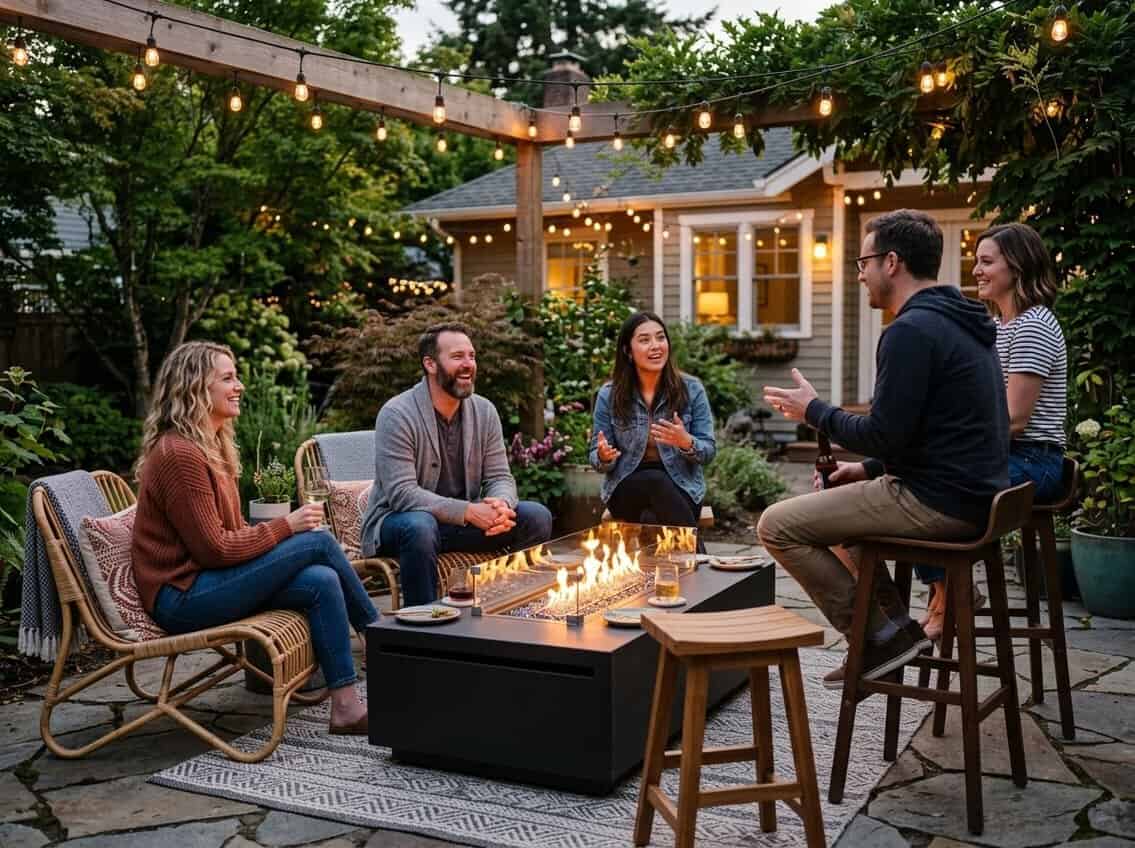
The height of a fire pit table affects comfort, seating options, and how people interact around the fire. Different heights work better for specific activities, from casual lounging to formal dining.
Chat, Dining, Coffee, and Bar Heights
Fire pit tables come in four main height categories. Each serves a different purpose and creates a distinct atmosphere.
Chat height tables measure 12-18 inches tall. They sit low to the ground and work well with deep lounge chairs or outdoor sofas. People using these tables typically relax in a reclined position, making them ideal for evening conversations.
Coffee height tables range from 18-24 inches. They pair with standard outdoor seating and Adirondack chairs. This height keeps the flames visible while maintaining a casual feel.
Dining height tables stand 24-32 inches tall. They match standard outdoor seating heights and allow guests to eat comfortably. Most outdoor fire table models fall into this category because of their versatility.
Bar height tables reach 35-42 inches. They encourage standing and mingling at cocktail parties. These tables pair with bar stools and create a more formal entertainment space.
The height you choose changes how guests use the space. Lower tables promote relaxation while higher tables support dining and socializing.
Best Height for Fire Pit Dining Tables
A fire pit dining table should measure 28-30 inches from the ground to the tabletop. This height allows standard dining chairs to slide underneath while keeping the fire at a safe, comfortable distance from plates and guests.
The flame height matters too. The fire bowl rim should sit 4-6 inches below the table surface. This design keeps flames contained while providing warmth without smoke blowing across food.
Chair seats should sit 17-19 inches off the ground when paired with a 28-30 inch dining table. This creates the standard 10-12 inch drop between seat and tabletop that makes eating comfortable.
Some fire pit dining tables include a wider rim around the fire bowl. Models like the JAMFLY 50000 BTU Fire Pit Table feature an extra-wide table edge that provides more space for plates and glasses. This design works better for actual dining than narrow-rimmed alternatives.
Premium options like American Fyre Designs tables offer custom height specifications. These tables start around $800 but allow buyers to match exact patio dimensions.
Pairing Table Height With Seating
Matching seating to table height creates comfortable outdoor gatherings. The seat should sit 10-12 inches below the table surface for dining comfort.
For chat height tables (12-18 inches): Use low lounge chairs, floor cushions, or built-in seating. Deep sofas with seat heights of 14-16 inches work well. The Best Choice Products 52in Wicker Fire Pit Table (50000 BTU) sits at chat height and pairs with their matching wicker chairs.
For dining height tables (24-32 inches): Standard patio chairs with 17-19 inch seat heights provide proper support. The Outland Living Series 403 44″ Fire Table measures 29 inches tall and works with most outdoor dining sets. Its 50000 BTU output heats a full dining group.
For bar height tables (35-42 inches): Bar stools with 24-30 inch seat heights fit correctly. Counter-height stools work for 35-36 inch tables while full bar stools suit 40-42 inch models.
The BALI OUTDOORS Fire Pit Table offers 60000 BTU output at dining height. It accommodates six standard chairs comfortably.
Measure existing seating before buying a table. Bringing chairs too close to flames creates safety hazards while placing them too far reduces heat benefits.
Key Features and Accessories to Consider
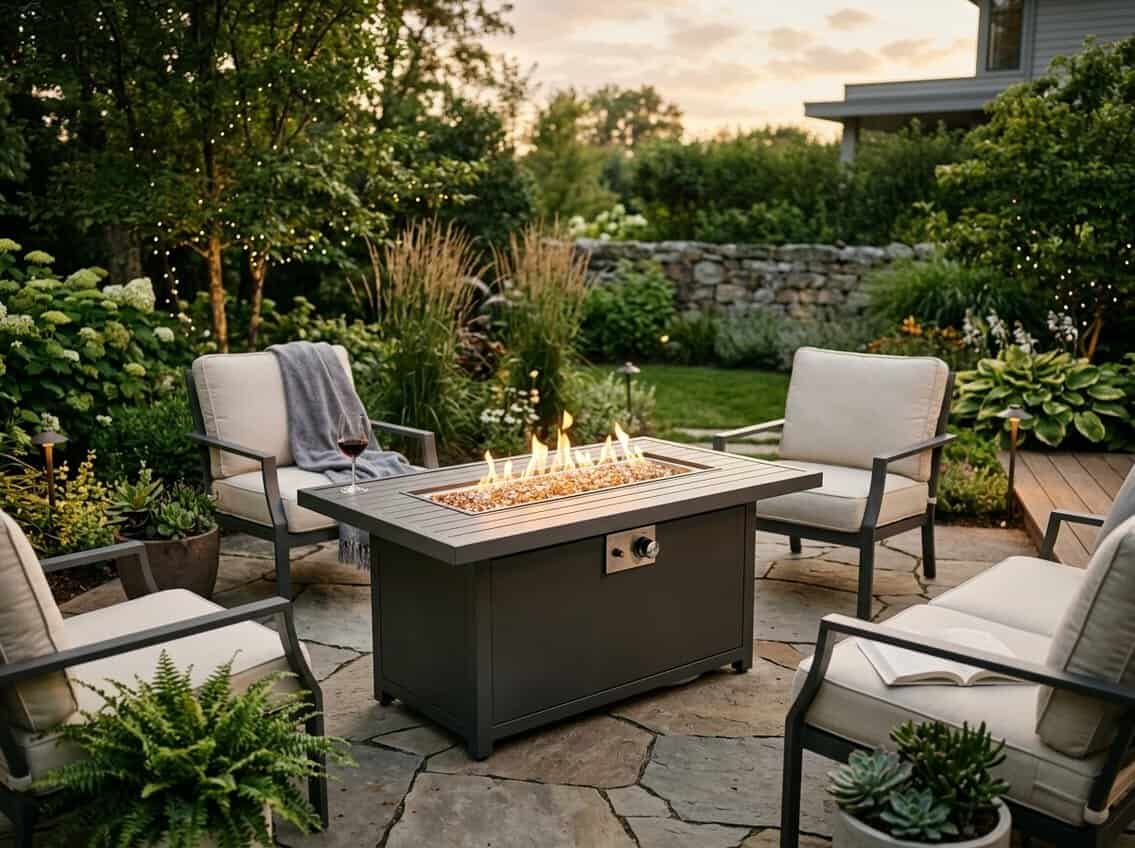
The right features make an outdoor fire table easier to use and safer for your family. Tank storage, ignition type, and protective accessories affect both convenience and long-term satisfaction.
Ignition Systems and Flame Control
Electronic ignition with push-button start offers the most reliable and convenient way to light a propane fire table. Users press a button and the flame ignites instantly without fumbling with matches or lighters.
Match-lit systems require a long lighter to reach the burner. They cost less but demand more effort each time someone wants to start the fire. These systems have fewer mechanical parts that can fail over time.
Premium models include:
- Remote control ignition
- Variable flame height adjustment
- Built-in timers for automatic shutoff
Remote-controlled systems let users light and adjust the flame from their seat. Flame control knobs allow adjustment from low ambiance to high heat output. Most residential models produce 40,000 to 60,000 BTUs, with the higher end providing warmth for a 10-foot seating radius.
Glass Wind Guards and Safety Covers
Tempered glass wind guards protect the flame from breezes while creating a safety barrier between people and the fire. The panels sit around the burner edge and prevent sparks from escaping.
Most propane fire tables include a metal or composite cover lid that converts the unit into a standard table when not in use. This protects the burner from weather damage and provides extra surface space for serving food or placing decorations.
Essential safety features:
- Tempered glass panels: Withstand high heat without cracking
- Protective covers: Shield burner components from rain and debris
- Non-slip surfaces: Prevent drinks from sliding toward flame
The covers double as table surfaces when the fire is off. Glass guards require periodic cleaning to remove soot buildup and maintain a clear view of the flame.
Hidden Propane Tank Storage
Standard 20-pound propane tanks slide into a compartment beneath the table surface on most residential models. This concealed storage keeps the tank out of sight and protects it from weather exposure.
Access doors or panels swing open for easy tank replacement. A single 20-pound tank provides 8 to 12 hours of burn time at medium flame settings. The hidden design maintains a clean appearance compared to visible tank setups.
Some tables include wheels or casters for moving the unit with the tank installed. Check that the access door opens wide enough for comfortable tank insertion. Measure your tank dimensions before purchase to confirm compatibility with the storage compartment size.
Maximizing Comfort and Safety in Your Outdoor Space
A fire pit table transforms outdoor living when properly sized for heat output and positioned safely. Regular maintenance extends the life of any outdoor fire table while ensuring it remains safe for year-round enjoyment.
Optimal BTU Ratings and Heat Output
BTU ratings measure the heat a fire pit produces, directly affecting comfort levels around the table. Most fire pit tables range from 40,000 to 65,000 BTUs, with higher numbers generating more warmth.
Speaking from experience: fire pit tables set the mood like nothing else — drinks, friends, good stories — but on a genuinely cold night, you’re still wearing your coat. The heat is real, just not coat-replacing. Plan accordingly and you’ll have a great evening regardless.
50,000 BTUs works well for spaces up to 150 square feet. This output keeps 4-6 people comfortable on cool evenings without overwhelming smaller patios. The Best Choice Products 52in Wicker Fire Pit Table delivers 50,000 BTUs at an affordable price point around $250-300, making it an excellent budget pick for first-time buyers.
60,000 BTUs suits larger gatherings of 6-8 people. The BALI OUTDOORS Fire Pit Table operates at this level, providing ample warmth for bigger seating areas. Tables with this output work better for open spaces where heat disperses more quickly.
40,000 BTUs suffices for intimate settings or warmer climates. Lower output reduces propane consumption while still creating ambiance. Higher ratings become necessary in colder regions or windy locations where heat escapes faster.
The JAMFLY 50000 BTU Fire Pit Table features a wide table edge that allows guests to place drinks and plates while staying warm. For premium installations, American Fyre Designs offers models starting at $800 with professional-grade burners and custom BTU options.
Fire Table Placement Tips for Safety
Proper placement of a fire pit dining table prevents accidents and protects property. Position tables at least 10 feet away from structures, overhanging branches, and outdoor furniture. This clearance zone reduces fire hazards and allows heat to dissipate safely.
Check local regulations before installation. Many municipalities require permits for permanent fire features or restrict open flames during dry seasons. HOA rules may also limit fire pit placement or fuel types.
Place tables on non-combustible surfaces like concrete, stone, or brick. Avoid wooden decks unless using a protective pad rated for high temperatures. Level ground prevents tipping and ensures stable operation of gas connections.
The Outland Living Series 403 44″ Fire Table works well for compact spaces at $350-450, with its smaller footprint fitting patios with limited clearance. Its 50,000 BTU output balances safety with performance, earning it recognition as a best overall mid-range option.
Wind direction matters for guest comfort. Position seating so prevailing winds blow smoke away from gathering areas. Adjustable flame controls help manage heat output based on weather conditions.
Year-Round Use and Maintenance Advice
Regular maintenance extends the lifespan of fire pit tables and maintains safe operation. Clean burners monthly during active use to prevent clogs from debris, insects, or corrosion. Remove the fire glass or lava rocks and wipe down the burner with a dry cloth.
Winterization Steps:
- Disconnect propane tanks and store them upright in a ventilated area
- Cover the table with a waterproof, UV-resistant cover
- Drain any water from gas lines to prevent freezing damage
- Apply protective sealant to metal components
Inspect gas connections before each season. Spray soapy water on fittings while the gas flows—bubbles indicate leaks that need immediate repair. Replace worn hoses or damaged igniters to maintain reliable operation.
Fire glass and lava rocks accumulate soot over time. Rinse them with water and mild soap every 3-4 months, then let them dry completely before replacing. This cleaning prevents buildup that reduces flame quality.
Store cushions and fabric items indoors during winter. Moisture and temperature swings degrade outdoor fabrics faster than the fire table itself. Clean table surfaces with appropriate cleaners based on material—stainless steel needs different care than wicker or stone.
Frequently Asked Questions
Buyers often ask about fuel types, size requirements, safety rules, and material durability before choosing a fire pit table. Budget concerns and whether these tables provide better value than standalone fire pits also come up frequently.
What features should I prioritize when choosing a fire pit table for my outdoor space?
The most important features depend on how the table will be used. Buyers who want year-round warmth need higher BTU output, while those focused on ambiance can choose lower heat levels.
Ignition type matters for convenience. Electronic or push-button ignition starts the flame quickly without matches or lighters. Manual ignition costs less but requires more effort.
Material quality affects how long the table lasts outdoors. Aluminum frames resist rust and work well in coastal areas. Steel frames provide strength but need powder coating to prevent corrosion.
A wind guard keeps the flame steady in breezy conditions. This feature helps the fire stay lit and protects guests from sudden flare-ups.
Storage space for propane tanks matters if the table runs on LP fuel. Hidden compartments keep tanks out of sight and make the setup look cleaner.
Should I choose propane, natural gas, or wood-burning for a fire pit table?
Propane offers the most flexibility because it does not require a permanent gas line. Tanks store inside or under the table and typically burn for 8 to 12 hours before needing a refill.
Natural gas connects to a home’s gas line and provides unlimited fuel without tank changes. This option costs less per hour of use but requires professional installation. The table must stay near the gas connection, which limits placement options.
Wood-burning tables create a traditional campfire experience with crackling sounds and higher heat. They produce smoke and ash, which means more cleanup. Local fire codes may restrict wood burning in some areas.
Bioethanol fuel burns clean without smoke or ash but produces less heat than gas or wood. This option works well on balconies or covered patios where ventilation is limited.
How do I determine the right size and heat output (BTUs) for a fire pit table?
Measure the outdoor space and leave at least 3 feet of clearance around all sides of the table. Each chair needs 18 to 24 inches of space for comfortable seating.
Small patios under 150 square feet work well with 20,000 to 35,000 BTUs. Medium spaces between 150 and 300 square feet need 40,000 to 60,000 BTU output. Large open areas over 300 square feet require 65,000 to 125,000 BTUs for adequate warmth.
Wind reduces how warm the fire feels even with high BTU ratings. A glass wind guard helps protect the flame and direct heat toward seating areas.
High altitude lowers combustion strength because of thinner air. Buyers in mountain regions may need 10 to 20 percent more BTUs than recommended for their space size.
Table shape affects how many people can sit comfortably. Round tables encourage conversation in small groups. Rectangular designs provide more surface area and work better with sectional seating.
What safety considerations matter most for fire pit tables used on patios or decks?
Fire pit tables need placement on flat, non-flammable surfaces. Wood and composite decks require a heat-resistant pad underneath to prevent scorching or melting.
Clearance rules protect people and structures from heat damage. Keep at least 6 feet of space around the table and 8 feet of open space above it. No trees, umbrellas, or roof overhangs should be within this zone.
An automatic shutoff feature stops gas flow if the flame goes out unexpectedly. This prevents gas buildup and potential ignition hazards.
Children and pets need supervision around any fire feature. A 3-foot safety zone around the table helps prevent accidental contact with hot surfaces.
Propane tanks must be stored upright and away from direct heat sources. Check connections regularly for leaks using soapy water, which creates bubbles if gas escapes.
Local fire codes and homeowners association rules may limit fire pit use or require permits. Check regulations before purchasing to avoid violations or fines.
Which materials and finishes hold up best outdoors and resist rust or weather damage?
Aluminum frames resist rust naturally and stay lightweight for easy movement. This material works best in humid or coastal environments where salt air accelerates corrosion.
Powder-coated steel provides strong structural support and comes in many color options. The coating protects against moisture but can chip over time with heavy use.
Stainless steel burners handle high heat and moisture exposure better than other metals. Brass burners cost more but offer superior corrosion resistance and precise flame control.
Resin wicker woven over metal frames adds texture without requiring much maintenance. This material tolerates weather changes and resists fading from sun exposure.
Concrete and stone tables feel solid and blend with natural landscapes. These materials weigh more and cannot move easily but provide excellent stability.
Tempered glass tabletops clean easily and create a polished appearance. Stone and tile surfaces look more natural but may stain without proper sealing.
Weather-resistant covers protect fire pit tables when not in use. UV-resistant fabric prevents fading and extends the life of all materials.
Are fire pit tables worth the cost compared with a standalone fire pit or patio heater?
Fire pit tables combine heat, lighting, and a functional surface in one piece of furniture. This design saves space compared to placing separate items around a patio.
Standalone fire pits cost less upfront but lack table surfaces for drinks or food. Guests need to use side tables or hold items throughout the evening.
Patio heaters provide focused warmth but no ambiance from visible flames. They also lack surfaces for setting down plates or glasses.
The Best Choice Products 52in Wicker Fire Pit Table offers 50,000 BTU output at an affordable price point between $250 and $300. This budget option includes a steel burner and resin wicker frame with a propane tank compartment.
The Outland Living Series 403 44″ Fire Table provides 50,000 BTUs with a
Will Montgomery brings an engineer’s eye and hands-on experience with fire pits to this buying guide — fuel, heat output, and build that matter — so you choose a fire pit table that lasts and performs.