
Outdoor rugs can transform a plain patio or deck into a welcoming space, but choosing the wrong one often leads to fading, mildew, or quick wear. The best outdoor rugs use polypropylene or other synthetic materials that resist UV damage and moisture while fitting properly under furniture and allowing airflow beneath. Most outdoor rugs last between three to seven years depending on climate and care.
Last Updated: May 2026 | Will Montgomery has spent years reviewing outdoor living products for patios, decks, and backyard spaces. The guidance below is based on material durability, weather performance, and real-world usability across different climates.
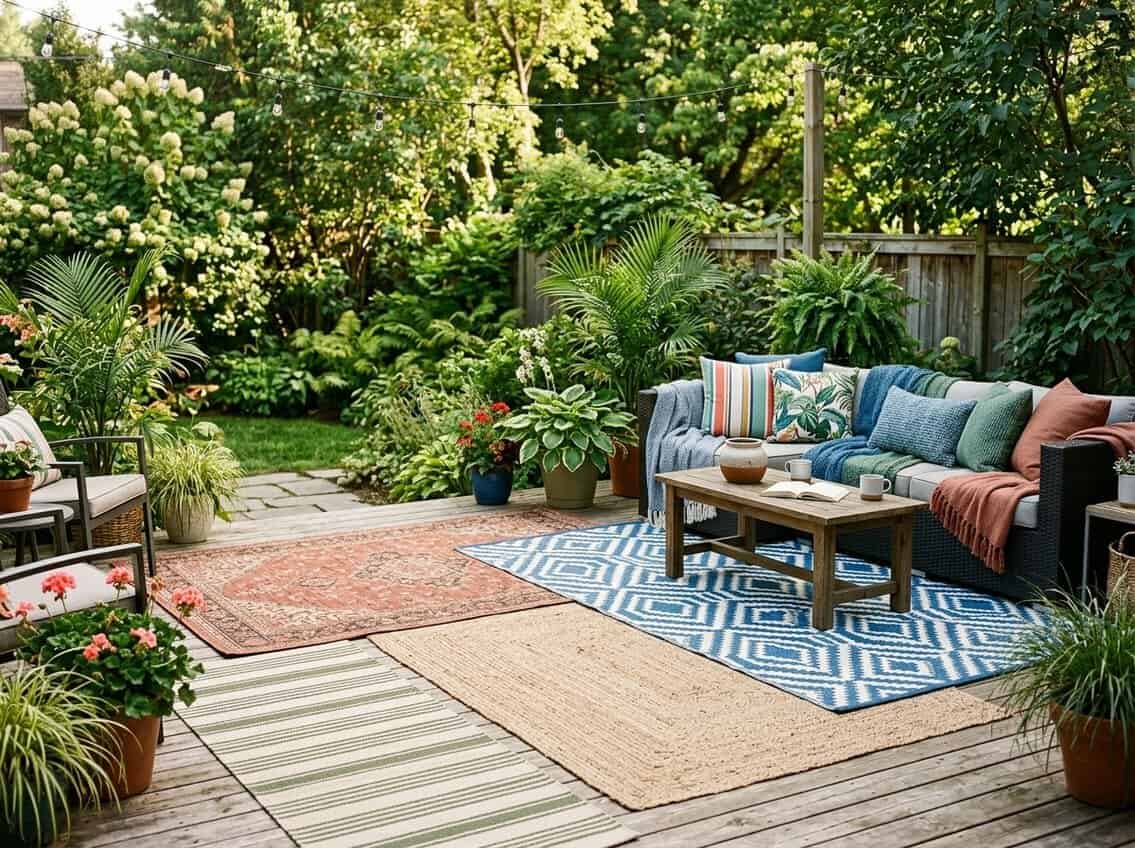
Shoppers face many choices when looking at outdoor rug materials and styles. Natural fibers like jute look appealing but trap moisture and break down faster than synthetics. Rubber-backed rugs seem practical but can damage surfaces and prevent proper drying. Size matters too since a rug that’s too small creates tripping hazards while one that’s too large overwhelms the space.
This guide covers everything from material comparisons to maintenance schedules. Readers will learn how to match rugs to different surfaces like concrete, wood decks, and tile. The guide also explains which features provide real value versus marketing hype and how to avoid common purchasing mistakes that waste money.
Key Considerations for Outdoor Rug Selection
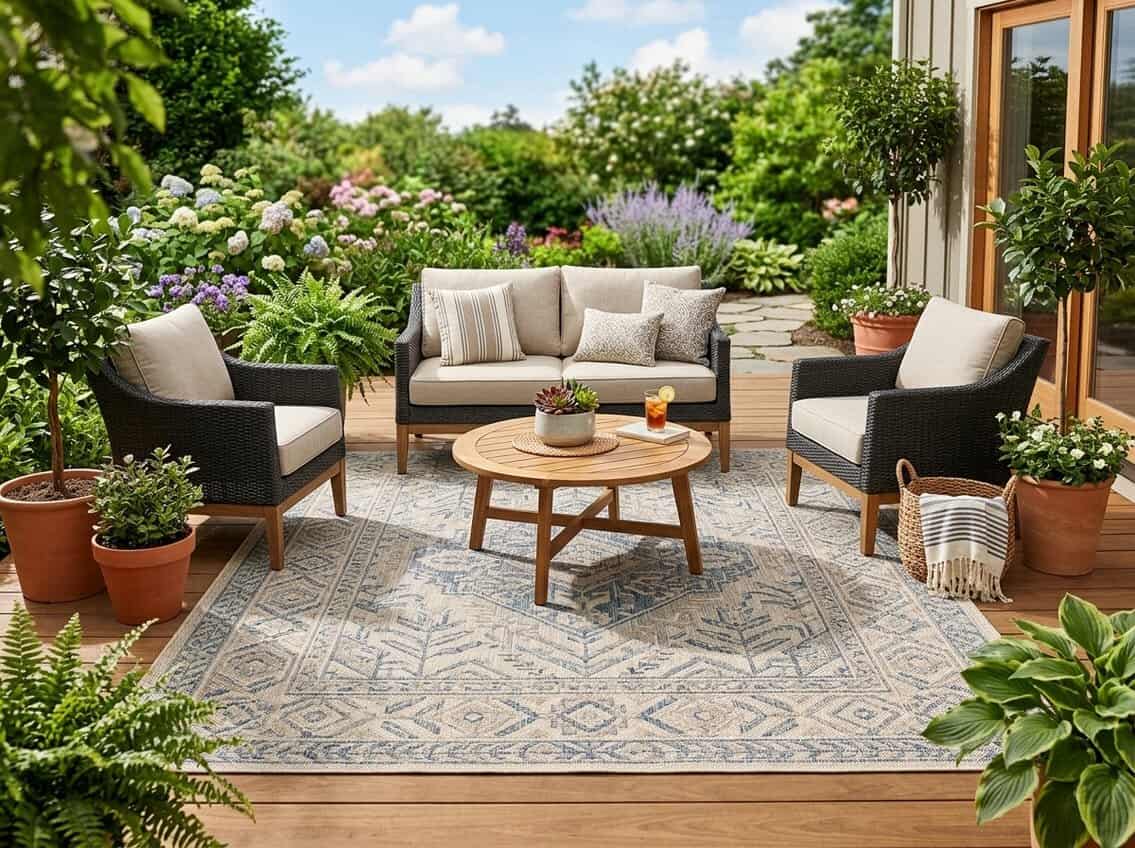
Outdoor rugs need to withstand sun, rain, and foot traffic while maintaining their appearance. The right choice depends on material durability, local weather patterns, and the surface where the rug will sit.
Understanding Outdoor Rug Durability
The lifespan of an outdoor rug typically ranges from three to seven years depending on material and maintenance. Polypropylene stands out as the most popular material for outdoor rugs because it resists UV fading and moisture damage effectively.
Synthetic materials like polypropylene, nylon, and polyester generally outlast natural fibers in outdoor settings. These petroleum-based fibers wick moisture and dry quickly. Natural materials such as jute, sisal, and seagrass look attractive but trap moisture in their backing layers, which promotes mold growth.
The construction method affects breathability. Open weave styles like sisal-weave patterns allow better airflow than tight weaves. However, many synthetic rugs contain natural fiber backings that can harbor fungi despite having weather-resistant surfaces.
Stain resistance and fade resistance make daily use more practical. UV-treated yarns prevent color loss from sun exposure. High-traffic areas demand tighter weaves and heavier materials that won’t shift underfoot.
Importance of Weather and Climate
Climate directly impacts how long an outdoor rug lasts and which materials work best. Humid and subtropical environments shorten rug life significantly because mold and mildew develop faster.
Climate-Specific Considerations:
- Rainy regions: Choose polypropylene or polyester that dries quickly
- High humidity: Avoid natural fibers completely
- Hot, sunny areas: Select UV-treated materials to prevent fading
- Coastal locations: Pick rust-resistant options if using on metal surfaces
Regular maintenance extends rug life in all climates. Hanging the rug to dry in sunlight after rain prevents moisture buildup. Some materials need only pressure washing while others require professional cleaning.
People living in damp climates should treat outdoor rugs as temporary purchases. The constant exposure to moisture means replacement every three to four years rather than seven.
Rug Placement and Surface Suitability
The surface underneath an outdoor rug for patio spaces affects both the rug’s durability and the flooring’s condition. Different materials create unique challenges for rug placement.
From experience: outdoor rugs add a genuinely homey feel to a seating area, but on a wood deck they hold moisture longer than you’d expect. We left one out over winter without issue — but only because the boards were treated. If your deck is untreated wood, that trapped moisture can cause real damage over time. Composite and PVC decking handles it much better.
Surface Compatibility Guide:
| Surface Type | Key Concern | Solution |
|---|---|---|
| Concrete | Moisture trapped in porous material | Use breathable rug materials |
| Grass | Constant dampness kills grass | Install click-lock tiles underneath |
| Wood decks | Stain discoloration from trapped water | Choose mildew-resistant deck stain |
| Tile | Grout damage from moisture | Seal grout well before rug placement |
| Metal | Rust and corrosion | Add protective flooring layer |
Unsealed concrete presents moisture problems because water gets trapped between the surface and non-breathable rugs. Grass surfaces suffer even more since the rug blocks sunlight and traps wetness.
Wood-stained decks need special attention. Any rug keeps covered areas damp longer than exposed wood, which encourages mildew. The uncovered portions may fade differently from covered sections, creating visible color differences when the rug moves.
Rubber-backed rugs cause the most surface damage. They prevent airflow completely and hold moisture against flooring materials. Skip rubber backing on all outdoor surfaces.
Recommended Outdoor Rugs
Best Overall: Safavieh Courtyard Collection Made from polypropylene with excellent UV resistance. Available in multiple sizes and patterns for any patio style. Price: $30-$80 Check Price on Amazon →
Best Budget: nuLOOM Outdoor Rug Affordable polypropylene construction that handles weather exposure. Perfect for renters or first-time buyers. Price: $25-$60 Check Price on Amazon →
Best for Patios: HEBE Outdoor Rug Features waterproof non-slip backing ideal for smooth patio surfaces. Polypropylene material resists fading and stains. Price: $35-$90 Check Price on Amazon →
Best for Large Patios: Unique Loom Outdoor Rug Durable polypropylene in sizes up to 10×13 feet. Handles heavy furniture and high foot traffic. Price: $50-$120 Check Price on Amazon →
Best Premium: Chilewich Woven Floormat PVC and polyester blend offers superior longevity and style. Easy to clean and maintains appearance for years. Price: $80-$200 Check Price on Amazon →
As an Amazon Associate, Outdoor Space Accents earns from qualifying purchases.
For detailed reviews and side-by-side comparisons of these options, read our complete guide to the best outdoor rugs in 2026.
Best Materials for Outdoor Rugs
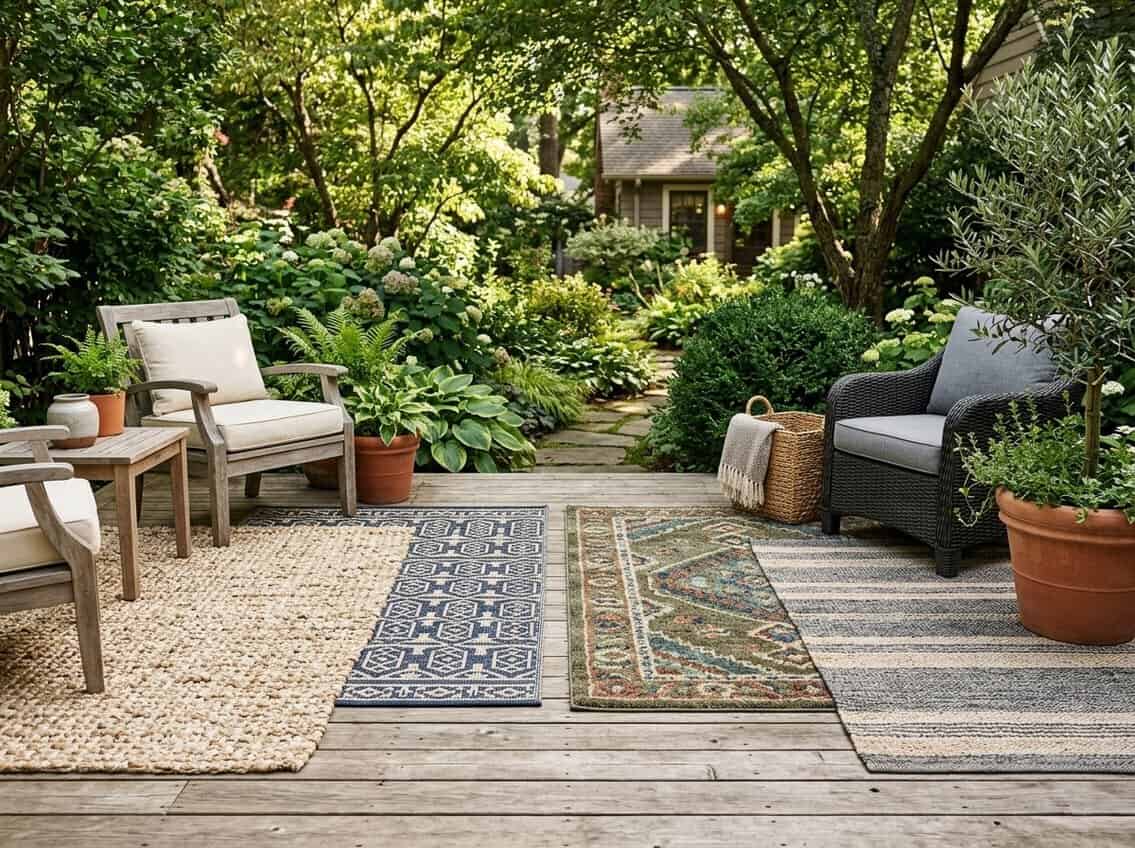
Polypropylene dominates the outdoor rug market due to its UV resistance and moisture-wicking properties, while natural fibers offer aesthetic appeal but require more maintenance. Recycled materials provide eco-conscious alternatives that balance durability with environmental responsibility.
Polypropylene, PET, and Synthetics
Polypropylene stands out as the best outdoor rug material for most applications. This plastic-based synthetic fiber resists fading, repels moisture, and withstands heavy foot traffic. It also allows for breathability, which prevents mildew growth underneath the rug.
PET (polyethylene terephthalate) offers similar benefits to polypropylene with slightly softer texture. Both materials work well for patios, decks, and balconies. Nylon and acrylic serve as alternative synthetics, though they vary in durability.
Most synthetic rugs contain fade-resistant treatments that protect against sun damage. However, some synthetic options include natural fiber backings like cotton or jute, which can trap moisture and promote mold growth. Check the backing material before purchase to ensure complete synthetic construction for maximum weather resistance.
Top Outdoor Rug Recommendations:
| Rug | Price Range | Material | Best For |
|---|---|---|---|
| Safavieh Courtyard Collection | $30-$80 | Polypropylene | Best Overall |
| nuLOOM Outdoor Rug | $25-$60 | Polypropylene | Best Budget |
| HEBE Outdoor Rug | $35-$90 | Polypropylene | Best for Patios (Waterproof) |
| Unique Loom Outdoor Rug | $50-$120 | Polypropylene | Best for Large Patios |
| Chilewich Woven Floormat | $80-$200 | PVC/Polyester Blend | Best Premium |
As an Amazon Associate, Outdoor Space Accents earns from qualifying purchases.
Check Price on Amazon → – Safavieh Courtyard Collection
Check Price on Amazon → – nuLOOM Outdoor Rug
Check Price on Amazon → – HEBE Outdoor Rug
Check Price on Amazon → – Unique Loom Outdoor Rug
Check Price on Amazon → – Chilewich Woven Floormat
Natural Fibers: Pros and Cons
Natural fiber rugs like sisal, jute, and seagrass bring organic texture to outdoor spaces. Seagrass provides the softest option among natural materials. Sisal and jute typically feature open weave patterns that promote airflow.
These materials face significant challenges outdoors. Most natural fiber rugs include fabric borders, glue-based backings, or rubber backings that trap moisture and encourage mildew growth. The fibers themselves absorb water rather than repel it.
Regular maintenance becomes necessary for natural fiber rugs used outdoors. Hang the rug in direct sunlight frequently to promote air circulation and prevent mold. Natural fibers generally last three to seven years, with shorter lifespans in humid climates.
Note that “sisal-style weave” differs from genuine sisal. This term refers to the weaving pattern, not the material. Sisal-style weaves made from synthetic fibers combine breathable construction with weather resistance.
Eco-Friendly and Recycled Options
Recycled plastic rugs transform post-consumer materials into durable outdoor products. These rugs match the performance of virgin synthetic materials while reducing environmental impact. They resist fading, repel moisture, and handle regular use effectively.
Recycled PET rugs use plastic bottles and containers as raw materials. The manufacturing process converts waste into weather-resistant fibers suitable for outdoor rugs for patios and decks. Quality remains comparable to new synthetic options.
Price points for recycled material rugs vary significantly. An 8×10 recycled plastic rug costs around $800 at specialty retailers, while smaller 4×6 versions range from $100 to $200. Budget-friendly recycled options also exist at major retailers.
These eco-conscious choices maintain the same care requirements as standard synthetic rugs. They clean easily with water and mild soap, dry quickly, and resist common outdoor stains.
Read our complete Best Outdoor Rugs 2026 review for detailed testing results and additional recommendations.
How to Choose Outdoor Rug Size
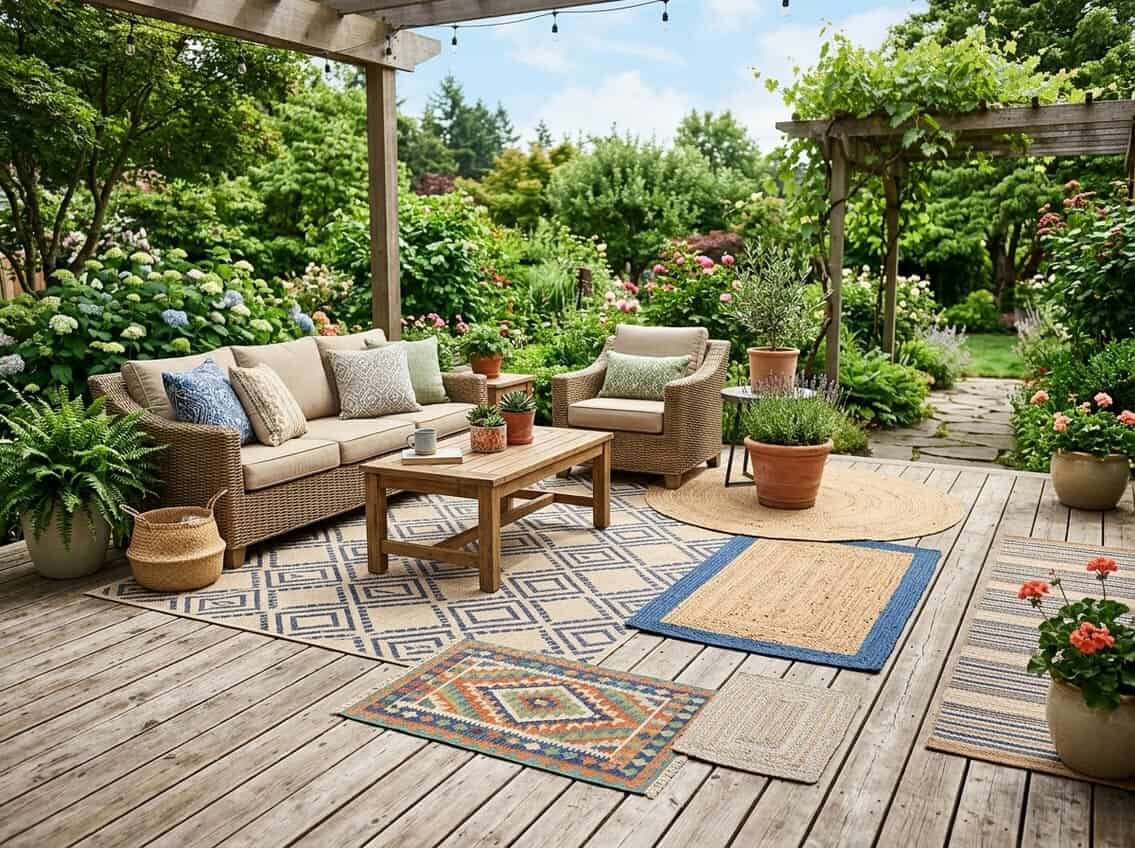
Selecting the right outdoor rug size depends on accurate measurements of your space and understanding how furniture placement affects rug dimensions. A rug that’s too small makes the area look disconnected, while an oversized rug can overwhelm the space and create tripping hazards.
Measuring Your Patio or Balcony
Start by measuring the total length and width of the outdoor area using a measuring tape. Record these dimensions in feet and inches for accuracy.
Next, identify where furniture will sit. Leave 12 to 18 inches of bare floor around the rug’s edges to prevent a cramped appearance. For smaller balconies under 8 feet wide, reduce this margin to 6 to 8 inches.
Mark the proposed rug area with painter’s tape or rope to visualize the coverage. Walk around the taped outline to confirm chairs and doors can open freely. This step helps avoid buying a rug that blocks walkways or sits awkwardly against walls.
Consider any permanent fixtures like grills, planters, or built-in benches that might affect rug placement. Account for these obstacles when calculating usable space.
Sizing for Dining and Seating Areas
For dining tables, the rug should extend at least 24 inches beyond the table on all sides. This allows chairs to pull out without catching on the rug edge. A 30-inch extension provides better coverage and a more polished look.
A rectangular table between 60 and 72 inches pairs well with an 8×10 foot rug. Tables larger than 84 inches need a 9×12 foot rug minimum.
For seating areas with sofas and chairs, choose between two layouts. Place all furniture legs on the rug for a grounded look, or position only the front legs on the rug to define the space while using less coverage.
A 5×7 foot rug works for intimate seating with two chairs and a small table. Standard arrangements with a sofa and two chairs require a 6×9 or 8×10 foot rug. Large sectionals need rugs measuring 9×12 feet or larger.
Round rugs measuring 5 to 6 feet in diameter suit bistro sets or small conversation areas with chairs arranged in a circle.
Common Sizing Mistakes to Avoid
Buying a rug before measuring the space leads to poor fit. Always measure first and account for furniture dimensions before shopping.
Ignoring furniture movement causes functionality issues. Dining chairs need to remain on the rug when pulled out from the table, requiring that 24 to 30-inch clearance mentioned earlier.
Choosing a rug that covers edge-to-edge looks awkward and makes the patio feel smaller. That border of visible flooring creates visual breathing room.
Forgetting to measure doorways and gates can result in rugs that block access or create trip hazards near entry points.
Matching rug size exactly to furniture dimensions creates an unbalanced look. The rug should extend beyond the furniture footprint to anchor the arrangement properly.
Popular Outdoor Rug Sizes and Uses:
| Rug Size | Best For |
|---|---|
| 2×3 feet | Entryways, doormats |
| 4×6 feet | Small bistro sets, accent areas |
| 5×7 feet | Dining for four, small seating groups |
| 6×9 feet | Dining for six, standard seating areas |
| 8×10 feet | Dining for 6-8, large seating arrangements |
| 9×12 feet | Dining for 8+, spacious patios |
Recommended Outdoor Rugs
Safavieh Courtyard Collection ($30-$80)
This polypropylene rug offers the best overall value with UV resistance and multiple size options. The low-pile design sheds water quickly and resists mildew in humid conditions.
Check Price on Amazon →
nuLOOM Outdoor Rug ($25-$60)
The best budget choice for small to medium patios. Made from durable polypropylene that handles sun exposure and rain without fading or deteriorating.
Check Price on Amazon →
HEBE Outdoor Rug ($35-$90)
Best for patios requiring waterproof protection. The non-slip backing prevents shifting on smooth surfaces like concrete or composite decking. Polypropylene construction resists stains and moisture.
Check Price on Amazon →
Unique Loom Outdoor Rug ($50-$120)
Ideal for large patios needing coverage over 8×10 feet. The tightly woven polypropylene fibers create a soft surface that stays comfortable underfoot while maintaining weather resistance.
Check Price on Amazon →
Chilewich Woven Floormat ($80-$200)
The premium option features a PVC and polyester blend that delivers superior durability and design aesthetics. This mat works well in covered outdoor spaces where style matters as much as function.
Check Price on Amazon →
Polypropylene remains the most popular material for outdoor rugs because it resists UV damage and moisture while staying affordable. These synthetic fibers don’t absorb water, preventing mold and mildew growth common with natural fiber rugs.
As an Amazon Associate, Outdoor Space Accents earns from qualifying purchases.
For detailed comparisons and expert testing results, check out our Best Outdoor Rugs 2026 review article.
Rug Styles and Design Choices
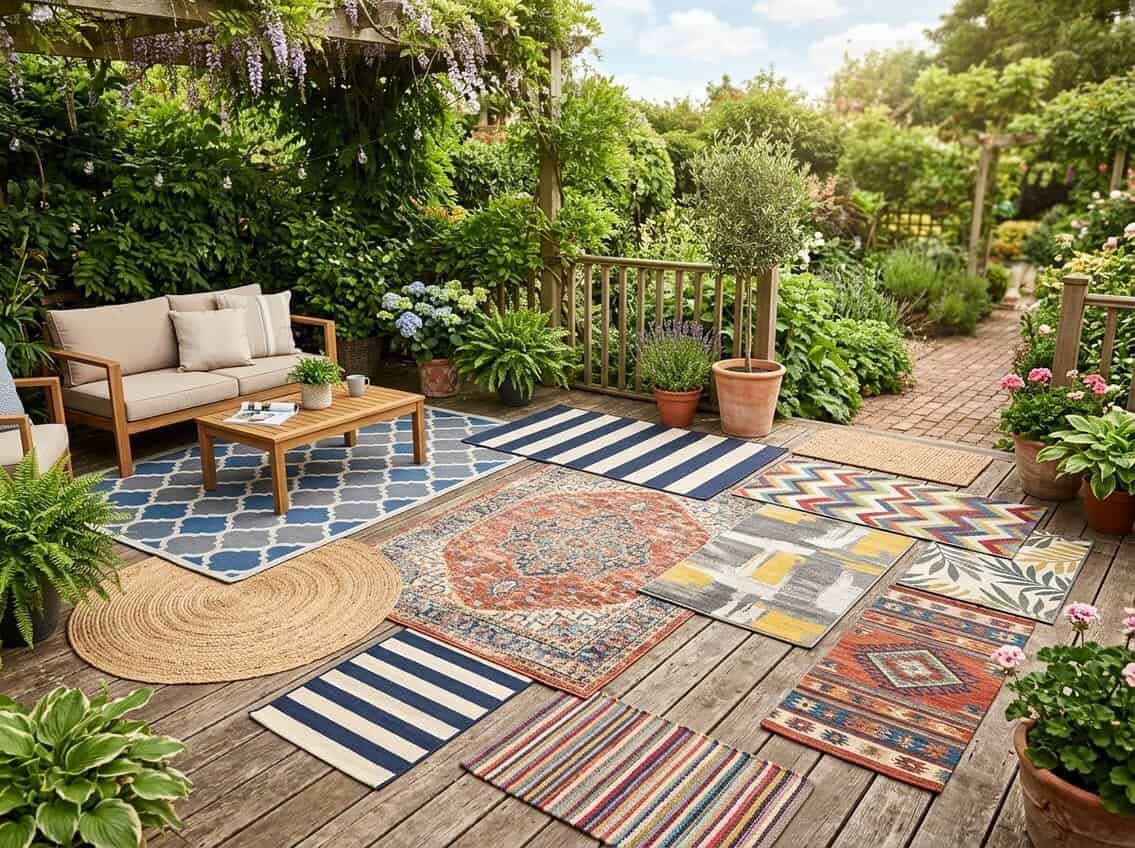
The right outdoor rug for patio spaces combines color schemes that complement natural surroundings, patterns that match existing furniture, and styles suited to specific patio configurations. Different outdoor areas call for different design approaches based on coverage, exposure, and intended use.
Patterns and Colors for Outdoor Spaces
Natural earth tones work well in most outdoor settings. Colors like terracotta, sage green, dusty blue, and beige blend with garden landscapes and wooden furniture. These shades hide dirt better than bright whites or pastels.
Bold geometric patterns add visual interest to plain concrete or stone patios. Stripes, diamonds, and chevrons create defined spaces for seating areas. Solid colors offer versatility when outdoor furniture already features busy patterns or bright cushions.
Minimalist neutrals and blacks pair with trending earth tones for balanced outdoor spaces. Floral designs bring color to covered porches where fading is less of a concern. Multicolor options with rainbow combinations work for playful backyard areas.
Darker colors show less wear in high-traffic zones near doorways. Lighter shades brighten shaded areas under pergolas or awnings.
Blending with Your Furniture and Decor
Match rug colors to existing cushions, planters, or outdoor pillows for a coordinated look. Pick one or two colors from furniture pieces and find rugs featuring those shades. This creates visual flow between different outdoor elements.
The rug should anchor the seating arrangement. Place furniture legs on the rug edges to tie everything together. For dining areas, ensure the rug extends at least 24 inches beyond the table on all sides so chairs remain on the rug when pulled out.
Scale matters for proportions. Small rugs make large patios feel choppy. Oversized rugs can overwhelm compact balconies. Measure the space first and leave 12-18 inches of flooring visible around the rug perimeter.
Wood furniture pairs well with woven textures and natural fiber looks. Metal furniture works with sleek, flat-weave designs. Wicker or rattan pieces complement bohemian patterns.
Best Styles by Patio Type
Covered porches handle more delicate designs since they’re protected from direct rain and sun. Softer materials and intricate patterns work here. Traditional oriental or Persian-style rugs add elegance to front porches.
Open patios need durable, weather-resistant styles. Flat-weave construction prevents water pooling. Simple geometric patterns or solid colors hold up better to constant sun exposure. Polypropylene rugs resist fading and moisture damage.
Pool decks require quick-drying, non-slip options. Textured surfaces provide traction on wet tile. Light colors reflect heat and stay cooler underfoot during summer months.
Balconies benefit from smaller rectangular or runner rugs. Vertical stripes make narrow spaces appear longer. Lighter colors brighten apartment balconies with limited natural light.
Decks need breathable rugs that won’t trap moisture against wood surfaces. Rugs with open weaves allow air circulation underneath to prevent mold growth and wood staining.
Recommended Outdoor Rugs by Style
As an Amazon Associate, Outdoor Space Accents earns from qualifying purchases.
| Rug | Price Range | Material | Best For |
|---|---|---|---|
| Safavieh Courtyard Collection | $30-$80 | Polypropylene | Best Overall |
| nuLOOM Outdoor Rug | $25-$60 | Polypropylene | Budget Choice |
| HEBE Outdoor Rug | $35-$90 | Polypropylene | Patios (waterproof, non-slip) |
| Unique Loom Outdoor Rug | $50-$120 | Polypropylene | Large Patios |
| Chilewich Woven Floormat | $80-$200 | PVC/Polyester Blend | Premium Option |
Safavieh Courtyard Collection offers the best balance of style and durability for most outdoor spaces. The polypropylene construction resists UV rays and moisture while maintaining vibrant colors. Multiple pattern options suit different decor styles.
nuLOOM Outdoor Rug delivers quality at an affordable price point. The lightweight polypropylene material makes it easy to move and clean. It works well for renters or those wanting to change styles frequently.
HEBE Outdoor Rug features a waterproof non-slip backing ideal for uncovered patios. The backing prevents water damage to deck surfaces while keeping the rug securely in place during windy conditions.
Unique Loom Outdoor Rug comes in larger sizes perfect for expansive patio areas. The durable polypropylene handles heavy foot traffic from entertaining and family gatherings. It’s available in various colors to match different outdoor color schemes.
Chilewich Woven Floormat represents premium quality with a PVC and polyester blend construction. The tight weave creates a sophisticated look while resisting stains and fading. It’s an investment piece for homeowners wanting long-lasting style.
Polypropylene remains the most popular material for outdoor rugs due to its UV resistance and moisture-wicking properties. This synthetic fiber doesn’t absorb water, preventing mold and mildew growth. It also maintains color vibrancy despite constant sun exposure.
For more detailed reviews and comparisons, check out our Best Outdoor Rugs 2026 guide.
Maintenance and Care Tips for Outdoor Rugs
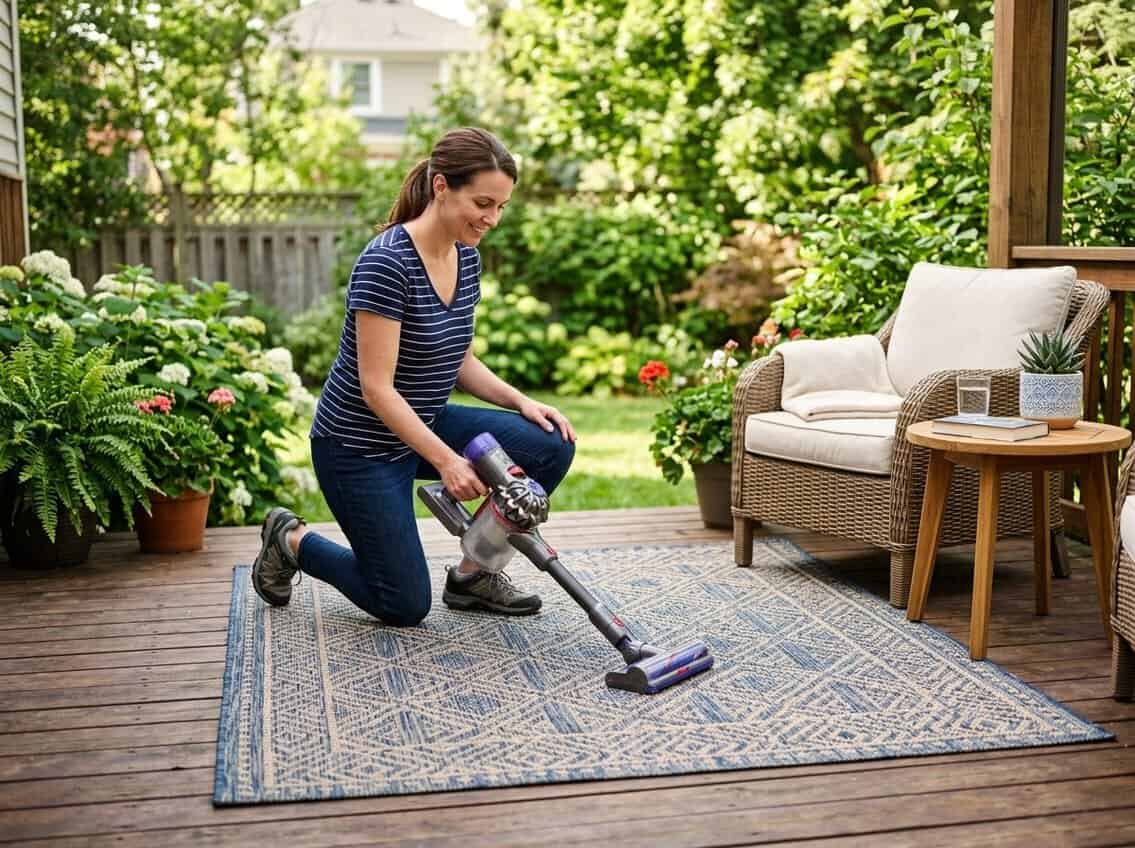
Proper cleaning prevents mold and mildew while extending your rug’s lifespan, and storing it during harsh weather protects your investment year after year.
Routine Cleaning and Stain Prevention
Regular maintenance keeps outdoor rugs looking fresh and prevents dirt buildup. Shake out or vacuum the rug weekly to remove loose debris, pollen, and dust that accumulate from foot traffic and outdoor exposure.
For spot cleaning, mix a quarter cup of mild dish soap with one gallon of lukewarm water. Apply the solution to stains immediately, scrub gently with a soft brush, and rinse thoroughly with a hose. Quick action prevents stains from setting into the fibers.
A monthly deep clean keeps rugs in top condition. Hosing down rugs with shampoo and sanitizing solutions helps protect against common mildew problems. For synthetic materials like polypropylene—the best outdoor rug material for durability—homeowners can handle cleaning themselves since these fibers don’t bleed dyes or require professional treatment.
Power washing works well for heavily soiled rugs. After washing, hang the rug in a sunny spot with good air circulation to dry completely before placing it back on the patio or deck.
Dealing With Mold, Mildew, and Fading
Most outdoor rugs offer mold and mildew resistance, but moisture exposure still requires attention. Rugs placed in shaded areas or regions with high humidity need more frequent cleaning than those in dry, sunny locations.
If mold or mildew appears, create a cleaning solution with white vinegar and water in equal parts. Spray the affected areas, let it sit for 15 minutes, scrub with a brush, and rinse completely. For stubborn growth, a diluted bleach solution works on synthetic rugs—test a small hidden area first.
Polypropylene rugs resist UV damage better than natural fibers, but all outdoor rugs fade over time with sun exposure. Rotating the rug every few months distributes wear and fading evenly. For expensive pieces needing deep sanitizing, hiring a carpet cleaning company ensures proper treatment without damaging the material.
City dwellers without hose access can air out rugs by hanging them over balconies or outdoor furniture between seasons to prevent moisture buildup.
Storage and Off-Season Protection
Homeowners in areas with cold winters should store outdoor rugs during off-season months to avoid unnecessary weather exposure. Thoroughly dry the rug before storage—any remaining moisture creates perfect conditions for mold growth.
Roll the rug loosely rather than folding it to prevent permanent creases. Store it in a dry, enclosed space like a garage, basement, or shed where rain and excessive moisture can’t reach it. Avoid plastic bags that trap humidity; instead, use breathable fabric storage bags or wrap the rug in old sheets.
For partially covered spaces like enclosed balconies, rugs can stay out longer but still need periodic airing. Hang the rug and allow air circulation on both sides, just like wet towels, to prevent mold development.
Buying two identical rugs and rotating them extends their life while keeping outdoor surfaces protected. One rug can be cleaned and dried while the other stays in use, and regular rotation reduces wear on both pieces.
Recommended Outdoor Rugs by Budget and Purpose
| Rug | Price Range | Material | Best For |
|---|---|---|---|
| Safavieh Courtyard Collection | $30-$80 | Polypropylene | Best overall value and durability |
| nuLOOM Outdoor Rug | $25-$60 | Polypropylene | Budget-friendly option |
| HEBE Outdoor Rug | $35-$90 | Polypropylene | Patios with waterproof non-slip backing |
| Unique Loom Outdoor Rug | $50-$120 | Polypropylene | Large patio spaces |
| Chilewich Woven Floormat | $80-$200 | PVC/Polyester blend | Premium quality and style |
Polypropylene dominates the outdoor rug market due to its exceptional UV resistance and moisture protection. This synthetic material handles rain, sun exposure, and heavy foot traffic without deteriorating quickly.
Safavieh Courtyard Collection offers the best balance of quality and affordability for most homeowners. Check Price on Amazon →
nuLOOM Outdoor Rug delivers reliable performance at the lowest price point without sacrificing basic durability. Check Price on Amazon →
HEBE Outdoor Rug features a waterproof backing that prevents water pooling underneath, making it ideal for uncovered patios. Check Price on Amazon →
Unique Loom Outdoor Rug comes in larger sizes perfect for spacious decks and patios that need substantial coverage. Check Price on Amazon →
Chilewich Woven Floormat uses a premium PVC and polyester blend that resists staining better than standard polypropylene while offering sophisticated designs. Check Price on Amazon →
As an Amazon Associate, Outdoor Space Accents earns from qualifying purchases.
For detailed comparisons and performance testing, read the complete Best Outdoor Rugs 2026 review article.
Budgeting and Value Considerations
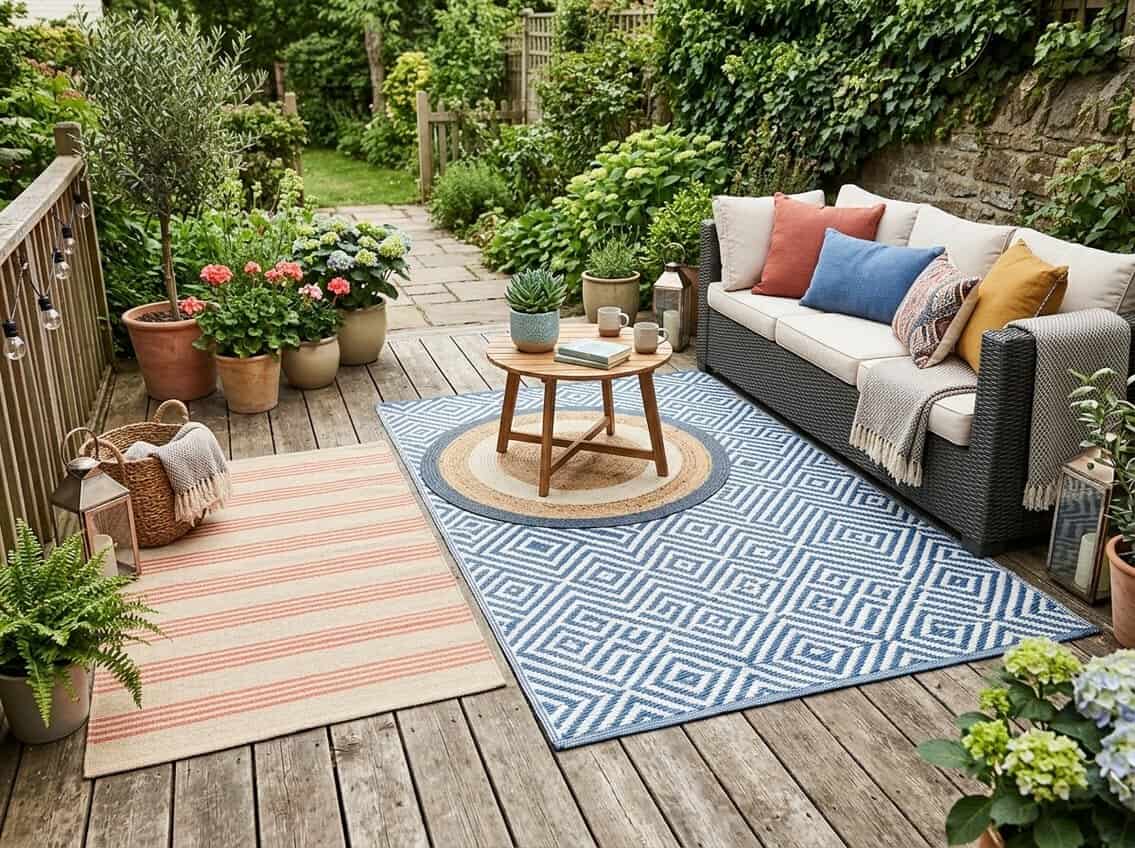
Outdoor rugs typically range from $20 for small sizes to over $1,000 for premium options, but understanding the relationship between cost and lifespan helps buyers make smarter purchasing decisions. Most outdoor rugs last three to seven years depending on climate and material quality.
Price Ranges for Outdoor Rugs
An 8×10 outdoor rug costs around $125 on average but can exceed $1,000 for high-end designs. Smaller rugs in the 4×6 size range start at $20 to $60 for basic options.
Budget Options ($20-$80): These rugs use polypropylene or basic synthetic materials. They work well for covered areas or seasonal use. The nuLOOM Outdoor Rug ($25-$60) offers solid value with UV-resistant polypropylene construction. Check Price on Amazon →
Mid-Range Options ($80-$150): This price point delivers better durability and design variety. The Safavieh Courtyard Collection ($30-$80) provides excellent quality for most outdoor spaces with fade-resistant polypropylene fibers. Check Price on Amazon → The HEBE Outdoor Rug ($35-$90) features waterproof non-slip backing ideal for patios. Check Price on Amazon →
Premium Options ($150+): High-end rugs like the Chilewich Woven Floormat ($80-$200) use advanced materials such as PVC/polyester blends for superior longevity. Check Price on Amazon → The Unique Loom Outdoor Rug ($50-$120) works well for large patios needing extensive coverage. Check Price on Amazon →
Polypropylene remains the most popular material due to its UV and moisture resistance at reasonable prices.
As an Amazon Associate, Outdoor Space Accents earns from qualifying purchases.
Longevity Versus Upfront Cost
Outdoor rugs should be considered somewhat disposable since weather degrades them over time. A $50 rug lasting three years costs $16.67 per year. A $200 rug lasting seven years costs $28.57 per year.
Climate significantly affects lifespan. Humid or subtropical environments accelerate mold and mildew growth, shortening rug life to the lower end of the three to seven year range. Dry climates extend durability.
Material choice impacts both cost and longevity. Synthetic fibers like polypropylene cost less to manufacture than hand-knotted natural fiber rugs. Regular maintenance extends any rug’s useful life, but replacement remains inevitable with outdoor use.
Protected placement matters too. Rugs under covered patios last longer than those exposed to direct rain and sun. Calculate annual cost rather than focusing solely on purchase price.
When to Replace Your Rug
Visible mold or mildew growth signals immediate replacement need. Dark shadows on the underside or strong odors indicate fungal growth that cleaning cannot fix.
Significant fading means UV damage has weakened the fibers. While aesthetic concerns vary by owner, extensive color loss suggests structural breakdown. Fraying edges or holes create tripping hazards and indicate the rug has reached end of life.
Loss of backing integrity compromises safety. Rugs with peeling or crumbling backing no longer provide stable footing. Water retention that doesn’t dry within 24 hours after rain shows the material has degraded and will promote surface damage underneath.
Persistent stains or odors after proper cleaning mean the rug cannot be adequately maintained. Replace rugs showing multiple deterioration signs rather than waiting for complete failure.
For detailed comparisons and testing results, check out our Best Outdoor Rugs 2026 comprehensive review article.
Safety, Comfort, and Added Features
Beyond style and durability, outdoor rugs need to prevent slips, feel comfortable underfoot, and withstand daily use from kids and pets. The right features can make an outdoor rug for patio spaces safer and more practical for families.
Non-Slip and Gripping Solutions
A rug that slides or bunches creates tripping hazards on decks and patios. Non-slip backing helps keep rugs in place, especially on smooth surfaces like tile or sealed concrete.
Most outdoor rugs use rubber or latex backing to grip the surface below. Some include textured undersides that create friction without full rubber coverage. This design allows better airflow and drainage while still preventing movement.
Rug pads offer another solution for areas that need extra grip. They sit between the rug and the ground, adding cushioning and stability. Pads work well on wood decks where rubber backing might trap moisture against the surface.
People should check that chairs can move smoothly when someone sits down at a table. Leaving at least 6 inches of rug on all sides of outdoor furniture prevents chair legs from catching on edges and reduces trip risks.
Comfort Underfoot and Barefoot Appeal
Most outdoor rugs have thinner construction than indoor versions, which means less cushioning. Polypropylene rugs feel firm but smooth, making them comfortable enough for bare feet on hot concrete or wood surfaces.
Rugs with slightly higher pile or added rug pads provide extra softness for seating and lounging areas. The added layer creates a buffer between feet and hard patio surfaces.
Heat resistance matters for comfort too. Dark-colored rugs absorb more sun and can become hot to walk on during peak hours. Lighter colors reflect heat and stay cooler underfoot.
Synthetic materials like polypropylene dry quickly after rain or cleaning. This prevents the damp, musty feeling that natural fiber rugs develop when wet. Fast-drying rugs return to normal use within hours instead of days.
Kid- and Pet-Friendly Rug Qualities
Families need outdoor rugs that handle spills, muddy paws, and constant activity. Polypropylene stands up to these challenges better than most materials because it resists stains and cleans easily with a hose or pressure washer.
Key features for households with children and pets include:
- Stain resistance for food and drink spills
- Quick-drying materials that don’t hold odors
- Durable construction that won’t fray or shed fibers
- Non-toxic materials safe for crawling babies and pets
- Mildew resistance to prevent bacterial growth
Tightly woven rugs work better than shaggy or loose weaves around pets. Long fibers can trap pet hair and dirt, making cleaning harder. Flat-weave or low-pile options shake clean and rinse thoroughly.
Color choice affects how visible stains and dirt become over time. Medium tones and patterns hide wear better than solid light or dark colors. Multicolored designs camouflage high-traffic areas where kids and pets spend most of their time.
Top Outdoor Rug Recommendations
| Rug | Price Range | Material | Best For |
|---|---|---|---|
| Safavieh Courtyard Collection | $30-$80 | Polypropylene | Best Overall |
| nuLOOM Outdoor Rug | $25-$60 | Polypropylene | Best Budget |
| HEBE Outdoor Rug | $35-$90 | Polypropylene | Best for Patios (waterproof non-slip backing) |
| Unique Loom Outdoor Rug | $50-$120 | Polypropylene | Best for Large Patios |
| Chilewich Woven Floormat | $80-$200 | PVC/Polyester Blend | Best Premium |
Polypropylene remains the most popular material for outdoor rugs because it resists UV damage and moisture while maintaining its appearance over multiple seasons.
As an Amazon Associate, Outdoor Space Accents earns from qualifying purchases.
Ready to explore more options? Read our complete Best Outdoor Rugs 2026 review for detailed comparisons and expert recommendations.
Common Mistakes to Avoid When Buying Outdoor Rugs
Buyers often overlook critical factors like climate conditions, surface types, and proper sizing when selecting outdoor rugs. Understanding material compatibility with your specific environment and balancing aesthetic appeal with practical performance prevents costly replacements and maintenance headaches.
Ignoring Climate and Surface Compatibility
Different surfaces require specific rug characteristics to prevent damage and extend lifespan. Concrete surfaces need breathable materials because unsealed concrete is porous and traps moisture underneath rugs. Without proper airflow, mildew develops quickly.
Grass creates even more moisture problems. Placing a rug directly on grass traps water against both the ground and the rug backing, leading to mold growth within weeks. Click-lock tiles provide a protective barrier that allows drainage and air circulation.
Wood decks face unique challenges with outdoor rug placement. The covered areas stay damp longer after rain, encouraging mildew growth on stained surfaces. Natural fiber rugs absorb more water than synthetics, making the problem worse.
Humid and coastal climates accelerate rug deterioration. Salt air and constant moisture reduce outdoor rug lifespans to three years instead of seven. Polypropylene stands up best to these conditions because it resists UV damage and wicks moisture away from surfaces.
Choosing Style Over Function
The best outdoor rug material prioritizes durability over appearance. Polypropylene (also called olefin) offers superior fade resistance, stain resistance, and moisture wicking compared to natural fibers. This synthetic plastic-based material handles spills, rain, and sun exposure without breaking down quickly.
Natural fibers like jute, sisal, and seagrass look attractive but create maintenance problems outdoors. These materials often include cotton backings or rubber adhesives that trap moisture and promote bacterial growth. Dark shadows and musty odors on the underside indicate mold colonization.
Marketing terms like “weatherproof” mislead buyers. No rug is truly weatherproof, though UV-treated polypropylene yarns resist fading better than untreated options. Synthetic rugs labeled as water-resistant may still contain natural fiber layers that harbor fungi.
Breathability matters more than aesthetics for outdoor use. Sisal-style weaves in synthetic materials allow airflow while maintaining durability. Open basket weaves and braided patterns promote faster drying after rain exposure.
Neglecting Size and Rug Pad Needs
How to choose outdoor rug size depends on furniture placement and traffic patterns. Rugs should extend at least 6 inches beyond all sides of outdoor furniture to prevent tripping hazards. Chairs catch on rug edges when people pull them out to sit, creating safety risks.
For seating areas, the rug must fit under both the sofa and coffee table completely. Smaller alternatives can frame just the coffee table while holding the front two legs of the sofa. Dining setups require enough space for chairs to slide in and out without catching edges.
An 8×10 rug accommodates a modest outdoor setup with a sofa and coffee table. Narrow balconies work better with runners that extend the full length. Proper sizing considerations prevent awkward furniture arrangements and improve visual balance.
Rug pads provide essential cushioning and prevent slipping on smooth surfaces like tile or sealed concrete. Without pads, rugs bunch up and create tripping hazards in high-traffic areas. Pads also allow better air circulation underneath, reducing moisture buildup and extending rug life.
Recommended Outdoor Rugs
Budget Pick: nuLOOM Outdoor Rug
$25-$60 | Polypropylene
Best for buyers seeking affordable weather resistance. The polypropylene construction handles rain and sun exposure without fading.
Check Price on Amazon →
Best Overall: Safavieh Courtyard Collection
$30-$80 | Polypropylene
This rug balances price and performance with UV-resistant fibers and versatile patterns. The material resists staining and mildew growth.
Check Price on Amazon →
Best for Patios: HEBE Outdoor Rug
$35-$90 | Polypropylene
Features waterproof non-slip backing that works well on concrete and tile surfaces. The backing prevents moisture damage while maintaining grip.
Check Price on Amazon →
Best for Large Patios: Unique Loom Outdoor Rug
$50-$120 | Polypropylene
Available in sizes up to 10×12 feet for expansive outdoor spaces. The durable construction withstands heavy foot traffic and furniture weight.
Check Price on Amazon →
Premium Choice: Chilewich Woven Floormat
$80-$200 | PVC/Polyester Blend
The highest quality option with exceptional durability and modern design. Easy to clean with a hose and maintains appearance for years.
Check Price on Amazon →
As an Amazon Associate, Outdoor Space Accents earns from qualifying purchases.
Polypropylene dominates the outdoor rug market because it resists UV damage and moisture better than other materials. The synthetic fibers dry quickly after rain and maintain color intensity through multiple seasons.
For detailed comparisons and testing results, read the complete Best Outdoor Rugs 2026 review article.
Frequently Asked Questions
What is the best material for an outdoor rug?
Polypropylene (olefin) and PET recycled-plastic rugs are best. They resist water, fading, and mildew, dry fast, and hose clean. Natural fibers like jute look great but are not for damp or exposed spots.
How do I choose the right outdoor rug size?
Pick a rug so at least the front legs of your furniture sit on it. An 8-by-10 fits most patio sets, a 9-by-12 for large groups, and a 5-by-7 or runner for a balcony or entry.
How do you care for an outdoor rug?
Shake or vacuum it, hose it with mild soap, scrub stains with a soft brush, rinse, and dry it flat. Lift it after heavy rain so moisture is not trapped underneath.
Can outdoor rugs be left out year-round?
In mild climates, weatherproof synthetic rugs can stay out, but rolling them up for winter or storms extends their life and protects the deck beneath from trapped moisture.
Do outdoor rugs mold or mildew?
Synthetic outdoor rugs resist mildew but can still grow it if left wet against a surface. Choose a breathable, quick-drying rug and let it dry fully to prevent mold.
Will Montgomery draws on hands-on experience with outdoor decor to guide your outdoor rug choice — material, size, and care that actually hold up — so you pick one that lasts.