
When shopping for outdoor speakers, you’ll notice strange codes like IP67 or IPX4 listed in the product details. These codes aren’t marketing buzzwords but standardized ratings that tell you exactly how well a speaker can handle dust and water. An IP rating uses two digits where the first number (0-6) measures protection against solid particles like dust, and the second number (0-9) measures protection against liquids like rain or pool water. Understanding what these numbers mean helps you avoid buying a speaker that can’t survive your specific outdoor environment.
A speaker rated IPX4 might handle light rain on your patio, but it will fail if dropped in a pool. Meanwhile, an IP67-rated speaker can survive both dusty beaches and underwater submersion. The difference between these ratings determines whether your investment lasts for years or gets ruined after one unexpected rainstorm. Choosing speakers with proper IP ratings is critical for long-term reliability in harsh weather conditions.
This guide breaks down each IP rating number, explains which rating works best for different outdoor spaces, and reveals the limitations that manufacturers don’t advertise. You’ll learn the real difference between weatherproof and waterproof speakers, discover why saltwater requires special care even with high ratings, and find out which protection level matches your lifestyle.
Key Takeaways
- IP ratings have two digits that measure dust protection (first digit, 0-6) and water protection (second digit, 0-9)
- Higher ratings like IP67 offer complete dust protection and waterproof submersion while lower ratings like IPX4 only handle splashes
- The right IP rating depends on your specific environment, from patios needing IP55 to beaches requiring IP67 protection
Ingress Protection Ratings for Outdoor Speakers

IP ratings provide a standardized way to measure how well outdoor speakers resist dust and water intrusion. The first digit indicates protection against solid particles like dust, while the second digit shows protection against liquids.
What Is an Outdoor Speaker IP Rating?
An IP rating is a standardized international code that defines how effectively a speaker’s outer casing protects its internal electronics from environmental intrusion. The abbreviation stands for Ingress Protection, and it appears on outdoor speakers as a two-digit number following the letters “IP.”
This rating system is defined by the international standard IEC 60529. It gives buyers a clear indication of what conditions a speaker can handle before damage occurs to internal components.
The outdoor speaker IP rating appears on product specifications as “IP” followed by two numbers. Each number corresponds to a specific level of protection against different types of environmental threats.
How to Read IP Ratings: Solids and Liquids
The two digits in an IP rating indicate protection against solids and liquids respectively. The first digit ranges from 0 to 6 and measures protection against solid objects like dust and dirt. The second digit ranges from 0 to 9 and measures protection against water and other liquids.
Higher numbers mean better protection in each category. A speaker rated IP60 has strong protection against solids but no protection against liquids. A speaker rated IP06 has no protection against solids but strong protection against liquids.
The first digit scale measures solid particle protection:
- 0 – No protection
- 1 – Protected against objects larger than 50mm
- 2 – Protected against objects larger than 12.5mm
- 3 – Protected against objects larger than 2.5mm
- 4 – Protected against objects larger than 1mm
- 5 – Dust protected (limited ingress)
- 6 – Dust tight (no ingress)
The second digit scale measures liquid protection:
- 0 – No protection
- 1 – Protected against vertical water drops
- 2 – Protected against water drops at 15-degree angle
- 3 – Protected against water spray at 60-degree angle
- 4 – Protected against water splashes from any direction
- 5 – Protected against water jets
- 6 – Protected against powerful water jets
- 7 – Protected against temporary water immersion
- 8 – Protected against continuous water immersion
- 9 – Protected against high-pressure, high-temperature water jets
The Meaning of ‘X’ in IP Ratings
An “X” appears in an IP rating when one protection level has not been tested or rated. Speakers labeled IPX4 have been tested for water protection (the second digit) but not officially rated for solid particle protection. Similarly, IP6X means the speaker has been tested for dust protection but not for water resistance.
The X does not mean zero protection exists. It simply indicates that particular protection level was not evaluated or is not applicable for the product’s intended use.
Manufacturers sometimes use X ratings when one type of protection matters more than the other for their target customers. Portable Bluetooth speakers often carry IPX ratings because water resistance is the primary concern for users.
Comparing Weatherproof and Waterproof Outdoor Speakers
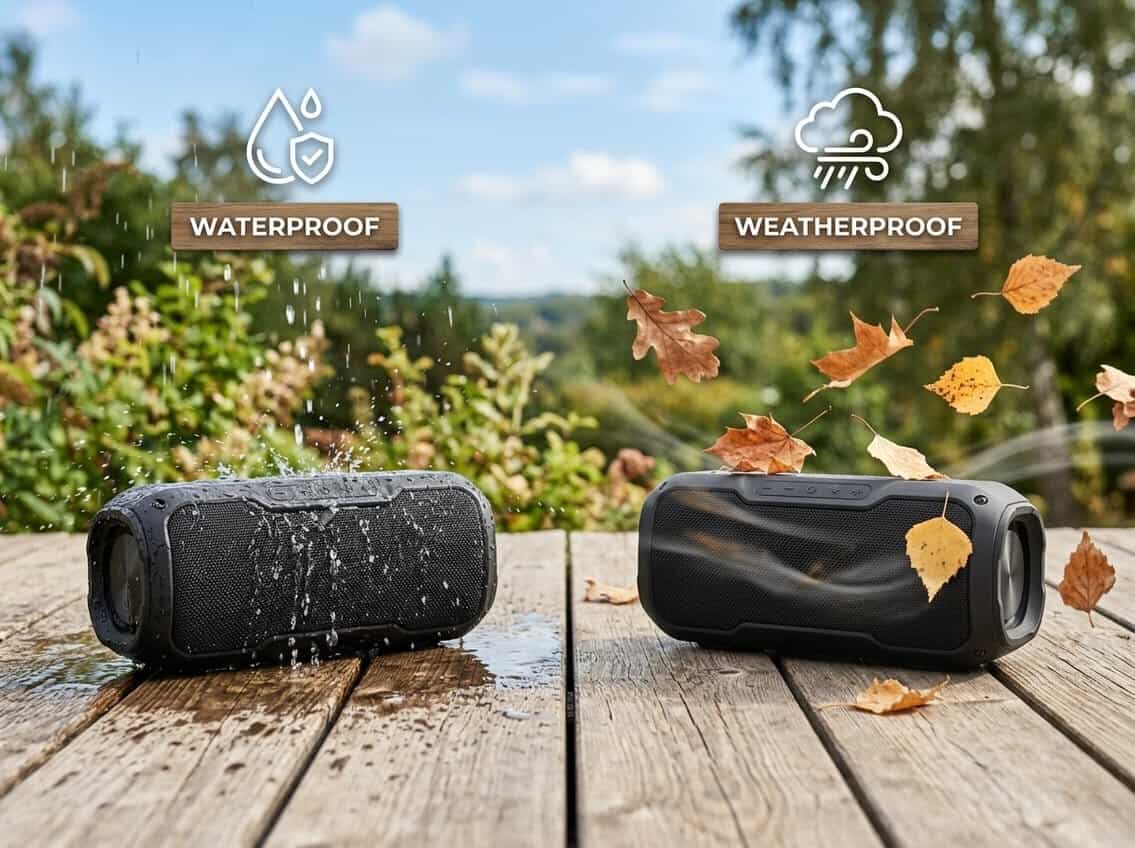
The terms weatherproof and waterproof describe different levels of protection, with waterproof speakers resisting water immersion while weatherproof speakers handle broader environmental challenges like UV rays, temperature changes, and salt exposure.
Defining Weatherproof vs Waterproof
Waterproof outdoor speakers resist water penetration at specific depths and durations. A speaker labeled waterproof typically has a high second digit in its IP rating, indicating strong protection against water. The IP rating system uses two digits: the first measures dust protection (0-6) and the second measures water protection (0-9).
Weather-resistant speakers go beyond simple water protection. These speakers handle multiple environmental threats including extreme temperatures, humidity, UV radiation, and wind. Weatherproof does not equal waterproof because a speaker might survive underwater but fail when exposed to prolonged sunlight or salt air.
Materials matter significantly for weatherproof construction. Manufacturers use fiberglass enclosures instead of wood to prevent rot. They apply powder-coated hardware to resist rust and UV-rated plastics to prevent sun damage. A speaker with IP55 protection might still develop rusty grilles, peeling paint, or degraded foam if not built with proper weatherproof materials.
The Role of Water-Resistance and Dustproofing
The first digit in an IP rating measures protection against solid particles like dust and sand. Dustproof outdoor speakers need a first digit of 6 for complete dust sealing. A rating of 5 provides protection against dust ingress but not complete sealing.
The second digit defines water resistance levels from 0 to 9. Higher numbers indicate stronger protection:
- IPX4: Splash-resistant from any direction
- IPX5: Withstands water jets
- IPX6: Resists powerful water jets
- IPX7: Survives immersion up to 1 meter for 30 minutes
- IPX8: Handles deeper immersion beyond 1 meter
General outdoor use requires at least IP54 protection for limited dust ingress and splash resistance. Pool or beach environments need IP67 or higher to handle both dust sealing and water immersion.
Understanding Common IP Ratings and Their Use Cases

IP ratings use a two-digit system where the first digit measures dust protection on a scale of 0 to 6, and the second digit measures water protection on a scale of 0 to 9. Different ratings work better for specific outdoor situations, from light rain protection to full underwater submersion.
IPX4 Outdoor Speakers: Splash Protection
IPX4 outdoor speakers provide basic water resistance against splashes from any direction. The “X” in the rating means the speaker hasn’t been tested for dust protection, while the 4 indicates it can handle water splashing against it for at least five minutes.
These speakers work well for covered patios, porches, or casual outdoor gatherings where they might encounter light rain or accidental spills. Popular models like the Ultimate Ears HYPERBOOM and Bose Portable Smart Speaker use IPX4 ratings and handle most casual outdoor situations.
IPX4 speakers should not be used in heavy rain or wet environments. They can tolerate water spray but cannot withstand direct water jets or submersion. Users need to bring these speakers inside during storms or when not actively supervising them outdoors.
IPX5 Outdoor Speakers: Jet Water Protection
IPX5 outdoor speakers offer stronger water protection than IPX4 models. The 5 rating means the speaker can withstand water jets from a nozzle at 6.3mm diameter from any direction for at least three minutes.
This level of protection suits outdoor activities near pools, beaches, or boating environments. The speaker can handle getting sprayed with a hose or caught in moderate rainfall without damage. IPX5 speakers still lack dust protection testing, so users should keep them away from extremely dusty or sandy conditions.
The jet water protection makes IPX5 speakers more versatile for active outdoor use. They handle splashes, rain, and direct water spray without issues. However, they still cannot be submerged in water, so dropping them in a pool or lake could cause permanent damage.
IP55 Outdoor Speakers: Everyday Outdoor Durability
IP55 outdoor speakers combine dust and water protection in one rating. The first digit of 5 means the speaker has limited dust ingress protection, while the second 5 provides the same jet water protection as IPX5 models.
For general outdoor use where dust and occasional splashes are likely, IP55 provides solid protection. The dust protection prevents most particles from entering the speaker enclosure, though some dust ingress can still occur under prolonged exposure.
IP55 rated speakers get commonly marketed as “weatherproof”, but this rating has limitations. The water resistance tests under the IEC 60529 standard only last 15 minutes, which means severe weather conditions lasting longer could still damage the speakers.
Professional outdoor installations often start with IP55 as a baseline. Additional weatherproofing features like UV-rated materials, rust-resistant hardware, and fiberglass enclosures provide better long-term outdoor durability beyond the basic IP rating.
IP67 and IP68 Outdoor Speakers: Immersion and Best-in-Class Protection
IP67 outdoor speakers offer complete dust protection (rated 6) and can withstand water immersion up to 1 meter deep for 30 minutes. The SoundLink Flex Bluetooth speaker has an IP67 rating, making it sealed against dust and fully waterproof for most outdoor activities.
These speakers handle beach trips, poolside use, and paddleboarding without concern. Users can drop IP67 speakers in shallow water and retrieve them without damage. The complete dust seal also protects against sand, dirt, and other fine particles.
IP68 outdoor speakers provide the highest standard protection available. The 8 rating means they can survive continuous submersion beyond 1 meter, with specific depth and duration determined by the manufacturer. These speakers work in the harshest outdoor conditions, including underwater use in some cases.
The main difference between IP67 and IP68 involves submersion depth and duration. Both ratings offer the same dust protection but IP68 handles deeper water and longer immersion times, making it ideal for water sports or extreme outdoor adventures.
Selecting the Right Outdoor Speaker for Your Environment
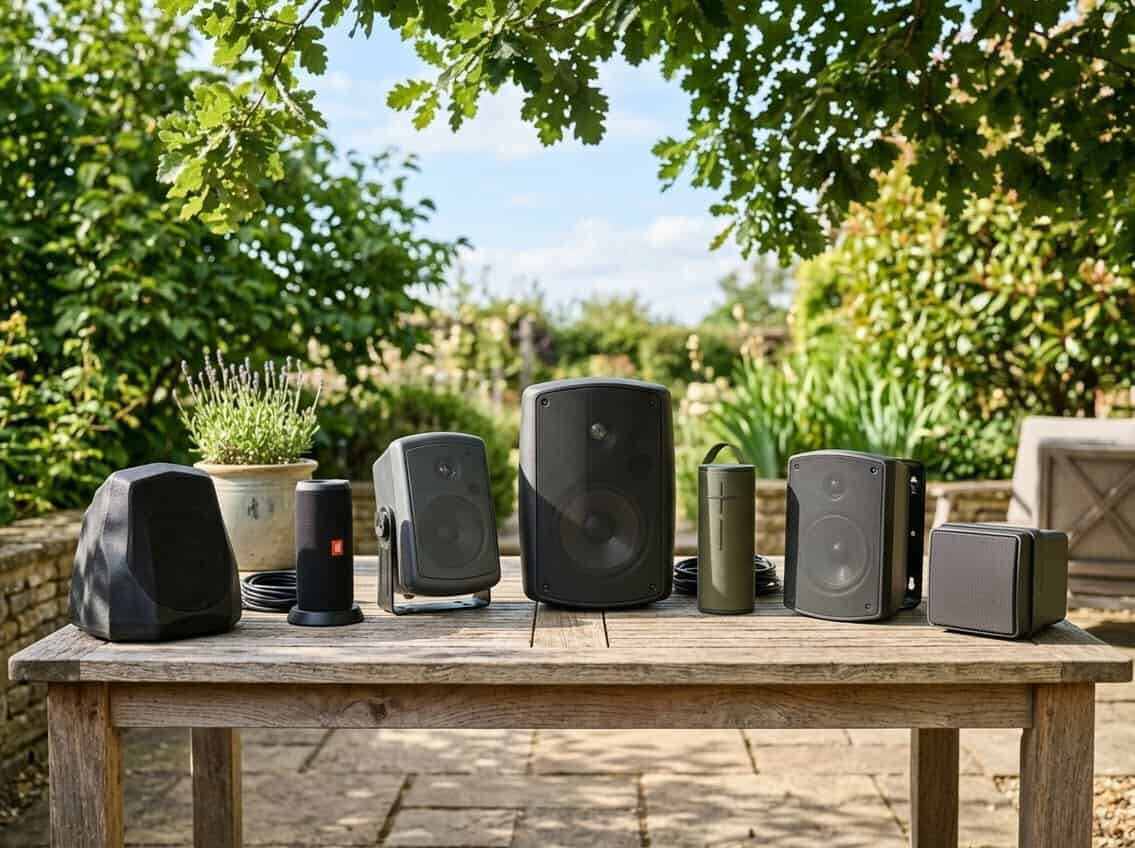
The location where speakers will be installed determines what level of protection they need against dust and moisture. Different outdoor spaces require different IP ratings, and understanding these requirements helps ensure speakers perform reliably for years.
Minimum IP Ratings Based on Location
For covered patios and sheltered decks, an IP44-rated speaker provides adequate protection for semi-protected areas. The first digit (4) indicates protection against solid objects larger than 1mm, while the second digit (4) protects against water splashes from any direction.
Fully exposed locations like pool areas, gardens, or open terraces need higher ratings. An IP54 rating offers better dust resistance and protection from water spray. However, environments with heavy rain, snow, or high humidity demand IP65 or IP66 ratings for ideal protection.
Coastal installations face additional challenges from salt spray and moisture. These locations benefit from IP66 or IP67 ratings. The 6 in the first position means complete dust protection, while 6 or 7 in the second position guards against powerful water jets or temporary water immersion.
Considerations for Long-Term Outdoor Use
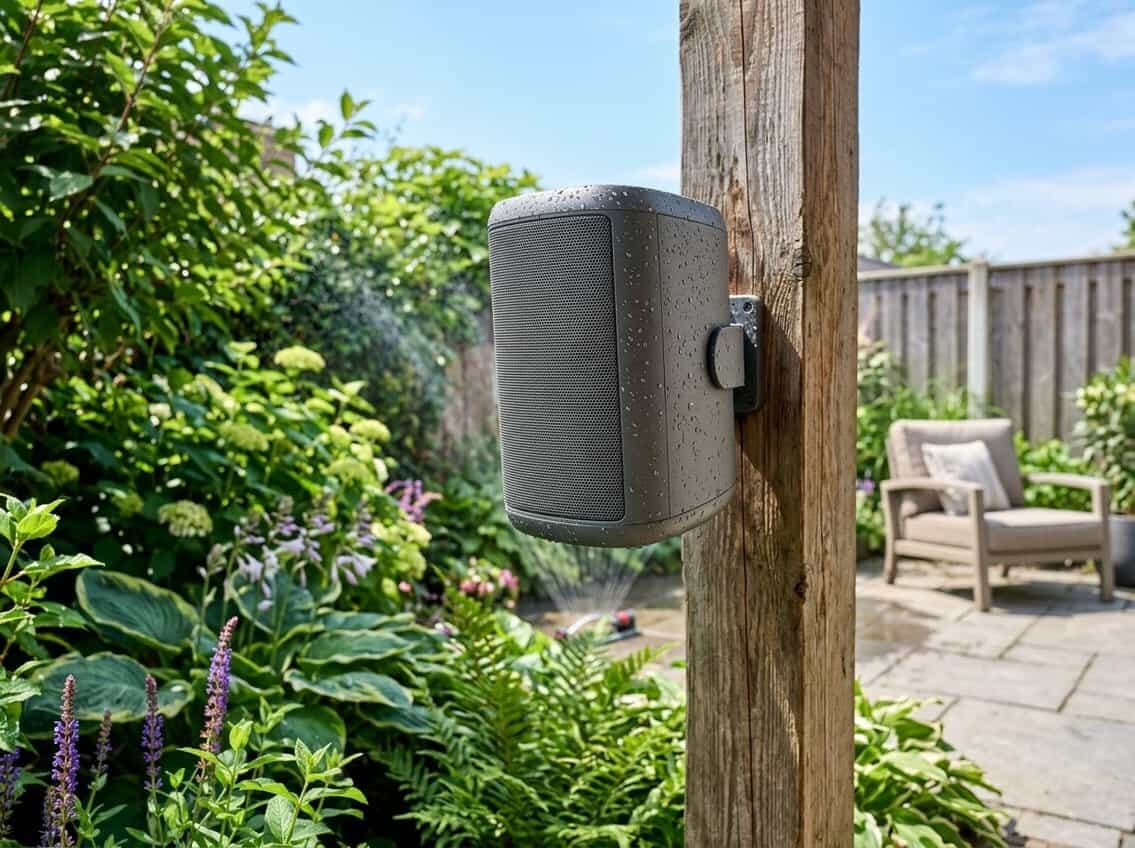
Can outdoor speakers stay outside permanently? Yes, but only when they feature weather-resistant materials and proper sealing. Fiberglass-reinforced plastic enclosures, aluminum grilles, and UV-stable finishes resist rust, corrosion, and sun damage over time.
Temperature changes and humidity affect speaker components differently than rain alone. Speakers designed for long-term outdoor use include hydrophobic coatings, sealed crossovers, and weather-treated drivers. These features prevent moisture from entering internal components.
The mounting hardware matters as much as the speaker itself. Corrosion-resistant brackets with secure locking mechanisms prevent movement in high winds or heavy snow. Weather-resistant input connectors and waterproof cable glands maintain sealed electrical connections that won’t fail during storms.
Understanding Manufacturer Recommendations
Manufacturers test their products under specific conditions and provide IP ratings based on those tests. Not all speakers are designed for the same environments, so checking the installation environment requirements proves essential before purchase.
Some manufacturers offer additional ratings beyond the standard IP system. Impact ratings (IK ratings) indicate resistance to drops and physical impacts, which matters in high-traffic areas or locations where speakers might get bumped.
Product documentation typically specifies temperature ranges, humidity limits, and recommended installation methods. Following these guidelines ensures the warranty remains valid and the speakers perform as expected throughout their lifespan.
Protecting Outdoor Speakers Through Weather and Seasons
Outdoor speakers need protection against multiple environmental threats including freezing temperatures, direct sunlight, salt exposure, and extreme heat. The IP rating system measures this protection using two digits: the first digit rates dust protection from 0 to 6, while the second digit rates water protection from 0 to 9.
Performance During Winter Conditions
Cold temperatures pose specific challenges for outdoor speakers in winter. Ice formation can damage speaker cones and surrounds when moisture freezes and expands inside the enclosure. Speakers with ratings of IP65 or higher prevent water from entering, which stops ice damage before it starts.
Snow accumulation creates another concern. Heavy snow loads can stress mounting hardware and push moisture into any unsealed gaps. The first digit in an IP rating indicates dust protection, and a rating of 5 or 6 ensures snow particles cannot penetrate the enclosure.
Temperature swings between day and night cause condensation inside speaker cabinets. Sealed enclosures with proper IP ratings for outdoor speakers prevent this moisture buildup. Some manufacturers include drainage ports or breathing membranes that equalize pressure without allowing water entry.
Addressing UV, Salt, and Temperature Extremes
Direct sunlight breaks down plastic components and fades finishes over time. UV-resistant materials and powder-coated metal grilles protect speakers in sunny locations. Speakers rated for temperatures above 140°F handle direct sun exposure without warping or cracking.
Salt air near oceans corrodes metal parts and degrades rubber seals. Stainless steel hardware and silicone gaskets resist salt damage better than standard materials. Selecting weatherproof outdoor loudspeakers for coastal areas requires marine-grade components.
Extreme heat above 120°F damages voice coils and adhesives. Speakers designed for hot climates use high-temperature wire and heat-resistant glues. Cold weather below -40°F makes plastics brittle and reduces battery life in wireless models.
Maintenance Tips for Longevity
Regular cleaning removes debris that traps moisture against speaker surfaces. A soft brush removes leaves and dirt from grilles without pushing particles into driver openings. Hosing down speakers rated IPX5 or higher clears accumulated grime safely.
Inspect mounting hardware every six months for rust or loosening. Tighten bolts and replace corroded screws before they fail. Check cable connections for corrosion and reseal any conduit openings where water might enter.
Apply silicone spray to rubber gaskets annually to maintain flexibility. This prevents cracking and maintains the seal that protects internal components. Cover unused speakers during extended periods of non-use to reduce UV exposure and weather wear.
Frequently Asked Questions
IP ratings use a two-digit system where the first digit measures protection against dust and solid particles (0-6) and the second digit measures protection against water and liquids (0-9). Higher numbers indicate better protection in each category.
What IP rating should an outdoor speaker have for year-round use?
For year-round outdoor use, speakers should have at least an IP54 rating for general outdoor conditions where dust and occasional splashes occur. However, IP55 or higher provides better long-term durability.
The first digit of 5 means the speaker has strong protection against dust, though not completely sealed. The second digit of 4 or 5 indicates protection against water splashes from multiple directions.
Speakers designed for permanent outdoor installations often start at IP55 as a baseline. This rating protects against limited dust ingress and low-pressure water jets from any direction.
For locations with heavy rain, snow, or high humidity, IP65 or IP67 ratings offer more reliable protection. These higher ratings ensure the speaker withstands prolonged exposure to harsh weather conditions throughout all seasons.
What does an IP67 rating mean for a speaker in real-world outdoor conditions?
An IP67 rating means the speaker is completely dust-tight and can survive temporary immersion in water up to 1 meter deep for 30 minutes. The 6 in the first position indicates total protection against dust and solid particles.
The 7 in the second position means the speaker can handle submersion in shallow water for short periods. This makes IP67 speakers suitable for poolside use, beach environments, or areas where accidental submersion might occur.
In real-world conditions, IP67 speakers resist heavy rain, snow, and direct water contact. They can be rinsed off with a hose if they get dirty or muddy.
However, IP67 testing only evaluates protection for 15 minutes or less under controlled conditions. Long-term exposure to UV radiation, salt water, extreme temperatures, and continuous moisture requires additional weatherproofing features beyond the IP rating itself.
How does an IP68-rated speaker differ from an IP67-rated speaker?
IP68-rated speakers can survive deeper water submersion and longer immersion times compared to IP67 models. While IP67 speakers handle up to 1 meter of water for 30 minutes, IP68 speakers withstand depths beyond 1 meter.
The exact depth and duration for IP68 varies by manufacturer since the standard allows companies to specify their own testing parameters. Some IP68 speakers may handle 1.5 meters for an hour, while others withstand 3 meters for extended periods.
Both ratings provide complete dust protection with the first digit of 6. The key difference lies entirely in water resistance capabilities.
For outdoor speakers, IP68 offers minimal practical advantage over IP67 unless the speaker will be used underwater or in conditions involving prolonged submersion. Most outdoor installations benefit equally from either rating when combined with proper weatherproofing materials.
Is IP65 protection enough for rain exposure, or is a higher rating recommended?
IP65 protection handles rain exposure effectively for most outdoor applications. The 5 in the second position means the speaker resists low-pressure water jets from any direction, which exceeds typical rainfall intensity.
This rating protects against heavy rain, sprinklers, and water spray. The 6 in the first position ensures complete dust protection, preventing particles from entering the enclosure.
Higher ratings like IP67 or IP68 provide better protection against standing water, flooding, or situations where water might pool around the speaker. They also offer more safety margin for unexpected weather events.
For covered patios or sheltered outdoor areas, IP65 proves sufficient. For fully exposed locations or coastal environments with salt spray, IP67 provides better long-term reliability.
What is the difference between water-resistant and waterproof when evaluating speakers?
Water-resistant speakers withstand light moisture, splashes, and brief exposure to water but cannot handle submersion. Waterproof speakers can survive being fully submerged in water without damage.
In IP rating terms, water-resistant typically describes ratings with a second digit of 4 or 5. These speakers handle splashing water from various angles but fail if submerged.
Waterproof speakers usually have a second digit of 7 or 8, meaning they survive temporary or continuous submersion. IP67 and IP68 ratings qualify as truly waterproof.
The distinction matters because marketing terms like “water-resistant” and “waterproof” lack precise definitions without IP ratings. An IP rating provides objective, standardized protection levels rather than vague claims.
What is the 83% rule for speakers, and how does it affect safe volume levels outdoors?
The 83% rule suggests keeping speaker volume at or below 83% of maximum output to prevent distortion and protect the speaker components from damage. This guideline helps extend speaker lifespan and maintain sound quality.
Running speakers at maximum volume for extended periods causes overheating, voice coil damage, and cone deterioration. The 83% limit provides a safety buffer that reduces stress on internal components.
Outdoor environments require higher volumes due to sound dissipation in open spaces. However, pushing speakers to 100% volume in these settings accelerates wear and increases failure risk.
For outdoor speakers, maintaining the 83% rule becomes more challenging when trying to achieve adequate sound coverage. Choosing speakers with higher wattage ratings allows sufficient volume without exceeding safe operating levels.
Will Montgomery draws on hands-on experience with outdoor audio to decode speaker IP ratings — what each number means and which you actually need — so you buy speakers that survive your weather.