

Choosing the right outdoor furniture material can make the difference between a set that lasts a decade and one that falls apart after a few seasons. The best outdoor furniture materials in 2026 include teak for durability and style, aluminum for low maintenance and rust resistance, resin wicker for classic looks with weather protection, and Polywood for eco-friendly longevity. Each material offers different benefits depending on climate, budget, and how much upkeep someone is willing to handle.
Last Updated: May 2026 | Will Montgomery has spent years sourcing and evaluating outdoor furniture and patio accessories. The material comparisons below reflect real-world durability, maintenance expectations, and value across different climates and budgets.
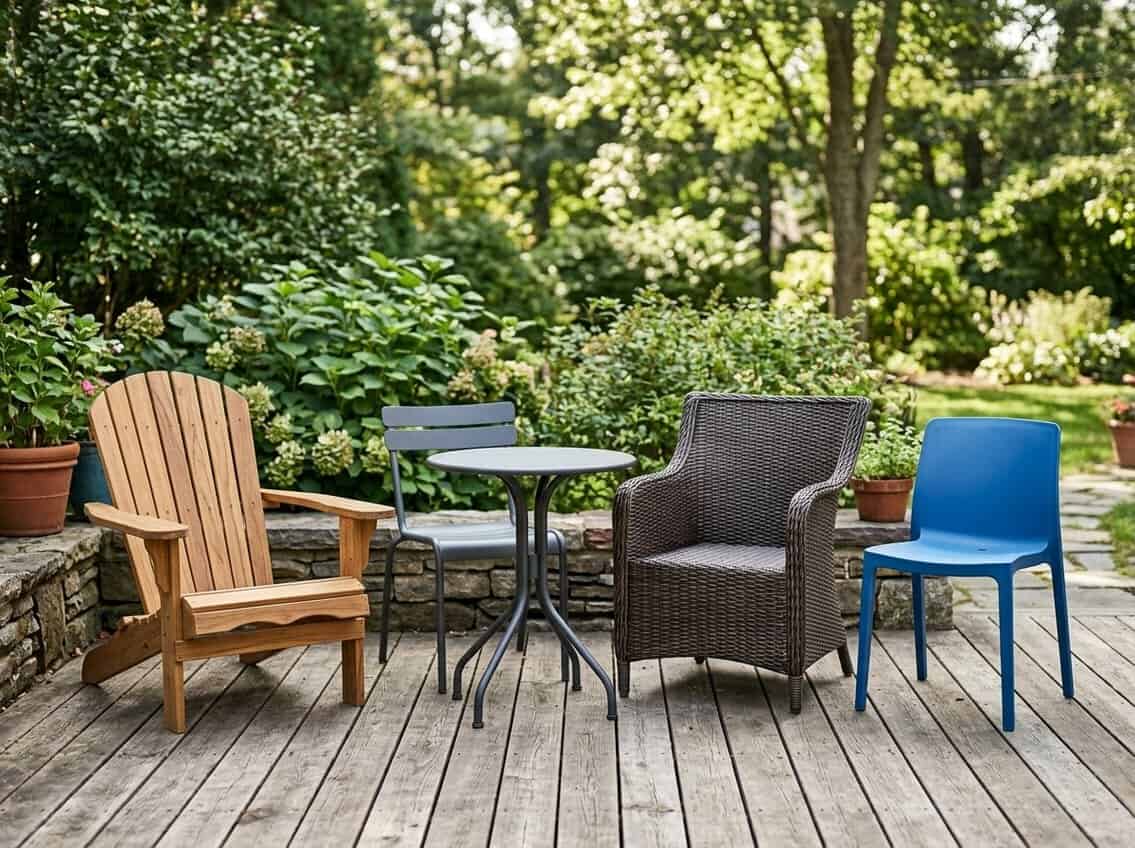
Understanding which materials last longest and need less maintenance helps buyers avoid costly mistakes. Some materials thrive in humid coastal areas while others perform better in dry heat or cold winters. The choice also depends on personal style preferences and whether the furniture will stay outside year-round or get stored during harsh weather.
This guide breaks down the most popular outdoor furniture materials with side-by-side comparisons of lifespan, maintenance needs, climate compatibility, and cost. It covers everything from traditional wood options like teak to modern alternatives like HDPE plastics, helping readers make informed decisions based on their specific needs.
Key Takeaways
- Different materials perform better in specific climates, with aluminum excelling in humid areas and teak adapting well to most environments
- Maintenance requirements vary widely, from aluminum needing almost no upkeep to acacia wood requiring oil treatments every few months
- Initial cost doesn’t always reflect long-term value, as durable materials like teak and Polywood often outlast cheaper alternatives by years
Key Criteria for Evaluating Outdoor Furniture Materials
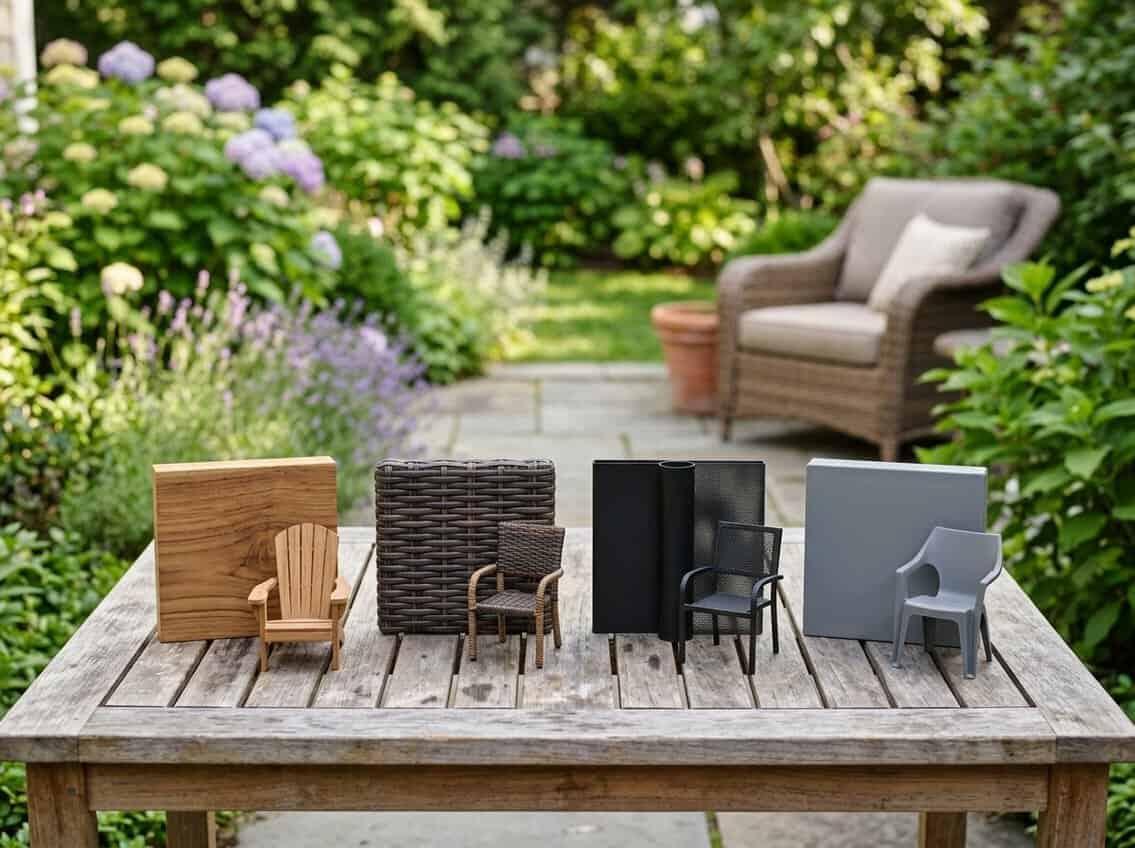
Choosing outdoor furniture materials requires assessing how each option handles weather exposure, maintenance demands, comfort levels, and environmental impact. Different materials excel in different areas, so understanding these key factors helps match furniture to specific needs and climates.
Durability and Weather Resistance
Weather resistance determines how long outdoor furniture will last. Materials must handle rain, UV rays, temperature changes, and humidity without breaking down.
From experience: the sun is a bigger factor than most people expect. Cheaper sets rarely lasted more than two seasons in direct exposure. Stepping up to a mid-range set and actually storing the cushions stretched that to five years. The goal now is ten — though that depends on staying disciplined about storage.
Teak contains natural oils that repel water and resist rot. It can last 25-30 years outdoors with minimal protection. Aluminum won’t rust and handles all weather conditions well, lasting 15-20 years or more.
Resin wicker with UV stabilizers prevents cracking and fading for 5-10 years. Without these stabilizers, synthetic wicker degrades faster in direct sunlight. Polywood (HDPE) resists moisture, salt spray, and insects. It doesn’t crack, chip, or splinter and can last 20+ years.
Cold climates require materials that won’t crack from freezing. Hot, sunny areas need UV-resistant options. Coastal regions demand salt-resistant materials like aluminum or marine-grade polymers.
| Material | Lifespan | Maintenance | Best Climate | Cost Range |
|---|---|---|---|---|
| Teak | 25-30 years | Low (annual cleaning) | All climates | $$$$ |
| Aluminum | 15-20 years | Very low (soap and water) | All climates | $$ |
| Resin Wicker | 5-10 years | Low (occasional washing) | Moderate sun exposure | $-$$ |
| Polywood (HDPE) | 20+ years | Very low (soap and water) | All climates | $$$ |
Maintenance Requirements
Maintenance needs vary significantly between outdoor furniture materials. Some require regular care while others need almost nothing.
Teak needs cleaning once or twice per year. Without treatment, it develops a silver-gray patina. Applying teak oil maintains the original honey color but requires reapplication every few months.
Aluminum requires only soap and water cleaning. Powder-coated finishes may need touch-ups if scratched. No sealing or special treatments are necessary.
Resin wicker cleans easily with a hose or damp cloth. Dirt doesn’t penetrate the synthetic material. Cushions need more attention than the frames themselves.
Polywood needs occasional washing with soap and water. It never requires painting, staining, or waterproofing. Stubborn stains come off with a soft brush and mild cleaner.
Comfort, Aesthetics, and Practicality
Material choice affects both how furniture looks and feels. Comfort and style preferences influence which materials work best for different spaces.
Teak offers a classic, natural appearance that fits traditional and modern designs. The wood feels warm to the touch but can get hot in direct sun without cushions.
Aluminum frames are lightweight and easy to move. The metal gets very hot in summer sun, so cushions or slings are essential for seating. Aluminum comes in many colors and styles through powder coating.
Resin wicker provides texture and visual interest. It mimics natural wicker but doesn’t splinter or scratch skin. The woven design allows airflow, keeping seats cooler.
Polywood looks like painted wood but feels like smooth plastic. It stays cooler than metal in direct sun. The material comes in various colors that go through the entire piece, not just surface coating.
Weight matters for rearranging furniture. Aluminum and resin wicker are lightest. Teak and Polywood are heavier but more stable in wind.
Environmental Impact and Sustainability
Environmental considerations include how materials are sourced and their end-of-life disposal. Sustainable choices reduce environmental harm.
Teak from FSC-certified forests ensures responsible harvesting. Plantation-grown teak is more sustainable than old-growth wood. Teak is biodegradable at end of life.
Aluminum is highly recyclable. Recycled aluminum uses 95% less energy than producing new material. Many manufacturers use recycled content in their frames.
Polywood contains recycled plastic bottles and containers. One chair can use hundreds of recycled bottles. The material is fully recyclable again at end of life.
Resin wicker quality varies. High-density polyethylene (HDPE) wicker recycles more easily than mixed polymers. Check if the manufacturer uses recycled content or accepts returns for recycling.
Ready to shop? See our top-ranked outdoor furniture sets by material in our Best Outdoor Dining Sets guide.
Top Outdoor Furniture Materials: Pros and Cons
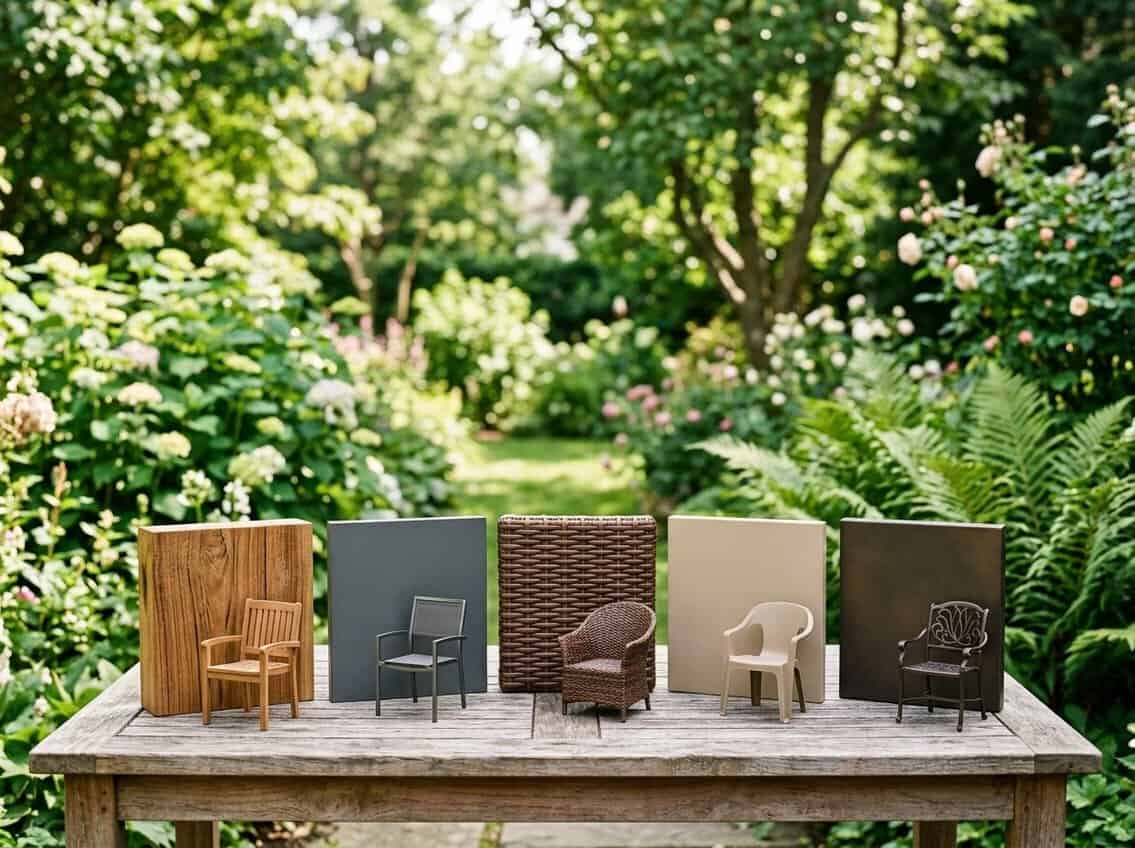
Each material offers different strengths in durability, maintenance needs, and climate resistance. Teak provides natural weather protection, aluminum resists rust, resin wicker offers classic styling, HDPE poly lumber mimics wood without upkeep, and steel delivers maximum strength.
| Material | Lifespan | Maintenance | Best Climate | Cost Range |
|---|---|---|---|---|
| Teak | 25-50+ years | Medium (annual oiling) | All climates | $$$$ |
| Powder-Coated Aluminum | 15-25 years | Low (occasional cleaning) | All climates | $$ |
| Resin/Synthetic Wicker | 10-15 years | Low (soap and water) | Moderate climates | $$ |
| HDPE Poly Lumber | 20-30 years | Very low (hose off) | All climates | $$$ |
| Steel/Wrought Iron | 15-30 years | Medium (rust prevention) | Dry climates | $$-$$$ |
Teak
Teak stands out as a premium wood option for outdoor furniture due to its high natural oil content. These oils protect the wood from water damage, rot, and insects without chemical treatment.
The wood starts with a golden-brown color but develops a silver-gray patina over time. This color change doesn’t affect durability. People who want to maintain the original color need to apply teak oil once or twice per year.
Benefits of teak:
- Extremely durable and heavy
- Naturally resists moisture and pests
- Stays cooler than metal in direct sun
- Works in any climate
Drawbacks of teak:
- Most expensive outdoor furniture material
- Requires annual oiling to preserve color
- Heavy weight makes moving difficult
Teak requires sanding every few years if the surface becomes rough. The investment-worthy material can last multiple decades with proper care.
Powder-Coated Aluminum
Aluminum furniture is lightweight and rust-resistant, making it one of the most practical choices. The powder coating adds color and extra protection against the elements.
This material works well in humid, coastal, and cold environments. It won’t corrode from salt air or moisture. The frames stay sturdy while remaining easy to move and rearrange.
Heat retention is the main concern. Dark-colored aluminum absorbs sun and becomes hot to touch. Quality manufacturers apply multiple coating layers to reduce heat absorption.
Advantages:
- Minimal maintenance required
- Won’t rust or corrode
- Easy to move due to light weight
- Modern, clean appearance
Disadvantages:
- Gets hot in direct sunlight
- Powder coating can chip with impact
- Less substantial feel than wood or iron
The coating may chip over time at stress points. Touching up chips quickly with matching paint prevents underlying metal exposure. Rubber feet on legs help prevent scratching.
Resin and Synthetic Wicker
Resin wicker mimics natural rattan but uses weather-resistant synthetic materials. High-density polyethylene (HDPE) wicker offers the best durability and UV resistance.
The woven design creates a classic, textured look that suits various decor styles. Cleaning requires only mild dish soap and a soft brush. Scrubbing between the weaves prevents mold and mildew buildup.
Lower-quality resin becomes brittle and fades after several seasons. UV-resistant HDPE wicker lasts longer and maintains color better. A long warranty indicates better material quality.
Positive aspects:
- Lightweight and portable
- Simple cleaning process
- Classic woven aesthetic
- Comfortable without cushions
Negative aspects:
- Less durable than metal or hardwood
- Can fade in intense sun exposure
- May become brittle over time
- Weave gaps trap dirt and debris
Synthetic wicker works best in covered patios or moderate climates. Extreme temperature swings and constant sun exposure shorten its lifespan compared to other materials.
HDPE Poly Lumber (Polywood)
HDPE poly lumber is made from recycled plastic bottles and containers. The material looks like painted wood but requires almost no maintenance. It won’t crack, splinter, rot, or need painting.
This durable material resists moisture, stains, and fading. Colors go through the entire material rather than just surface coating. Scratches don’t show bare material underneath.
Cleaning takes minutes with a garden hose or damp cloth. The material never needs sanding, staining, or sealing. It handles humid climates, coastal salt air, and freezing temperatures equally well.
Strengths:
- Nearly maintenance-free
- Won’t crack, peel, or splinter
- Made from recycled materials
- Color stays consistent
- Resists moisture and insects
Weaknesses:
- Higher upfront cost than basic plastic
- Limited style options compared to wood
- Can feel hot in direct sun
- Heavier than standard plastic
HDPE poly lumber represents the best outdoor furniture material for people who want wood appearance without wood maintenance. The material typically lasts 20 to 30 years with minimal care.
Steel and Wrought Iron
Steel and wrought iron provide the strongest, most stable outdoor furniture frames. The heavy weight prevents tipping in wind. Ornate designs create traditional or elegant appearances.
Powder coating protects the metal from rust. The coating can chip, exposing bare metal to moisture. Rust develops quickly once metal is exposed.
Regular inspection and touch-up paint maintain protection. Furniture covers during wet seasons extend lifespan. Dry climates suit iron furniture better than humid or coastal areas.
Pros:
- Extremely strong and stable
- Heavy weight resists wind
- Ornate designs possible
Wood Options: Teak and Alternative Hardwoods
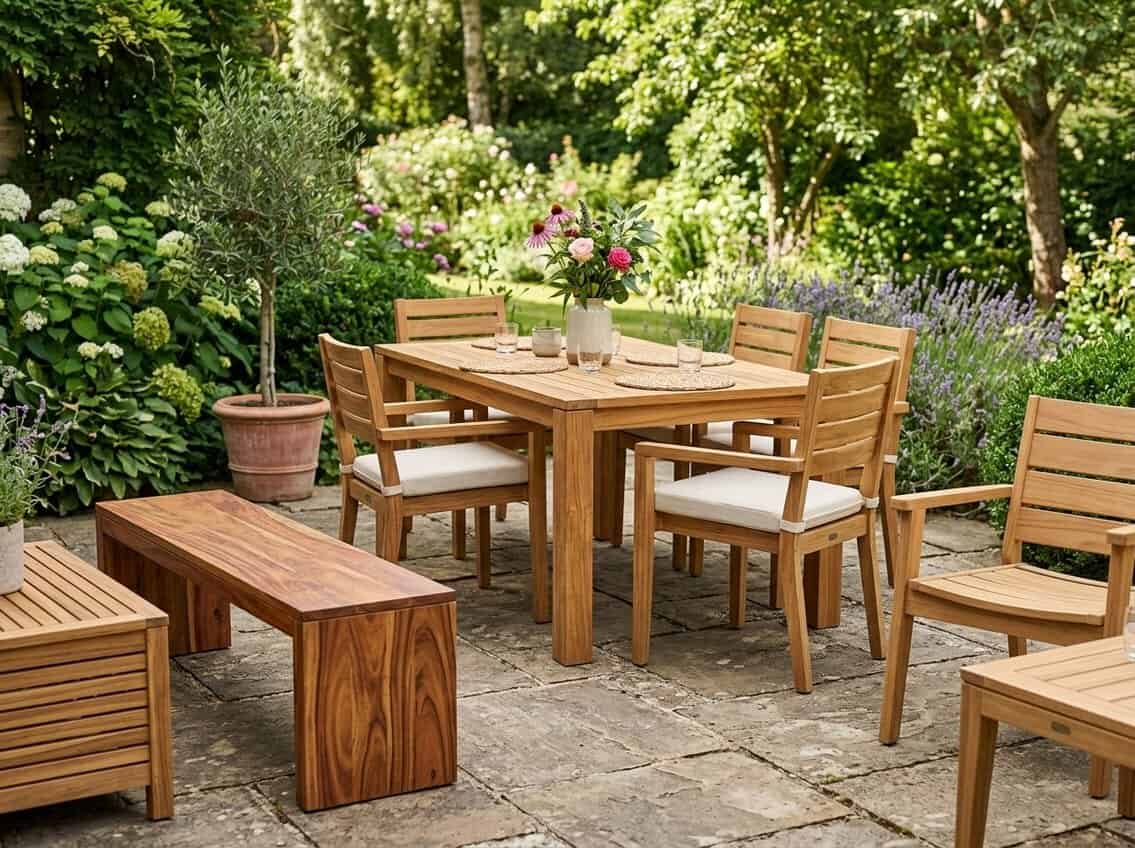
Wood furniture brings natural warmth to outdoor spaces, with teak leading as the premium choice and several hardwood alternatives offering different benefits at lower price points. Natural oils, grain density, and weather resistance vary significantly between wood types, affecting both longevity and care requirements.
Teak: Premium Features and Longevity
Teak stands out among outdoor furniture materials due to its natural oil content and tight grain structure. These oils repel water and prevent rot, mildew, and insect damage without any chemical treatment.
The wood contains silica, which protects against warping and cracking even in harsh weather conditions. Teak furniture can last 20 to 40 years or more with minimal maintenance, making it a worthwhile investment despite higher upfront costs.
Teak develops a silver-gray patina over time when left untreated. This natural aging doesn’t affect the wood’s structural integrity. Homeowners who prefer the original honey-brown color can maintain it with periodic oiling, though this requires extra effort.
The material performs well in all climates, from humid coastal areas to dry inland regions. Its dense structure resists splitting and provides stable dimensions throughout seasonal temperature changes.
Acacia, Eucalyptus, and Cedar
Acacia offers a budget-friendly alternative with decent weather resistance at a fraction of teak’s cost. The wood has natural oils but requires regular sealing to prevent weathering and extend its lifespan to 10-15 years.
Eucalyptus provides moderate durability with a tight grain similar to teak but needs consistent maintenance. The differences between acacia, eucalyptus, and teak become clear in weather resistance, with teak outlasting both alternatives significantly.
Cedar contains natural preservatives that resist decay and insect damage. It’s lightweight and easy to move but softer than hardwoods, making it prone to dents and scratches. The wood works best in covered areas or mild climates.
Price Comparison:
- Teak: $$$$
- Acacia: $$
- Eucalyptus: $$
- Cedar: $-$$
Weathering and Maintenance for Wood
All wood furniture requires some level of care to maintain appearance and function. Teak demands the least attention, needing only occasional cleaning with soap and water.
Alternative hardwoods need more regular maintenance. Proper sealing and cleaning can double the service life of woods like acacia and cedar. Apply protective sealant every 1-2 years for best results.
Wood furniture should be cleaned seasonally to remove dirt, pollen, and mildew. Use a soft brush and mild detergent, avoiding pressure washers that can damage the grain. Check joints and hardware annually, tightening loose screws and replacing corroded fasteners.
Storage extends furniture life regardless of wood type. Move pieces under cover or use protective covers during harsh winter months or extended periods of non-use.
| Material | Lifespan | Maintenance | Best Climate | Cost Range |
|---|---|---|---|---|
| Teak | 20-40+ years | Low – occasional cleaning | All climates | $$$$ |
| Acacia | 10-15 years | High – annual sealing | Dry to moderate | $$ |
| Eucalyptus | 10-15 years | High – regular sealing | Moderate humidity | $$ |
| Cedar | 15-20 years | Moderate – periodic sealing | Dry, covered areas | $-$$ |
| Aluminum | 15-20 years | Low – wipe down | All climates | $$-$$$ |
| Resin Wicker | 10-15 years | Low – occasional cleaning | Most climates | $$-$$$ |
| Polywood (HDPE) | 20+ years | Very low – soap and water | All climates | $$$-$$$$ |
Ready to shop? See our top-ranked outdoor furniture sets by material in our Best Outdoor Dining Sets guide.
Aluminum Versus Wicker: A Detailed Comparison

Aluminum furniture weighs 30-50% less than wicker alternatives while offering superior weather resistance in coastal and extreme climates. Synthetic wicker provides traditional aesthetics with moderate durability, while natural wicker requires protected placement to avoid deterioration within 2-3 years.
Aluminum: Strengths and Limitations
Aluminum frames handle temperature extremes from -40°F to 120°F without warping or cracking. The material resists corrosion in salt air environments where other metals fail quickly.
Commercial-grade aluminum uses 1.2mm-2.0mm wall thickness with welded joints rather than bolted connections. This construction prevents wobbling at connection points that develops in lower-quality pieces. Powder coating adds a protective layer that resists chipping and fading for 5-7 years.
The lightweight nature creates portability benefits but requires securing mechanisms in windy locations. Aluminum dining chairs typically weigh 8-12 pounds compared to 15-20 pounds for wicker versions. This weight difference simplifies rearrangement and seasonal storage.
Heat retention poses a comfort challenge in direct sunlight. The material absorbs and radiates warmth, making cushions necessary for extended seating. Aluminum dries quickly after rain, reducing moisture-related problems with cushion storage.
Wicker: Synthetic Versus Natural
Natural wicker uses rattan, bamboo, or willow fibers that create authentic texture but absorb moisture. These materials develop mold and structural weakness within 2-3 years of outdoor exposure without covered protection.
Synthetic resin wicker uses HDPE or PVC materials that resist UV rays and temperature fluctuations while maintaining flexibility. Quality synthetic versions handle full sun and rain exposure that destroys natural fibers. The woven surface creates pressure points during extended use, requiring cushions for comfortable seating.
Synthetic wicker maintains appearance for approximately five years before showing subtle color variations. Lower-quality versions develop fraying at stress points after 3-4 years. The material may become brittle in extreme cold below 0°F or fade in intense UV exposure.
Wicker’s additional weight provides stability in moderate wind conditions. The heavier construction complicates seasonal storage compared to aluminum alternatives.
Best Use Cases for Each Material
Aluminum suits pool areas, coastal properties, and regions with extreme weather conditions. The corrosion resistance and temperature tolerance make it practical for year-round outdoor placement. Budget-conscious buyers benefit from aluminum’s longevity, with quality pieces maintaining structural integrity for 7-10 years.
Wicker works best on covered patios, screened porches, and mild climates with moderate rainfall. Traditional aesthetics appeal to style-focused buyers creating cottage or resort-style outdoor spaces. Synthetic wicker handles occasional rain exposure but performs better with overhead protection.
| Material | Lifespan | Maintenance | Best Climate | Cost Range |
|---|---|---|---|---|
| Aluminum | 7-10 years | Low – occasional cleaning | All climates, especially coastal | $400-$3,000+ |
| Synthetic Wicker | 5-7 years | Medium – regular cleaning, cushion care | Moderate, covered areas | $300-$2,500+ |
| Natural Wicker | 2-3 years | High – covered storage required | Indoor/covered only | $200-$1,500+ |
Climate considerations influence the best outdoor furniture material choice significantly. Properties in hurricane-prone areas benefit from aluminum’s wind resistance and quick-drying properties. Homes in dry climates with intense sun exposure see better performance from powder-coated aluminum than synthetic wicker prone to UV degradation.
Ready to shop? See our top-ranked outdoor furniture sets by material in our Best Outdoor Dining Sets guide.
Polywood and Modern Plastics in Outdoor Furniture
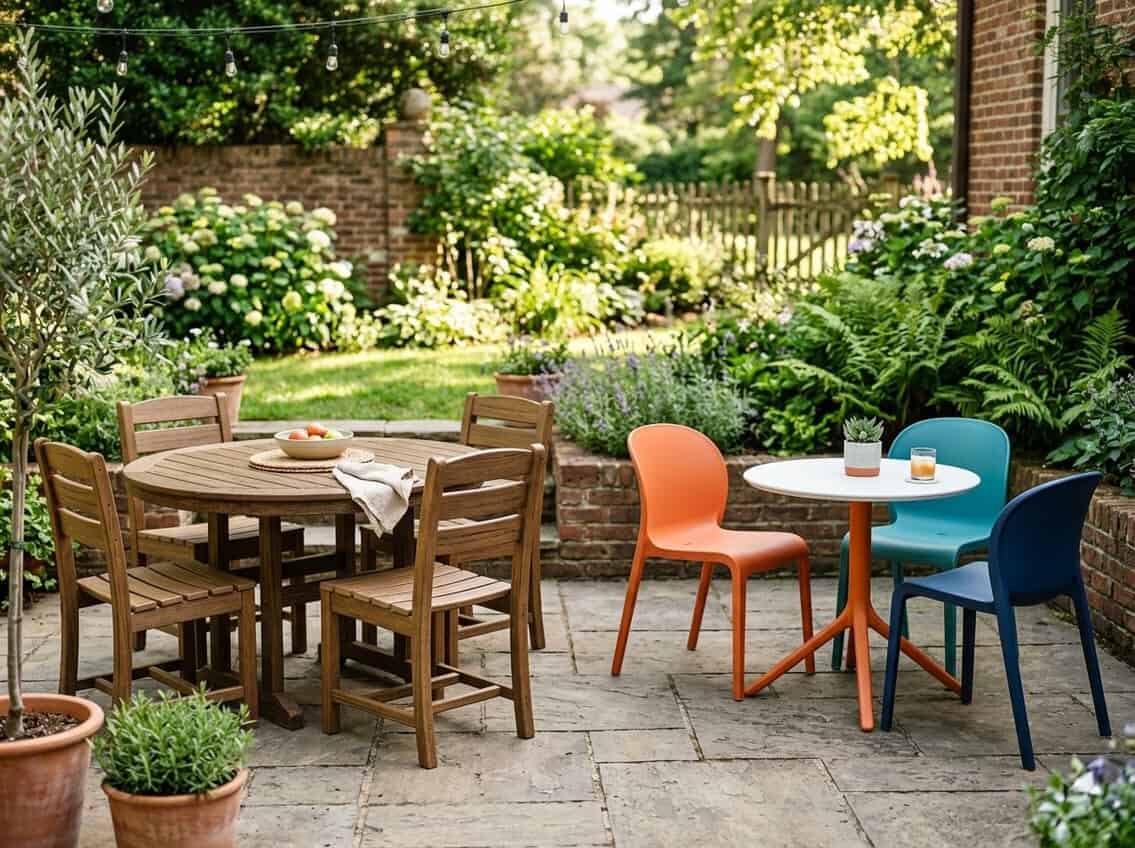
Modern plastic materials like HDPE poly lumber offer durability that rivals natural wood without the maintenance demands. These engineered materials resist fading, cracking, and moisture damage while supporting sustainable manufacturing practices.
HDPE Poly Lumber Advantages
High-density polyethylene (HDPE) stands out as a premium plastic material for outdoor furniture. HDPE can be exposed to UV rays for decades without degrading or losing its structural integrity.
The material resists punctures, stays dense and strong, and cleans easily with just soap and water. Unlike wood, HDPE won’t warp, crack, or splinter over time. It doesn’t absorb moisture, which means mold and mildew can’t take hold on the surface.
HDPE furniture maintains its color for years because the pigments are mixed into the material itself rather than applied as a surface coating. This makes it highly fade-resistant even in harsh sun. The material also stays cool to the touch compared to metal options.
Key HDPE Benefits:
- Lightweight yet sturdy construction
- No painting or sealing required
- Resistant to salt spray in coastal areas
- Won’t rust or corrode like metals
Eco-Friendly Manufacturing
HDPE poly lumber is often made from recycled plastics, giving new life to materials that would otherwise end up in landfills. Many manufacturers use recycled milk jugs, detergent bottles, and other post-consumer plastics in their production process.
This recycling approach reduces the demand for new plastic production and petroleum-based materials. The furniture itself remains recyclable at the end of its lifespan, creating a closed-loop system.
Polywood materials are products of modern engineering designed specifically for outdoor performance. The manufacturing process produces minimal waste compared to traditional wood harvesting and processing.
Polywood vs. Traditional Wood
When comparing teak vs polywood outdoor furniture, the maintenance requirements differ dramatically. Teak needs periodic oiling to maintain its honey color, while polywood needs only occasional cleaning.
Teak offers natural beauty and warmth that some prefer for aesthetic reasons. However, quality teak furniture carries a premium price tag due to the slow-growing nature of teak trees. Polywood provides similar durability at a lower cost.
Both materials last for decades in outdoor conditions. Teak develops a silver-gray patina if left untreated, while polywood maintains its original color indefinitely.
| Material | Lifespan | Maintenance | Best Climate | Cost Range |
|---|---|---|---|---|
| Teak | 25-50+ years | Medium (periodic oiling) | All climates | $$$$ |
| Aluminum | 15-20 years | Low (occasional cleaning) | All climates | $$ |
| Resin Wicker | 10-15 years | Low (soap and water) | Dry to moderate | $-$$ |
| Polywood (HDPE) | 20-30+ years | Very low (minimal cleaning) | All climates | $$-$$$ |
Polywood wins for those seeking the best outdoor furniture material with minimal upkeep requirements. Wood appeals to buyers who prioritize natural materials and traditional aesthetics despite higher maintenance needs.
Ready to shop? See our top-ranked outdoor furniture sets by material in our Best Outdoor Dining Sets guide.
Material Comparisons by Climate and Lifestyle
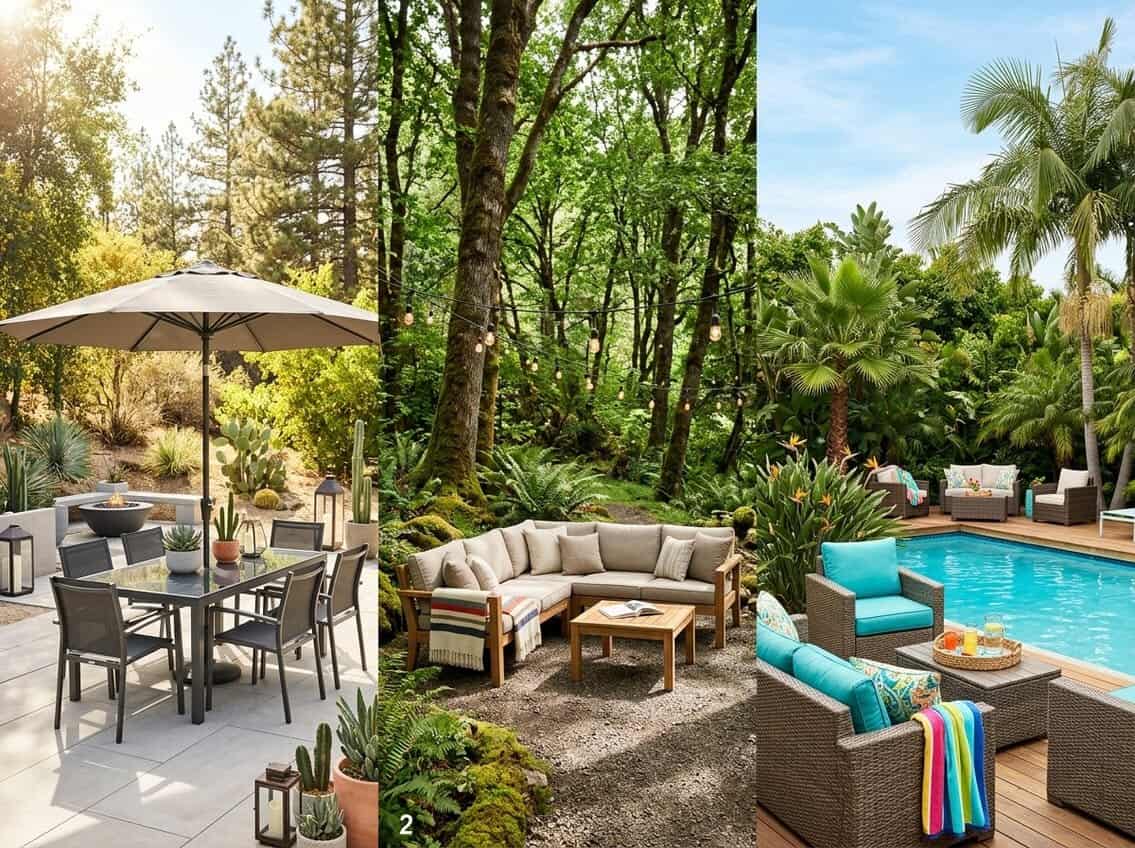
The right outdoor furniture material depends heavily on your local weather conditions and how much time you can dedicate to upkeep. Coastal areas demand rust-resistant options, while hot climates require materials that won’t crack or fade under intense UV exposure.
Best Options for Coastal Environments
Coastal environments present unique challenges with salt spray, moisture, and strong winds. Aluminum stands out as the top choice for coastal settings because it naturally resists rust and corrosion. The powder-coated finish protects the metal from salt damage without requiring special maintenance.
Polywood (HDPE) also performs exceptionally well in beach areas. This recycled plastic material won’t rot, splinter, or absorb moisture. It needs only occasional cleaning with soap and water.
Teak works in coastal climates thanks to its high oil content that repels water. However, it will develop a silver-gray patina faster in salty air. Buyers should avoid wicker in these environments, as salt accelerates deterioration of the weave and can trap moisture that leads to mildew.
Recommendations for Hot and Humid Climates
Hot and humid regions require materials that resist both UV damage and moisture-related problems. Aluminum furniture with quality powder coating handles extreme heat better than most alternatives. Higher-end manufacturers apply multiple coats that reduce heat absorption and prevent the surface from becoming too hot to touch.
Resin wicker designed for outdoor use performs well if it contains UV stabilizers. Look for high-density polyethylene (HDPE) construction, which prevents cracking and fading for 5-10 years.
Teak naturally resists humidity and won’t warp or rot. The wood stays relatively cool even in direct sunlight. Acacia requires more frequent oiling in humid climates and may crack in very dry heat, making it less suitable for temperature extremes.
| Material | Lifespan | Maintenance | Best Climate | Cost Range |
|---|---|---|---|---|
| Aluminum | 15-20 years | Low – occasional cleaning | All climates, especially coastal | $$ – $$$ |
| Teak | 25+ years | Medium – annual oiling/sanding | All climates, excellent for humid | $$$$ |
| Resin Wicker | 5-10 years | Low – soap and water cleaning | Moderate climates, covered areas | $ – $$ |
| Polywood (HDPE) | 20+ years | Very low – soap and water only | All climates, especially coastal | $$$ |
Low-Maintenance Choices for Busy Lifestyles
Aluminum requires the least effort to maintain among all outdoor furniture materials. A quick wipe-down with mild soap removes dirt and debris. The powder coating eliminates the need for painting or sealing.
Polywood delivers maintenance-free performance for homeowners who want attractive furniture without ongoing care. The material won’t need staining, waterproofing, or painting throughout its lifetime. It resists stains from food and drinks, making it ideal for dining areas.
Resin wicker ranks third for ease of care. Regular brushing between the weaves prevents buildup, but overall upkeep stays minimal. Teak and acacia demand more attention with periodic oiling, making them poor choices for those seeking hands-off options.
Durability for High-Traffic and Family Spaces
Families with children and frequent entertainers need furniture that withstands heavy use. Teak offers the highest durability thanks to its dense grain and natural oils. It handles daily use, spills, and rough treatment without showing significant wear.
Aluminum provides excellent longevity in busy spaces. The metal won’t crack under pressure, though the powder coating may chip if furniture gets dragged or knocked around frequently. These minor chips are easy to touch up with repair kits.
Polywood resists scratches and dents better than wood alternatives. It won’t splinter, making it safe for barefoot children. The material maintains its appearance even with constant use.
When comparing aluminum vs wicker outdoor furniture, aluminum wins for high-traffic areas. Wicker weaving can loosen or break with heavy use, and repairs prove difficult. The best outdoor furniture material for families balances durability with safety—avoid sharp metal edges and choose rounded designs.
Ready to shop? See our top-ranked outdoor furniture sets by material in our Best Outdoor Dining Sets guide.
Cost, Warranty, and Long-Term Value of Outdoor Materials
Material choice affects upfront cost, how long furniture lasts, and what you’ll spend on upkeep. Teak and aluminum command higher prices but offer decades of use, while wicker and acacia cost less initially but may need replacement sooner.
Initial Investment vs. Lifespan
Teak stands as the most expensive option, with dining sets starting around $2,000 and reaching $5,000 or more for premium pieces. This hardwood delivers 25 to 50 years of service when properly maintained. Aluminum furniture offers a rust-resistant alternative at moderate price points between $800 and $2,500, lasting 15 to 25 years in most climates.
Resin wicker costs less upfront, with full dining sets available from $500 to $1,800. High-quality HDPE wicker with UV stabilizers lasts 5 to 10 years before fading or cracking becomes noticeable. Acacia wood provides an affordable entry point at $400 to $1,200 per set but typically needs replacement within 5 to 10 years due to cracking and weathering.
Material Comparison Chart:
| Material | Lifespan | Maintenance | Best Climate | Cost Range |
|---|---|---|---|---|
| Teak | 25-50 years | Annual oiling/sanding | All climates | $2,000-$5,000+ |
| Aluminum | 15-25 years | Minimal | All climates | $800-$2,500 |
| Resin Wicker | 5-10 years | Light cleaning | Moderate | $500-$1,800 |
| Acacia | 5-10 years | Oil every 2-3 months | Moderate | $400-$1,200 |
Brand Reputation and Warranty Offers
Reputable manufacturers use better materials and back their products with warranties that reflect quality standards. Premium teak furniture often carries 10 to 20-year warranties covering structural defects. Powder-coated aluminum from established brands typically includes 5 to 10-year coverage against rust and coating failure.
Wicker warranties range from 1 to 5 years depending on resin quality and UV protection. Look for brands that specify HDPE construction and UV stabilizers in their product descriptions. Shorter warranty periods often signal lower-grade materials that won’t hold up as long outdoors.
Brand reputation serves as a quality indicator when comparing similar materials at different price points. Companies with decades of experience tend to source better raw materials and maintain stricter manufacturing standards than newer market entrants.
Maintenance Costs Over Time
Teak requires annual oiling and sanding to preserve its natural color, adding $50 to $150 yearly in products and time. Skipping this maintenance allows the wood to develop a gray patina but doesn’t affect structural integrity. Aluminum needs occasional cleaning with mild soap but powder coating chips may require touch-up paint every few years at minimal cost.
Acacia demands more frequent attention with oiling needed every 2 to 3 months to prevent cracking. This translates to roughly $100 to $200 annually in wood oil and potential repair costs. Resin wicker requires the least maintenance with simple soap-and-water cleaning, though mold can develop between weaves in humid climates without regular scrubbing.
Storage costs factor into long-term value for climates with harsh winters. Lightweight aluminum and wicker move easily into covered areas, while heavy teak pieces often stay outside year-round without damage.
Ready to shop? See our top-ranked outdoor furniture sets by material in our Best Outdoor Dining Sets guide.
Frequently Asked Questions
Different materials perform better in specific conditions, and choosing the right one depends on climate, budget, and how much maintenance a homeowner wants to handle. Teak offers the longest lifespan but costs more, while aluminum and resin wicker provide excellent weather resistance at lower price points.
Which outdoor furniture material is most durable for year-round use?
FSC-certified teak lasts the longest, with a documented service life of 50+ years in coastal applications when properly maintained. The wood contains natural oils that protect it from rot, insects, and moisture damage.
Powder-coated aluminum comes in second for durability. It resists rust and corrosion in all weather conditions and typically lasts 15-20 years with minimal care.
High-density polyethylene (HDPE), sold under brand names like Polywood, also performs well year-round. This recycled plastic material won’t crack, splinter, or fade and carries warranties of 20+ years from most manufacturers.
What material holds up best in heavy rain and high humidity?
Aluminum and HDPE perform best in coastal and lakeside climates with high moisture levels. These materials resist rust, moisture absorption, and salt air damage without special treatments.
Resin wicker on aluminum frames combines moisture resistance with attractive styling. The synthetic fibers don’t absorb water like natural materials, and the aluminum frame prevents rust from forming underneath.
Teak handles rain and humidity well due to its natural oil content. However, it requires periodic cleaning and may develop mildew if left in constant shade without air circulation.
How do aluminum and powder-coated aluminum compare for outdoor furniture longevity?
Raw aluminum naturally forms a protective oxide layer that prevents corrosion. This makes it suitable for outdoor use even without additional coating.
Powder-coated aluminum adds a colored finish and extra protection against scratches and UV damage. The coating process bonds paint particles to the metal at high temperatures, creating a more durable surface than liquid paint.
Powder-coated finishes extend the lifespan of aluminum furniture and reduce maintenance needs. The coating prevents chalking and fading that can occur on bare aluminum over time. Most powder-coated pieces maintain their appearance for 10-15 years before needing refinishing.
Which materials resist rust, corrosion, and fading in harsh sun exposure?
Aluminum never rusts because it doesn’t contain iron. It may corrode slightly in salt air, but this process happens slowly and doesn’t compromise structural integrity.
HDPE contains UV stabilizers mixed throughout the material during manufacturing. This prevents fading and brittleness even after years of direct sun exposure.
High-quality resin wicker includes UV stabilizers that prevent cracking and fading for 5-10 years. Lower-quality synthetic wicker without these additives breaks down faster in intense sunlight.
Teak naturally weathers to a silver-gray color when exposed to sun and rain. This doesn’t damage the wood, but some owners prefer to maintain the original honey-brown color with teak oil applications.
How does synthetic wicker compare to natural rattan for outdoor performance and maintenance?
Natural rattan comes from tropical vines and wasn’t designed for outdoor exposure. It absorbs moisture, cracks in dry conditions, and breaks down quickly when left outside year-round.
Synthetic wicker (also called resin wicker or PE wicker) is made from polyethylene plastic woven to look like natural rattan. It handles all weather conditions without rotting, cracking, or fading.
Resin wicker requires minimal maintenance compared to natural materials. A simple soap and water wash removes dirt and pollen. Natural rattan needs to stay dry and often requires indoor storage during winter months.
The main advantage of synthetic wicker is durability combined with the traditional woven look. It costs less than teak while lasting longer than natural rattan in outdoor settings.
What are the best cushion fabrics and fills for outdoor comfort, mildew resistance, and easy cleaning?
Solution-dyed acrylic fabrics like Sunbrella resist fading, mildew, and staining better than other outdoor textiles. The color goes through the entire fiber rather than being applied as a surface treatment.
These fabrics clean easily with mild soap and water. They dry quickly and won’t develop mildew when exposed to rain or morning dew.
Quick-dry foam provides the best fill material for outdoor cushions. It features an open-cell structure that allows water to drain through rather than pooling inside. Regular polyester foam absorbs moisture and takes days to dry, creating mildew problems.
Some cushions use polyester fiberfill instead of foam. This material dries faster than standard foam but compresses over time and provides less support for seating.
| Material | Lifespan | Maintenance | Best Climate | Cost Range |
|---|---|---|---|---|
| Teak | 50+ years | Medium (annual cleaning, optional oiling) | All climates | $$$$ |
| Aluminum | 15-20 years | Low (occasional washing) | All climates, especially coastal | $$ |
| Resin Wicker | 5-10 years | Low (soap and water) | All climates except extreme cold | $$ |
| HDPE/Polywood | 20+ years | Very low (hose rinse) | All climates | $$$ |
Ready to shop? See our top-ranked outdoor furniture sets by material in our Best Outdoor Dining Sets guide.
Will Montgomery draws on hands-on experience with outdoor furniture to compare materials — aluminum, teak, resin, and more — on durability and care, so you buy a set that lasts for years.