

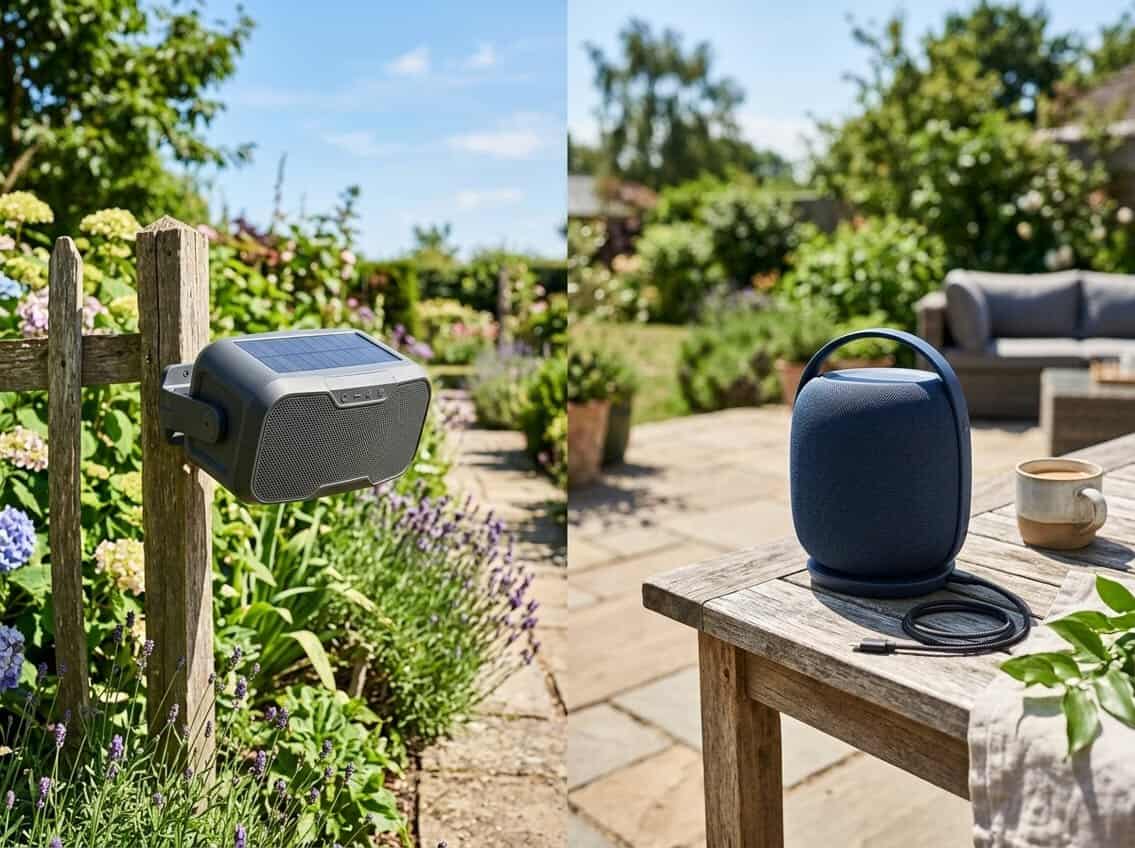
Outdoor speakers need reliable power to keep the music playing during gatherings, but the choice between solar and rechargeable models isn’t always clear. Solar outdoor speakers use sunlight to charge their batteries while rechargeable speakers plug into standard outlets. Each type offers distinct advantages depending on how and where they’ll be used.
Solar speakers provide continuous charging during daytime use without requiring electrical outlets, while rechargeable speakers offer more predictable battery performance but need access to power sources. Understanding the trade-offs between these two technologies helps buyers make informed decisions for their outdoor spaces. Factors like weather patterns, available sunlight, and proximity to outlets all play important roles.
The right choice depends on specific needs and circumstances. Solar-powered speakers require sufficient sun exposure to stay charged, while rechargeable models work reliably regardless of weather conditions. Both types have evolved significantly, offering waterproof designs and quality sound for gardens, patios, and pools.
Key Takeaways
- Solar speakers work best in sunny locations without outlet access while rechargeable speakers suit areas with reliable power sources
- Both speaker types offer waterproof protection and quality audio but differ primarily in their charging methods and power reliability
- Choosing between solar and rechargeable depends on sun exposure, outlet availability, and how frequently the speakers will be used
Fundamentals of Solar and Rechargeable Outdoor Speakers
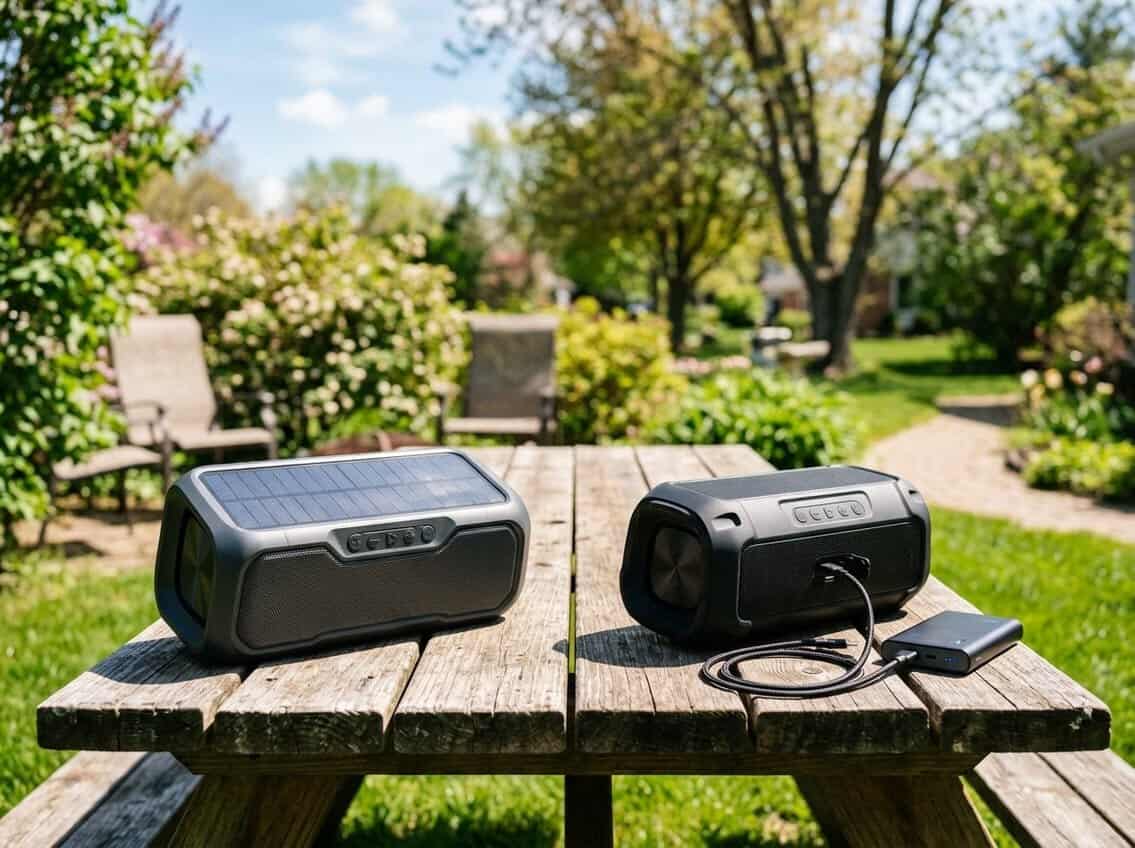
Solar outdoor speakers use built-in photovoltaic panels to convert sunlight into electrical energy, while rechargeable outdoor speakers rely on internal batteries that need periodic charging through USB or wall outlets. Both types eliminate the need for electrical wiring in outdoor spaces.
How Solar Panels Power Outdoor Speakers
Solar outdoor speakers integrate photovoltaic panels directly into the speaker housing. These panels capture sunlight and convert it into electricity that charges an internal battery.
The solar charging process works as a supplement rather than a complete replacement for USB charging. Most portable models add a few hours of playtime per day of sun exposure. Solar Bluetooth speakers designed for outdoor use can recharge during activities like beach trips or camping without requiring outlets.
Solar panels on portable speakers typically generate 200mAh to 300mAh per hour of direct sunlight. Some models convert 30 minutes of sun into 30 minutes of playback. Rock-style garden speakers rely more heavily on solar power since they remain stationary outdoors where extension cords are impractical.
The efficiency of solar charging depends on panel quality and weather conditions. Direct sunlight produces the best results, while cloudy days reduce charging speed significantly.
Understanding Rechargeable and Battery-Powered Outdoor Speakers
Rechargeable outdoor speakers contain lithium-ion batteries that store electrical energy from USB charging cables or wall adapters. Battery capacity measured in milliamp hours (mAh) determines how long the speaker plays before needing a recharge.
A 2000mAh battery typically delivers 12 to 15 hours of playback at moderate volume. Larger 5000mAh batteries extend playtime to 30 to 50 hours. The advertised playtime numbers assume minimum volume settings, so actual performance at higher volumes will be shorter.
Battery powered outdoor speakers require regular charging cycles to maintain performance. Most models take 3 to 5 hours to fully recharge via USB-C or micro USB connections. Unlike solar speakers that trickle charge throughout the day, rechargeable models need intentional charging sessions.
The battery chemistry affects lifespan and performance in different temperatures. Lithium-ion batteries lose capacity over time, typically maintaining 80% of original performance after 300 to 500 charge cycles.
Key Differences in Power Sources and Charging
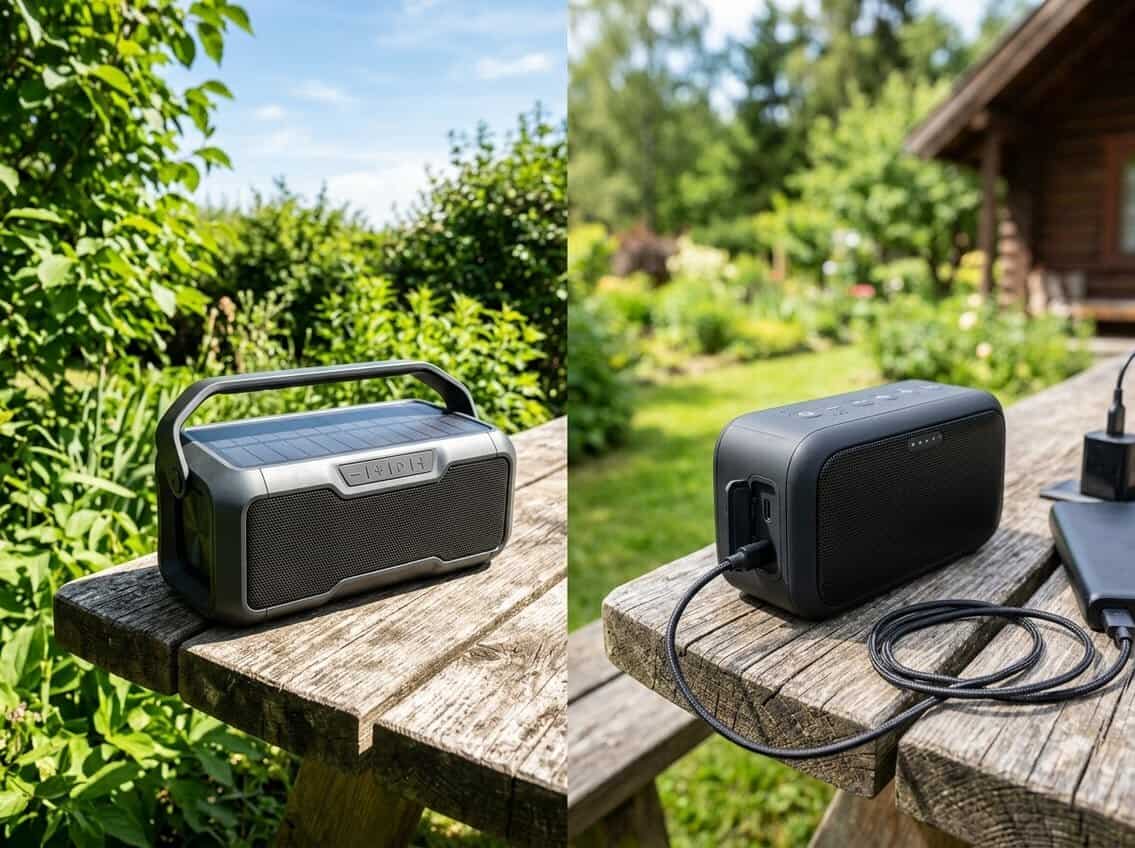
Solar outdoor speakers and rechargeable speakers differ mainly in how they gain power and how long that power lasts. Solar models use photovoltaic panels to convert sunlight into electricity, while rechargeable speakers depend on wall outlets or USB ports to fill their batteries.
Outdoor Speaker Charging Options
Rechargeable speakers connect to standard power outlets or USB ports for charging. Most models take 2-4 hours to reach full battery capacity when plugged into a wall adapter. USB-C charging has become common in newer models, offering faster power delivery than older micro-USB ports.
Solar speakers include built-in photovoltaic panels that convert sunlight into electricity. These panels typically generate 1 to 1.5 watts of power in direct sunlight. However, solar charging takes 10-20 hours in full sun to fully charge a medium-sized speaker battery.
Most solar models also include USB charging ports as a backup option. This dual charging system lets users plug in when solar power isn’t practical. Solar batteries are designed for long-term energy storage, while standard rechargeable batteries focus on efficiency in portable devices.
Solar Speaker Battery Life Compared to Rechargeable Batteries
Standard rechargeable speakers typically offer 8-12 hours of playback on a single charge at moderate volume. Premium models can reach 20-24 hours, depending on battery capacity and driver efficiency.
Solar speakers provide similar base battery life but add the ability to extend playtime through sun exposure. A solar panel might add 10-15% battery per hour in direct sunlight. This means a speaker at 50% charge could gain several extra hours of use during a sunny afternoon.
The actual benefit depends heavily on conditions. Cloudy weather, shade, or dirty panels reduce charging speed significantly. Solar works best as a power extender rather than a primary charging method.
Best Power Source for Outdoor Speakers
The best power source depends on how and where someone uses their speakers. Traditional rechargeable speakers work better for short trips, backyard parties, or anywhere near electrical outlets. They charge faster and deliver predictable battery life.
Solar speakers excel during extended outdoor activities like camping, beach days, or backpacking. They provide useful convenience in off-grid environments where outlets aren’t available. The solar panel acts as insurance against dead batteries during multi-day trips.
For users who leave speakers outside permanently, solar charging reduces the need for frequent manual recharging. However, both types still benefit from regular wall charging to maintain battery health over time.
Performance and Durability in Real-World Conditions

Outdoor speakers face harsh conditions that test both their construction and power systems. Solar models rely on sun exposure while battery-powered units depend on charge cycles, and each handles weather challenges differently.
Weatherproof Solar Speakers for Any Climate
Modern weatherproof solar speakers use IP ratings to indicate protection levels. IP65 provides dust-tight construction and protection from water jets. IP66 adds defense against powerful water jets. IP67 allows temporary submersion up to one meter deep.
Solar panels on these speakers need protection too. UV-resistant coatings prevent degradation from constant sun exposure. The panels must remain clear of debris to maintain charging efficiency.
Rechargeable speakers without solar panels often achieve similar waterproof ratings. They avoid the panel maintenance issue entirely. Both types handle rain and splashes, but solar Bluetooth speakers experience real-world sun dependency that varies by climate.
Cold weather reduces solar charging speed significantly. Hot climates can overheat battery systems in both speaker types. Humidity affects electronic components equally regardless of charging method.
Battery Life and Runtime in Outdoor Environments
Solar speaker battery life varies dramatically based on sunlight availability. Premium models provide 12-20 hours on full charge but only 6-10 hours from solar charging alone. They need 4-6 hours of direct sunlight to reach full capacity.
Battery-powered outdoor speakers deliver consistent runtime regardless of weather. A fully charged unit provides its rated playtime without sun dependency. Users know exactly how long their music will last.
Volume settings impact both speaker types equally. Maximum volume drains batteries 40-50% faster than moderate levels. Temperature extremes reduce capacity by 20-30% in cold conditions.
Most solar speakers include USB-C backup charging for cloudy periods. This hybrid approach matches battery-powered units during extended use. The solar advantage only appears with regular sun exposure over weeks of use.
Use Cases for Patios, Gardens, and Outdoor Spaces

Solar speakers work well in outdoor areas where running power cords is difficult or impossible. Different outdoor spaces have different needs based on size, layout, and how people use them.
Solar Speakers for Patio Entertainment
Patios need speakers that can handle regular use during meals and gatherings. Solar speakers for patios should offer at least 8-12 hours of playtime to last through afternoon barbecues and evening dinners. Models with IPX7 waterproof ratings protect against sudden rain and drink spills.
Most patio setups work best with two speakers placed 10-15 feet apart. This creates stereo sound without needing multiple outlets. Bluetooth range matters since people control music from inside the house or across the deck. A 30-foot range handles most patio sizes.
Look for speakers with quick solar charging of 3-4 hours in direct sunlight. USB backup charging helps on cloudy days. Rock-shaped designs blend with patio furniture and planters better than obvious tech gadgets.
Best Garden-Friendly Solar Speakers
Gardens need speakers that look natural among plants and flowers. Solar speakers designed for gardens come in rock or stone shapes that blend into landscaping. These speakers should be fully wireless since gardens rarely have nearby outlets.
Water resistance rated at IP44 or higher protects against garden hoses and sprinkler systems. Lighter models around 3 pounds are easier to move when rearranging garden layouts or mowing.
Battery life of 5-8 hours works for most garden use since people spend less continuous time there than on patios. RGB lighting features add color to evening garden walks. The ability to link multiple speakers helps cover larger garden areas without increasing volume to disruptive levels.
Choosing the Right Speaker: Essential Buying Considerations
Buyers need to evaluate sound performance, connectivity options, setup requirements, and long-term costs when comparing solar and rechargeable outdoor speakers. Weather resistance ratings, battery capacity, and placement flexibility directly impact which speaker type works best for specific outdoor environments.
Sound Quality and Bluetooth Connectivity
Sound quality depends on wattage, driver size, and speaker design. Solar Bluetooth speakers typically range from 5 to 20 watts, while rechargeable outdoor speakers can deliver 10 to 50 watts or more. Higher wattage produces louder volume and better bass response for larger outdoor spaces.
Key audio specifications to compare:
- Driver size: 40mm to 52mm drivers deliver fuller sound
- Frequency range: 60Hz to 20kHz covers most music genres
- Total harmonic distortion: Below 1% maintains clarity at high volumes
Bluetooth connectivity has improved across both speaker types. Most models now support Bluetooth 5.0 or 5.3, which provides a range of 30 to 100 feet outdoors. Buyers should verify codec support like aptX or AAC for better audio quality during wireless streaming.
Some premium solar outdoor speakers include app-based equalizers and voice assistant integration. Rechargeable models more commonly offer these smart features due to larger battery reserves that support additional processing power.
Installation and Placement Tips
Solar outdoor speakers require direct sunlight for 4 to 6 hours daily to maintain charge. Users should position them in south-facing areas without shade from trees or buildings. Angled placement maximizes solar panel exposure throughout the day.
Rechargeable outdoor speakers offer more flexibility since they don’t depend on sun exposure. They work equally well on covered patios, under umbrellas, or in shaded garden areas. Both speaker types benefit from elevated placement on tables or mounting brackets to improve sound projection.
Outdoor speakers need power considerations that vary by type. Solar models should avoid metal surfaces that cause uneven heat distribution. Rechargeable speakers need proximity to electrical outlets for periodic charging sessions.
Weather resistance matters for longevity. IP66 ratings protect against rain and splashes, while IP67 ratings allow brief submersion up to one meter. Buyers should match the IP rating to their specific outdoor conditions.
Cost, Maintenance, and Lifespan
Solar Bluetooth speakers typically cost $99 to $249, while rechargeable outdoor speakers range from $50 to $300 depending on features. Initial purchase price doesn’t tell the complete story since operating costs differ significantly.
Solar models eliminate electricity costs but require panel cleaning every few weeks to maintain efficiency. Dust and pollen reduce charging capacity by up to 25%. Rechargeable speakers add minimal electricity expense, usually under $5 annually for regular charging.
Lifespan comparison:
| Speaker Type | Battery Replacement | Typical Lifespan |
|---|---|---|
| Solar | 2-3 years | 3-5 years |
| Rechargeable | 2-4 years | 4-7 years |
Both types use lithium-ion batteries that degrade over time. Solar batteries often wear faster due to constant sun exposure and heat cycling. Premium solar speakers last 3-5 years with proper care, while quality rechargeable models extend beyond five years with battery replacements.
Warranty coverage matters for long-term value. Most manufacturers offer 1 to 2 years for solar models and 1 to 3 years for rechargeable speakers.
Frequently Asked Questions
Solar and rechargeable outdoor speakers raise practical questions about charging speeds, battery life, weather protection, and long-term durability that buyers need answered before making a decision.
How does solar charging performance compare to USB charging in low-light or cloudy conditions?
USB charging delivers consistent power regardless of weather conditions. A standard USB connection can fully charge most outdoor speakers in 3 to 5 hours.
Solar charging slows dramatically when conditions aren’t ideal. Solar panels on most speakers typically produce 1 to 1.5 watts in direct sunlight, but cloudy weather can reduce output by 50 to 80 percent.
On overcast days, a speaker that would gain 10 to 15 percent battery per hour in full sun might only add 2 to 3 percent. Early morning and late afternoon sun also reduces charging efficiency due to the angle of light hitting the panel.
Users still need to plug in their solar speakers regularly. Solar charging works best as a supplement rather than a complete replacement for traditional charging methods.
What runtime can you realistically expect at different volume levels for outdoor use?
Battery capacity and volume levels directly impact how long speakers play. Most outdoor speakers with 2000 to 3000 mAh batteries run 8 to 12 hours at moderate volume (50 to 60 percent).
Higher volumes drain batteries faster. Playing at 80 to 100 percent volume can cut runtime in half, bringing it down to 4 to 6 hours for many models.
Solar speakers may offer slightly longer runtimes if they’re actively charging during use. A speaker in direct sunlight can add 1 to 2 hours of extra playtime throughout a full day outdoors.
Rechargeable speakers without solar panels maintain more predictable battery performance. Their runtime depends entirely on battery capacity rather than environmental conditions.
Which features matter most for weather resistance, such as IP ratings, sealed ports, and corrosion protection?
IP ratings indicate how well a speaker handles water and dust exposure. An IPX6 rating protects against powerful water jets from any direction, while IPX7 means the speaker can survive temporary submersion up to 1 meter deep.
Sealed ports prevent water from reaching internal components. Rubberized covers over charging ports and auxiliary inputs keep moisture out when the speaker isn’t plugged in.
Corrosion protection matters for speakers exposed to salt water or humid environments. Metal grills and connectors with anti-corrosion coatings last longer near beaches or pools.
Solar panels add another weatherproofing consideration. The panel surface needs protection from scratches and impact damage that could reduce charging efficiency over time.
How do sound quality and maximum volume typically differ between solar-powered and standard rechargeable outdoor speakers?
Solar panels don’t inherently affect sound quality. The audio performance depends on speaker driver size, amplifier power, and overall build quality rather than the charging method.
Budget solar speakers sometimes sacrifice audio components to offset the cost of adding solar technology. These models may have smaller drivers or lower-wattage amplifiers compared to rechargeable speakers at the same price point.
Maximum volume typically ranges from 85 to 95 decibels for most portable outdoor speakers. Higher-end models in both categories can reach 100 decibels or more.
Some cheaper solar speakers may reduce audio output during solar charging if the system can’t handle simultaneous charging and high-volume playback. Better-designed models maintain full performance regardless of charging status.
What battery capacity and charging time should you look for to ensure reliable day-to-night playback?
A minimum battery capacity of 3000 mAh provides enough power for all-day outdoor use at moderate volumes. Speakers with 5000 mAh or higher can handle extended parties or camping trips without running out.
USB charging should complete in 4 to 6 hours for most portable speakers. Faster charging times indicate either smaller batteries or more efficient charging circuits.
Solar charging takes significantly longer to reach full capacity. Most solar speakers need 10 to 20 hours of direct sunlight to charge completely from empty.
Users who want day-to-night reliability should charge speakers fully before heading outdoors. Solar panels work best for maintaining charge throughout the day rather than providing emergency power when batteries run low.
Are there common durability or maintenance issues with integrated solar panels, and how can they be avoided?
Dust and debris reduce solar panel efficiency over time. Regular cleaning with a soft cloth and mild soap keeps the panel surface clear and maintains optimal charging performance.
Physical damage poses the biggest durability risk for solar panels. Scratches, cracks, or impact damage can permanently reduce power output or stop solar charging entirely.
Direct exposure to extreme heat can degrade both solar panels and lithium batteries. Storing speakers in temperatures above 140°F (60°C) shortens battery lifespan and may damage panel connections.
Panel angle matters for charging efficiency. Positioning the speaker so the panel faces directly toward the sun maximizes power generation, especially during early morning or late afternoon hours.
Will Montgomery draws on hands-on experience with outdoor audio to compare solar and rechargeable speakers — power, volume, and real battery life — so you buy the one that fits how you use your yard.