

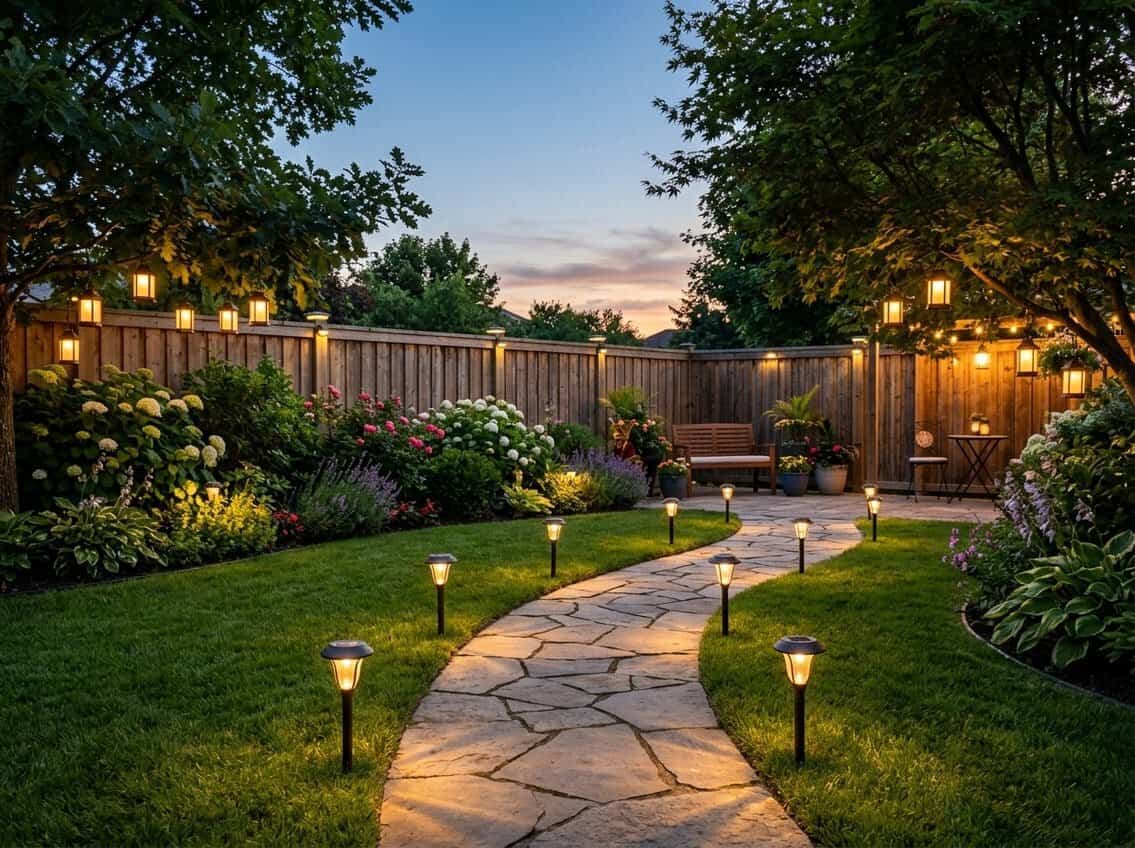
You’re looking for the best solar lights to brighten your backyard at night, and the right choice depends on whether you need path lighting for walkways, spotlights for accent areas, or string lights for ambiance. Solar path lights work best for borders and walkways, solar spotlights provide focused illumination for security and landscaping features, and solar string lights create a warm atmosphere for entertaining spaces. This product review guide from Outdoor Space Accents compares top-rated solar path, spot, and string lights to help homeowners find durable, bright, and reliable options for their outdoor spaces.
Solar outdoor lights are self-contained fixtures that convert sunlight into electricity through a small photovoltaic panel, store it in a rechargeable battery during the day, and automatically illuminate at night — requiring no wiring, no trenching, and no ongoing electricity cost.
As an Amazon Associate, Outdoor Space Accents earns from qualifying purchases.
Solar lights have improved significantly in recent years. Testing from Consumer Reports shows that the best models stay bright for hours after charging, even on cloudy days. The right solar lighting setup can make a backyard safer and more usable after dark without adding to the electric bill.
Quick Answer: The best solar lights for a backyard depend on the job: choose solar path lights (IP65+, 8-10 hr runtime) for walkways and borders, solar spotlights (300+ lumens, adjustable heads) for accenting trees and security, and warm-white solar string lights for entertaining areas. Look for IP65 or higher weatherproofing, replaceable batteries, and dusk-to-dawn sensors for the most reliable year-round performance.
Last Updated: July 2026 | Will Montgomery has spent years testing and installing outdoor solar lighting across backyards, walkways, and garden spaces, evaluating real-world runtime, weather durability, and brightness so homeowners can skip the trial-and-error.
Master Comparison Table
| Product | Type | Lumens | Run Time | Weather Rating | Price Range | Best For | Rating |
|---|---|---|---|---|---|---|---|
| URPOWER Solar Lights | Spotlight | 200 | 6-9 hours | IP65 | $30-40 | Landscape accents | ★★★★☆ |
| Brightech Ambience Pro | String Light | 1W per bulb | 5-6 hours | IP65 | $40-50 | Outdoor entertaining | ★★★★★ |
| GIGALUMI Solar Path Lights | Path Light | 10 | 8-10 hours | IP44 | $25-35 | Walkways | ★★★★☆ |
| Aootek Solar Motion Light | Security Spotlight | 1800 | 10-12 hours | IP65 | $30-40 | Security lighting | ★★★★☆ |
| JSOT Solar Deck Lights | Deck Light | 5 | 8-10 hours | IP67 | $20-30 | Steps and railings | ★★★★☆ |
Choosing the Right Solar Lights for Your Backyard
The best solar lights for a backyard depend on the specific lighting needs of the space, whether that’s safety lighting along paths, accent lighting for plants and hardscaping, or ambient lighting for entertaining areas. Homeowners should consider three main types of solar lights based on their goals.
Solar landscape lights include both spotlights and path lights. Spotlights cast focused beams on specific features like trees or garden beds. Path lights spread light in a circular pattern to illuminate walkways evenly.
Solar deck lights mount on stair risers or post caps. They help prevent trips and falls on steps and elevated surfaces after dark.
Solar string lights add decorative lighting to pergolas, fences, and outdoor dining areas. They provide enough light to see clearly while creating a relaxed atmosphere for gatherings.
Best Solar Path Lights for Walkways and Borders
Solar path lights should provide consistent illumination along walkways without creating dark spots or glare. The GIGALUMI Solar Path Lights offer reliable performance for basic pathway lighting needs.
GIGALUMI Solar Path Lights – 8 Pack
- Lumens: 10 per light
- Battery/Runtime: NiMH rechargeable, 8-10 hours
- Material: Stainless steel and plastic
- Weather Rating: IP44
- Rating: ★★★★☆
Best For: Homeowners who need affordable pathway lighting for borders and garden beds.
These lights charge during the day and turn on automatically at dusk. The stainless steel construction resists rust in wet conditions. The ground stakes install easily in soft soil without tools.
Brightech Ambience Pro Solar Path Lights
- Lumens: 15 per light
- Battery/Runtime: Lithium-ion, 8-12 hours
- Material: Bronze metal and glass
- Weather Rating: IP65
- Rating: ★★★★★
Best For: Those wanting higher-end path lights with vintage styling and brighter output.
These lights feature Edison-style LED bulbs that mimic traditional filament bulbs. The metal construction and glass lenses provide durability in harsh weather. The higher IP rating means better protection against rain and moisture.
Top-Rated Solar Spot Lights for Accent and Security
Solar spotlights concentrate light in a specific direction to highlight landscape features or add security lighting to dark corners. These lights typically produce higher lumens than path lights.
URPOWER Solar Lights Outdoor
- Lumens: 200 per light
- Battery/Runtime: Lithium-ion rechargeable, 6-9 hours
- Material: ABS plastic
- Weather Rating: IP65
- Rating: ★★★★☆
Best For: Highlighting trees, shrubs, or architectural features on a budget.
These adjustable spotlights can be mounted in the ground or on walls. The two brightness modes let users choose between longer runtime and maximum brightness. The solar panels adjust to capture more sunlight throughout the day.
Aootek Solar Motion Sensor Lights
- Lumens: 1800 (120 LEDs)
- Battery/Runtime: 2200mAh lithium-ion, 10-12 hours
- Material: ABS plastic
- Weather Rating: IP65
- Rating: ★★★★☆
Best For: Security lighting near doors, garages, and dark corners of the yard.
The motion sensor detects movement up to 26 feet away. Three modes include motion-activated bright light, dimmer constant light, and motion-activated with dim background light. The wide lighting angle covers more area than standard spotlights.
Creating Ambience with Solar String Lights
Solar string lights transform outdoor spaces into comfortable evening gathering spots without extension cords or outdoor outlets. [Designers recommend solar string lights](https://www
Choosing the Right Solar Lights for Your Backyard
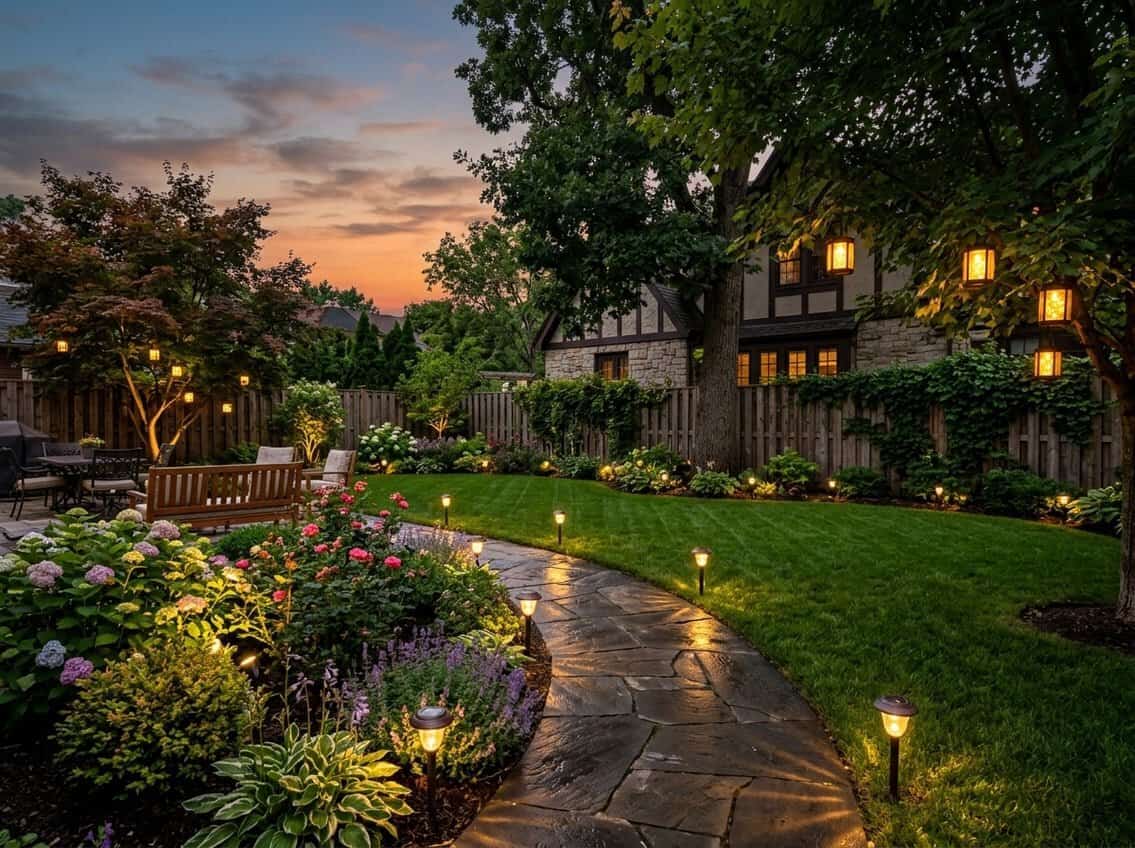
Selecting the right solar lights depends on understanding brightness requirements, panel efficiency, and how different light types serve specific purposes. Weather resistance and seasonal performance also play critical roles in ensuring lights function year-round.
Factors to Consider Before Buying
Brightness stands as the most important specification when choosing solar lights for outdoor spaces. Lumens measure light output, and different areas require different levels.
Path lights need 100-250 lumens to safely illuminate walkways. Landscape lights work well at 50-300 lumens for highlighting garden features. Motion sensor lights should provide 300-700 lumens for security purposes.
Solar panel type affects how efficiently lights charge during the day. Monocrystalline panels reach up to 24% conversion efficiency but cost more. Polycrystalline panels convert up to 16% of sunlight and offer better value for most backyards.
Battery capacity determines how long lights stay on after dark. Measured in milliampere-hours (mAh), higher numbers mean longer runtime. A good rule is one hour of sunlight provides one hour of light output.
Key specifications to compare:
- Lumens (brightness level)
- Battery capacity (mAh)
- Solar panel efficiency
- IP weatherproof rating
- Material durability
LED bulbs last up to 50,000 hours and use 75% less energy than incandescent options. They produce minimal heat and require no maintenance.
Types of Outdoor Solar Lighting
Path and walkway lights guide foot traffic along driveways and sidewalks. These stake-mounted fixtures typically stand 12-18 inches tall and provide downward illumination.
Spotlights highlight specific features like trees, statues, or architectural elements. Adjustable heads allow precise aiming, and most models produce 200-400 lumens.
String lights create ambient lighting for patios and entertainment areas. They use smaller C3-C5 bulbs that produce softer light perfect for gatherings.
Floodlights deliver 800+ lumens for large open areas that need broad coverage. Motion-activated models save battery power by only lighting when needed.
Landscape lights enhance garden beds and plantings with focused 50-300 lumen beams. Low-profile designs blend into landscaping during daylight.
Solar landscape lighting comes in ground stakes, wall mounts, and hanging styles. Each serves different functions based on where light is needed most.
Weatherproof and Seasonal Performance
Durable solar lights for yard installations must withstand rain, snow, and temperature extremes. The IP rating system indicates protection levels against water intrusion.
An IPX4 rating protects against water splashing from any direction, which handles typical rain. IPX6 ratings defend against powerful water jets and heavy storms. Pool areas and very wet climates need at least IPX6 protection.
Construction materials affect longevity outdoors. Stainless steel resists rust in humid conditions. ABS plastic withstands UV rays without cracking. Cast aluminum provides strength while remaining lightweight.
Winter presents charging challenges with shorter daylight hours and lower sun angles. Lights with larger solar panels and higher battery capacity maintain better performance during cold months. Positioning panels to face south maximizes winter sun exposure.
Snow covering solar panels stops charging completely. Regular cleaning keeps panels working efficiently in all seasons. Some models include tilted panel designs that shed snow naturally.
Temperature extremes affect battery performance. Lithium-ion batteries handle cold better than nickel-based options and maintain 500-1000 charge cycles.
Best Solar Path Lights for Walkways and Borders
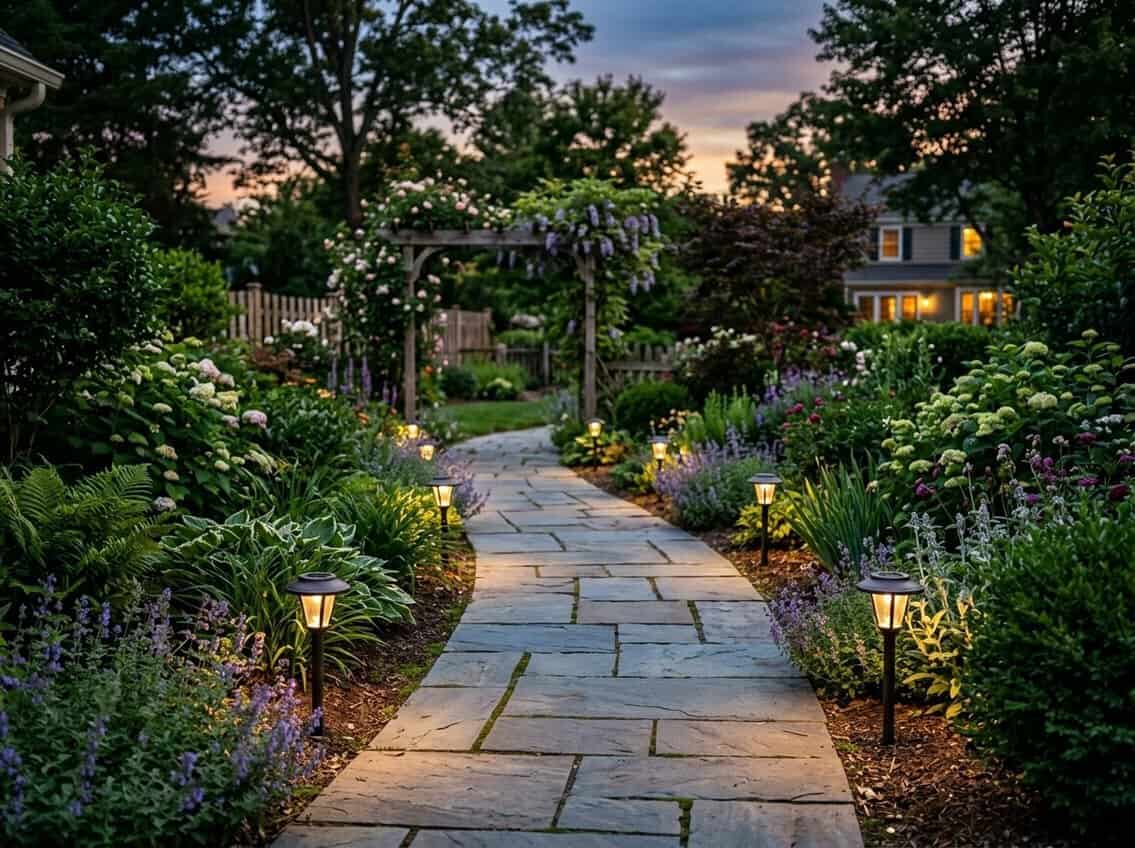
Path lights define walkways and garden borders while providing safety after dark. The right fixtures deliver consistent brightness through the night, withstand weather exposure, and complement landscaping without complicated wiring.
Key Features of Path Lighting
Brightness levels matter most for walkway safety. Quality path lights produce 10-150 lumens per fixture, with popular solar pathway lights averaging around 10 lumens for ambient lighting. Higher outputs work better for primary walkways where visibility is critical.
Battery capacity determines runtime. The best solar path lights feature improved batteries that power fixtures from dusk to dawn, even after cloudy days. Look for models with at least 600mAh batteries for reliable all-night performance.
Material durability affects lifespan. Metal stakes and glass shades outlast plastic alternatives in harsh weather. Stainless steel and powder-coated finishes resist rust, while tempered glass withstands temperature changes better than acrylic.
Weather resistance ratings indicate outdoor durability. IP65-rated fixtures handle rain and dust exposure. Models tested in multiple climate zones prove their ability to function in snow, heat, and humidity.
Popular Styles and Designs
Traditional stake lights feature classic lantern designs with ground spikes. These solar garden lights install quickly along borders and driveways. Glass shades often cast decorative patterns on surrounding surfaces.
Bollard-style fixtures stand taller at 12-18 inches. They provide more visible illumination for longer pathways and work well in commercial-style landscaping.
Disk lights sit flush with the ground. These low-profile options suit modern landscapes and avoid visual clutter during daylight hours.
Color-changing models offer white and multiple color options. Some fixtures include remote controls or buttons to switch between seven color modes, creating different ambiances for entertaining.
Flickering flame torches simulate real fire with LED technology. These decorative options add atmosphere to patios and pool areas while still marking pathway edges.
Installation Tips for Path Lights
Spacing affects coverage. Place fixtures 6-8 feet apart for continuous walkway illumination. Tighter spacing at 4-5 feet works better for curved paths or areas needing extra visibility.
Ground preparation ensures stability. Soften hard soil with water before inserting stakes. Press firmly but avoid forcing plastic posts that might crack.
Sun exposure impacts charging. Position solar panels toward the south where they receive direct sunlight for at least 6-8 hours daily. Avoid installation under tree canopies or building overhangs.
Initial charging requires patience. Let new lights charge for 1-2 full sunny days before expecting optimal performance. Turn switches to the “on” position during this charging period.
Seasonal adjustments may be necessary. Relocate fixtures if growing plants create shade. Clean solar panels monthly with a damp cloth to maintain charging efficiency.
Top-Rated Solar Spot Lights for Accent and Security
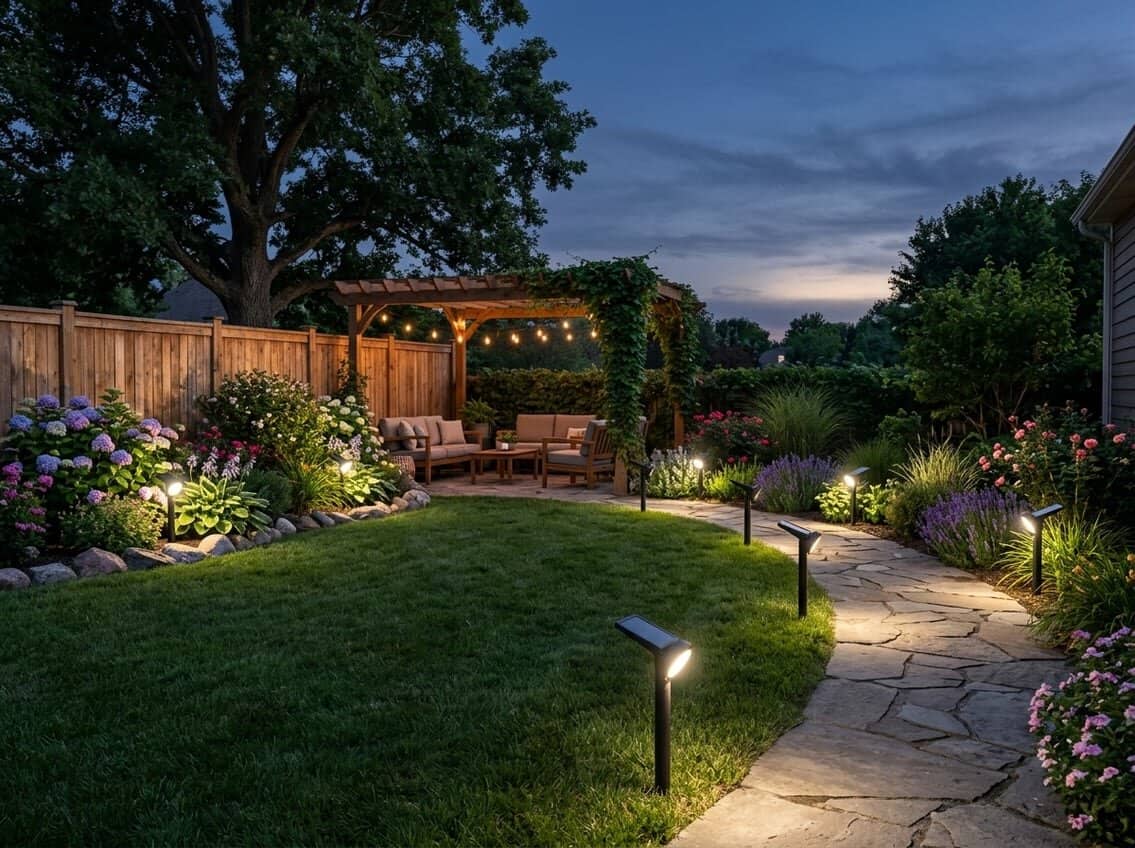
Solar spotlights deliver focused beams that highlight landscape features or deter intruders with motion-activated brightness. Quality models feature adjustable heads and multiple brightness modes to suit different outdoor needs.
Spotlight Brightness and Coverage
Solar spotlights typically range from 200 to 800 lumens per fixture. Lower outputs around 200-400 lumens work well for accent lighting on trees, garden beds, or architectural details. Higher outputs of 600-800 lumens provide security lighting that covers driveways and entry points.
Top-performing outdoor solar spotlights use multiple LED bulbs to increase brightness. Models with 58 LEDs can deliver up to 20 hours of runtime on full charge. The beam angle affects coverage too. Narrow 30-degree beams create dramatic uplighting effects. Wide 120-degree beams cover broader areas for security purposes.
Battery capacity matters for consistent performance. Most quality spotlights include 1800mAh to 2000mAh rechargeable batteries. Polycrystalline solar panels with 20-25% efficiency rates charge faster and maintain power during cloudy weather.
Adjustability and Placement
The best spotlights feature 180-degree rotating heads and 90-degree tilting bases. This flexibility allows users to direct light exactly where needed. Some models include separate solar panels connected by extension cords. This design lets homeowners place lights under eaves or in shaded areas while positioning panels in direct sunlight.
Mounting options include ground stakes for garden beds and wall brackets for building facades. IP65 or IP68 weather ratings ensure protection against rain and dust. Durable models rated for extreme temperatures from -4°F to 140°F withstand harsh winters and hot summers without degrading.
Two-in-one fixtures combine spotlights with motion sensors. These activate at full brightness when movement is detected and dim to ambient mode otherwise.
Recommended Uses for Spot Lights
Landscape accent lighting transforms yards after dark. Position spotlights at the base of trees to create dramatic uplighting effects. Aim fixtures at garden sculptures, water features, or stone walls to add visual depth.
Security applications benefit from motion-activated spotlights near doorways, garages, and side yards. Place fixtures 8-10 feet high and angle downward to eliminate dark corners where intruders might hide.
Pathway definition works with solar landscape lighting placed along walkways. Space spotlights every 6-8 feet to create continuous illumination without harsh shadows. Flag poles, house numbers, and mailboxes become more visible with dedicated spotlight fixtures.
Deck and patio areas gain ambiance from spotlights aimed at pergolas or seating areas. Use warm color temperatures around 3000K for relaxing spaces. Cool white 5000K+ works better for task lighting and security zones.
Creating Ambience with Solar String Lights

Solar string lights transform outdoor spaces into inviting evening retreats without requiring electrical outlets or adding to utility bills. The right bulb style and strategic placement can create warm, welcoming atmospheres for relaxation or entertaining guests.
Best Solar String Lights for Backyard Entertaining
The Brightech Ambience Pro Solar String Lights stands out as a top choice for backyard gatherings with its 12 full-size S14 Edison LED bulbs spaced 20 inches apart along a 27-foot cord. These lights provide 5 to 6 hours of runtime after just 6 hours of direct sunlight charging.
The shatterproof plastic bulbs resist heat up to 122 degrees Fahrenheit and feature replaceable bulbs for long-term use. A 6-foot wire connects to the solar panel, allowing placement in the sunniest spot while lights hang elsewhere.
Key Specs:
- Bulbs: 12 S14 Edison LED
- Runtime: 5-6 hours
- Weather Rating: Heat resistant to 122°F
- Price Range: Mid-range
Rating: ★★★★★ (4.6/5)
Best For: Homeowners seeking durable, classic-looking lights for semi-permanent patio or deck installations
Check Price on Amazon →
Bulb Styles and Lighting Modes
Edison-style bulbs with visible filaments create vintage charm and provide warm white light perfect for conversation areas. The brass socket options from Brightech’s Glow series add an upscale touch with their commercial-grade rubberized cords.
Fairy lights with small LED bulbs wrapped in plastic flowers offer a whimsical alternative. These decorative options often include multiple lighting modes like slow-fade, blinking, or alternating patterns. The Brightown 60 LED flower lights provide eight color modes and run from dusk to dawn despite their compact size.
Globe-style bulbs deliver softer ambient lighting compared to Edison bulbs. They work well for creating background illumination rather than task lighting.
Hanging and Layout Ideas
Draping solar string lights across pergola beams creates an overhead canopy of light that defines outdoor dining or seating areas. Spacing multiple strings 2 to 3 feet apart ensures adequate coverage without dark gaps.
Wrapping lights around porch posts or tree trunks adds vertical interest and highlights architectural features. Use built-in hooks or mounting clips to secure lights without damaging surfaces.
For patios without overhead structures, string lights between fence posts or install poles specifically for lighting support. The solar panel should face south and remain unobstructed by trees or structures for maximum charging efficiency.
Hanging two or more strings in close proximity increases brightness for areas needing more illumination while maintaining the decorative appeal of individual strands.
Solar Garden Lights for Decorative and Functional Lighting

Solar garden lights serve dual purposes in outdoor spaces by providing necessary visibility while creating atmosphere through varied colors and patterns. The right combination of placement and style transforms basic lighting into a landscape feature.
Unique Effects and Color Options
Modern solar landscape lights offer much more than standard white illumination. Color-changing LEDs allow homeowners to switch between warm white for everyday use and vibrant colors for parties or holidays.
String lights with decorative bulb shapes create festive atmospheres along fences and pergolas. Some models feature eight or more lighting modes, including steady glow, gradual fade, and dynamic flashing patterns. Memory functions save preferred settings so lights automatically resume the last-used mode each night.
Projection lights cast patterns like stars or snowflakes onto walls and ground surfaces. These work well for seasonal decorating without the hassle of wired connections.
Flame-effect solar lights mimic flickering torches or candles. They add ambiance to patios and pathways with realistic movement that battery-powered static lights cannot match.
Popular color options include:
- Warm white (2700-3000K) for traditional appeal
- Cool white (5000-6500K) for modern aesthetics
- RGB multicolor for entertainment spaces
- Amber for bug-deterring illumination
Blending Lights with Landscaping
Strategic placement makes solar garden lights appear as intentional design elements rather than afterthoughts. Stake lights positioned behind plants create silhouette effects that highlight interesting foliage shapes after dark.
Low-profile in-ground lights work well along flower bed edges without interfering with maintenance tasks. Their flush installation keeps them nearly invisible during daytime while providing subtle boundary definition at night.
Solar spotlights aimed upward at trees or architectural features add depth and drama. Positioning them 3-4 feet from the target creates optimal light distribution without harsh glare.
Decorative lantern-style lights complement traditional garden designs when placed on posts or hung from shepherd hooks. Glass and metal construction feels more permanent than plastic alternatives.
Color temperature matters for cohesion. Warm tones blend naturally with wood and stone materials. Cool white complements contemporary hardscaping and metal accents.
Durability and Longevity in Outdoor Solar Lighting

The lifespan of durable solar lights for yard installations depends primarily on material construction and weather protection ratings. Quality components can deliver 5-10 years of performance, while budget options often fail within months.
Material Quality and IP Ratings
Premium solar garden lights use aluminum die-cast housings or high-grade ABS plastic that resists corrosion and UV damage. These materials hold up better than thin plastic shells that crack and fade after one season.
The IP (Ingress Protection) rating tells buyers exactly how well a light handles dust and water exposure. IP65 is the minimum acceptable standard for outdoor solar lighting. This rating means the fixture is completely dust-tight and can withstand water jets from any direction. IP67 and IP68 ratings offer even better protection, including temporary submersion.
Cheaper lights often skip proper sealing, which allows moisture to enter the battery compartment and corrode internal components. This is why high waterproof ratings directly correlate with longer product lifespans.
The battery type also affects durability. Lithium-ion batteries last 3-5 years, while premium Lithium Iron Phosphate (LiFePO₄) batteries can reach 10-15 years. Standard NiMH batteries typically need replacement after 2-4 years.
Weather Resistance and Maintenance
Solar lights experience constant exposure to rain, snow, UV rays, and wind-blown debris. Regular maintenance extends their operational life significantly.
Cleaning solar panels every few weeks prevents dirt, pollen, and bird droppings from blocking sunlight. A soft cloth with mild detergent restores charging efficiency in minutes.
Most mid-range and premium fixtures allow easy battery replacement through a simple access panel. When lights start dimming or running shorter periods, swapping the battery restores full performance without replacing the entire unit.
Proper placement matters more than many buyers realize. Solar panels need 6-8 hours of direct sunlight daily to fully charge. Positioning lights away from porch lights and street lamps prevents the dusk sensor from malfunctioning.
Quality durable solar lights for yard applications use separated solar panels on cables, allowing optimal sun exposure while keeping the fixture protected under eaves or covered areas.
Installation and Maintenance Best Practices
Proper placement determines how well solar lights charge during the day, while regular cleaning and battery care extend their lifespan. These two factors have the biggest impact on performance and reliability.
Placement for Optimal Solar Charging
From experience: I’ve run solar lights here in Pennsylvania, and my honest take is they’re only reliable if you genuinely have a spot that gets a full eight hours of direct sun on a clear day. The day you most want them on is usually the cloudy or hazy one — and the runtime is never quite as long as you’d like. If you need accent lighting that comes on exactly when you want it, go electric (even low-voltage DC that plugs into a 120V power supply). But if all you need is a light that clicks on at dark for two or three hours, and your spot gets long direct sun, solar works just fine.
Solar panels need direct sunlight for 6-8 hours daily to fully charge. Place lights away from tree branches, roof overhangs, and building shadows that block sun exposure. Even partial shade reduces charging efficiency by 50% or more.
Face panels toward true south in the Northern Hemisphere. This positioning toward the sun captures maximum sunlight throughout the day. Tilt angle matters too—panels angled at 30-45 degrees perform better than flat-mounted units in most climates.
Avoid installing solar lights near bright porch lights or street lamps. These can confuse the dusk sensor and prevent lights from turning on automatically. Test each location by observing sun patterns for a full day before permanent installation.
Space pathway lights 6-8 feet apart for even coverage. Spotlights work best 3-5 feet from the object being illuminated.
Cleaning and Battery Care
Dust, pollen, and debris reduce solar panel efficiency. Wipe panels with a damp cloth every 2-3 months. After heavy pollen seasons or winter snow, clean more frequently.
Most solar lights use rechargeable NiMH or lithium batteries that last 2-3 years. Dim output despite full sun exposure signals battery replacement time. Match the exact battery type and voltage specified by the manufacturer.
Remove batteries if storing lights for winter. This prevents corrosion and extends battery life. Check waterproof seals annually to protect internal components from moisture damage. Replace cracked gaskets immediately to maintain weather resistance.
Eco-Friendly and Cost-Saving Benefits
Solar-powered backyard lights eliminate electricity costs while reducing household carbon emissions. These fixtures harness renewable energy during daylight hours and provide illumination without adding to monthly utility bills.
Reducing Energy Bills
Traditional outdoor lighting can add $5 to $15 per month to electricity bills for an average backyard setup. Solar lights eliminate these costs completely since they draw power exclusively from the sun.
A typical solar light setup with 10 to 15 fixtures replaces conventional lighting that would consume 150 to 300 watts per evening. Over a year, this translates to savings of $60 to $180 depending on local electricity rates. The initial investment in quality solar lights typically pays for itself within 12 to 18 months.
Solar lights require no wiring or electrical infrastructure. This eliminates installation costs that electricians charge for running outdoor circuits, which often range from $200 to $500 for basic backyard lighting projects. Homeowners can install most solar lights in minutes without professional help.
Sustainability Advantages
Solar backyard lights generate zero carbon emissions during operation. Each solar fixture prevents approximately 50 to 100 pounds of CO2 emissions annually compared to grid-powered alternatives.
These lights contain rechargeable batteries that last 2 to 4 years before replacement. Modern LED bulbs in solar fixtures operate for 25,000 to 50,000 hours, which equals 10 to 20 years of typical nightly use. This longevity reduces waste from frequent bulb replacements.
Solar-powered outdoor lights operate automatically from dusk to dawn without manual intervention. Built-in sensors detect ambient light levels and manage battery charging cycles, maximizing efficiency without homeowner input. Many models use recycled materials in their construction, further reducing environmental impact.
Frequently Asked Questions
Solar backyard lights raise common questions about runtime, brightness needs, weather durability, and seasonal performance. Understanding lumens, IP ratings, and sensor types helps buyers choose lights that work reliably year-round.
Which outdoor solar lights stay on all night without dimming too early?
Solar lights with larger battery capacities and efficient LED bulbs provide longer runtime without early dimming. Models with 2000mAh to 3000mAh batteries typically last 8 to 12 hours on a full charge.
The runtime depends on how much direct sunlight the solar panel receives during the day. Lights placed in shaded areas charge slower and dim earlier than those in full sun.
Some solar lights feature smart dimming modes that reduce brightness after a few hours to extend battery life. This allows them to stay on all night but at lower intensity levels.
What brightness level (lumens) is ideal for lighting a backyard or walkway?
Outdoor solar lights for pathways work well at 50 to 100 lumens per light. This brightness level provides enough visibility without creating harsh glare.
Backyard area lighting needs 100 to 300 lumens per fixture. Spotlights for trees or architectural features perform best at 300 to 600 lumens.
Security lighting or motion-activated lights require 700 to 1300 lumens for effective illumination. The higher the lumens, the brighter the light appears and the more visible the area becomes.
How do waterproof and weatherproof ratings affect outdoor solar light performance?
IP ratings measure how well solar lights resist water and dust intrusion. An IP65 rating means the light is dust-tight and can withstand water jets from any direction.
Lights with IP65 or higher ratings survive rain, snow, and humidity without internal damage. Lower ratings like IP44 only protect against water splashes and may fail in heavy rain.
Weather-resistant materials like aluminum and tempered glass outlast plastic housings. Heat-resistant designs prevent battery degradation during hot summer months.
Which solar lights perform reliably during winter months with shorter daylight hours?
Solar lights work in winter as long as sunlight reaches the panels, but runtime decreases. Winter models need larger solar panels and higher-capacity batteries to compensate for reduced charging time.
Lights with monocrystalline solar panels charge more efficiently in weak winter sunlight than polycrystalline models. They capture more energy during shorter days.
Runtime drops from 12 hours in summer to 5 hours in winter for most solar lights. Adjustable panels that tilt toward winter sun angles improve charging performance.
What features matter most when choosing solar lights for hanging in trees or mounting on fences?
Mounting hardware determines installation flexibility. Look for lights with adjustable brackets, S-hooks, or stake-and-mount combination options.
Battery placement affects weight distribution. Lights with the battery integrated into the light head hang better than models with separate solar panels.
Cord length between the solar panel and light matters for shaded mounting locations. A 10 to 16-foot cable allows the panel to sit in sunlight while the light hangs in shade.
Are motion-sensor solar lights or dusk-to-dawn solar lights better for backyard use?
Motion-sensor lights save battery power by only activating when movement occurs. They work well for security purposes and high-traffic areas like doorways and pathways.
Dusk-to-dawn lights turn on automatically at sunset and stay lit until sunrise or battery depletion. They provide consistent ambient lighting for entertaining areas and general backyard visibility.
Motion sensors with adjustable sensitivity and detection angles offer more control. A 120-degree detection angle covers wider areas than narrower ranges.
Some solar lights combine both features with dim mode and bright mode settings. The light stays dim until motion triggers full brightness, extending battery life while maintaining visibility.
Will Montgomery draws on hands-on outdoor-lighting experience to pick the best backyard solar lights — judged on brightness, battery life, and durability — so you light your yard without wiring or running cost.