
Choosing the right outdoor shade structure can transform a backyard into a comfortable retreat, but the options can feel overwhelming. Pergolas, gazebos, and canopies each offer different benefits for outdoor spaces, and understanding what sets them apart helps homeowners make the right choice for their needs.
Last Updated: May 2026 | Will Montgomery has spent years evaluating outdoor living structures and patio improvements. The comparisons below are based on real-world durability, installation costs, weather performance, and long-term value.
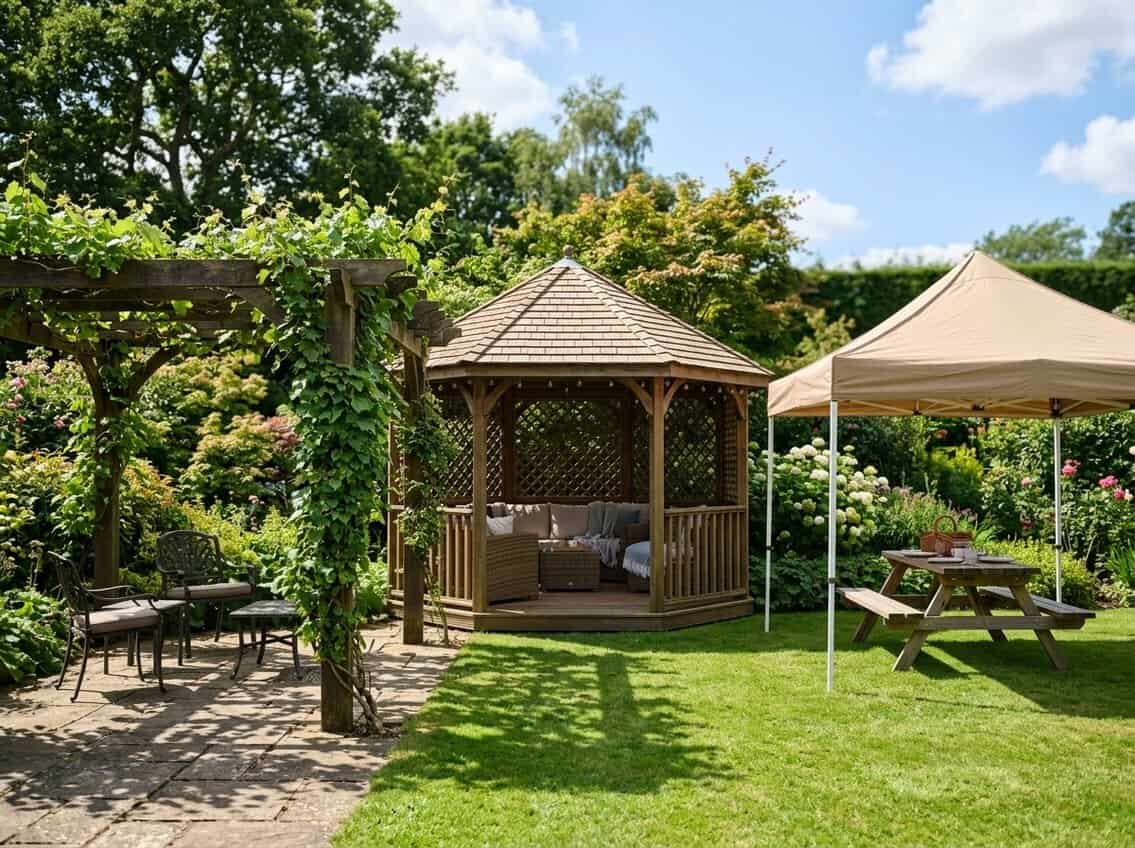
The main differences come down to roof design, weather protection, and permanence: pergolas have open slatted roofs that provide partial shade, gazebos feature fully covered solid roofs for complete protection, and canopies are lightweight temporary structures with fabric tops. Each structure serves different purposes and fits different budgets, from the architectural appeal of pergolas to the full shelter of gazebos to the flexibility of portable canopies.
Understanding how these structures differ in cost, durability, shade coverage, and installation requirements helps narrow down which option makes the most sense. Some homeowners need complete rain protection for outdoor dining areas, while others want a decorative feature that adds curb appeal without blocking too much sunlight.
Key Takeaways
- Pergolas offer partial shade with open roofs, gazebos provide full coverage with solid roofs, and canopies are temporary fabric structures
- Gazebos cost more and provide better weather protection, while pergolas are less expensive and easier to install
- The best choice depends on your budget, desired shade level, and whether you need a permanent or portable structure
Core Differences Between Pergolas, Gazebos, and Canopies

The main variations between these three structures come down to their roof design, how they’re built, and whether they stay in one place or move around. Each option offers different levels of sun coverage and weather protection based on its construction.
Design and Structural Comparison
Pergolas feature an open-air design with vertical pillars that support crossbeams and a slatted roof system. The roof typically consists of parallel beams or lattice work that creates a grid pattern overhead. These structures can attach to a house on one or more sides, or they can stand alone with four corner posts.
Gazebos are freestanding structures with pillars that support a fully enclosed roof. Most gazebos have six or eight sides, creating a round or octagonal shape, though some come in square or rectangular designs. They usually include a built-in floor that sits raised above the ground.
Canopies are simple temporary structures made from fabric stretched over a metal or plastic frame. They use basic materials and fold down for storage. The frame typically consists of collapsible poles connected at corners, with fabric draped or attached on top.
Roof Styles and Sun Protection
A pergola’s slatted roof allows sunlight to filter through the gaps between beams. This design creates partial shade with dappled light patterns that change throughout the day. Some pergolas include retractable fabric panels or growing vines that increase shade coverage.
Gazebos provide complete overhead protection with solid roofing materials like shingles, metal, or polycarbonate panels. The enclosed roof blocks rain and sun entirely, making the space usable in various weather conditions. The sides remain open for airflow while keeping the interior dry.
Canopies offer full sun and rain protection through their fabric covering. The material blocks UV rays and sheds water, though it provides less durability than permanent roof structures. Wind can catch the fabric and cause movement or damage without proper anchoring.
Permanence and Mobility
Pergolas are permanent installations that require concrete footings or anchors secured into an existing surface like a deck or patio. Building them involves precise measurements and construction skills. They become part of the property’s landscaping and typically require permits.
Gazebos are freestanding permanent structures that need foundation preparation and ground anchoring. The construction process is more complex due to the enclosed roof system and often includes railings and built-in seating. Most gazebos stay in place year-round.
Canopies are portable and temporary. They set up in minutes without tools and break down for storage during off-seasons or bad weather. The lightweight design allows one or two people to move them to different yard locations as needed.
Ready to add a pergola to your backyard? See our top-rated Best Pergola Kits guide for the best kits at every budget.
Shade and Weather Protection Performance

Each structure offers different levels of protection from sun, rain, and wind. Gazebos provide the most complete coverage, while pergolas offer partial shade and canopies fall somewhere in between depending on their design.
Sun Coverage and UV Protection
Gazebos deliver full overhead protection with solid roofs made from metal, wood, or polycarbonate panels. The enclosed design blocks 100% of direct sunlight from above, making them ideal for all-day outdoor activities. Most hardtop gazebos also include side rails where homeowners can add curtains or netting for additional shade control.
Pergolas create partial shade through open slat designs or adjustable canopies. The amount of sun coverage changes throughout the day as the sun moves across the sky. Pergolas with retractable canopies let users adjust shade levels based on their needs, extending the canopy for more coverage or retracting it for full sunlight.
Canopies typically offer moderate sun protection with fabric tops that block most UV rays. The level of coverage depends on fabric thickness and material quality. Portable canopies work well for temporary shade needs but may not provide consistent protection in shifting sun angles.
Rain and Wind Resistance
Gazebos dominate in rain protection with solid roofing and engineered drainage systems. The enclosed roof keeps furniture, electronics, and guests completely dry during storms. Hardtop models also handle wind better due to their heavier frames and stronger anchoring systems.
Pergolas struggle in wet weather unless equipped with louvered roofs that can close during rainfall. Standard open-slat pergolas let rain pass through entirely. Fabric canopy versions offer water resistance but not waterproofing, and water pooling becomes a concern if the fabric isn’t properly tensioned.
Canopies provide basic rain coverage but perform poorly in wind. Fabric tops can tear or collapse under strong gusts. Anchored gazebos perform better in windy areas than portable canopies, which must be taken down during storms to prevent damage.
Seasonal Use Considerations
Gazebos function year-round in most climates. Their solid construction handles snow loads better than other structures, and the weatherproof design allows for heating elements and lighting installation. This makes gazebos the best shade structure for patio spaces used in multiple seasons.
Pergolas work best during warm months. Snow accumulation can damage open roofs or fabric canopies, requiring homeowners to remove canopy materials before winter. Metal pergolas with louvered roofs extend the usable season into fall but still need winterization in cold climates.
Canopies serve as seasonal-only solutions in most cases. The lightweight fabric and frame construction aren’t designed for winter weather. Most owners store portable canopies indoors during colder months to prevent damage from ice, snow, and freezing temperatures.
Aesthetic Impact and Backyard Integration

Each structure brings a distinct visual character to outdoor spaces, with pergolas offering open architectural lines, gazebos providing enclosed focal points, and canopies delivering temporary coverage. The right outdoor structure depends on neighborhood context and existing landscape features.
Visual Appeal and Architecture
Pergolas create vertical interest with their column-and-beam design. The open lattice top casts attractive shadow patterns across patios and walkways. These structures work well attached to homes or freestanding in yards.
Gazebos serve as standalone architectural features with their enclosed roofs and raised platforms. Their rounded or octagonal shapes draw the eye and create clear gathering spots. The solid roof design makes them more prominent in yards than other options.
Canopies offer minimal visual impact. The simple frame and fabric top blend into backgrounds rather than standing out. They suit spaces where homeowners want shade without permanent structures. The lightweight design means they won’t compete with existing architectural elements.
Suitable Styles for Different Landscapes
Modern homes pair well with pergolas made from aluminum or sleek wood designs. The clean lines match contemporary architecture. Traditional properties benefit from wooden gazebos with detailed railings and ornate roof designs.
Small yards handle pergolas better than gazebos. Pergolas adapt to compact areas while providing the best shade structure for patio spaces. Gazebos need more square footage to avoid overwhelming tight spaces.
Coastal settings demand rust-resistant materials. Aluminum pergolas and metal-framed canopies handle salt air better than wood. Garden-focused landscapes suit pergolas with climbing vines that blend greenery with structure.
Customization and Accessories
Pergolas accept the most modifications. Homeowners add retractable canopies for adjustable shade, hang fabric panels between beams, or train climbing plants up columns. The open design allows for string lights, ceiling fans, and hanging planters.
Gazebos come with built-in customization through screens, curtains, and lighting fixtures. The enclosed space accommodates furniture arrangements and decorative elements. Many include railings that hold flower boxes or string lights.
Canopies offer limited personalization beyond fabric color choices. Some models include sidewalls for wind protection. The temporary nature restricts permanent additions but allows seasonal changes to coverage areas.
Ready to add a pergola to your backyard? See our top-rated Best Pergola Kits guide for the best kits at every budget.
Installation, Maintenance, and Durability

Each structure requires different levels of effort to set up and keep in good condition over time. Pergolas are the easiest to install and maintain, while gazebos demand more work upfront but offer better protection, and canopies provide quick temporary solutions with minimal upkeep.
Setup and Professional Requirements
Canopies are the simplest option to set up. Most models come with pop-up frames that one or two people can assemble in under an hour without tools. They typically anchor to the ground with stakes or weights.
Pergolas require moderate installation effort. DIY kits are available for as little as $1,500 and include pre-cut materials with instructions. Most homeowners with basic carpentry skills can build a pergola over a weekend. The structure attaches to concrete footings or bolts directly to a deck.
Gazebos need the most complex installation. A level concrete slab makes a gazebo durable by providing a thick base to support the structure and furnishings. Professional installation is common due to the enclosed roof, elevated flooring, and precise measurements required. Assembly typically takes several days to complete.
Material Longevity
A well-built pergola can last 10-12 years or more with proper maintenance. Wood pergolas face faster deterioration without weather protection, while vinyl and aluminum options resist weathering better. The open design leaves columns and beams exposed to the elements.
Gazebos typically have sturdier structures than pergolas. Galvanized steel and aluminum frames outlast lower-quality metals. Wood gazebos made from cedar or redwood resist rot naturally. Asphalt shingle roofs cost less initially but won’t last as long as metal roofing.
Canopies offer the shortest lifespan. Most fabric canopies last 2-3 years before UV damage weakens the material. They serve best as temporary solutions for seasonal use.
Maintenance Needs
Pergolas require less maintenance than gazebos, especially with weather-resistant materials. The open design allows rain to pass through rather than collect, reducing water damage and mold growth risks. Annual maintenance involves basic cleaning and applying weather-resistant sealant to wood.
Gazebos need regular roof inspections to check for leaks and damaged shingles. The enclosed design traps moisture if ventilation is poor. Metal gazebos require checks for rust and corrosion, while wood structures need annual staining or painting.
Canopies demand minimal upkeep. Users should remove fabric covers before heavy rain or snow to prevent damage. Storage during off-seasons extends canopy life significantly.
Ready to add a pergola to your backyard? See our top-rated Best Pergola Kits guide for the best kits at every budget.
Cost Considerations and Value for Money
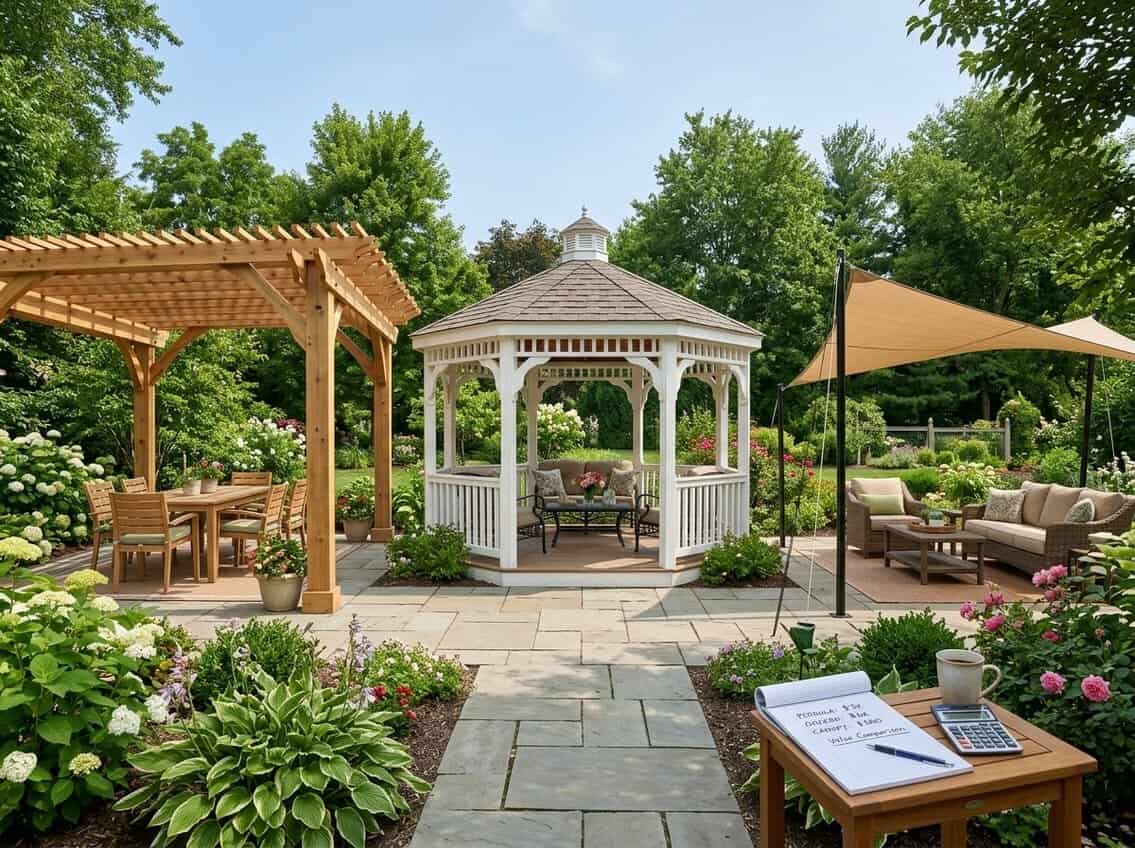
Canopies start at $50 to $500 for portable models, while pergolas cost $1,500 to $12,000 and gazebos range from $4,000 to $25,000 installed. The price gap reflects differences in materials, permanence, and long-term value to a property.
Upfront and Long-Term Expenses
Canopies represent the lowest upfront investment at $50 to $500 for basic pop-up models. Heavy-duty commercial canopies with steel frames run $300 to $1,500. These structures require no installation labor or permits, but they last only 2 to 5 years before fabric tears or frames corrode.
Pergolas cost $1,500 to $12,000 depending on whether a homeowner chooses a DIY kit or custom build. Pressure-treated pine kits start around $500 in materials, while custom cedar pergolas with motorized louvered roofs reach $25,000. Wood pergolas need staining every 2 to 3 years at $200 to $400 per treatment. Vinyl and aluminum options cost 30% to 100% more upfront but eliminate maintenance expenses.
Gazebos cost $4,000 to $25,000 installed, with hardtop metal kits at the lower end and custom screened cedar gazebos at the upper range. The full roof and structural framing drive costs higher than pergolas. Wood gazebos carry the same staining requirements as pergolas, adding $200 to $400 annually.
Resale Value and Property Enhancement
Canopies add no resale value because they are temporary and portable. Buyers view them as outdoor furniture rather than improvements to the property.
Pergolas return 50% to 60% of their cost at resale by defining outdoor living spaces and adding visual interest to yards. A $6,000 pergola typically adds $3,000 to $3,600 in home value.
Gazebos recoup 60% to 70% of costs because they provide functional outdoor rooms with weather protection. A $12,000 gazebo adds roughly $7,200 to $8,400 in property value. Custom builds with electrical service and quality materials perform better at resale than basic kits.
Ready to add a pergola to your backyard? See our top-rated Best Pergola Kits guide for the best kits at every budget.
Backyard Uses and Functional Applications

Each shelter type serves different backyard needs based on how homeowners plan to use their outdoor space. Gazebos work best for permanent gathering spots, while canopies offer portable coverage for changing needs.
Outdoor Living and Entertaining
Gazebos create dedicated outdoor rooms that work well for dining areas and seating arrangements. The solid roof protects furniture from rain and sun damage year-round. Many homeowners place hot tubs or outdoor kitchens under gazebos since the full coverage keeps equipment dry.
Pergolas suit casual entertaining where filtered shade is enough. The open slats let in natural light while reducing direct sun exposure by about 50-70%. Homeowners often add climbing plants or retractable shade cloth to increase coverage.
Canopies provide flexible shade for parties and gatherings that happen a few times per year. They set up quickly over picnic tables or temporary seating areas. The lightweight design means one or two people can move them to different spots as the sun shifts throughout the day.
Temporary vs Permanent Solutions
Permanent structures like gazebos and built-in pergolas require concrete footings and building permits in most areas. They stay in place through all seasons and become part of the property value. Installation takes several days to weeks depending on size and complexity.
Temporary options include pop-up canopies and some pergola kits that anchor with stakes or weights. These structures come down for winter storage or when not needed. No permits are typically required for temporary installations.
The canopy vs gazebo backyard decision often comes down to commitment level. Renters and homeowners who move frequently benefit from portable canopies. Those planning to stay long-term get more value from permanent gazebos or pergolas.
Event Hosting and Flexibility
Canopies excel at event hosting because they relocate easily and cost less to buy multiple units. Wedding receptions, graduation parties, and yard sales all benefit from movable shade coverage. Setup takes 10-30 minutes depending on the model.
Gazebos work well for events that happen in the same spot repeatedly. The enclosed space creates a focal point for ceremonies or buffet tables. Some models include mosquito netting and privacy curtains that make evening events more comfortable.
Pergolas offer middle-ground flexibility through removable shade additions. Homeowners can attach fabric panels for full events or leave them open for casual use. The structure stays put while the coverage level changes based on needs.
Ready to add a pergola to your backyard? See our top-rated Best Pergola Kits guide for the best kits at every budget.
Selecting the Best Shade Structure for Your Patio
The best shade structure for your patio depends on how much weather protection you need and whether the structure will stay in place year-round. Permanent options like pergolas and gazebos offer more durability, while canopies provide flexibility for renters or seasonal use.
From experience: pergolas feel open and airy and tend to run cooler, while gazebos win on usability when the weather turns. The compromise that worked for us was a solid rectangle roof over the patio table, open on all sides — you get rain coverage without losing that open feel. If you’re torn between the two, that middle-ground approach is worth considering before committing to a full structure.
Key Decision Factors
Three main factors determine which structure works best: installation permanence, budget, and weather exposure.
Permanence matters most for homeowners planning long-term improvements. Pergolas and gazebos require foundation posts and often permits, making them poor choices for rental properties. Canopies set up in hours without digging or concrete.
Budget creates clear divisions. Canopies cost $100 to $1,000, pergolas range from $2,000 to $8,000, and gazebos typically run $5,000 to $15,000 for permanent installations.
Weather exposure separates functional choices from aesthetic ones. Patios in rainy climates need solid roofs, making gazebos the practical choice. Areas with mild weather can use pergolas with optional retractable covers. Canopy vs gazebo backyard comparisons show canopies struggle in wind despite lower costs.
Patio size also affects decisions. Small patios under 200 square feet work better with wall-mounted pergolas that don’t consume floor space. Larger patios can accommodate freestanding gazebos without feeling cramped.
Matching Structure to Lifestyle
Daily use patterns reveal which structure fits best. Dining patios benefit from pergolas with retractable canopies that adjust for changing sun angles throughout meals.
Garden sitting areas work well with gazebos. The enclosed roof creates a destination spot separate from the main house. Built-in seating and railings turn gazebos into outdoor rooms.
Entertainment spaces need flexibility. Canopies work for occasional parties but lack the polish for frequent hosting. Homeowners who entertain weekly typically choose pergolas for their blend of style and shade.
Maintenance preferences matter too. Pergolas require occasional staining or sealing depending on wood or metal construction. Gazebo roofs need inspection for leaks and shingle replacement. Canopies demand the most upkeep, with fabric replacement every 2 to 5 years.
Ready to add a pergola to your backyard? See our top-rated Best Pergola Kits guide for the best kits at every budget.
Expert Tips for Choosing Between Pergolas, Gazebos, and Canopies
Making the right choice requires understanding your budget limits and avoiding common setup errors that can lead to wasted money or structural problems. The comfort level of your outdoor space depends on smart placement decisions and adding features that match how you actually use your yard.
Common Mistakes to Avoid
Many homeowners pick the wrong structure by focusing only on appearance instead of weather protection needs. A pergola with an open roof won’t work well if the main goal is rain coverage during summer storms.
Skipping local building code checks creates serious problems. Some areas require permits based on structure size or distance from property lines. Fixing permit issues after construction costs more time and money than checking regulations first.
Poor ground preparation causes stability issues. Installing a gazebo on uneven grass or without proper anchoring leaves it vulnerable to wind damage. The ground must be level and free of tree roots before installation begins.
Buying undersized structures is another frequent error. A canopy that barely covers a dining table leaves guests in the sun. Measure the intended furniture layout and add at least 2-3 feet on all sides for comfortable movement.
Maximizing Comfort and Usability
Location directly affects how often the structure gets used. Place it near the kitchen or grill if outdoor dining is the priority. Position it to capture the best yard views while maintaining privacy from neighbors.
Adding the right accessories transforms basic shade into a comfortable outdoor room. Retractable fabric panels on pergolas provide flexible sun control throughout the day. Mesh screens on gazebos keep bugs out during evening gatherings without blocking airflow.
Consider multiple functions when planning the space. Built-in benches in a gazebo create permanent seating that doesn’t need storage. Electrical outlets allow for lighting, fans, or outdoor entertainment systems.
Drainage matters more than most people realize. Water pooling under a structure creates mud and mosquito breeding grounds. Slight grading away from the structure or adding gravel underneath prevents these problems and extends the life of any flooring.
Ready to add a pergola to your backyard? See our top-rated Best Pergola Kits guide for the best kits at every budget.
Frequently Asked Questions
Each outdoor structure type has different strengths when it comes to weather protection, cost, and setup difficulty. These common questions cover the practical details homeowners need to know before choosing between these three options.
What are the key differences in structure and purpose between a pergola, a gazebo, and a canopy?
The roof design is the key difference between these three structures. A pergola features an open grid of beams and rafters that provide partial shade but little rain protection. A gazebo has a complete, solid roof that covers the entire structure and typically includes a finished floor.
A canopy uses fabric stretched over a frame to create temporary shelter. Canopies are generally used temporarily for events or seasonal outdoor activities.
Pergolas can attach directly to a house wall for support, while gazebos always stand alone. Most pergolas sit on existing patios or grass without built-in floors.
Which option provides the best shade and rain protection for a patio or backyard seating area?
Gazebos offer the most complete protection from sun and rain due to their solid, pitched roofs. The continuous roof coverage blocks direct sunlight and channels water away from the seating area below.
Pergolas provide only partial shade through their open beam structure. They offer negligible rain protection unless fitted with a retractable fabric canopy or roof covering.
Canopies fall somewhere between the two options. Better canopy models have polycarbonate roof panels that block UV rays and shed light rain, though they remain less protective than gazebo roofs.
How do the typical installation complexity and required tools compare across these backyard structures?
Pergolas are the most DIY-friendly option among the three structures. Home improvement stores sell pergola kits that handy homeowners can assemble using basic tools.
Many pergola plans use affordable dimensional lumber that simplifies the building process. The structure’s simpler design requires fewer materials and less complex joinery than gazebos.
Gazebos involve more complicated construction with multiple roof angles and support systems. Wooden gazebo kits exist but remain considerably more complex than pergola kits of similar size. Canopies offer the easiest setup, with lightweight pop-up models requiring no tools and taking minutes to erect.
What is the average cost range to buy and install each type of outdoor structure?
Pergolas cost less to build than gazebos because they require fewer materials for their open design. A basic pergola typically represents the most affordable permanent structure option.
The exact price depends on size, materials, and whether someone hires professional installers or builds it themselves. DIY pergola kits save on labor costs for those with construction skills.
Seasonal canopies often cost less than building a pergola, especially lightweight fabric models. However, permanent gazebos carry the highest price tag due to their complex roof systems and increased material requirements. A pergola typically has a better return on investment because it costs much less to build while still adding property value.
Which materials and maintenance needs should I expect for each option over time?
Pergolas come in wood, aluminum, steel, or PVC materials. Wood pergolas need periodic staining or sealing to prevent rot and weather damage. Metal pergolas require less maintenance but may need rust treatment in humid climates.
Gazebo roofs use materials ranging from shingles to metal to polycarbonate panels. Wood gazebos demand regular maintenance similar to pergolas, while metal frames resist weather better but cost more upfront.
Canopy fabric represents the weakest point in these structures. Fabric covers tear relatively easily and typically need replacement every few years. Higher-quality canopies with UV-resistant fabric last longer but still degrade faster than solid roofing materials.
Do I need a permit or planning permission to install an outdoor structure in my yard or garden?
Local building codes determine whether a permit is required for backyard structures. Size is rarely a problem, but proximity to property lines or utilities can trigger permit requirements.
Checking with the local building department before starting construction prevents issues later. Some jurisdictions allow smaller structures without permits while requiring approval for larger installations.
Zoning requirements are easier to obtain for pergolas compared to fully enclosed gazebos in many areas. Officials may order removal of unpermitted structures, so verifying requirements beforehand saves time and money.
Ready to add a pergola to your backyard? See our top-rated Best Pergola Kits guide for the best kits at every budget.
Will Montgomery draws on hands-on outdoor-living experience to compare pergolas, gazebos, and canopies — shade, cost, and permanence — so you choose the structure that fits your yard and budget.