

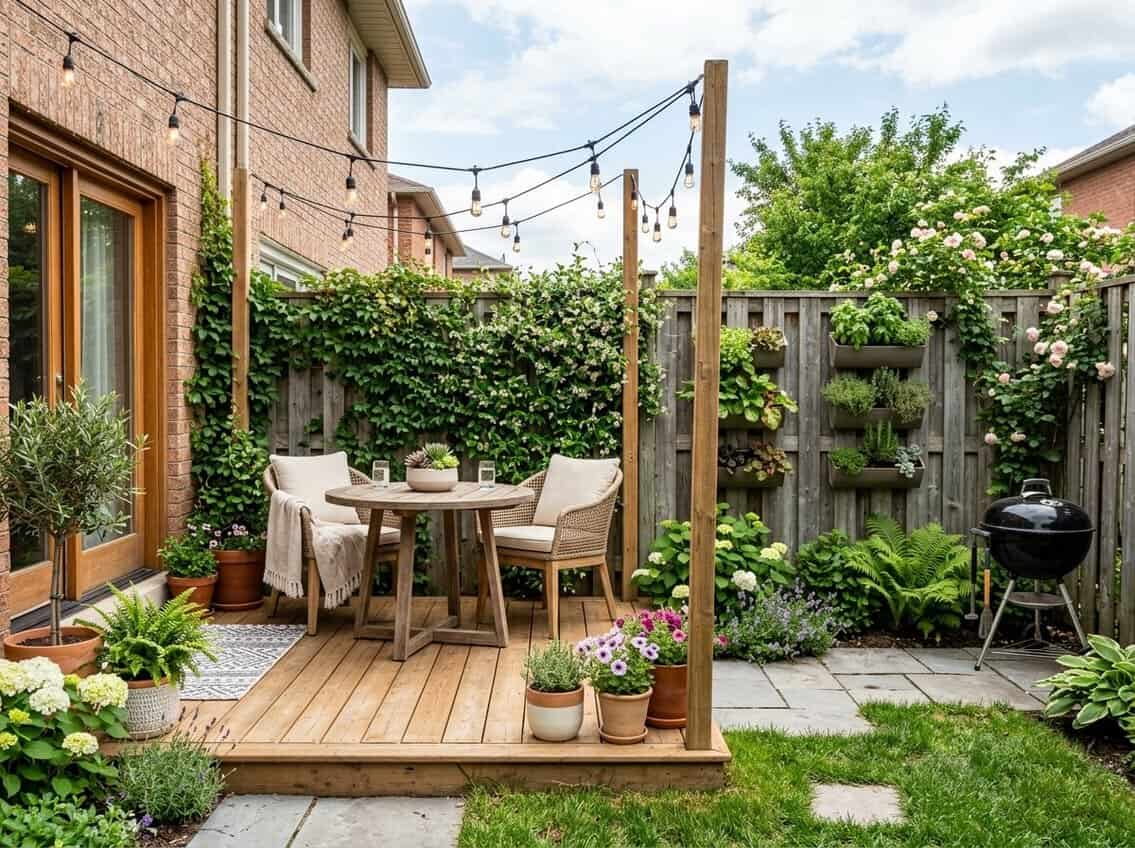
Last Updated: June 2026 | Will Montgomery has transformed small outdoor spaces for years — he knows which ideas actually work in tight yards and which ones just look good on Pinterest.
A small backyard doesn’t mean you have to give up on creating an outdoor space you love. Limited square footage actually opens up creative opportunities that larger yards don’t always allow. With smart planning, vertical gardens, multi-purpose zones, and clever design choices, even the tiniest backyard can become a comfortable retreat that looks bigger than it really is.
The key is working with what you have instead of against it. Small backyard landscaping focuses on maximizing every inch through thoughtful layout and strategic plant choices. Simple changes like adding a small patio, using containers for plants, or installing a vertical garden can transform a cramped yard into a functional outdoor living area.
Whether you want a cozy spot to relax, a place to grow vegetables, or an attractive view from your windows, small garden ideas can help you achieve your goals without needing a big budget or a lot of space. The right approach makes all the difference in how your outdoor area looks and feels.
Key Takeaways
- Plan your small backyard layout carefully to make the most of limited space
- Use vertical elements and layered planting to add depth without taking up ground space
- Strategic design choices and visual tricks can make a small yard feel larger and more inviting
Space-Smart Planning for Small Yards

Success in small yard design starts with understanding what the space offers and how it will be used. Proper planning turns limitations into advantages through strategic layout choices and material selection.
Assessing Layout and Sunlight
The first step involves measuring the yard’s dimensions and noting sun exposure throughout the day. Full sun areas receive six or more hours of direct sunlight, partial sun gets three to six hours, and shade receives less than three hours.
Homeowners should walk the space at different times to identify which spots stay sunny or shaded. This determines where to place seating areas, gardens, and features like fire pits. South-facing areas typically get the most sun, while north-facing spots stay cooler and shadier.
Key observations to record:
- Morning vs. afternoon sun patterns
- Shaded areas from buildings or trees
- Wet or dry spots after rain
- Wind exposure and direction
The yard’s shape matters too. Long, narrow spaces benefit from different strategies than square plots. Taking photos from multiple angles helps visualize potential layouts before making changes.
Defining Zones for Functionality
Breaking up small backyards into distinct zones actually makes them feel larger rather than cramped. Each zone serves a specific purpose like dining, relaxing, or gardening.
A typical small yard might include a paved dining area near the house, a gravel path leading to a seating nook, and planting beds along the perimeter. Pathways between zones create natural divisions without physical barriers.
Furniture groupings help define each area’s function. A bistro set signals a breakfast spot, while lounge chairs with a side table create a reading area. Raised planters or low hedges can separate zones without blocking views entirely.
Choosing the Right Materials
Material selection impacts both appearance and maintenance. Pavers work well for patios because they drain water and come in various sizes to fit tight spaces. Gravel costs less and suits paths or seating areas.
Material comparison:
| Material | Best Use | Maintenance | Cost |
|---|---|---|---|
| Pavers | Patios, walkways | Low | Medium to high |
| Gravel | Paths, ground cover | Low | Low |
| Decking | Elevated areas | Medium | Medium to high |
| Mulch | Garden beds | Medium | Low |
Lighter colors make spaces feel more open, while darker tones create intimacy. Mixing materials adds visual interest without overwhelming the space. A combination of pavers for the main patio and gravel for secondary paths provides texture variation while keeping costs reasonable.
Creative Landscaping and Design Strategies
From experience: My wife had a small brick patio in a row home when we got together. The single biggest upgrade we made was adding a pergola with a cloth roof — it completely transformed the space into somewhere you actually wanted to sit. Two years later, a straight-line wind came down the alley and took the whole thing out, bent frame and all. The UV-weakened cloth didn’t stand a chance. We didn’t replace it because we knew we were moving, but the lesson stuck: if you go the pergola route, invest in a steel or aluminum frame and UV-rated fabric — cheap versions won’t last.
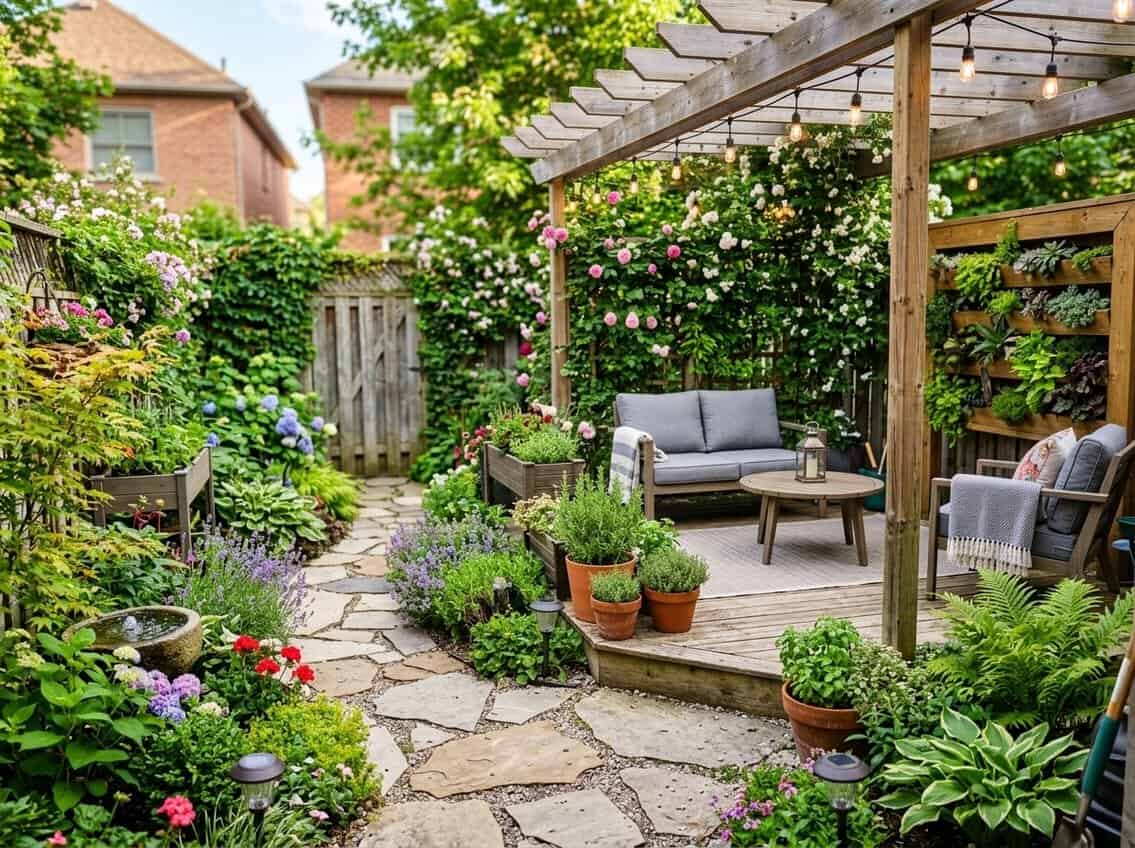
Smart design choices can transform a cramped yard into an inviting outdoor retreat. Vertical structures add growing space without consuming square footage, while multi-level layouts create visual interest and functional zones.
Maximizing Vertical Gardens
Vertical gardens offer an effective solution for homeowners who want more planting area without sacrificing ground space. Wall-mounted planters, trellises, and living walls allow plants to grow upward rather than outward. These structures can support herbs, flowers, vegetables, and even small fruiting plants.
Espalier techniques work particularly well for dressing up plain walls while maintaining a slim profile. This method trains trees and shrubs to grow flat against vertical surfaces. Popular options include fruit trees like apples and pears, which produce food while adding greenery.
Common vertical gardening structures include:
- Hanging pocket planters
- Wooden ladder shelves
- Metal grid panels
- Bamboo or wooden trellises
- Modular living wall systems
These installations need proper support and regular watering since vertical gardens dry out faster than ground-level beds. Drip irrigation systems can simplify maintenance and ensure consistent moisture levels.
Incorporating Multi-Level Features
Raised planting beds and elevated areas draw the eye upward and make small spaces feel more expansive. Homeowners can use retaining walls to create terraced gardens that add one to two feet of height variation. This approach works especially well on sloped properties where different levels occur naturally.
Multi-level designs also include sunken seating areas, raised decks, and tiered planters. A patio positioned slightly below grade creates intimate gathering spots, while elevated platforms offer better views. Steps connecting different levels serve double duty as seating or display areas for potted plants.
The varied heights prevent the space from feeling flat and monotonous. Each level can serve a distinct purpose, such as dining on one tier and relaxing on another.
Selecting Low-Maintenance Plants
Choosing the right plants reduces ongoing work while keeping the yard attractive year-round. Dwarf and columnar varieties grow vertically instead of spreading horizontally, which preserves valuable space in restricted areas. Native plants typically require less water and resist local pests better than non-native species.
Perennials return each year without replanting, and evergreens maintain color during winter months. Ground covers like creeping thyme or sedum spread to fill bare spots while needing minimal care. Ornamental grasses add movement and texture with little maintenance beyond an annual trim.
Plants with interesting foliage provide visual appeal without requiring deadheading or constant pruning. Hostas, ferns, and coral bells offer varied leaf colors and shapes that look good throughout the growing season.
Outdoor Living Enhancements on a Smaller Scale
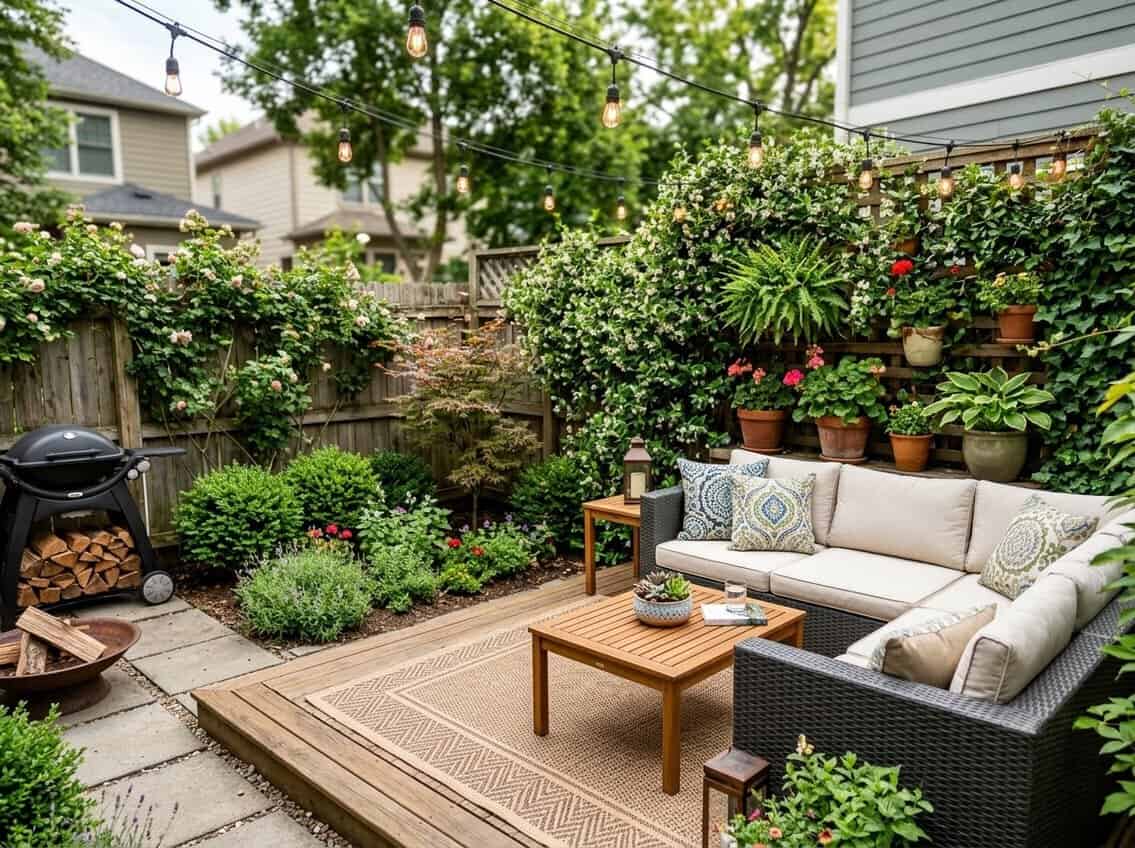
Small backyards benefit from thoughtful additions that maximize comfort without overwhelming the space. Strategic furniture placement, carefully chosen water elements, and dual-purpose storage transform compact areas into functional outdoor retreats.
Cozy Seating and Dining Nooks
Creating dedicated zones for relaxation and meals makes small backyards feel more purposeful. A built-in bench along a fence or patio edge provides seating while preserving floor space for a movable table. When not dining, homeowners can slide the table away and add a small fire pit instead.
Corner spaces work well for hanging egg chairs or reading nooks that take advantage of underused areas. Adding outdoor pillows, throw blankets, and weather-resistant rugs makes these spots feel like natural extensions of indoor living rooms.
For dining areas, a small bistro table fits two people comfortably without dominating the yard. Foldable chairs store easily when extra floor space is needed. Homeowners who entertain frequently can install a compact bar cart stocked with glasses, napkins, and entertaining essentials that rolls out when guests arrive.
Adding Water Features and Lighting
Water elements create peaceful atmospheres without requiring pool-sized commitments. A small fountain or decorative pond attracts birds and butterflies while adding soothing sounds. These water features enhance the backyard environment and serve as focal points in compact spaces.
string lights remain the most popular outdoor lighting choice because they add warmth overhead without consuming ground space. Lanterns placed on tables or hung from hooks provide task lighting for dining. Solar-powered lights along pathways illuminate walkways while reducing energy costs.
Pendant lights rated for outdoor use work well over seating areas when hung from pergolas or covered porches. These fixtures elevate the backyard’s style while providing practical illumination after sunset.
Smart Storage and Multipurpose Furniture
Every item in a small backyard should serve multiple functions. Benches with lift-up seats hide garden tools, cushions, or pool toys while providing places to sit. Vertical storage solutions like wall-mounted tool racks and hose reels keep necessities accessible without cluttering the ground.
Rolling carts function as mobile prep stations during cookouts and store away when not needed. A shelving unit placed near the grill creates an outdoor kitchen setup without permanent construction.
Ottomans that double as side tables offer footrests, extra seating, and surfaces for drinks. Stackable chairs nest together in closets or sheds between gatherings. These flexible pieces adapt to different activities throughout the seasons.
Visual Tricks and Finishing Touches
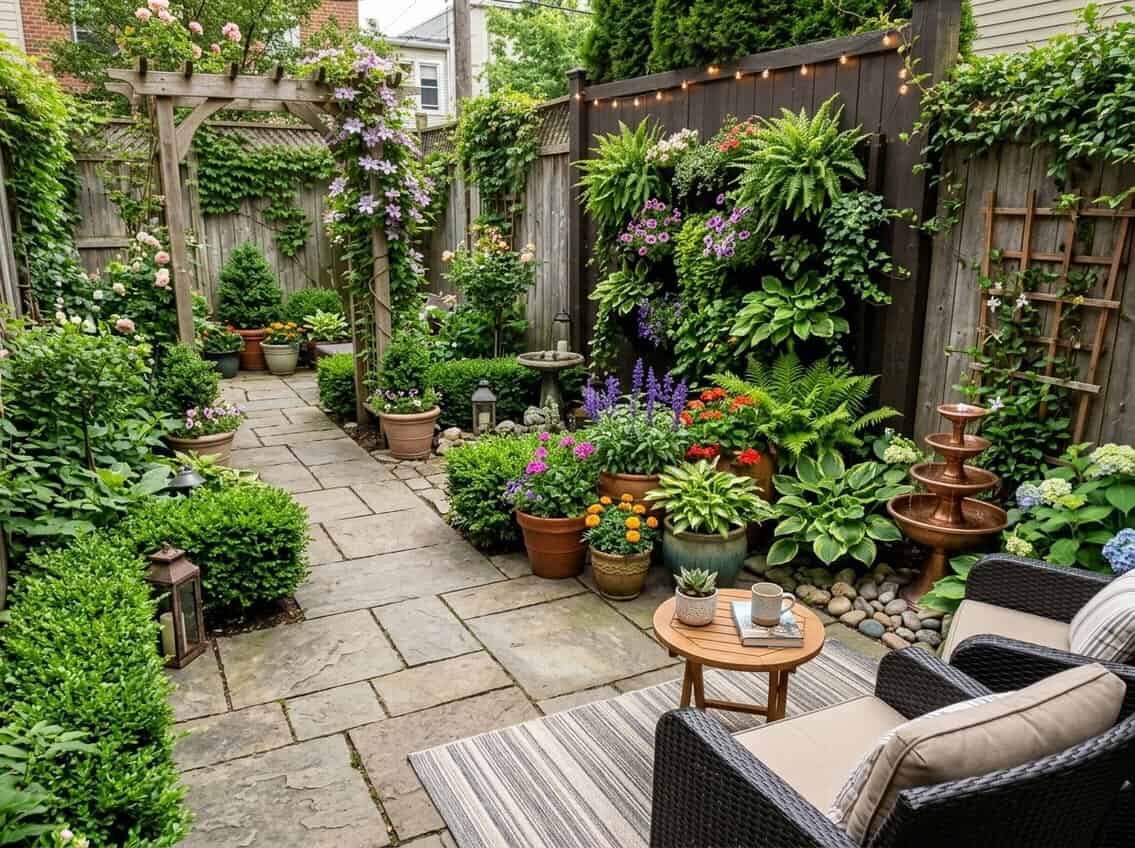
Smart design choices can make a compact yard feel twice its actual size. Simple additions like mirrors, colorful plants, and well-placed features transform cramped spaces into inviting outdoor rooms.
Using Color and Texture
Bold, bright flowers planted in visible spots draw the eye and make gardens appear more spacious. The key is placing colorful blooms strategically so the rest of the yard seems to recede into the background.
Large tropical plants with big leaves create a lush atmosphere in tight spaces. Their unique shapes and varied textures add visual interest without taking up much ground space. Mixing different foliage types makes the yard feel fuller and more developed.
Color placement tips:
- Plant bright flowers near seating areas
- Use darker colors at the back of the yard
- Add white or light-colored blooms to brighten shaded corners
Combining unexpected elements like varied paving materials, container plantings, and different hardscape textures adds depth. These small changes help visitors focus on the design details rather than the limited square footage.
Expanding Space With Mirrors and Pathways
Long, straight lines make small gardens feel larger through strategic perspective. Slanting pathway edges toward each other at the far end creates a central focal point that extends the visual depth.
Repeating rows of the same plants along walkways reinforces the length of the space. Adding a pergola or arbor at the end of a path gives the eye a clear destination and enhances views in compact gardens.
Breaking up open areas with different furniture groupings and pathways actually makes yards feel bigger. This approach creates distinct zones that give the illusion of multiple rooms rather than one cramped area.
Creating Focal Points and Privacy
A strong focal point draws attention and unifies the space effectively. Options include a vertical planter wall, an oversized container with a centerpiece tree, or a fire pit surrounded by welcoming chairs.
Mid-height fences with lush plantings screen out views beyond the yard while maintaining an open feel. This balance provides privacy without making the space feel enclosed or claustrophobic.
Effective focal point ideas:
- Water features or fountains
- Unique sculpture or garden art
- Cozy seating nooks with overhead structures
- Statement plants in decorative containers
Elevating planting areas by one or two feet with retaining walls draws the eye upward. This vertical emphasis distracts from limited horizontal space and adds architectural interest to flat yards.
Frequently Asked Questions
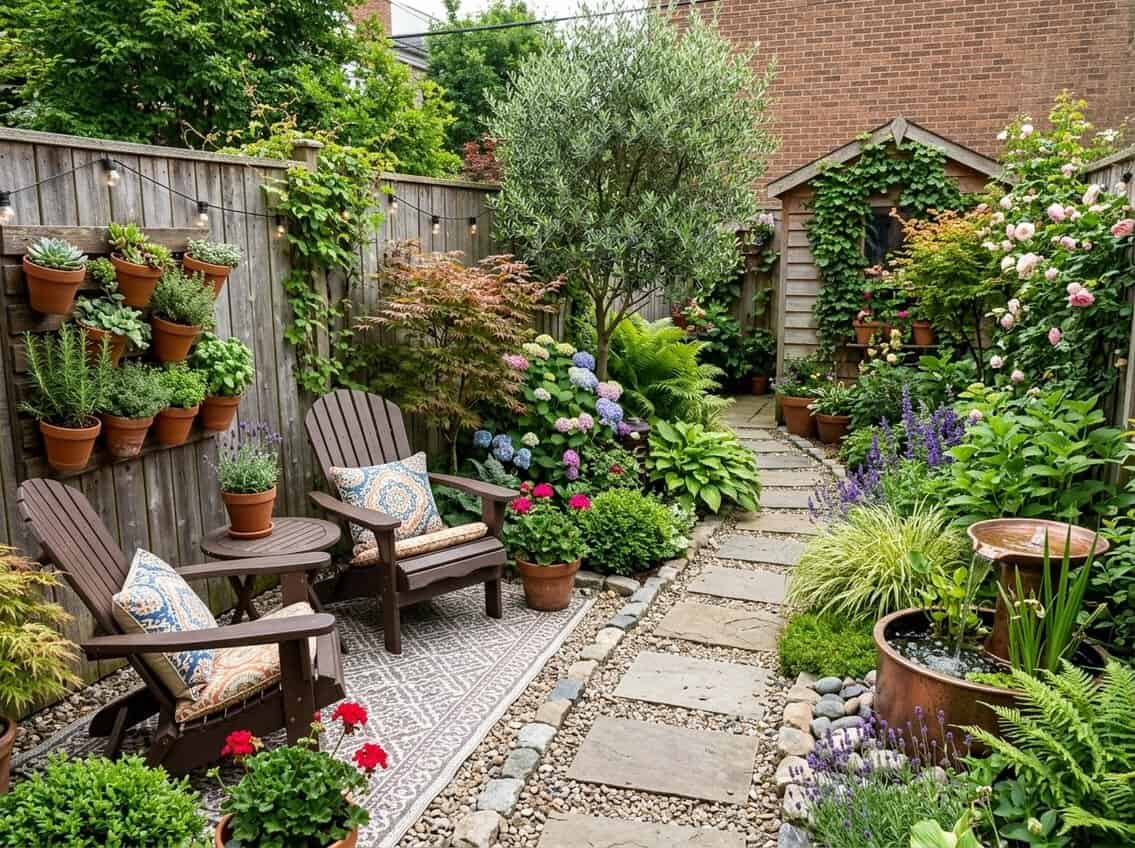
Budget-conscious homeowners can transform their small backyards using vertical gardening, repurposed materials, and smart plant choices. Parents and renters often face unique challenges with space constraints, maintenance requirements, and existing concrete surfaces.
What are the most cost-effective ways to upgrade a small backyard?
Vertical gardens offer one of the best returns on investment for small spaces. Wall-mounted planters, trellises, and hanging baskets maximize growing area without taking up valuable ground space. These ideas for a small garden on a budget work well for renters and homeowners alike.
DIY projects using reclaimed materials keep costs down while adding character. Old pallets transform into vertical planters or seating areas. Cinder blocks stack to create raised beds or outdoor furniture at a fraction of retail prices.
Strategic plant selection reduces both initial investment and long-term maintenance costs. Native plants require less water and care than exotic varieties. Perennials come back year after year, eliminating the need to replant annually.
Paint and lighting create significant visual impact for minimal expense. A fresh coat of paint on fences or walls brightens the space immediately. String lights or solar path lights add ambiance without electrical work or high energy bills.
How can I design a functional patio layout in a limited outdoor space?
Multi-functional furniture pieces solve the space puzzle in compact patios. Benches with built-in storage hold cushions and gardening tools. Folding chairs and tables collapse when not in use, freeing up floor space for other activities.
Zone creation helps small patios feel larger and more organized. A defined seating area separates from a small dining spot or plant display zone. Different flooring materials or outdoor rugs mark these boundaries without physical barriers.
Traffic flow matters even in tiny spaces. A clear path from the door to seating areas prevents furniture from feeling cramped. Leaving at least 24 inches for walkways ensures comfortable movement throughout the patio.
Corner placement maximizes usable space in small backyard landscaping ideas. Built-in corner benches or L-shaped seating arrangements use otherwise wasted areas. Corner plant stands or shelving add vertical interest while keeping the center open.
What are the best low-maintenance alternatives to grass for a small yard?
Artificial turf eliminates mowing, watering, and fertilizing entirely. Modern synthetic grass looks realistic and stays green year-round. It drains well and works on uneven surfaces where natural grass struggles.
Ground cover plants spread naturally and require minimal care once established. Creeping thyme releases fragrance when stepped on and tolerates light foot traffic. Clover stays green with little water and actually enriches soil with nitrogen.
Gravel or decomposed granite creates clean, modern looks with almost no upkeep. These materials drain quickly and never need cutting. They work especially well in dry climates or shaded areas where grass won’t grow.
Mulch beds filled with shrubs and perennials reduce maintenance significantly. A thick layer of wood chips or bark suppresses weeds naturally. Strategic plant placement in these beds creates visual interest without weekly care demands.
Which DIY projects add the most value and usability to a compact backyard?
Built-in seating maximizes space while adding permanent features that buyers notice. A simple bench along a fence line provides seating without taking up floor space. Corner benches with storage underneath serve multiple purposes.
Raised garden beds increase growing space and improve drainage in problem areas. These garden ideas for small yards allow for better soil control and easier access. They define space boundaries while producing vegetables or flowers.
Pergolas or shade structures extend usability during hot months. A basic DIY pergola over a seating area creates an outdoor room feeling. Adding climbing plants or shade cloth increases comfort without blocking views.
Fire pits extend the season and create gathering spots. A simple in-ground or above-ground fire pit becomes a focal point. They encourage outdoor use during cooler evenings and add entertainment value.
How can I make a small backyard safe and engaging for kids without cluttering it?
Designated play zones keep toys contained while maximizing open space. A defined area with mulch or rubber matting marks the play territory. This approach prevents play equipment from taking over the entire yard.
Vertical play elements save ground space while offering engagement. Wall-mounted chalkboards, climbing grips, or basketball hoops attach to fences or walls. These features pack away or fold flat when not in use.
Multi-use features serve both kids and adults. A raised sandbox doubles as a planter box when children outgrow it. Low platforms work as play stages for kids and later become garden benches or display areas.
Natural play elements blend into landscaping better than plastic equipment. Stepping stones, balance beams made from logs, and small hills for climbing integrate with plants. These features look intentional rather than cluttered in small backyard design ideas.
Safety measures work invisibly in well-planned yards. Soft ground covers like grass or mulch cushion falls without obvious safety equipment. Rounded edges on hardscaping and furniture prevent injuries without looking institutional.
Want more backyard upgrade ideas? Check out our guides on outdoor furniture materials, the best outdoor rugs of 2026, and how to pick the right shade structure for your space.
What are the best ways to soften and style a concrete backyard without major renovation?
Outdoor rugs instantly warm up concrete surfaces and define different areas. Weather-resistant rugs add color and texture without permanent changes. Multiple smaller rugs create zones while remaining budget-friendly and movable.
Container gardens bring life to concrete without breaking through the surface. Large pots in varying heights create visual interest and soften hard edges. Grouping containers together makes more impact than spreading them thin.
Potted trees add vertical elements and shade to concrete spaces. Dwarf varieties or container-suitable trees grow well in large pots. They create privacy and break up the visual monotony of flat concrete.
Wood elements contrast nicely with concrete’s cold appearance. Wooden pallets create raised platforms for seating areas. Deck tiles snap together over concrete to add warmth without permanent installation.
Climbing plants on trellises or walls add greenery vertically. Freestanding trellises placed against fences or walls support vines without drilling into concrete. These plants draw eyes upward and away from the concrete surface.
Fabric and textiles introduce softness through shade sails, curtains, or cushions. Outdoor curtains hang from pergolas or fence posts to add movement. Plenty of pillows and throws on seating make concrete patios feel like outdoor living rooms.
Will Montgomery draws on hands-on outdoor-living experience to share small backyard ideas that actually work — layout, scale, and lighting tricks — so you get the most from a compact space.