

This post contains affiliate links. We may earn a commission if you purchase through our links, at no extra cost to you.
Quick Answer: The Best Wall-Mounted Patio Heaters for 2026
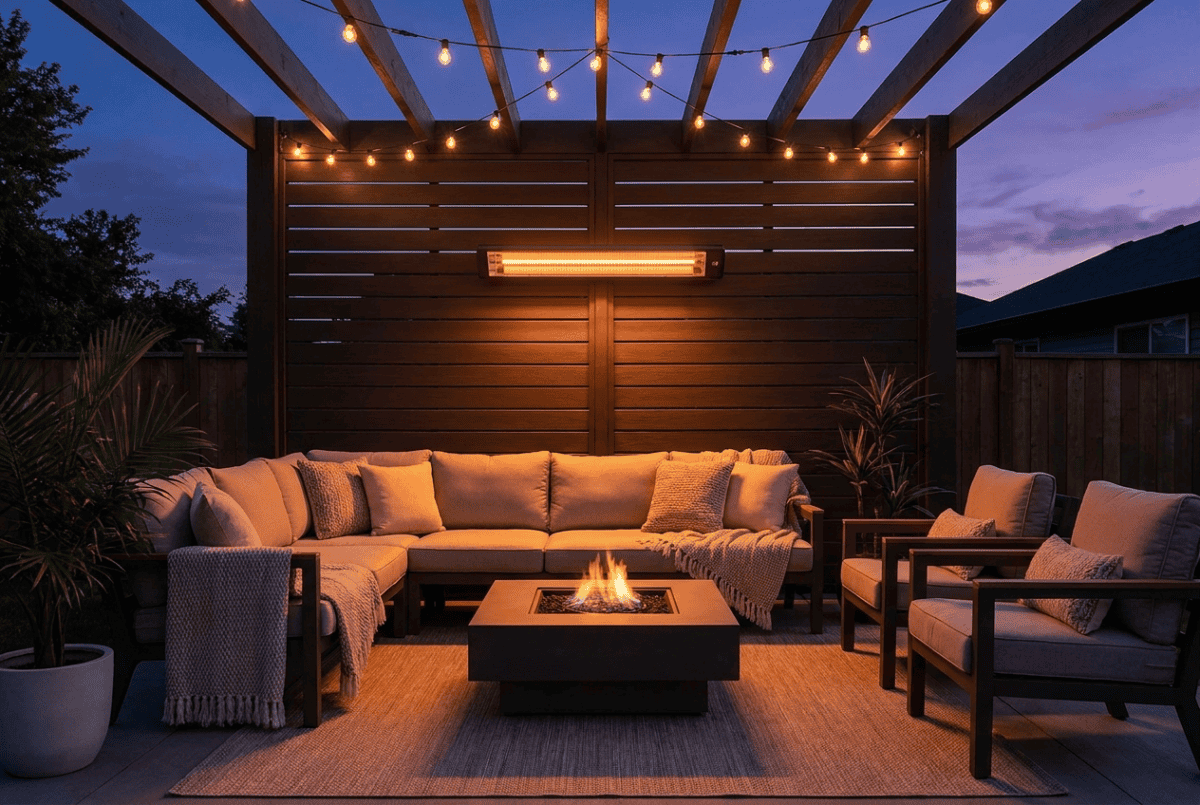
The best wall-mounted patio heaters are electric infrared units that bolt to a wall or ceiling to warm a defined zone without eating floor space. Our top pick for 2026 is the Dr. Infrared Heater DR-238 — 1,500 watts of quiet carbon-infrared heat with a remote, a 9-hour timer, and an IP55 weather rating. For a covered patio you can mount overhead, the Comfort Zone CZQTV5M is the budget standout, and the Paraheeter QHA-15DB is the most weatherproof (IP65) if your mounting spot sees rain.
🏆 Top Pick: Dr. Infrared Heater DR-238
1,500W carbon infrared · wall or ceiling mount · remote + 9-hour timer · IP55. Quiet, weather-rated, and space-saving — the best all-around wall-mounted heater for a covered patio or porch. Check price on Amazon
Last Updated: July 2026 | Will Montgomery has spent years comparing wall-mounted and mounted electric patio heaters for tight outdoor spaces.
Best Wall-Mounted Patio Heaters Compared
| Heater | Mount | Power | Weather rating | Best For | Rating |
|---|---|---|---|---|---|
| Dr. Infrared Heater DR-238 | Wall / ceiling | 900–1,500 W | IP55 | Best overall | 4.7 / 5 |
| Briza 1500W (IT-HEQQ-1831) | Wall / ceiling + tripod | 900–1,500 W | IP55 | Most versatile | 4.5 / 5 |
| Paraheeter QHA-15DB | Wall / ceiling + tripod | 750–1,500 W | IP65 | Most weatherproof | 4.4 / 5 |
| Shinic QGW15-602 (2-pack) | Ceiling | 750–1,500 W ea. | ETL (indoor/covered) | Best for larger areas | 4.3 / 5 |
| Comfort Zone CZQTV5M | Ceiling | 750–1,500 W | Covered use | Best budget | 4.2 / 5 |
Why Choose a Wall-Mounted Patio Heater?
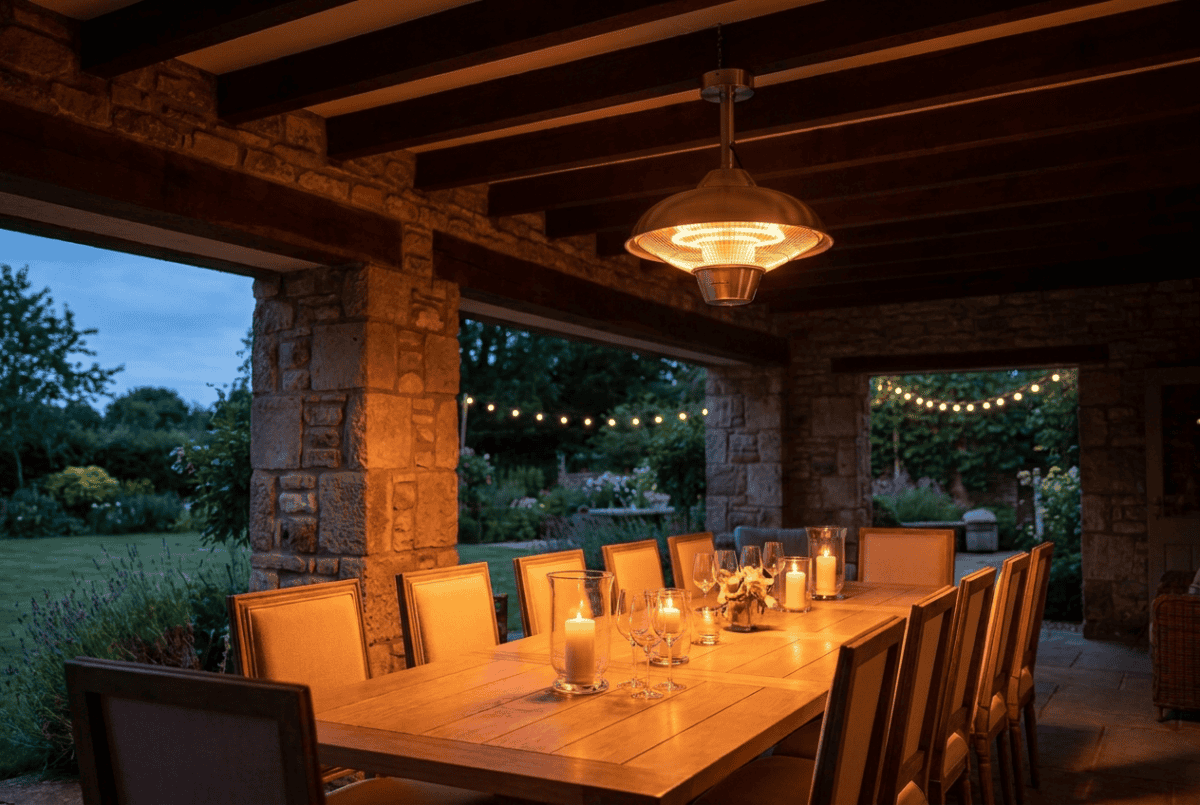
Wall- and ceiling-mounted heaters solve the two biggest problems with freestanding towers: they take zero floor space, and they can’t be knocked over. That makes them ideal for small patios, balconies, covered porches, and outdoor bars where a tall tower would be in the way or a tripping hazard. Mounted units also aim their heat — down and outward over a set zone — so the warmth lands where people actually sit rather than radiating in all directions.
The trade-off is that they are almost always electric infrared, which means you need a nearby outlet (or a hardwired circuit for high-end models) and a solid surface to mount to. They also heat a defined area rather than a wide open patio, so placement matters more than with a freestanding propane heater. We rank these by mounting flexibility, weather rating, and how evenly they cover a real seating zone — not by wattage on the box.
The Best Wall-Mounted Patio Heaters for 2026
1. Dr. Infrared Heater DR-238 — Best Overall
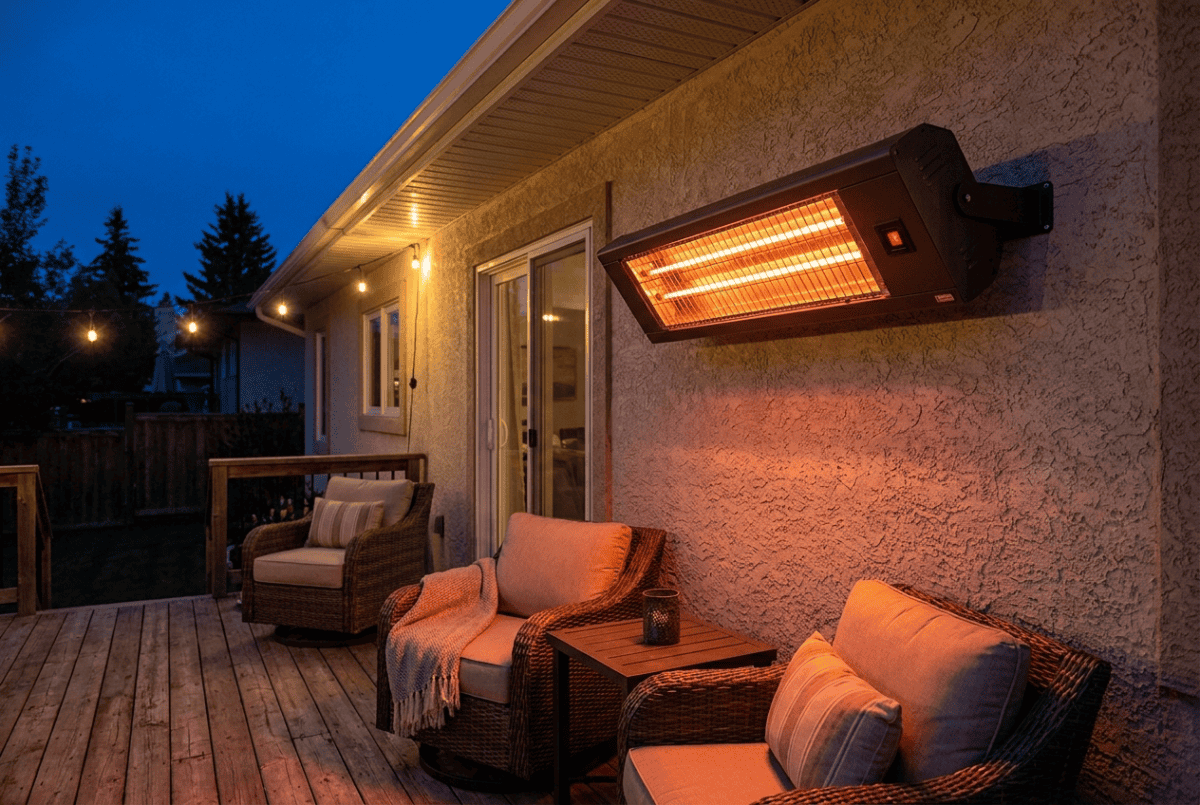
The DR-238 is the wall-mounted heater we recommend to almost everyone. It mounts on a wall or ceiling, runs three power levels (900/1,200/1,500 W), and comes with a remote and a 0–9 hour timer — rare at this price. The carbon infrared element is silent and heats people and surfaces directly, and the IP55 rating lets it shrug off light rain on a covered patio. It hits the sweet spot of features, output, and weather resistance without stepping up to premium-brand pricing.
Pros: Remote + timer, IP55, quiet carbon element, wall or ceiling. Cons: Single-zone coverage; needs a stud or solid mount. Rating: 4.7/5. Check price on Amazon
2. Briza 1500W Infrared (IT-HEQQ-1831) — Most Versatile
The Briza matches the DR-238’s core specs — 900/1,200/1,500 W, remote, 1–9 hour timer, IP55 — but adds a tripod stand in the box alongside the wall/ceiling hardware. That flexibility is the selling point: mount it permanently over a patio, or stand it up and move it as needed. If you are not 100% sure where you want it mounted yet, the Briza lets you try before you drill.
Pros: Wall, ceiling, or tripod; weatherproof; full controls. Cons: Slightly bulkier head; premium of paying for hardware you may not use. Rating: 4.5/5. Check price on Amazon
3. Paraheeter QHA-15DB — Most Weatherproof
If your mounting spot is exposed to real weather, the Paraheeter’s IP65 rating is the highest here — sealed against dust and low-pressure water jets, not just splashes. It runs low/high power levels up to 1,500 watts, mounts to a wall or ceiling (with a tripod option), includes a remote, and weighs a manageable 18.75 pounds. It is the pick for an uncovered wall or a rainy climate where lesser IP ratings would struggle.
Pros: IP65 weatherproofing, multiple mounts, remote. Cons: Fewer power steps than the DR-238; heavier head. Rating: 4.4/5. Check price on Amazon
4. Shinic QGW15-602 — Best for Larger Covered Areas
The Shinic comes as a two-pack of ceiling-mounted heaters, which is the smart way to warm a longer covered patio, outdoor bar, or gazebo evenly instead of relying on one hot spot. Each unit runs 750 or 1,500 watts, tilts up to 90 degrees to aim, uses a simple pull-cord, and is ETL listed. Because they are quartz and ceiling-oriented, keep them under solid cover — but for spreading heat across a bigger zone, two mounted units beat one every time.
Pros: Two units for even coverage, adjustable tilt, good value per heater. Cons: Ceiling only; keep dry; pull-cord control is basic. Rating: 4.3/5. Check price on Amazon
5. Comfort Zone CZQTV5M — Best Budget
The Comfort Zone is the value entry point into ceiling-mounted heat. It tilts 90 degrees to aim, runs 750 or 1,500 watts on a pull string, covers up to about 150 square feet, and includes a 25-watt work light — handy over a workbench or bar. It lacks a remote and weather sealing, so it belongs under a solid roof, but for a covered porch on a budget it does the job.
Pros: Inexpensive, adjustable tilt, built-in light. Cons: No remote; quartz tubes; keep it fully covered. Rating: 4.2/5. Check price on Amazon
Want a premium, hardwired look? Brands like Bromic make higher-output, designer wall-mounted electric heaters (the Bromic Platinum and Tungsten lines) that often require professional installation and cost several times more. They are worth it for a permanent outdoor kitchen or high-end patio, but for most homeowners the picks above deliver the same comfort for far less.
How to Choose a Wall-Mounted Patio Heater
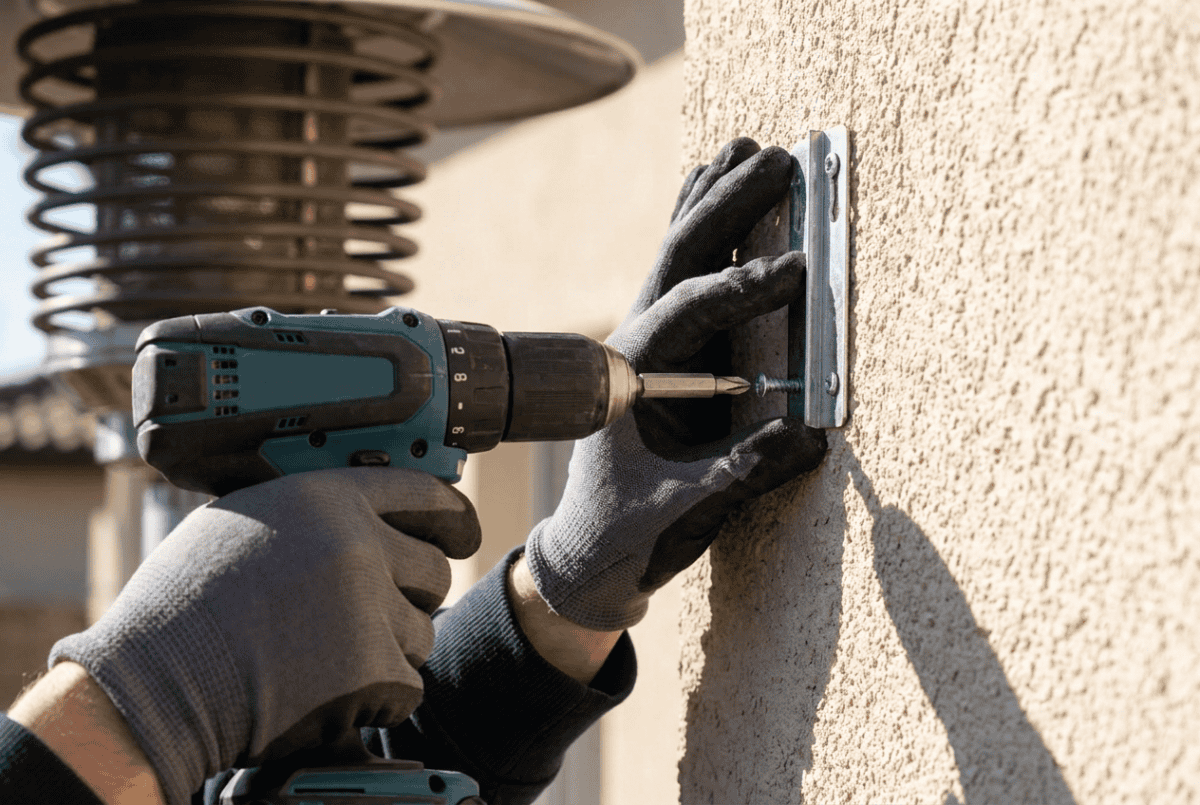
From experience: I mounted a Mr. Heater infrared electric unit as a ceiling-style mount right over the patio table under our backyard pavilion. Mine was easy because it was all wood — I just used the screws it came with. But watch what you’re mounting to: I’d never put one on a vinyl-siding wall, since the heat can warp or melt it — I’d mount it on the opposite side and aim the heat that way instead. If you’re going into drywall or anything soft, use good anchors, or better yet hit a stud, even if that means drilling new holes in the bracket to line it up where you actually want it. And I rarely run mine on the highest setting unless nothing else is on that circuit, because setting three is the maximum pull.
Four things decide the right mounted heater:
- Mounting height and angle. Most wall units perform best mounted 7–9 feet high and angled down toward the seating area. Ceiling units should clear the manufacturer’s minimum distance from the roof.
- Coverage vs. number of units. One 1,500-watt heater warms a small seating group; a longer patio or bar is better served by two mounted units (like the Shinic pack) for even heat.
- Weather rating. Under a solid roof, most models are fine. On an exposed wall or in a wet climate, choose IP55 (DR-238, Briza) or IP65 (Paraheeter).
- Plug-in vs. hardwired. Nearly all consumer picks here plug into a standard outlet and draw about 12.5 amps — give them their own 15-amp circuit. Premium brands may require a hardwired 240-volt line and an electrician.
Not sure how much output you need? Our BTU sizing guide converts watts to coverage, and our cost to run a patio heater breakdown shows these run about $0.28/hour. For the full category, see patio heaters explained, the best electric patio heaters roundup, or our balcony heater guide if you’re in a rental.
Frequently Asked Questions
How high should you mount a wall patio heater?
Most wall-mounted infrared patio heaters work best mounted about 7 to 9 feet above the floor and angled slightly down toward the seating area. Always follow the model’s manual for its exact minimum mounting height and required clearance from the ceiling or any combustible surface.
Are wall-mounted patio heaters any good?
Yes. Wall-mounted electric infrared heaters are an excellent choice for covered patios, porches, and small spaces because they save floor space, can’t be tipped over, and aim their heat directly at people. Their main limitation is that they warm a defined zone rather than a wide open area, so placement matters more than with a freestanding propane heater.
Do wall-mounted patio heaters need to be hardwired?
Most consumer wall-mounted heaters, including all five picks here, simply plug into a standard 120-volt outlet and draw about 12.5 amps, so they need their own 15-amp circuit rather than hardwiring. Only high-end, high-output units — often 240-volt models from premium brands — require a hardwired connection and a licensed electrician. Either way, that circuit needs GFCI protection — see our guide to sizing the breaker and outlet for an electric patio heater for the amp-draw table and code requirements.
Can wall-mounted patio heaters get wet?
It depends on the IP rating. Units rated IP55 (like the DR-238 and Briza) handle light rain and splashes, and IP65 models (like the Paraheeter) resist water jets and dust. Heaters without a weather rating, or quartz ceiling units meant for covered use, should be mounted under a solid roof and kept dry.
How many wall-mounted heaters do I need for my patio?
One 1,500-watt mounted heater comfortably warms a small seating group of a few people. For a longer patio, an outdoor bar, or a gazebo, use two units spaced along the area — a two-pack like the Shinic — so the heat is even instead of concentrated in one spot.
Key Takeaways
- Best overall: Dr. Infrared Heater DR-238 — wall/ceiling, remote, timer, IP55.
- Most weatherproof: Paraheeter QHA-15DB (IP65) for exposed spots.
- Larger areas: Shinic QGW15-602 two-pack for even coverage.
- Mount most units 7–9 ft high, angled down, on their own 15-amp circuit.
- Match the IP rating to how exposed the mounting spot is.
Written by Will Montgomery for Outdoor Space Accents. Follow each heater’s manual for mounting height and clearance. Ratings are our editorial assessment; check current specs and prices before buying.
Will Montgomery brings an engineer’s eye and real hands-on time with outdoor heaters — judging each wall-mounted model on what matters most to you: heat output, secure mounting, and weatherproofing, so this best-of list points you to units that actually perform.