

This post contains affiliate links. We may earn a commission if you purchase through our links, at no extra cost to you.
Quick Answer: What Size Patio Heater You Need
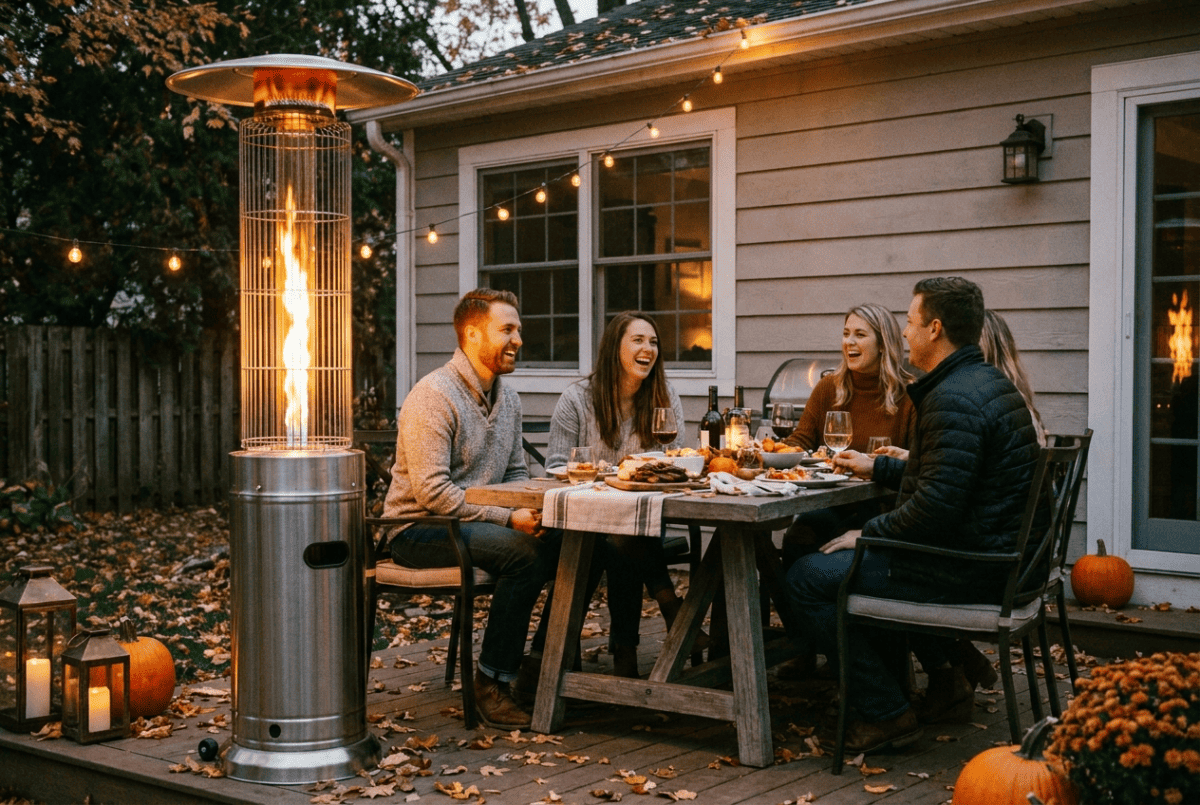
As a rule of thumb, plan for about 20 BTUs per square foot of patio you want to heat. That means a standard 40,000-BTU freestanding propane heater comfortably warms a small seating group in a 10- to 20-foot-wide circle (roughly 150–300 square feet). For electric infrared, figure on one 1,500-watt heater (about 5,100 BTUs) for every 100–150 square feet, since infrared heats a tighter, directional zone. Cold, wind, and open, uncovered spaces all mean you need more heat than the baseline.
Below we walk through the simple math, a coverage table by heater size, and how to adjust for your real-world conditions so you buy once instead of twice.
Last Updated: July 2026 | Will Montgomery has spent years sizing patio heaters for patios, decks, and balconies of every shape and exposure.
Patio Heater Size & Coverage Chart
Use this as a starting point, then adjust up for wind and cold using the steps further down.
| Space you want to heat | Approx. BTUs needed | Typical heater choice |
|---|---|---|
| Small balcony or bistro set (~50–80 sq ft) | ~1,000–5,000 BTU | One 1,500 W electric infrared, or a tabletop propane heater |
| Standard patio seating group (~150–300 sq ft) | ~40,000–46,000 BTU | One full-size freestanding propane heater |
| Covered porch or 3-season room (~150–250 sq ft) | ~5,000–11,000 BTU (electric) | One or two electric infrared heaters (no open flame) |
| Large patio or deck (~300–700 sq ft) | ~2 × 40,000 BTU | Two freestanding heaters, spaced apart |
| Big entertaining area (1,000+ sq ft) | Multiple units | One freestanding heater per ~1,000–1,500 sq ft |
The Simple BTU Formula
The quickest way to size a patio heater is to multiply the square footage of the area you actually sit in by 20 BTUs:
Square footage × 20 BTU = the heat output you need.
So a 200-square-foot patio needs roughly 4,000 BTUs for a gentle warm-up in mild conditions, and a 500-square-foot patio needs about 10,000 BTUs. Here is the important nuance most guides skip: that 20-BTU baseline assumes a fairly sheltered space and a modest temperature bump. Outdoors, heat escapes fast, so real patios almost always need more output than the raw formula suggests, which is exactly why a single 40,000-BTU heater is the standard pick even for a mid-size patio. It is not overkill outdoors; it is headroom for wind and cold.
How to Convert Watts to BTUs for Electric Heaters
Electric heaters are rated in watts, not BTUs, so to compare them fairly, convert:
Watts × 3.412 = BTUs.
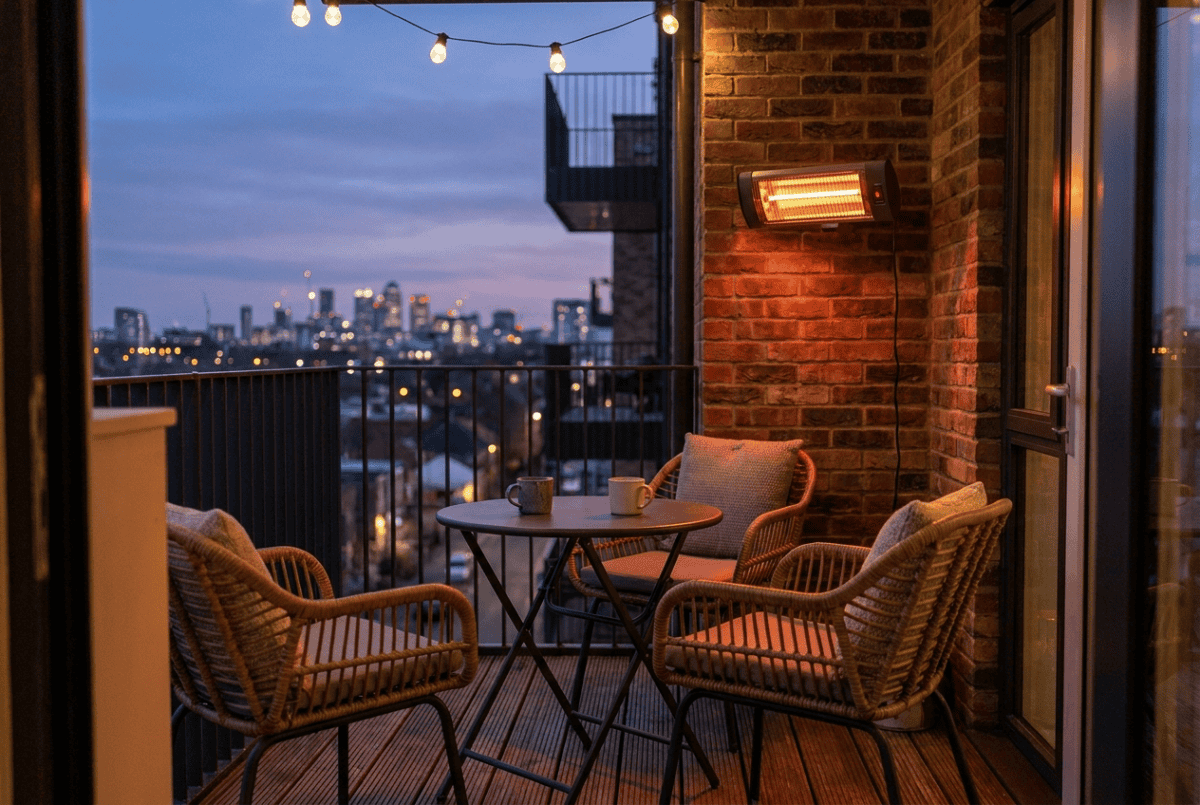
A standard 1,500-watt electric infrared heater puts out about 5,100 BTUs, and a 3,000-watt commercial unit about 10,200 BTUs. That sounds small next to a 40,000-BTU propane heater, but infrared works differently: instead of warming the air (which blows away outdoors), it beams heat directly onto people and objects. For a covered patio, porch, or balcony where that directional heat is trapped and aimed, a 1,500-watt infrared heater is often all you need.
How to Size a Patio Heater for Your Space (Step by Step)
From experience: In the real world there’s no perfect BTU number — sizing is really just a feasibility check for your space. Almost every “top hat” tower heater is built around the same 40,000–45,000 BTU max and can be dialed back, so the real question is whether your area even needs that much. For a tiny spot, don’t force a big tower — jump to electric or a tabletop or wall-mount unit. For a big, open area, one heater often isn’t enough; I’d rather run two towers people can actually gather under than crank a single one to the max. Just don’t turn a propane heater down too far: they burn clean down to about half (roughly 20,000–40,000 BTU), but go lower and you lose the good flame around the burner that actually throws the heat.
Here is the exact process we use to match a heater to a patio:
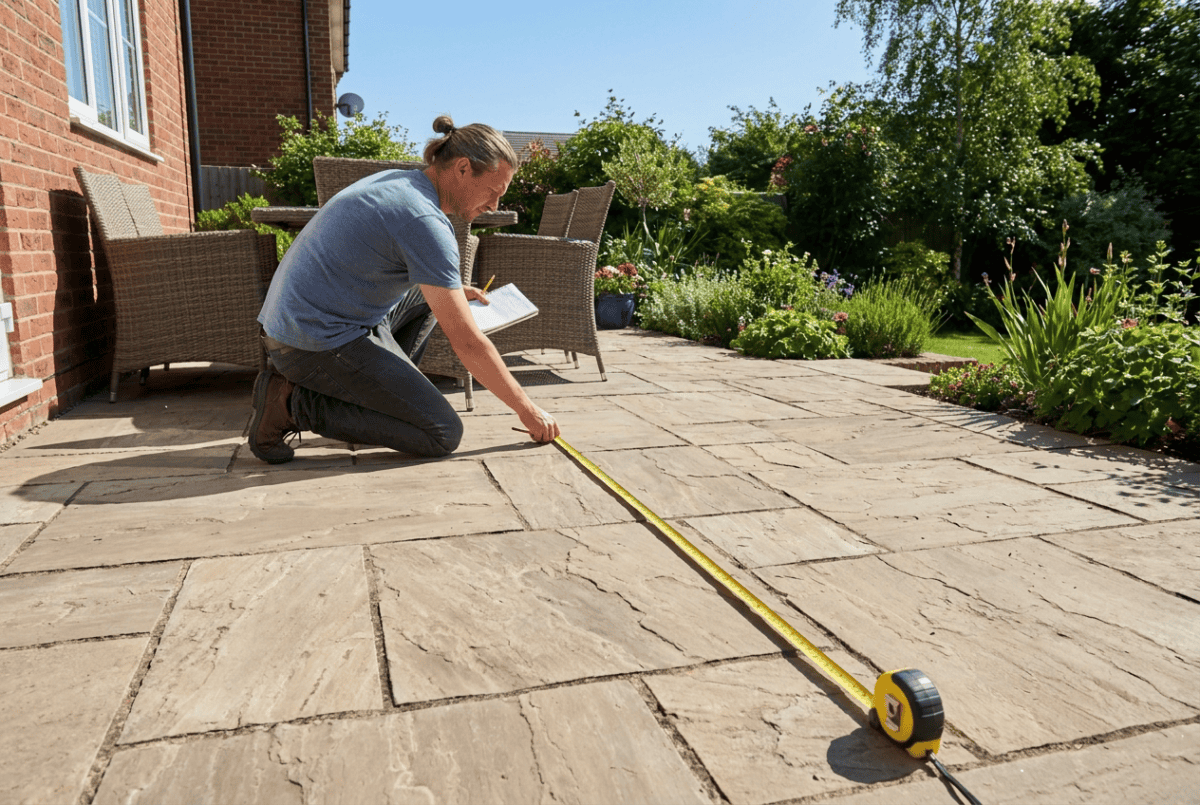
- Measure the seating area, not the whole yard. You only need to heat where people actually sit and stand. Multiply length × width to get the square footage.
- Apply the baseline. Multiply that square footage by 20 BTUs for a sheltered space, or 30–40 BTUs if the area is open or you live somewhere cold.
- Adjust for wind and exposure. A breezy, fully open patio can lose heat two to three times faster than a walled or partially enclosed one. If you get regular wind, size up or add a windbreak.
- Pick your fuel type. Open, uncovered patio → propane for its high output. Covered patio, porch, balcony, or renter setup → electric infrared for safe, directional heat.
- Decide how many heaters. If one unit will not cover your square footage, use the “one heater per ~1,000–1,500 sq ft” rule and space them to create overlapping warm zones instead of one blast in the middle.
How Many Patio Heaters Do I Need?
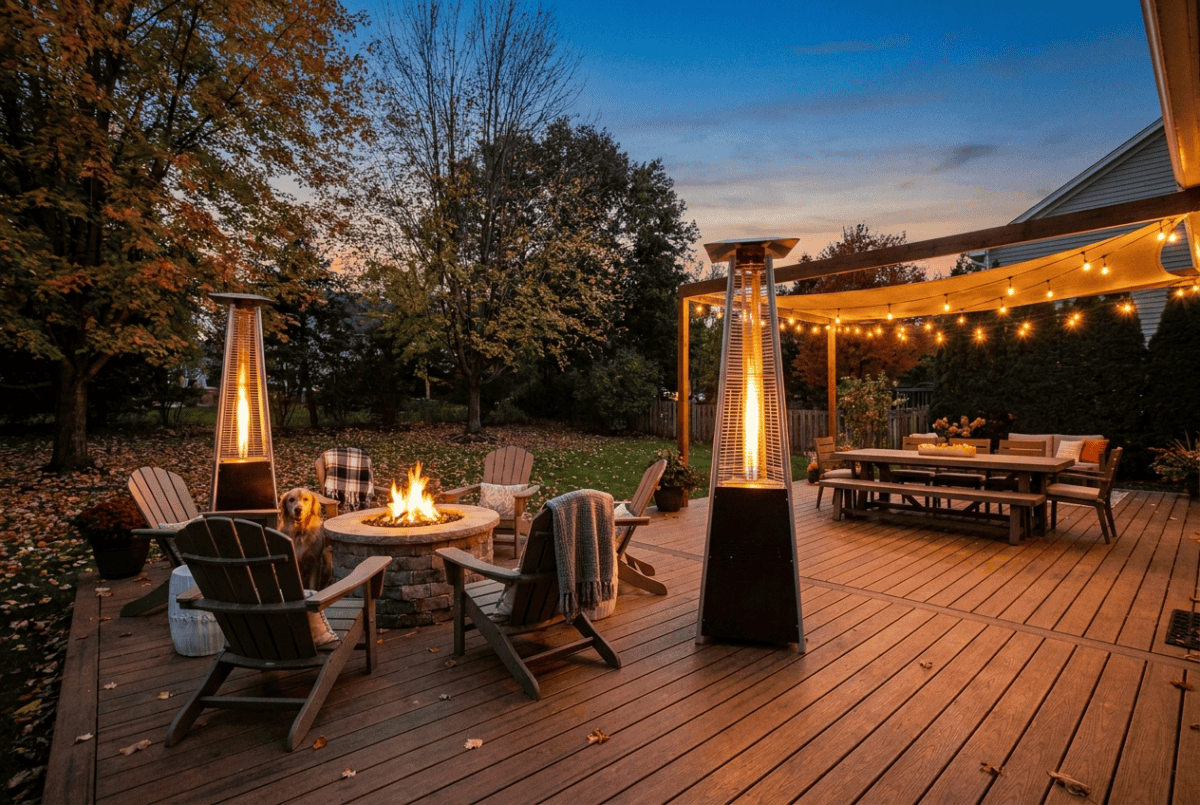
For most home patios, one full-size 40,000-BTU freestanding heater is enough — it anchors a seating group of four to six people. You need a second heater when your space is larger than about 300 square feet, when the layout is long and narrow (so one central heater leaves cold ends), or when steady wind steals heat from one side. As a planning rule, figure one freestanding heater per 1,000 to 1,500 square feet, and place them near where people gather rather than in the exact geometric center.
Getting the Size Wrong: The Two Common Mistakes
The first mistake is buying too small — a cute tabletop heater for a big open deck. It will take the chill off the table but leave everyone standing three feet away cold. The second is buying one giant commercial heater for a covered porch, where a directional electric infrared unit would have been cheaper to buy, cheaper to run, and safer without an open flame. Matching the heater type to the space matters as much as the BTU number.
Once you know your target BTUs, our running-cost math helps you compare fuels: see how much it costs to run a patio heater. For picks, start with our best patio heaters guide, or go straight to best electric patio heaters or best propane patio heaters.
Frequently Asked Questions
How many BTUs do I need for a patio heater?
Multiply the square footage of your seating area by about 20 BTUs for a sheltered space, or 30–40 BTUs for an open or cold one. Most home patios land in the 4,000–10,000 BTU range on paper, but because heat escapes quickly outdoors, a single 40,000-BTU freestanding heater is the standard real-world choice for a typical seating group.
What size patio heater do I need for a 200-square-foot patio?
A 200-square-foot patio needs roughly 4,000 BTUs by the baseline formula, but for open-air use one standard 40,000-BTU freestanding propane heater is the practical pick. That extra output gives you headroom for wind and colder nights instead of running a small heater flat out.
How many square feet does a 40,000 BTU patio heater cover?
A typical 40,000-BTU freestanding propane heater warms a circle roughly 10 to 20 feet across, which is about 150 to 300 square feet of usable warmth. Wind and cold shrink that area, while a sheltered or partially enclosed patio extends it.
How many patio heaters do I need for a large deck?
Plan for about one freestanding heater per 1,000 to 1,500 square feet, and add a unit any time the space is larger than roughly 300 square feet or shaped so a single central heater leaves cold corners. Spacing two smaller heaters usually beats one oversized unit for even warmth.
Are electric or propane heaters better for a small covered patio?
Electric infrared is usually the better choice for a small covered patio, porch, or balcony. It has no open flame, is safe in enclosed areas, costs far less per hour to run, and beams directional heat exactly where you sit. Save propane for large, open, uncovered spaces where its higher output is worth it.
Key Takeaways
- Baseline rule: square footage × 20 BTU (use 30–40 BTU for open or cold areas).
- Convert electric heaters with watts × 3.412 = BTU; a 1,500 W infrared ≈ 5,100 BTU.
- A standard 40,000-BTU freestanding heater covers a 10–20 ft circle (~150–300 sq ft).
- Add a second heater above ~300 sq ft or in windy, long, or exposed layouts.
- Match the type to the space: propane for open patios, electric infrared for covered or renter spaces.
Written by Will Montgomery for Outdoor Space Accents. Sizing figures reflect common manufacturer and industry guidance; your ideal size will vary with wind, temperature, and how enclosed your space is.
Will Montgomery brings an engineer’s eye and hands-on experience with patio heaters to explain how to size one to your space — the BTUs per square foot that matter — so you buy a heater that actually keeps you warm.