

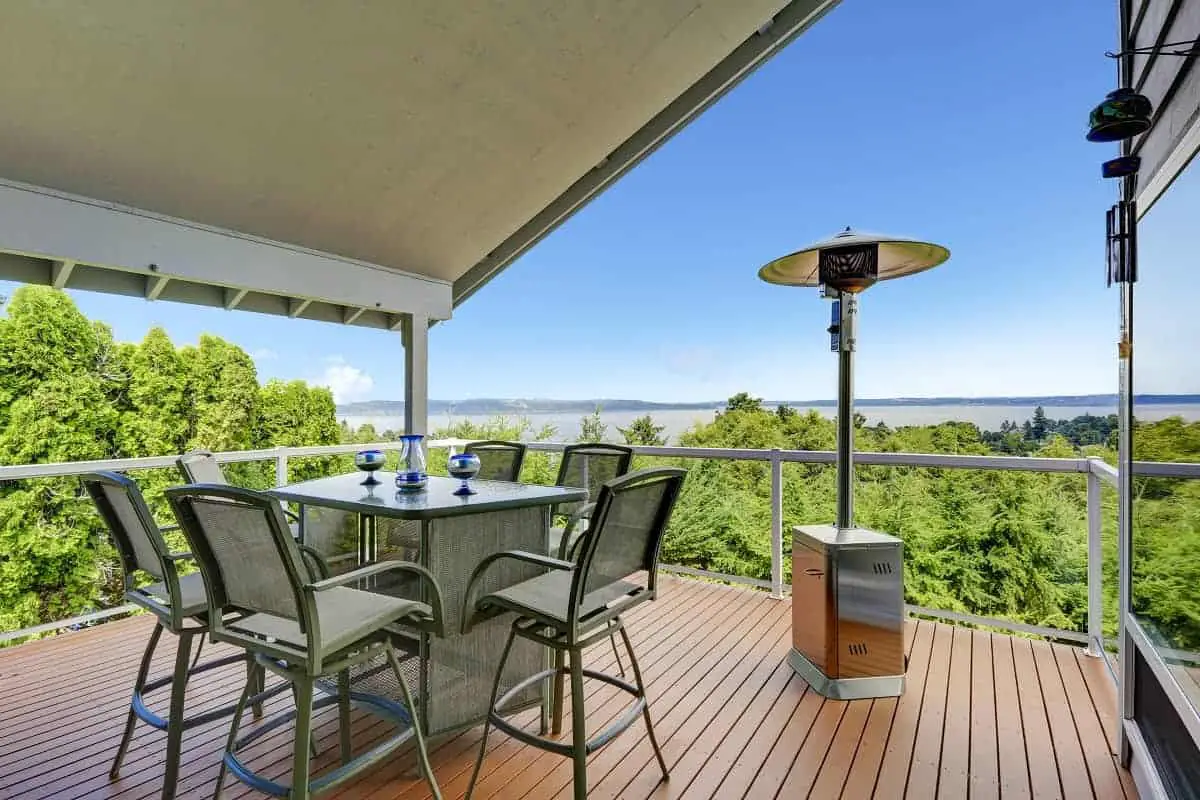
Patio heaters let you enjoy your outdoor space when temperatures drop, turning chilly evenings into comfortable gatherings. Whether you’re hosting dinner parties or relaxing with family, the right heater makes your patio usable for more months of the year.
Last Updated: May 2026 | Will Montgomery has spent years evaluating outdoor living products and heating solutions for backyard and patio setups. The picks below are based on BTU performance data, safety feature verification, and verified owner reviews.
The best patio heaters balance powerful heat output with safety features, durability, and ease of use, with top models like the Amazon Basics 46K BTU Patio Heater and East Oak 55K BTU Patio Heater delivering reliable warmth for spaces up to 15 feet across. Choosing between propane and electric models depends on your needs. Propane heaters like the Fire Sense 46K BTU Patio Heater generate more heat and work anywhere on your patio, while electric options such as the Dr. Infrared Portable Electric Patio Heater plug into standard outlets for instant warmth.
Understanding heat output, safety features, and maintenance requirements helps you pick a heater that works for your space and budget. Premium models like the Bromic Tungsten Smart-Heat Patio Heater offer advanced controls and sleek designs, while budget-friendly options still provide dependable performance for regular use.
Key Takeaways
- Propane patio heaters produce significantly more heat than electric models but require tank refills and regular maintenance
- Safety features like tip-over switches and stable bases are essential for preventing accidents during outdoor use
- Heat output measured in BTUs determines coverage area, with 46,000-50,000 BTU models warming circles of 10-15 feet effectively
Choosing an Outdoor Heater for Your Patio
The right outdoor heater depends on your patio size, preferred fuel type, and how much heat coverage you need. Understanding BTU ratings, fuel costs, and spatial requirements helps narrow down which heater works best for your specific setup.
Assessing Your Outdoor Space
The size and layout of your patio determines what type of heater will work effectively. A small balcony or covered porch under 100 square feet works well with compact electric models like the Dr. Infrared Portable Electric Patio Heater. Larger open patios need more powerful units that can heat 10 to 15 feet in diameter.
Wind exposure matters significantly for heat retention. Enclosed or partially covered spaces hold warmth better than open areas. Patios with walls or windbreaks let heaters work more efficiently.
Check for nearby electrical outlets if considering electric models. Extension cord requirements and outdoor outlet locations affect placement options. Propane heaters offer more flexibility since they don’t need power sources, though they do require space to store 20-pound tanks safely.
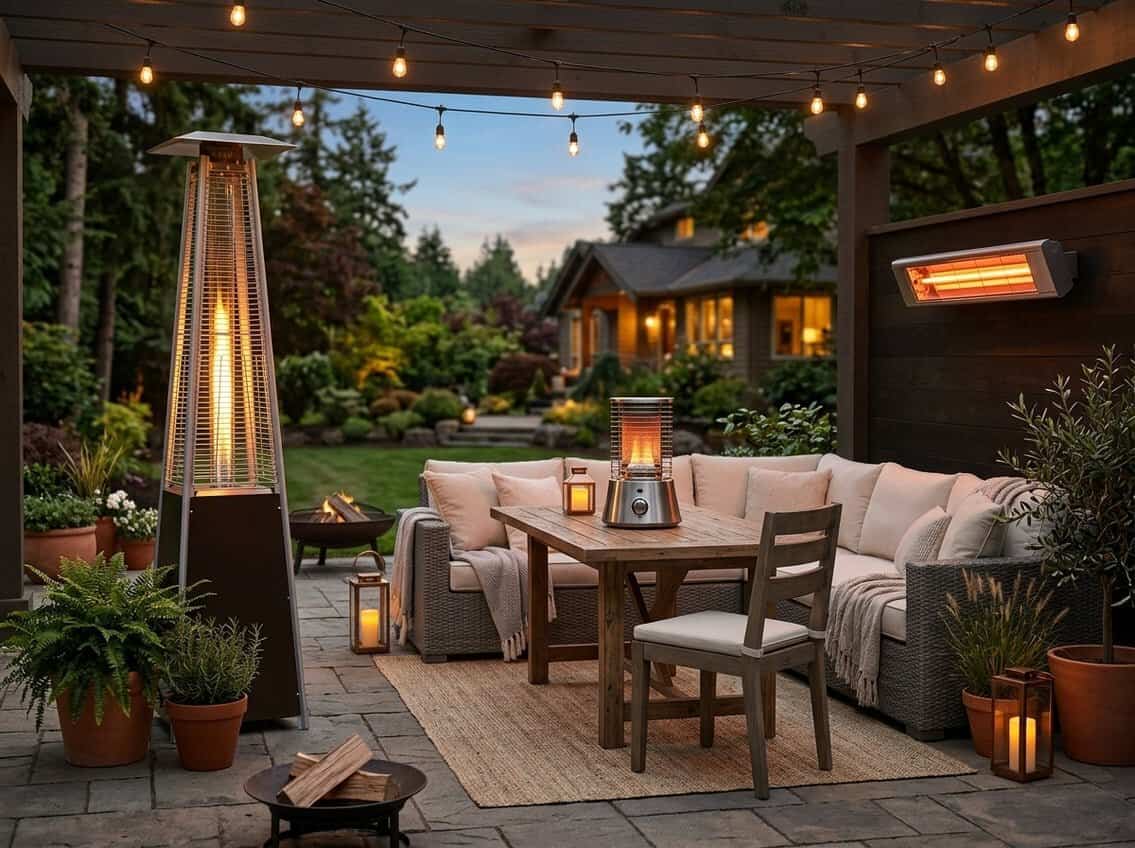
Ceiling height and overhead structures also play a role. Pyramid-style propane heaters with glass tubes work better under pergolas than tall mushroom-style models.
Heat Output and Coverage Area
BTU ratings measure how much heat a patio heater produces. Electric heaters typically max out around 5,100 BTU, while propane models range from 40,000 to 55,000 BTU or higher.
The Amazon Basics 46K BTU Patio Heater covers approximately 10 to 12 feet in diameter. The East Oak 55K BTU Patio Heater and Fire Sense 46K BTU Patio Heater both provide similar coverage for medium to large gatherings. Higher BTU doesn’t always mean better performance—it depends on your actual space needs.
BTU Requirements by Space:
- Small patio (up to 100 sq ft): 5,000-15,000 BTU
- Medium patio (100-200 sq ft): 30,000-45,000 BTU
- Large patio (200+ sq ft): 45,000+ BTU
Propane heaters warm the ambient air around them. Electric infrared heaters direct heat straight at people and objects. This means electric models feel warmer at closer distances even with lower BTU output.
Fuel Types: Propane, Electric, and Natural Gas
Propane heaters dominate the patio heater market because they deliver high heat output without electrical requirements. A standard 20-pound propane tank runs for 8 to 10 hours depending on heat settings. Fuel costs average $15 to $25 per tank refill.
Electric heaters plug into standard 120V outlets and cost about $0.15 to $0.30 per hour to operate based on local electricity rates. They require no refueling but need access to outdoor outlets. The Bromic Tungsten Smart-Heat Patio Heater offers app-controlled electric heating for modern setups.
Natural gas heaters connect directly to home gas lines, eliminating tank refills entirely. They require professional installation and permanent mounting, which limits portability.
Fuel Type Comparison:
| Fuel Type | Heat Output | Portability | Operating Cost |
|---|---|---|---|
| Propane | 40K-55K BTU | High | $1.50-$3/hour |
| Electric | 1.5K-5K BTU | Medium | $0.15-$0.30/hour |
| Natural Gas | 30K-50K BTU | None | $0.50-$1.50/hour |
Propane produces fewer emissions than other fossil fuels but still burns petroleum-based fuel. Electric heaters have zero on-site emissions, though their environmental impact depends on local power grid sources.
From experience: At our place, we run both types. A Mr. Heater electric unit mounts over the patio table under our pavilion — three heat settings, no tank, and nothing blocking views across the table. The propane top-hat heater gets anchored in the yard off the sidewalk, where guests can stand around it. One honest reality: cold nights are usually windy nights, and wind takes the edge off both types of outdoor heat.
Features to Expect From the Best Outdoor Patio Heaters

The best outdoor patio heater should combine powerful heating with practical safety features and weather-resistant construction. Models that are easy to assemble and maintain will provide better long-term value.
Important Safety Considerations
Safety features separate quality patio heaters from basic models. A tip-over switch automatically shuts off the unit if it gets knocked over, which is essential for both propane and electric heaters. The Amazon Basics 46K BTU Patio Heater includes this feature along with an automatic shutoff valve.
Propane models need a thermocouple that stops gas flow if the flame goes out unexpectedly. Look for heaters with clearly marked ignition systems that distinguish between pilot and light settings. This reduces the risk of gas buildup during startup.
Electric models like the Dr. Infrared Portable Electric Patio Heater should have overheat protection that stops operation if internal temperatures get too high. Check the Ingress Protection (IP) rating to confirm the heater can handle rain and moisture safely. Most quality electric heaters rate at least IP44 for outdoor use.
Propane heaters benefit from anchor ports or wheels for stability. The East Oak 55K BTU Patio Heater comes with three anchor points to secure the unit during windy conditions.
Weather Resistance and Durability
Outdoor heaters face constant exposure to sun, rain, and temperature changes. Metal components should resist rust and corrosion over multiple seasons. Stainless steel burners and powder-coated finishes hold up better than basic painted metal.
The burner screen quality matters significantly. Premium heaters resist charring better than cheaper models that turn black with soot after just 30 minutes of use. The Fire Sense 46K BTU Patio Heater uses a reinforced burner screen designed for extended durability.
A protective cover extends the lifespan of any patio heater. Store the unit indoors during harsh weather when possible. High-end models like the Bromic Tungsten Smart-Heat Patio Heater feature marine-grade construction that can handle coastal environments with salt air.
Warranty length indicates manufacturer confidence in durability. Basic models offer one year while premium options may extend to three years of coverage.
Ease of Use and Assembly
Assembly should take 30 minutes or less with basic tools. Most propane heaters arrive with the main pole, base, and burner assembly as separate pieces. Clear instructions with labeled diagrams make the process straightforward.
Electric models plug into standard 120V outlets, though some high-powered units need dedicated 220-240V circuits. Check power requirements before purchasing. Extension cord compatibility varies by model, so review the manual for approved outdoor-rated cords.
Propane heaters need simple ignition systems. Push-button igniters work better than manual lighting methods. Controls should adjust heat output easily without requiring tools or complicated sequences.
Maintenance requirements differ between fuel types. Electric heaters need minimal upkeep beyond occasional cleaning. Propane models require regular carbon buildup removal and eventual replacement parts. Companies with accessible customer service make long-term ownership easier.
Popular Types and Designs

Patio heaters come in several distinct styles that affect both their heating performance and how they fit into outdoor spaces. The main design categories include tall freestanding towers, decorative pyramid models with visible flames, small tabletop units, and space-saving wall-mounted options.
Freestanding Tower Heaters
Freestanding tower heaters are characterized by their mushroom-shaped top that reflects heat downward in a circular pattern. These units typically stand between 7 and 8 feet tall and can warm areas up to 10 feet in radius.
Most tower models run on propane tanks stored in the base. The Amazon Basics 46K BTU Patio Heater and East Oak 55K BTU Patio Heater are popular examples that use standard 20-pound propane tanks. The Fire Sense 46K BTU Patio Heater offers similar heating capacity with wheels attached to the base for easy movement.
These heaters usually produce between 40,000 and 55,000 BTUs of heat output. The mushroom-style reflector distributes warmth evenly across dining areas or seating spaces. Many models include automatic shut-off valves that activate if the unit tips over.
The main advantage of tower heaters is their ability to heat larger outdoor areas without taking up table space. They work best on patios, decks, and other semi-enclosed outdoor spaces where wind won’t disperse the heat too quickly.
Pyramid and Flame Patio Heaters
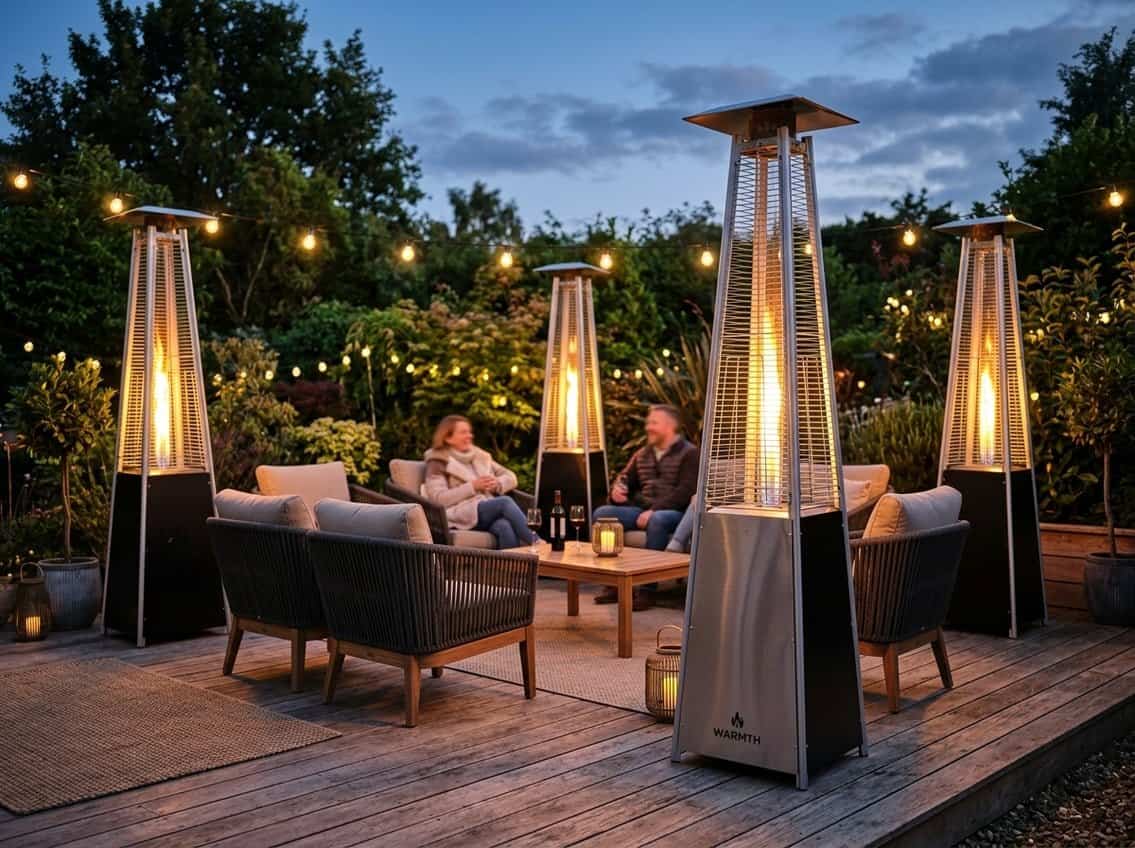
Pyramid heaters feature a glass tube design that showcases a visible flame as the centerpiece. The flame travels up through a quartz glass tube, creating both warmth and ambient lighting for evening gatherings.
These pyramid-style outdoor heaters typically measure between 7 and 8 feet tall with a triangular shape. They produce similar BTU ratings to mushroom heaters but direct heat differently. The glass tube radiates warmth in all directions while the flame adds a decorative element.
Most pyramid models run on propane and include adjustable control valves. They often come with protective covers to shield the unit when not in use. The main drawback is that they sometimes produce less heat than mushroom-style heaters of similar size.
Pyramid heaters work well as focal points for outdoor entertaining spaces. The visible flame creates atmosphere while providing functional warmth on cool evenings.
Tabletop and Compact Models
Tabletop heaters are small units designed to sit on outdoor tables or side surfaces. These compact models typically measure between 1 and 3 feet tall and produce between 9,000 and 12,000 BTUs of heat.
Most tabletop units run on small one-pound propane canisters that last approximately 3 to 4 hours. They warm small areas of about 3 to 4 feet in diameter, making them ideal for intimate gatherings or camping trips.
These heaters weigh only a few pounds and are highly portable. They include the same safety features as larger models, such as tip-over protection and overheat sensors. The compact design makes them easy to store when not needed.
Tabletop models work best for heating individual seating areas rather than entire patios. They’re suited for balconies, small decks, or as supplemental heat sources alongside larger heaters. The limited heat output and short fuel duration make them less practical for extended outdoor events.
Wall-Mounted and Hanging Heaters
Wall-mounted and ceiling-mounted heaters save floor space by attaching directly to structures. These units typically run on electricity and use infrared heating elements to warm targeted areas.
The Dr. Infrared Portable Electric Patio Heater is a popular electric model that mounts to walls or ceilings. The Bromic Tungsten Smart-Heat Patio Heater offers a premium option with smart controls and higher heat output. Electric models typically produce between 1,500 and 6,000 watts, which converts to roughly 5,000 to 20,000 BTUs.
Mounted heaters require more installation than freestanding options but provide permanent heating solutions. They direct heat downward or outward depending on placement. Most models include remote controls with multiple power settings.
These heaters work best in covered patios, pergolas, or outdoor dining areas with nearby electrical outlets. They eliminate tripping hazards and keep walkways clear. The main limitation is that electric models generally produce less heat than propane alternatives of similar price.
Performance and Efficiency Insights

Heat output determines how well a patio heater warms your space, while energy efficiency affects your ongoing costs. The best outdoor patio heater balances strong performance with reasonable fuel or electricity consumption.
Understanding BTUs and Power Ratings
Propane patio heaters measure heat output in British Thermal Units (BTUs). Most residential models range from 40,000 to 55,000 BTUs. The Amazon Basics 46K BTU Patio Heater sits in the middle of this range and handles typical backyard needs.
Higher BTU ratings don’t always mean better performance. The East Oak 55K BTU Patio Heater produces more heat than models with 48,000 BTUs, but most people won’t notice the difference unless running the heater at maximum power constantly.
Electric heaters work differently. They max out at 1,500 watts (about 5,100 BTUs) for standard outlets. The Dr. Infrared Portable Electric Patio Heater uses infrared technology that heats people directly instead of warming the air. This makes electric models feel warmer than their lower BTU ratings suggest.
Some premium models like the Bromic Tungsten Smart-Heat Patio Heater use 4,000 watts with a dedicated 240V outlet. These units deliver roughly 13,600 BTUs and compete better with propane options.
Heating Radius Comparison
Propane heaters with 46,000-48,000 BTUs typically warm a 10 to 15-foot circle. The Fire Sense 46K BTU Patio Heater covers this standard area effectively. Models above 50,000 BTUs extend the radius by 2-3 feet.
Electric heaters create smaller zones. Standard 1,500-watt units heat a 6 to 8-foot radius. They work best for small patios or targeted heating near seating areas.
Heater placement affects coverage. Mushroom-style propane units place the burner at the top, where heat naturally rises. Only a portion reaches ground level where people sit. Pyramid heaters with central flame tubes distribute warmth more evenly through the heated space.
Energy Consumption and Cost Factors
Propane heaters burn through a standard 20-pound tank in 8 to 10 hours of continuous use. At current propane refill costs of $15-25 per tank, this equals roughly $1.50-3.00 per hour of heating.
Electric models cost less per hour to operate. A 1,500-watt heater running on electricity priced at $0.15 per kilowatt-hour costs about $0.23 per hour. The tradeoff comes in reduced heat output compared to propane.
Efficiency tips:
- Run propane heaters at medium instead of maximum settings
- Use electric heaters for smaller gatherings
- Position heaters to block wind
- Turn off when not actively needed
Propane produces more total heat per dollar spent, but electric heaters waste less energy heating empty air.
Top-Rated Patio Heater Recommendations
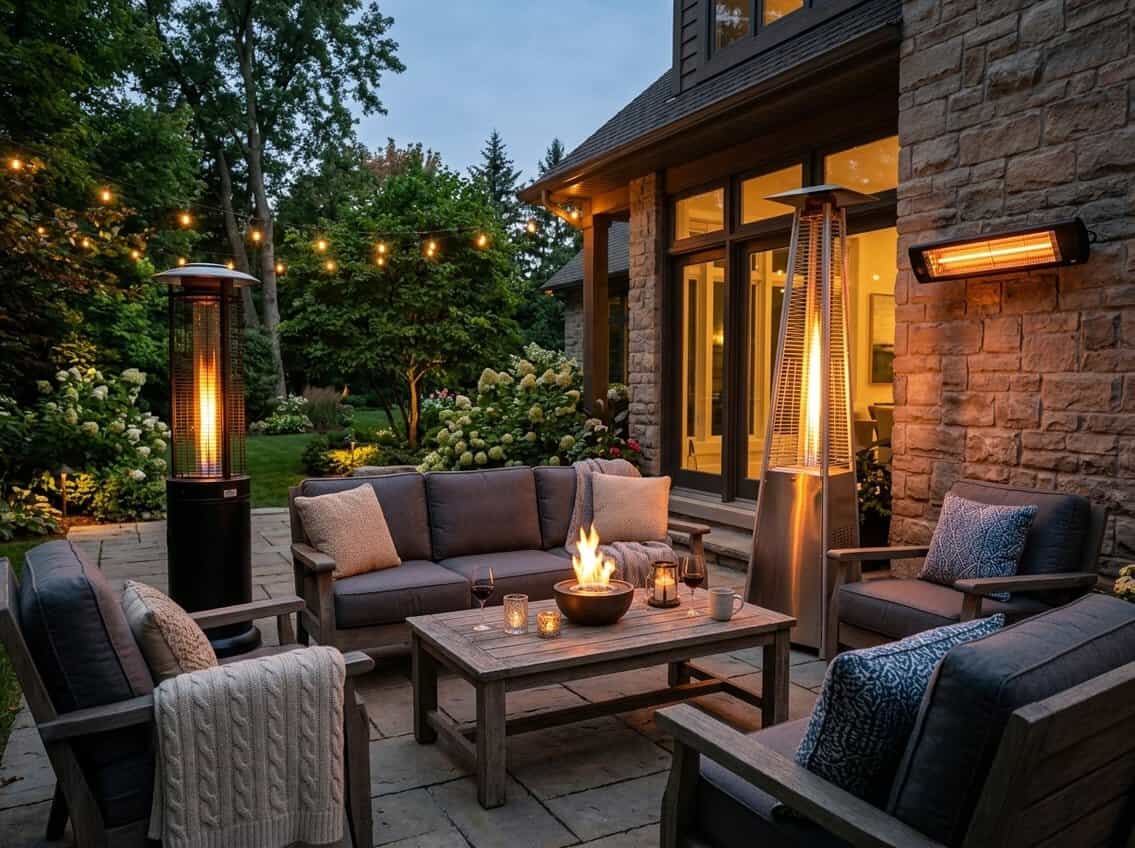
Several standout models excel in different categories, from budget-friendly options to premium designs. The right choice depends on heating needs, space size, and desired features.
Best Overall Outdoor Patio Heater
The Amazon Basics 46K BTU Patio Heater delivers reliable performance at a reasonable price point. This propane-powered unit heats up to 200 square feet effectively, making it suitable for most standard patios and decks.
The heater features a stable base and wheels for easy movement. Its 46,000 BTU output provides consistent warmth without overwhelming smaller spaces. The unit includes automatic shut-off protection and a tip-over safety switch.
For those seeking more power, the East Oak 55K BTU Patio Heater offers enhanced heating capacity. This model covers up to 250 square feet and features a commercial-grade design. Its higher BTU rating makes it ideal for larger outdoor areas or colder climates.
Both units represent solid choices when shopping for the best outdoor patio heater that balances performance with affordability.
Best Value Picks
The Fire Sense 46K BTU Patio Heater stands out as an excellent budget option. It provides nearly 47,000 BTUs of heating power at a lower price than many competitors. The unit heats spaces up to 215 square feet effectively.
This model includes essential safety features like auto shut-off and tilt protection. Its straightforward design makes assembly and operation simple for first-time buyers. The wheels allow easy repositioning around outdoor spaces.
Budget-conscious shoppers can find top-rated outdoor heaters that don’t sacrifice quality. The Fire Sense model proves that effective patio heating doesn’t require premium pricing. Its durable construction and consistent performance make it a smart investment for seasonal outdoor entertaining.
Best Patio Heater for Small Spaces
The Dr. Infrared Portable Electric Patio Heater excels in compact outdoor areas. This wall-mounted unit saves valuable floor space while delivering 1,500 watts of heating power. It works well for balconies, covered porches, and small patios.
Electric models like this one offer advantages for confined spaces. They eliminate the need for propane tanks and provide flameless operation. The unit mounts at various heights to optimize heat distribution.
This heater features three power settings for temperature control. Its infrared technology heats people and objects directly rather than warming the air. Electric patio heaters work particularly well in areas with limited ventilation or where open flames aren’t permitted.
The compact design fits spaces where traditional freestanding heaters won’t work. Its lightweight construction allows for straightforward installation on most exterior walls.
Best Premium and Unique Models
The Bromic Tungsten Smart-Heat Patio Heater represents the top tier of outdoor heating. This electric infrared heater offers sleek design and advanced technology. It integrates with smart home systems for remote temperature control.
The Bromic unit provides powerful directional heating without visible light. Its ceramic heating elements last longer than traditional models. The weather-resistant housing withstands harsh outdoor conditions.
Premium models justify higher costs through superior performance and longevity. The Tungsten series heats up to 160 square feet per unit and can be installed on ceilings or walls. Multiple units connect for whole-patio coverage in larger spaces.
This heater includes dimming capabilities and customizable heat zones. Its modern aesthetic complements upscale outdoor living areas without dominating the visual space.
How to Use and Maintain Your Patio Heater
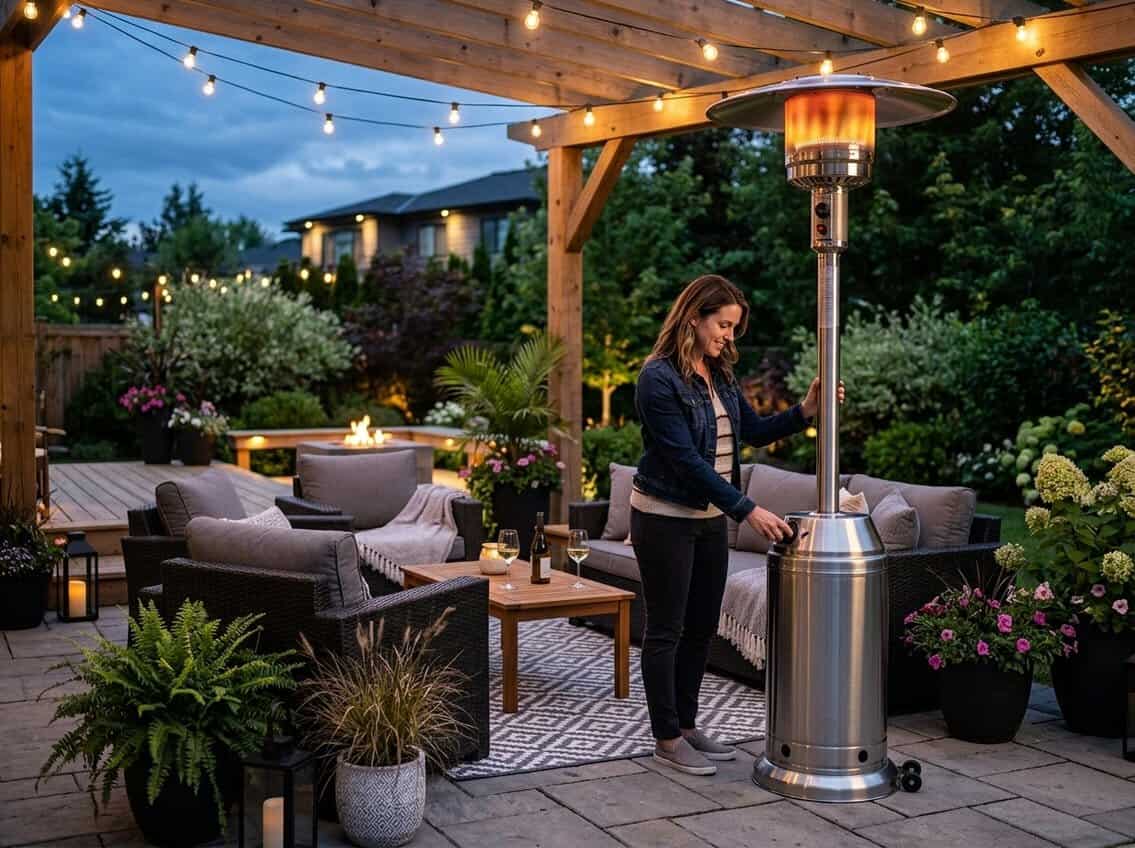
Getting the most from your patio heater requires proper setup, regular care, and smart storage practices. Following these steps helps ensure safe operation and extends the life of your equipment.
Proper Placement and Safe Operation
Place the heater on a flat, stable surface away from walls, ceilings, and overhangs. Most models need at least three feet of clearance on all sides and six feet above. Freestanding units like the Amazon Basics 46K BTU Patio Heater should never sit on uneven ground where they might tip over.
Keep the heater away from flammable materials such as cushions, umbrellas, plants, and curtains. Never use a gas-powered model in an enclosed space without proper ventilation. The East Oak 55K BTU Patio Heater and similar propane models require open-air settings only.
Check all connections before each use. For propane heaters, inspect the hose for cracks and ensure the tank valve closes tightly. Electric models like the Dr. Infrared Portable Electric Patio Heater need a dedicated outlet that matches their voltage requirements. Most electric heaters require 240 volts rather than standard 120-volt outlets.
Never leave a running heater unattended. Always turn it off when leaving the area or going to bed. Install tip-over switches and automatic shut-off features when available for added safety during outdoor heating.
Maintenance Tips for Longevity
Clean the heater at the start and end of each season. Wipe down the exterior with a damp cloth and mild soap to remove dirt, pollen, and debris. For gas models like the Fire Sense 46K BTU Patio Heater, clean the burner assembly with a soft brush to prevent blockages.
Inspect the reflector dome regularly for dents or damage that could affect heat distribution. Check all screws and bolts to ensure they remain tight. Loose connections reduce efficiency and create safety risks.
For propane heaters, examine the gas line for wear or cracks before each season. Replace damaged hoses immediately. Electric models need less maintenance but still benefit from checking the power cord for fraying or exposed wires.
Test the ignition system periodically. If the heater struggles to light or produces an irregular flame, cleaning the burner ports usually solves the problem. High-end models like the Bromic Tungsten Smart-Heat Patio Heater may require professional servicing for complex issues.
Storing Your Heater During Off-Season
Store portable heaters indoors during warmer months. Garages, sheds, or basements provide protection from weather damage. Giving your patio heater a cleaning before storage prevents rust and buildup.
Remove propane tanks and store them upright in a well-ventilated outdoor area. Never store propane tanks indoors or in enclosed spaces. Disconnect electric heaters and wrap cords loosely to avoid kinks.
Cover wall-mounted or permanent fixtures with weatherproof covers designed for outdoor use. These covers protect against rain, snow, and UV damage. For units that stay outside year-round, use covers rated for all-weather protection.
Keep stored heaters in a dry location where temperatures remain moderate. Extreme cold or heat can damage internal components and shorten the heater’s lifespan.
Frequently Overlooked Factors When Buying
Many buyers focus solely on heat output and fuel type, but miss critical details that affect long-term satisfaction. Design compatibility with outdoor decor, local safety codes, and the environmental footprint of different fuel sources all play important roles in selecting the right heater.
Aesthetic and Design Considerations
Portability is an important consideration that affects both storage and visual appeal throughout different seasons. A heater’s appearance matters because it becomes a permanent fixture in outdoor living spaces. The finish, color, and overall style should complement existing patio furniture and architectural elements.
Freestanding tower heaters like the Amazon Basics 46K BTU Patio Heater or East Oak 55K BTU Patio Heater work well in open spaces but can dominate smaller patios. Wall-mounted options like the Dr. Infrared Portable Electric Patio Heater save floor space and blend into backgrounds more easily. Tabletop models suit intimate dining settings without overwhelming conversation areas.
Material choices range from stainless steel to powder-coated finishes. Stainless steel resists rust and maintains a modern look but shows fingerprints and smudges. Bronze or black finishes hide wear better and suit traditional outdoor designs. Premium models like the Bromic Tungsten Smart-Heat Patio Heater offer sleek, minimalist designs that function as outdoor art pieces when not in use.
Local Restrictions and Regulations
Building codes and homeowner association rules often restrict patio heater installation in ways buyers don’t anticipate. Some municipalities prohibit propane heaters on apartment balconies or decks above ground level due to fire hazards. Natural gas heaters require professional installation and permits in most areas, adding unexpected costs to the initial purchase price.
Some heaters can be installed inside covered porches and sunrooms, but local codes determine clearance requirements from walls, ceilings, and combustible materials. Electric models like the Dr. Infrared Portable Electric Patio Heater typically face fewer restrictions but may violate HOA aesthetic guidelines in some communities.
Rental properties present additional limitations. Landlords often prohibit propane tanks or permanent installations. Checking lease agreements before purchasing prevents wasted money on equipment that can’t be used legally.
Environmental Impact of Different Fuels
Propane heaters like the Fire Sense 46K BTU Patio Heater release carbon dioxide and nitrogen oxides directly into the air. A typical propane patio heater consumes about one pound of fuel per hour at full output, producing roughly three pounds of CO2 emissions. Natural gas burns slightly cleaner than propane but still contributes to greenhouse gas emissions.
Electric heaters produce zero on-site emissions, though their environmental impact depends on local power grid sources. Regions using coal-fired plants see higher indirect emissions compared to areas powered by renewable energy. Electric models generally cost more to operate per hour than propane in most U.S. markets.
Infrared heaters prove more efficient than traditional radiant models because they heat objects and people rather than air. This targeted heating reduces energy waste by 30-40% compared to standard designs. The Bromic Tungsten Smart-Heat Patio Heater uses this technology to minimize environmental impact while maintaining comfort levels.
Frequently Asked Questions
Choosing the right patio heater involves understanding efficiency ratings, power sources, heat output requirements, and safety features. Most buyers want to know which heater type delivers the best performance for their specific space and budget.
What type of patio heater is most efficient for typical outdoor use?
Electric infrared heaters offer the highest efficiency for typical outdoor spaces because they convert nearly 100% of their energy into heat. These units direct heat at people and objects rather than trying to warm the surrounding air.
Gas-powered heaters like the Amazon Basics 46K BTU Patio Heater work well for open spaces where wind might disperse heat. They produce more total heat output but lose some efficiency to air movement.
For covered patios or enclosed spaces, electric models waste less energy. Infrared technology heats objects directly, which means less heat escapes into the atmosphere compared to convection-style heaters.
Should I choose propane, electric, or infrared for my outdoor heating needs?
Propane heaters suit large open areas where electrical outlets aren’t available. The East Oak pyramid-style heater produces 48,000 BTUs and can heat approximately 115 square feet effectively.
Electric heaters work best for smaller covered spaces like balconies or screened porches. They require access to electrical outlets but eliminate the need to refill propane tanks.
Infrared heaters provide targeted heat that feels warm even in breezy conditions. The Dr. Infrared Portable Electric Patio Heater uses this technology to heat specific zones rather than entire areas.
What heating output (BTUs or watts) do I need for my patio size and climate?
A patio of 100 square feet typically requires 40,000 to 50,000 BTUs for comfortable heating. The Fire Sense 46K BTU Patio Heater falls within this range for medium-sized outdoor spaces.
Electric heaters measure output in watts rather than BTUs. One watt equals approximately 3.5 BTUs, so a 1,500-watt heater produces about 5,250 BTUs per hour.
Colder climates need higher heat output to maintain comfort. A heater with 50,000+ BTUs works better in areas where temperatures drop below 40°F regularly.
Which patio heaters are safest to use on a covered patio or under an awning?
Electric heaters present fewer risks on covered patios because they don’t produce open flames or carbon monoxide. The Bromic Tungsten Smart-Heat Patio Heater mounts overhead and keeps heating elements away from contact.
Gas heaters require adequate clearance above the unit to prevent heat damage to roofs or awnings. Most manufacturers specify at least 3 feet of clearance from combustible materials.
Tip-over shutoff features prevent fires if someone bumps the heater. Many models also include automatic gas shutoff if the flame extinguishes unexpectedly.
What features make an outdoor electric heater truly weatherproof?
IP ratings indicate a heater’s resistance to water and dust. An IP rating of IP65 or higher means the unit can withstand rain and outdoor conditions without damage.
Powder-coated steel or aluminum construction resists rust better than standard painted finishes. These materials hold up to humidity, rain, and temperature changes throughout multiple seasons.
Sealed electrical components prevent moisture from reaching internal wiring. This feature extends the heater’s lifespan and reduces the risk of electrical failures during wet weather.
Which brands are most reliable for long-term performance and easy maintenance?
Bromic produces commercial-grade heaters known for durability and minimal maintenance needs. Their models use high-quality components that withstand years of regular use.
Dr. Infrared builds electric heaters with simple designs that require little upkeep. Their units have fewer moving parts compared to gas models, which means fewer potential failure points.
Amazon Basics offers budget-friendly options with standard safety features and straightforward operation. While not as robust as premium brands, these heaters provide reliable performance for occasional use.
Will Montgomery brings an engineer’s eye and hands-on experience with patio heaters to pick the best of 2026 — judged on real heat output, build, and value — so you choose one that keeps you warm for years.