

Cold evenings shouldn’t force everyone inside when the right propane patio heater can extend outdoor comfort well into fall and winter. These heaters provide instant warmth without the hassle of electrical outlets, making them a practical choice for patios, decks, and backyard gatherings. The best propane patio heaters deliver between 40,000 and 55,000 BTUs of heating power, can warm spaces up to 20 feet in diameter, and include safety features like tip-over switches and flame-out protection.
Last Updated: May 2026 | Will Montgomery has spent years evaluating outdoor living products for patios, decks, and backyards. The picks below are based on BTU output data, safety certification checks, and verified owner reviews.
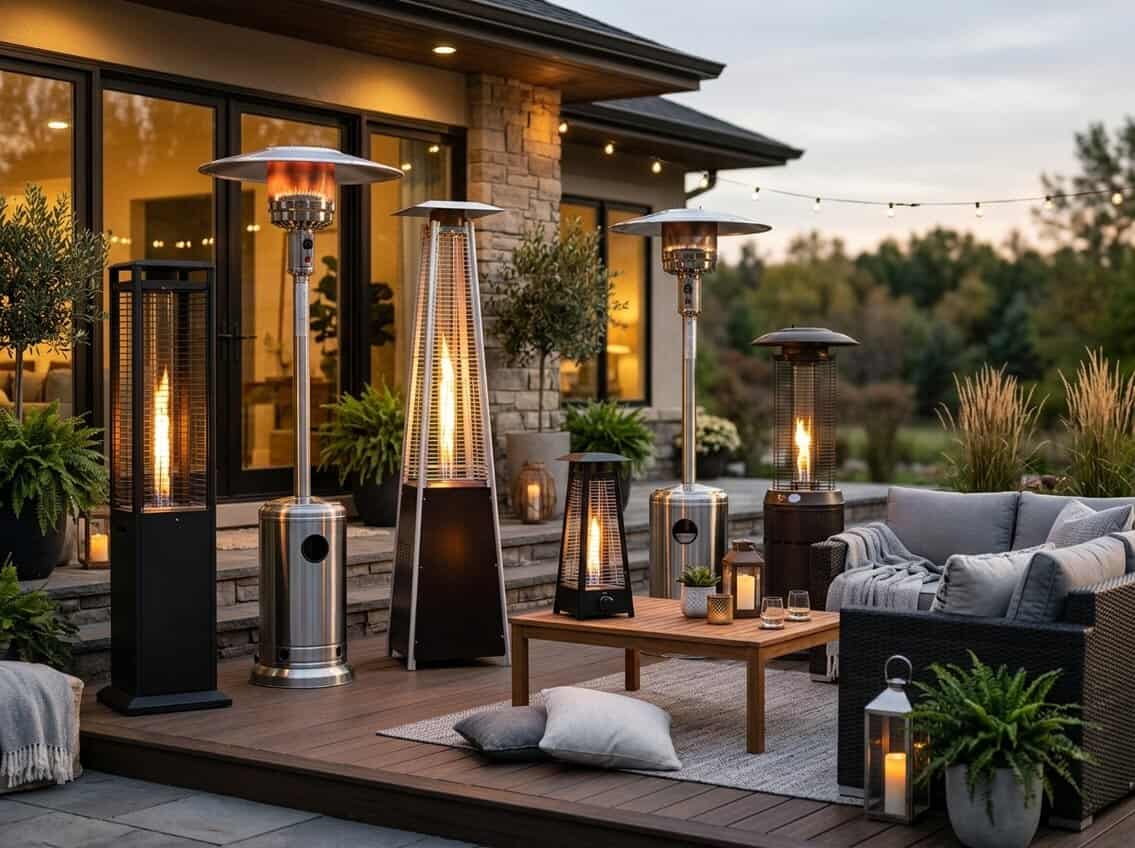
Popular models include the Amazon Basics 46K BTU Propane Patio Heater (read our full review) for reliable performance, the East Oak 55K BTU Propane Patio Heater for maximum heat output, and the Sunjoy 47K BTU Propane Patio Heater for balanced power. Smaller spaces work well with the AZ Patio Heaters Tabletop Propane Heater, while those seeking style might prefer the Hiland Pyramid Propane Patio Heater (read our full review). Testing multiple models reveals significant differences in heat coverage, fuel efficiency, and build quality.
Understanding BTU ratings, fuel consumption, safety certifications, and placement requirements helps buyers choose the right heater for their specific outdoor space. This guide breaks down what matters most when selecting a propane patio heater that balances performance, safety, and value.
Key Takeaways
- Propane patio heaters with 40,000 to 55,000 BTUs effectively warm outdoor spaces up to 20 feet in diameter
- Safety features like tip-over protection and CSA certification are essential for reliable outdoor heating
- Proper placement away from walls and overhead structures maximizes heat distribution and reduces fire risk
Key Features and Heating Power
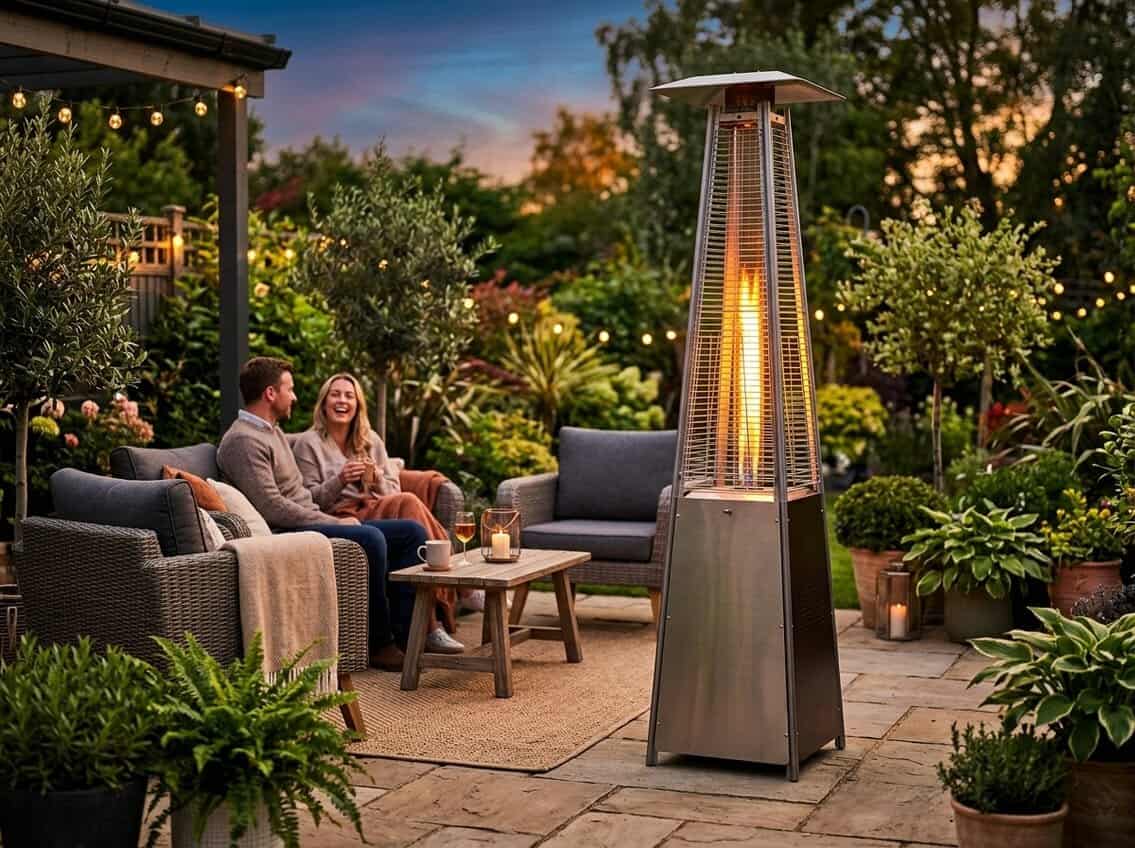
Propane patio heaters vary widely in their heat output, coverage area, and design style. The BTU rating determines how much warmth a unit can produce, while the heater’s physical design affects how that heat spreads across your outdoor space.
Understanding Propane Heater BTUs
BTU stands for British Thermal Unit and measures the amount of heat energy a propane heater produces. A propane heater for patio BTU rating typically ranges from 40,000 to 55,000 for residential models.
To calculate your needs, multiply your patio’s square footage by 20 to find the minimum BTU requirement. A 100-square-foot patio needs at least 2,000 BTUs, though outdoor conditions require higher outputs than this baseline suggests.
The Amazon Basics 46K BTU Propane Patio Heater offers middle-range power suitable for most residential patios. The East Oak 55K BTU Propane Patio Heater provides maximum heat output for larger spaces or colder climates. Higher BTU ratings consume propane faster, with most 20-pound tanks lasting approximately 10 hours of continuous use.
Optimal Coverage and Heat Distribution
Heat output and coverage work together to determine effectiveness in your space. Most propane outdoor heaters warm areas between 15 to 200 square feet depending on their design and BTU rating.
Pyramid-style heaters like the Hiland Pyramid Propane Patio Heater distribute warmth in a 360-degree pattern, making them ideal for central placement. Their glass flame tubes radiate heat evenly but lose some efficiency in windy conditions.
Reflector-style heaters focus warmth in one direction, providing more concentrated heat for specific seating areas. The Sunjoy 47K BTU Propane Patio Heater uses this approach to maximize heat in a targeted zone. Wind, overhead coverage, and ambient temperature all affect actual heating performance beyond manufacturer specifications.
Tabletop vs. Freestanding Designs
Freestanding heaters stand between 7 to 8 feet tall and typically produce 40,000 to 55,000 BTUs. They work well for large patios and can warm multiple people simultaneously. Most models include wheels for repositioning, though weights range from 32 to 74 pounds.
Tabletop models like the AZ Patio Heaters Tabletop Propane Heater sit on tables or railings and generate 10,000 to 15,000 BTUs. These compact units heat smaller areas of 4 to 6 feet and work best for intimate gatherings of two to four people.
Freestanding units require adequate overhead clearance and floor space but offer superior heating capacity. Tabletop versions provide portability and easier storage but cannot warm larger groups effectively.
Popular Propane Patio Heater Types
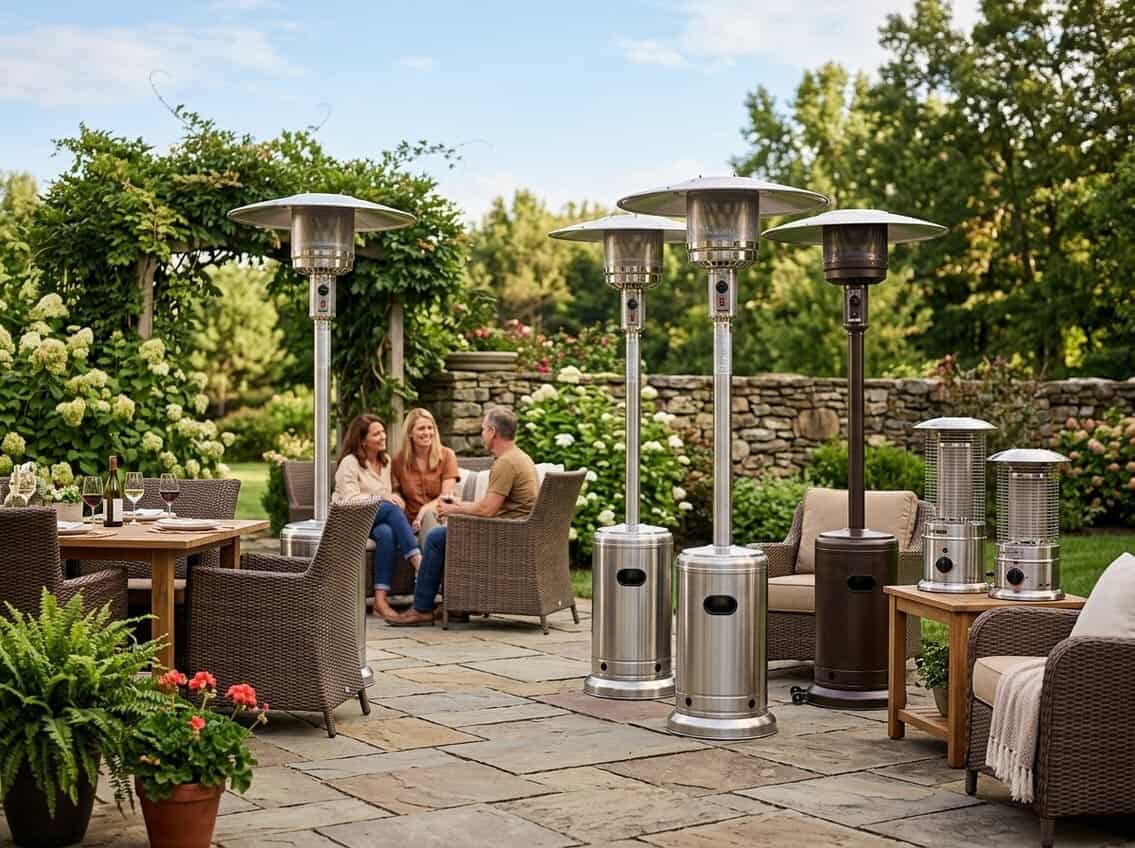
Propane patio heaters come in three main design styles that affect how they distribute heat and fit into outdoor spaces. Each type offers different heat coverage patterns and works better for specific patio layouts and uses.
Mushroom Patio Heater Designs
The mushroom patio heater gets its name from the umbrella-shaped reflector dome on top. This dome directs heat downward in a circular pattern that typically covers 15 to 20 feet in diameter.
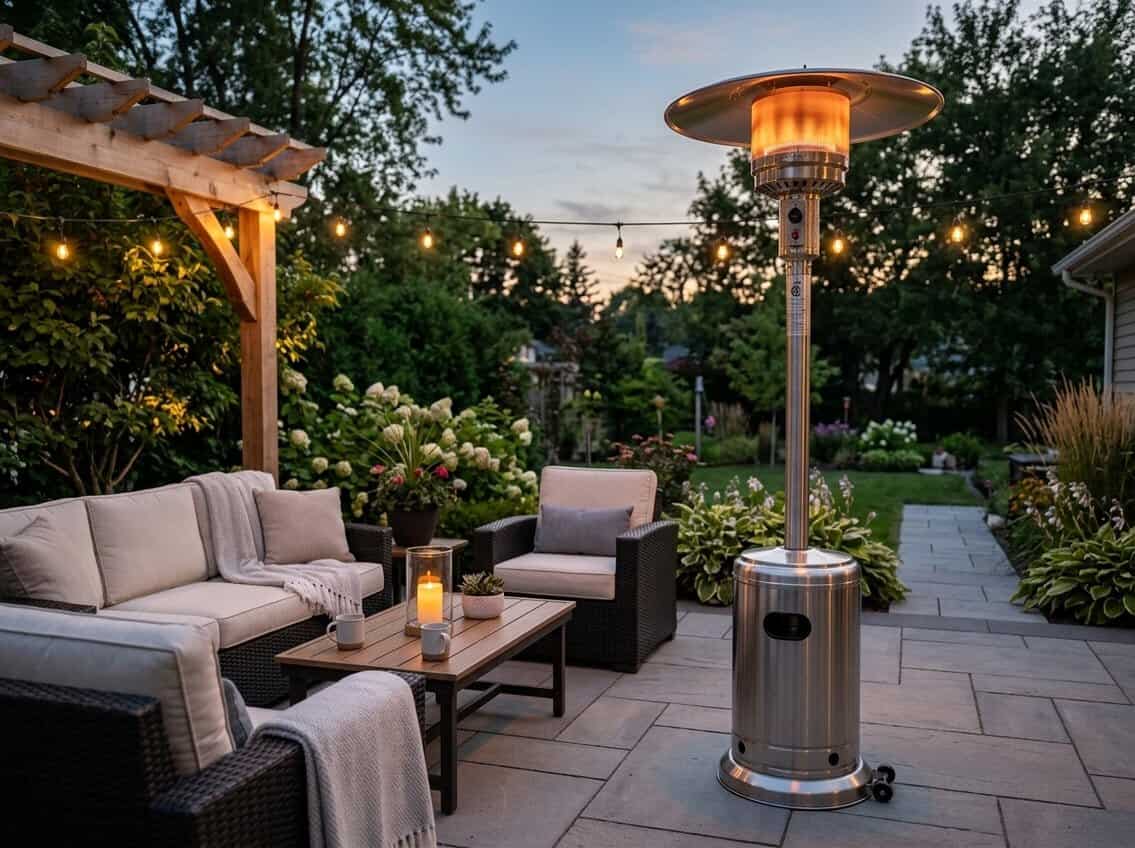
These freestanding units stand about 7 feet tall and work well for open patios where people gather around a central spot. The Amazon Basics 46K BTU Propane Patio Heater uses this classic mushroom design with a chrome or bronze finish.
Most mushroom models include wheels at the base for easy movement. They hold a standard 20-pound propane tank in the base, which keeps the unit stable and puts the fuel source out of sight. The East Oak 55K BTU Propane Patio Heater adds a tabletop ring around the pole for holding drinks or plates during outdoor gatherings.
Pyramid and Glass Tube Models
Pyramid heaters feature a tall triangular design with a visible glass flame tube running up the center. These units create both heat and ambient lighting through the exposed flame.
The Pamapic Pyramid Patio Heater warms a 10-foot space in about 10 minutes and offers better wind resistance than mushroom styles. The Hiland Pyramid Propane Patio Heater provides similar performance with its enclosed flame tube design.
These models typically produce 40,000 to 48,000 BTUs and work best in covered patios or areas with some wind protection. The glass tube protects the flame while still allowing it to be visible for decorative appeal.
Commercial vs. Residential Styles
Commercial propane outdoor heaters are built heavier and produce more heat than residential models. They use thicker steel construction and higher BTU outputs of 50,000 or more to handle constant use in restaurants and event spaces.
The Sunjoy 47K BTU Propane Patio Heater bridges the gap between residential and light commercial use. Residential heaters like the AZ Patio Heaters Tabletop Propane Heater focus on portability and compact size for home patios and decks.
Commercial units often lack wheels because they stay in fixed locations. They also include reinforced tip-over protection and industrial-grade ignition systems that handle frequent daily use.
From experience: After trying two different brands of the classic top-hat style propane heater, the Amazon Basics model ended up being the preference. The pyramid style was tempting, but the exposed glass tube made tip-over feel like a real risk with guests standing nearby. The top-hat design is simpler, more stable, and easier to move around.
Top Models and Brand Comparisons
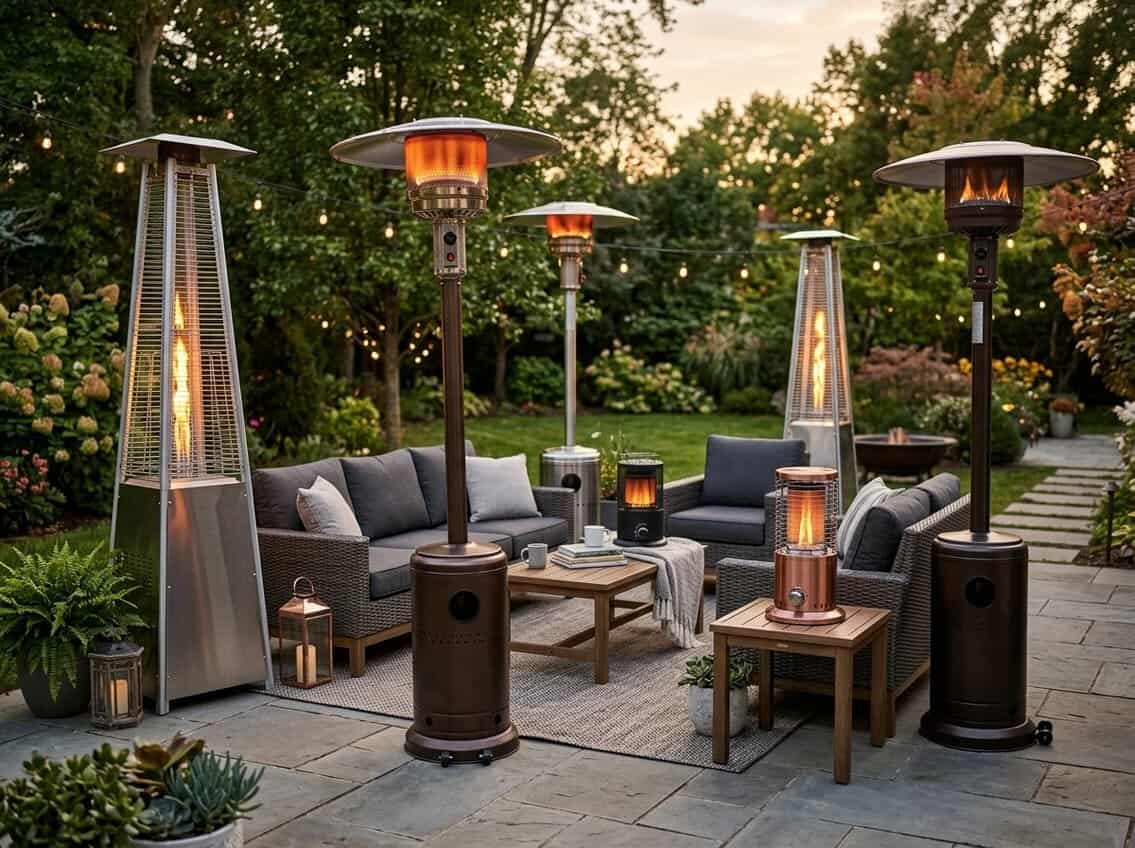
Several major brands dominate the propane patio heater market with models ranging from 46,000 to 55,000 BTU output. These heaters vary in design, portability features, and heating coverage, making it important to understand the differences between popular options.
Amazon Basics 46,000 BTU Review
The Amazon Basics 46,000 BTU Propane Patio Heater delivers reliable warmth for outdoor spaces up to a 9-foot radius. This propane outdoor heater features a powder-coated slate gray finish that resists weather damage while maintaining a clean appearance.
The unit includes a one-touch ignition button that eliminates the need for matches or lighters. Built-in wheels make it easy to move between different areas of a patio or deck. The water tank base provides stability during use, reducing the risk of tipping.
Safety features include a tilt auto-shutoff valve that cuts fuel flow if the heater tips over. The design accommodates a standard 20 lb propane tank, which is secured with a chain system. Temperature control is adjustable through a simple knob interface.
The Amazon Basics model with wheels and water tank stands 91.3 inches tall and weighs enough to stay stable in moderate wind conditions.
EAST OAK 50,000 BTU Overview
EAST OAK produces a propane heater for patio use that generates 50,000 BTU and heats areas up to 20 feet in diameter. The unit is constructed from 304 stainless steel with a double-layer heating mesh that extends product lifespan compared to single-layer alternatives.
A unique round table design sits at the base, providing a convenient surface for drinks or small items during outdoor gatherings. This feature separates EAST OAK from competitors who typically offer only standard bases. The stainless steel construction and round table design make it suitable for both residential and commercial applications.
ETL certification confirms the heater meets safety standards for outdoor use. Assembly requires minimal effort since many parts come pre-installed. The three-piece reflector shield snaps together without tools.
Tip-over protection and flame-out safety systems activate automatically when problems occur. The wheels roll smoothly across concrete, wood, and tile surfaces for easy repositioning.
Pamapic and Hykolity Heaters
Pamapic offers outdoor propane heaters with lockable wheels and protective covers included in the purchase. The lockable wheel system prevents unwanted movement during operation, which is helpful on sloped surfaces or in windy conditions.
The Hykolity 48,000 BTU Pyramid Heater runs for 8 to 10 hours on a single 20 lb propane tank. The 90-inch tall design includes a clear glass tube that displays the flame, adding visual appeal to functional heating. A side door provides quick access for tank replacement without disassembling the unit.
Both brands include waterproof covers to protect the heaters when not in use. The covers extend equipment life by preventing rust and weather damage. Temperature controls on both models adjust heat output to match changing outdoor conditions.
Anti-tilt shut-off systems on these units meet current safety requirements. The Hykolity model with wheels and cover offers detachable wheels for easier storage during off-season months.
Cuisinart Tabletop Options
The Cuisinart COH-500 Tabletop Propane Heater produces 11,000 BTU and warm spaces up to 30 square feet. These smaller units work well for camping, tailgating, or small patio areas where full-size heaters are impractical.
The portable tabletop design with safety tilt switch weighs less than standard models and fits easily in vehicle storage areas. A reflector top plate distributes heat evenly across the coverage area. The burner screen guard prevents accidental contact with hot components.
These tabletop heaters operate on 1 lb propane tanks for portability or connect to 20 lb tanks with an optional regulator for extended runtime. Adjustable heat control dials offer multiple settings to fine-tune comfort levels.
The safety tilt switch automatically shuts off fuel flow if the heater tips beyond a safe angle. This feature is particularly valuable for uneven surfaces like grass or gravel.
Safety, Efficiency, and Certifications
Propane patio heaters need proper safety features and certifications to protect users from fire hazards and gas leaks. Understanding BTU efficiency helps match a propane heater for patio to your space size, while regular propane maintenance keeps the unit running safely for years.
Key Safety Features to Look For
A quality propane outdoor heater includes multiple safety mechanisms that prevent accidents. Tilt switches and automatic shutoff valves are essential features that cut off gas flow if the heater tips over.
Flame failure devices stop gas release when the pilot light goes out. Anti-tip bases add stability, especially important for tall models like the Hiland Pyramid Propane Patio Heater.
Look for these critical safety features:
- Automatic shutoff when tipped beyond a certain angle
- Flame failure protection to prevent gas leaks
- Cool-touch housing to prevent burns
- Secure tank brackets or chains to hold propane cylinders in place
The Amazon Basics 46K BTU Propane Patio Heater includes a tilt auto-shutoff valve and chain to secure the propane tank. Models like the East Oak 55K BTU Propane Patio Heater often feature triple protection systems combining multiple safety mechanisms.
CSA and ETL Certifications
CSA, ETL, and UL certifications confirm that a propane heater for patio meets strict safety standards. These independent testing organizations evaluate heaters for gas leaks, fire safety, and electrical components.
CSA certification is particularly important for outdoor heaters because it tests propane systems under various weather conditions. ETL certification verifies that the heater meets North American safety standards.
Always check for visible certification marks on the heater body or in product documentation. The Sunjoy 47K BTU Propane Patio Heater typically carries CSA approval for safe outdoor use.
Uncertified heaters may lack proper safety testing and could pose serious risks. Reputable manufacturers display these certifications prominently because they demonstrate quality and compliance.
Propane Usage and Maintenance
Proper propane usage starts with selecting the right tank size for your heater. Most patio heaters use standard 20-pound tanks, though tabletop models like the AZ Patio Heaters Tabletop Propane Heater accept smaller 1-pound cylinders.
BTU ratings determine propane consumption rates. A 46,000 BTU unit burns approximately 2 pounds of propane per hour at maximum output, giving about 10 hours of heat from a full 20-pound tank.
Check hose connections before each use for cracks or wear. Replace damaged parts immediately to prevent gas leaks. Store propane tanks upright in well-ventilated outdoor areas away from heat sources.
Clean burner screens regularly to maintain even heat distribution. Spider webs and debris can clog gas ports, reducing efficiency and creating safety hazards. Inspect the pilot light assembly at the start of each season for proper flame color and height.
Installation, Placement, and Seasonal Care
Setting up a propane outdoor heater correctly ensures safe operation and better heat distribution. Proper placement maximizes warmth while regular maintenance extends the lifespan of your investment.
Assembly Tips for Propane Heaters
Most propane patio heaters arrive in multiple pieces that require assembly before use. The process typically takes 30 minutes to an hour for standard models, though some units may need longer.
Start by laying out all parts and hardware on a flat surface. Check the instruction manual to identify each component before beginning. Many heaters like the Amazon Basics 46K BTU Propane Patio Heater come with clearly labeled parts that simplify the process.
Tall pyramid-style heaters require careful attention during upper section assembly. A step stool helps when connecting pieces above shoulder height. The Hiland Pyramid Propane Patio Heater features a glass flame tube that needs gentle handling during installation to avoid cracks.
Some models can take over four hours to fully assemble due to individually wrapped components. Weather-resistant models with rustproof materials often have more parts but provide better durability. Tighten all bolts and connections firmly but avoid overtightening, which can strip threads or crack plastic components.
Best Placement for Maximum Comfort
Location directly affects how well a propane heater for patio BTU output performs. Calculate the space by multiplying square footage by 20 to determine minimum BTU requirements.
Place heaters in the center of seating areas when possible. This allows heat to radiate evenly in all directions. Models like the East Oak 55K BTU Propane Patio Heater work best when positioned 6 to 8 feet from seating.
Keep adequate clearance from overhead structures. Most manufacturers require at least 3 feet of space above the heating element. Check the manual for specific clearance requirements before using under a covered patio or gazebo.
Avoid placing heaters near flammable materials like curtains, cushions, or dried plants. Wind can push flames or hot air toward these items. The Sunjoy 47K BTU Propane Patio Heater includes built-in wind guards but still needs protection from strong gusts.
Position heaters on level, stable surfaces. Uneven ground increases tipping risks even with safety shutoff features. The AZ Patio Heaters Tabletop Propane Heater requires a sturdy table surface that can support its weight plus the propane tank.
Storing and Maintaining Your Heater
Clean the heater after each season of use. Wipe down exterior surfaces with a damp cloth to remove dirt and debris. Check burner ports for spider webs or insect nests, which can block gas flow.
Disconnect and remove propane tanks before storage. Store tanks upright in a well-ventilated outdoor area away from living spaces. Never store propane tanks in garages, basements, or enclosed spaces.
Weather-resistant heaters can stay outside year-round but perform better with protective covers. A fitted cover prevents rust and keeps internal components dry during rain and snow.
Inspect safety features before each season. Test the tilt shutoff valve by gently pushing the heater to ensure it cuts gas flow. Check all gas connections for leaks using soapy water. Bubbles indicate escaping gas that needs immediate attention.
Replace worn ignition systems or damaged reflectors promptly. Annual professional inspections catch problems before they become safety hazards. Store lightweight models indoors during winter to prevent weather damage to electronic ignition systems.
Frequently Asked Questions
Choosing the right propane patio heater involves understanding BTU requirements, safety standards, fuel efficiency, and which style fits your space. These answers address the most common concerns buyers face when selecting and maintaining a heater.
How do I choose the right BTU output for the size of my patio?
The basic formula is to multiply your patio’s square footage by 20 to find the minimum BTUs needed. A 100-square-foot patio would need at least 2,000 BTUs, though outdoor conditions require much higher output than this baseline suggests.
Most patio heaters range from 40,000 to 50,000 BTUs. The Amazon Basics 46K BTU Propane Patio Heater and Sunjoy 47K BTU Propane Patio Heater work well for medium-sized patios up to 200 square feet.
Wind and lack of overhead coverage reduce heating efficiency significantly. Open patios in cold climates benefit from higher BTU models like the East Oak 55K BTU Propane Patio Heater. Covered or enclosed spaces retain heat better and may not need maximum output.
Are propane patio heaters worth the cost compared with electric heaters?
Propane heaters deliver stronger heat output and work anywhere without requiring electrical outlets. They heat larger areas more effectively than most electric models, which makes them ideal for outdoor entertaining spaces.
Operating costs stay reasonable since a 20-pound propane tank typically costs $15 to $25 and provides multiple uses. Electric heaters may have lower upfront costs but can increase utility bills with extended use.
Propane offers more flexibility for placement since these heaters don’t need cords. The Hiland Pyramid Propane Patio Heater and similar freestanding models can move to different areas as needed. Electric heaters work better for small covered spaces where outlets are accessible.
What safety features should I look for in a propane patio heater?
A tilt shutoff valve is essential because it automatically stops gas flow if the heater tips over. This feature prevents gas leaks and fire hazards during accidents or strong winds.
An oxygen depletion sensor detects low oxygen levels and shuts down the heater before dangerous conditions develop. Weather-resistant and rustproof materials ensure the unit stays safe for outdoor use year-round.
Stable bases prevent tipping, and wheels allow safe repositioning without lifting heavy units. The AZ Patio Heaters Tabletop Propane Heater includes safety features sized for smaller applications. Always maintain proper clearance from covered patios and furniture according to manufacturer guidelines.
How long will a standard 20-pound propane tank last on a patio heater?
Most propane patio heaters consume about two pounds of propane per hour at maximum output. A standard 20-pound tank provides approximately 10 hours of continuous heating at full blast.
Running the heater at lower settings extends tank life significantly. A heater set to 50% output can stretch a single tank to 20 hours or more. Checking the tank weight before gatherings prevents unexpected shutdowns.
Higher BTU models burn through propane faster. The East Oak 55K BTU Propane Patio Heater uses fuel more quickly than 40,000 BTU units. Buying propane in bulk or exchanging tanks at retailers keeps costs manageable for frequent users.
Which heater style is better for my setup: mushroom, pyramid, or tabletop?
Mushroom-style heaters have dome-shaped reflectors that direct heat downward in a circular pattern. These freestanding units work well for large decks and open areas where people gather around the heater.
Pyramid heaters like the Hiland Pyramid Propane Patio Heater feature glass flame tubes that provide both warmth and visual appeal. They distribute heat more evenly across the vertical space and serve as attractive focal points.
Tabletop models such as the AZ Patio Heaters Tabletop Propane Heater fit on surfaces like outdoor dining tables or side tables. They heat smaller zones effectively and work perfectly for intimate gatherings of two to four people. These compact units store easily and cost less than full-sized options.
What maintenance and cleaning steps keep a propane patio heater running reliably?
Inspect the burner and pilot assembly regularly for debris, spider webs, or dust that can block gas flow. Use a soft brush or compressed air to clear these components without damaging delicate parts.
Check all connections for leaks by applying soapy water and watching for bubbles before each season. Tighten loose fittings and replace worn hoses or damaged O-rings immediately.
Clean reflector surfaces and glass tubes with appropriate cleaners to maintain heat efficiency. Store the heater in a dry location during extended periods of non-use, or use weatherproof covers if leaving it outside. Annual professional inspections catch potential problems before they cause malfunctions or safety issues.
Will Montgomery brings an engineer’s eye and hands-on experience with propane heaters to pick the best of 2026 — judged on real BTU output, build, and value — so you get one that warms a big patio for years.