

This post contains affiliate links. We may earn a commission if you purchase through our links, at no extra cost to you.
Quick Answer: Infrared vs. Propane Patio Heaters
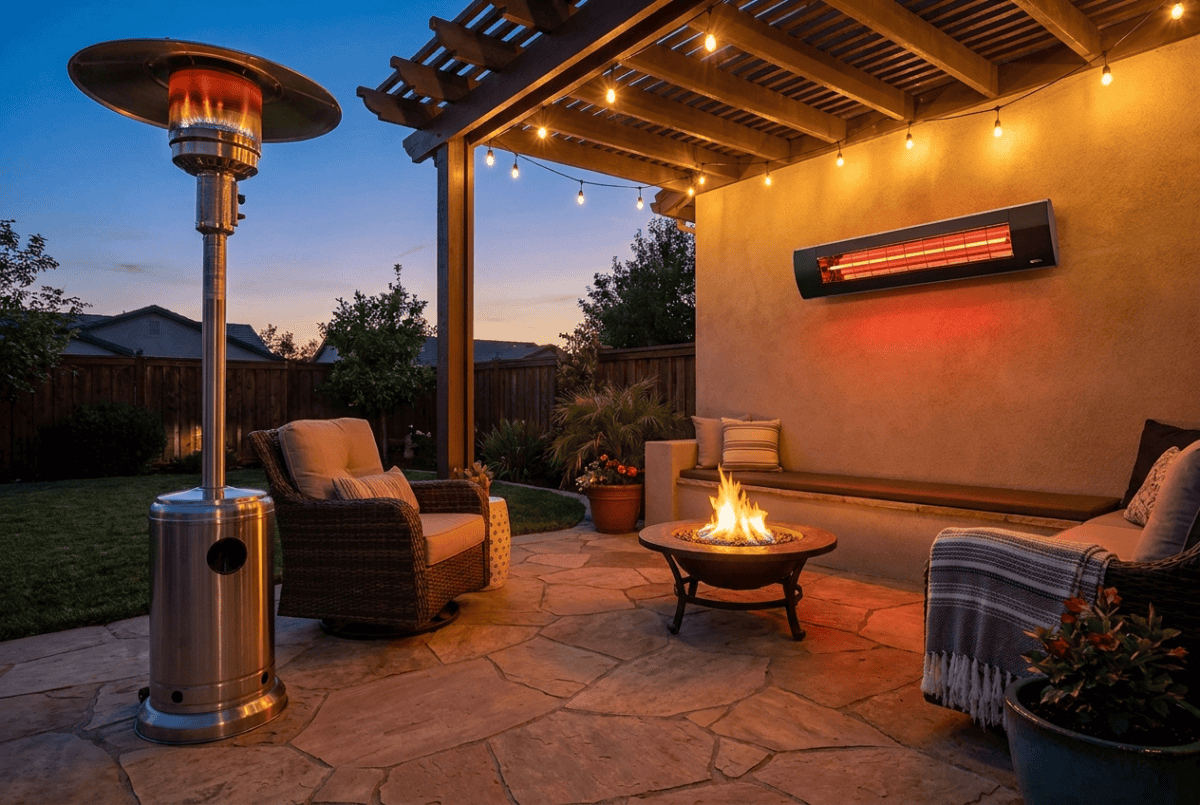
Choose an electric infrared patio heater for covered patios, porches, balconies, and anywhere you want cheap, quiet, flame-free heat aimed directly at people — it costs about $0.28 an hour to run. Choose a propane patio heater for large, open, uncovered patios and decks where you need maximum heat output and no wiring; it runs about $1.15–$2.00 an hour but throws far more warmth over a wider area. Infrared wins on running cost, safety, and covered spaces; propane wins on raw heat and open-air reach.
Last Updated: July 2026 | Will Montgomery has spent years comparing infrared and propane patio heaters across real backyards and patios.
Infrared vs. Propane at a Glance
| Factor | Electric Infrared | Propane |
|---|---|---|
| How it heats | Radiant infrared — warms people/objects directly | Flame heats air + some radiant; warms a wider area |
| Heat output | ~5,100 BTU (1,500 W) | ~40,000 BTU |
| Running cost | ~$0.28 / hour | ~$1.15–$2.00 / hour |
| Best for | Covered patios, porches, balconies, renters | Open patios, decks, big or windy areas |
| Open flame | No | Yes |
| Fuel / power | Standard outlet | Refillable propane tank |
| Instant heat | Yes, immediate | Yes, but warms area gradually |
| Wind resistance | Lower (directional beam) | Higher (high output) |
How Each Type Heats Your Patio
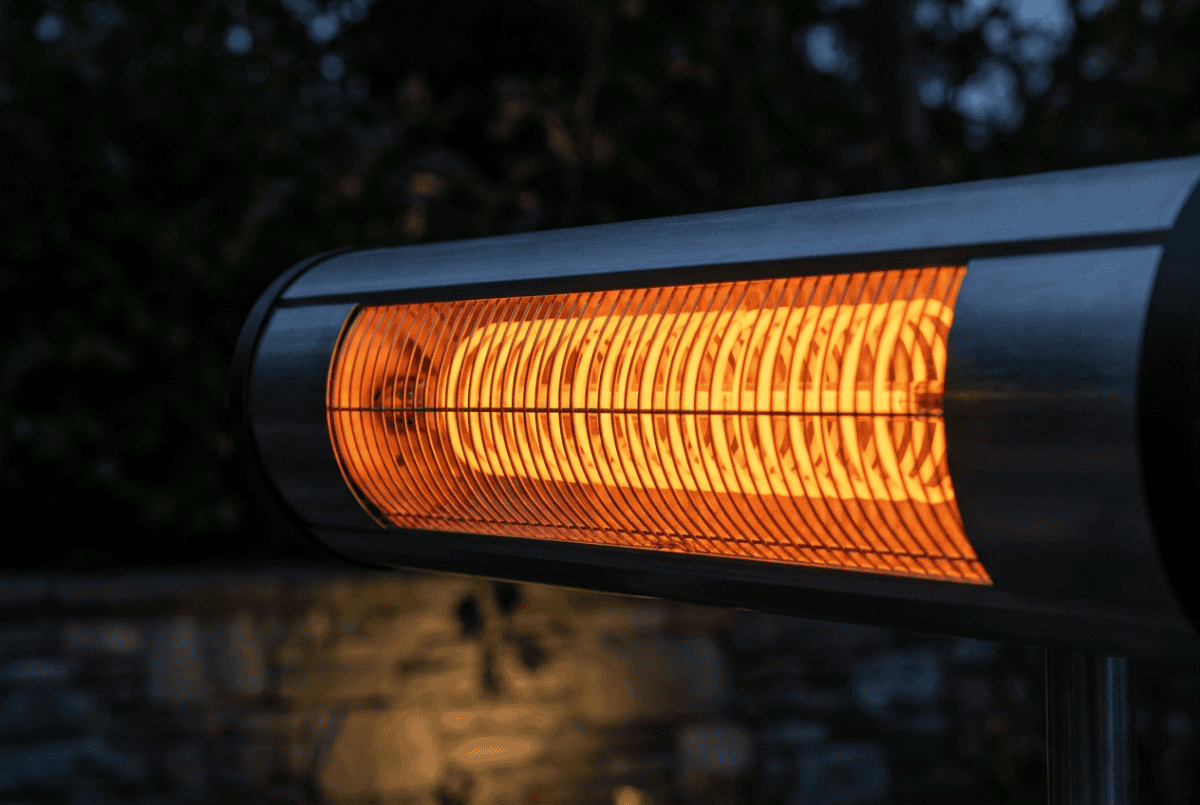
The core difference is how the heat reaches you. An infrared heater emits radiant energy that travels in a straight line and warms whatever it hits — your skin, your clothes, the chair — without wasting energy heating the air in between. That is why infrared feels warm instantly and why it works so well in covered or partly enclosed spaces where the beam is trapped and aimed. Step out of its line of sight, though, and the warmth drops off quickly.
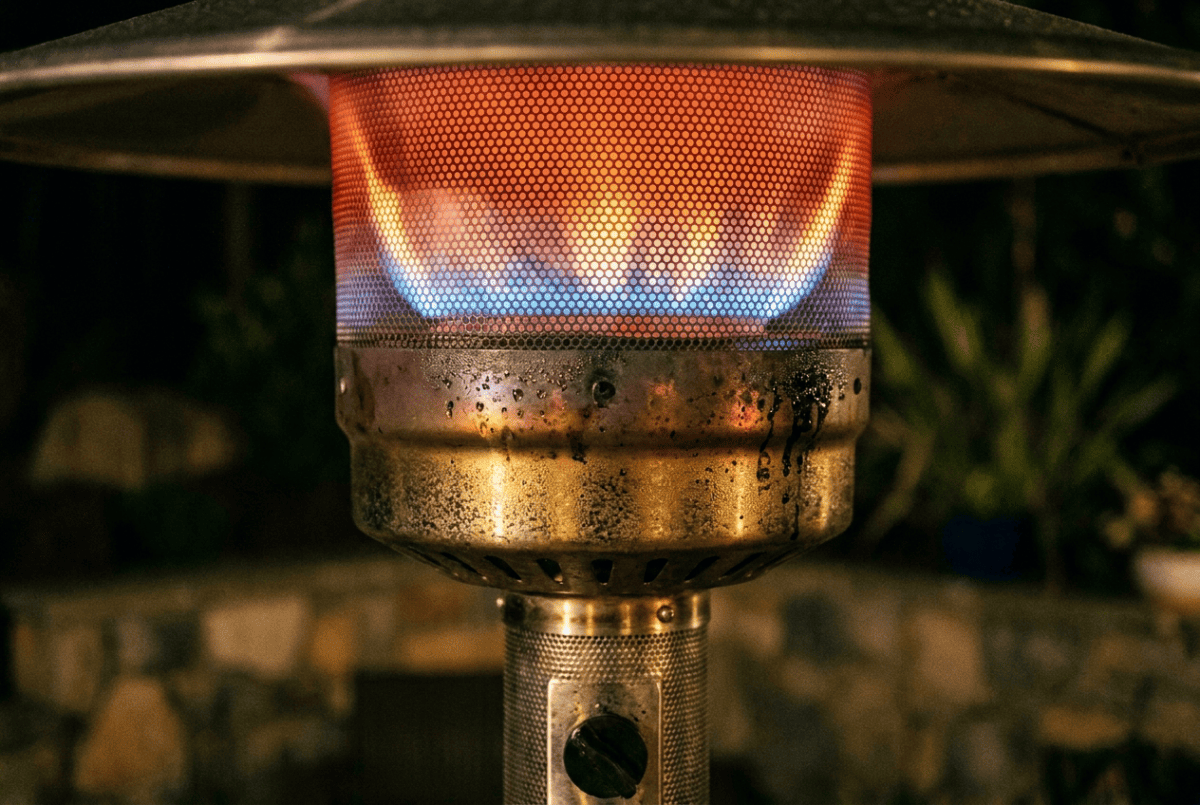
A propane heater burns fuel to produce a flame, which heats the surrounding air (convection) plus some radiant heat off the emitter and reflector. That rising warm air fills a wider zone, which is why a single propane tower can warm a whole seating group on an open patio. The trade-off: outdoors, warm air drifts and blows away, so propane burns a lot of fuel to keep a space comfortable, especially in wind.
Running Cost: Infrared Is Far Cheaper
This is the clearest win for infrared. A 1,500-watt electric infrared heater uses 1.5 kWh per hour, which costs about $0.28 an hour at the current U.S. average electricity rate of 18.83¢/kWh. A 40,000-BTU propane heater burns roughly 0.44 gallons an hour and costs about $1.15 to $2.00 an hour depending on whether you buy bulk propane or refill 20-lb tanks. Over a season of regular evenings, that gap adds up fast. We show the full math in our cost to run a patio heater guide.
Heat Output and Coverage: Propane Wins
Where propane pulls ahead is sheer output. At around 40,000 BTUs, a propane tower produces roughly eight times the raw heat of a 1,500-watt infrared unit (about 5,100 BTUs). That matters on a big, open, or windy patio, where infrared’s directional beam simply can’t keep up. Propane warms a 10-to-20-foot circle; a single plug-in infrared heater warms a tighter zone you need to sit within. If you’re unsure how much output your space needs, our BTU sizing guide converts both to coverage.
Safety and Convenience
Infrared has no open flame, no combustion gases, and no tank to store, which makes it the safe choice for covered patios, porches, and apartment balconies — and the only choice most leases and fire codes allow above the first floor. It also switches on instantly and needs no refills. Propane’s flame and fuel demand more care: adequate clearance and ventilation, no indoor or enclosed use, and periodic tank swaps. The upside is total freedom from wiring — a propane heater goes anywhere, no outlet required.
Which Should You Buy?
From experience: For us, since everything’s outside, the infrared electric one lives right over where we eat — you flip it on and even when there’s a little wind chill that feels like it’s barely doing anything, it actually is helping. But if you truly want warmth, propane is the answer; it just throws out way more BTUs. I like the top-hat towers, with one caveat: if they ever tip over, they bend up to almost non-recognition. The best-looking ones are the glass-tube “pyramid” style with the flame running up the middle — they make a little more noise, but in normal party conversation you’d never notice it.
Match the heater to your space:
- Buy electric infrared if: you have a covered patio, porch, three-season room, or balcony; you want the lowest running cost; you rent; or you want flame-free, instant, directional heat.
- Buy propane if: you have a large, open, uncovered patio or deck; you deal with wind; you want maximum heat for a group; or you have no convenient outdoor outlet.
Many homeowners end up with both — propane for the open backyard, infrared under the covered porch. Ready to shop? See our best electric patio heaters and best propane patio heaters guides, or the overall best patio heaters roundup. For the full picture, start at our patio heaters explained hub, and see our companion electric vs. propane patio heater comparison.

Frequently Asked Questions
Is an infrared or propane patio heater better?
Neither is universally better — it depends on your space. Electric infrared is better for covered patios, porches, and balconies because it is cheaper to run, has no flame, and aims heat directly at people. Propane is better for large, open, or windy patios because it produces far more heat and needs no outlet.
Do infrared heaters use less energy than propane?
Yes, by a wide margin in running cost. A 1,500-watt infrared heater costs about $0.28 an hour, while a 40,000-BTU propane heater costs roughly $1.15 to $2.00 an hour. Infrared is more efficient at delivering heat to people because it doesn’t waste energy warming outdoor air that drifts away.
Are infrared patio heaters warm enough for outdoors?
For covered patios, porches, balconies, and small or partly enclosed spaces, yes — infrared’s directional heat is trapped and effective there. On a large, fully open, or windy patio, a single infrared unit may struggle, and a higher-output propane heater (or multiple infrared units) is the better call.
Can you use a propane patio heater on a covered porch?
With caution. Propane heaters produce an open flame and combustion gases, so they need adequate overhead clearance and ventilation and should never run in an enclosed space. On a fully covered or enclosed porch, an electric infrared heater is the safer and more practical choice.
Which lasts longer, infrared or propane heaters?
Both can last many years with care. Electric infrared units have fewer parts that wear out — no burner, thermocouple, or igniter — so they often need less maintenance. Propane heaters may require occasional cleaning of the burner and replacement of parts like the thermocouple, but they are also easily repairable.
Key Takeaways
- Infrared: ~$0.28/hr, no flame, best for covered/renter spaces, instant directional heat.
- Propane: ~$1.15–$2.00/hr, ~40,000 BTU, best for open, large, or windy patios.
- Infrared wins on cost and safety; propane wins on raw heat and reach.
- Covered or enclosed space → infrared. Open, uncovered space → propane.
Written by Will Montgomery for Outdoor Space Accents. Cost figures reflect U.S. averages as of mid-2026 and vary by location.
Will Montgomery brings an engineer’s eye and hands-on experience with both infrared and propane heaters to compare them fairly — heat, cost, and safety — so you choose the right type for your space.