

This post contains affiliate links. We may earn a commission if you purchase through our links, at no extra cost to you.
Quick Answer: What Is a Patio Heater?
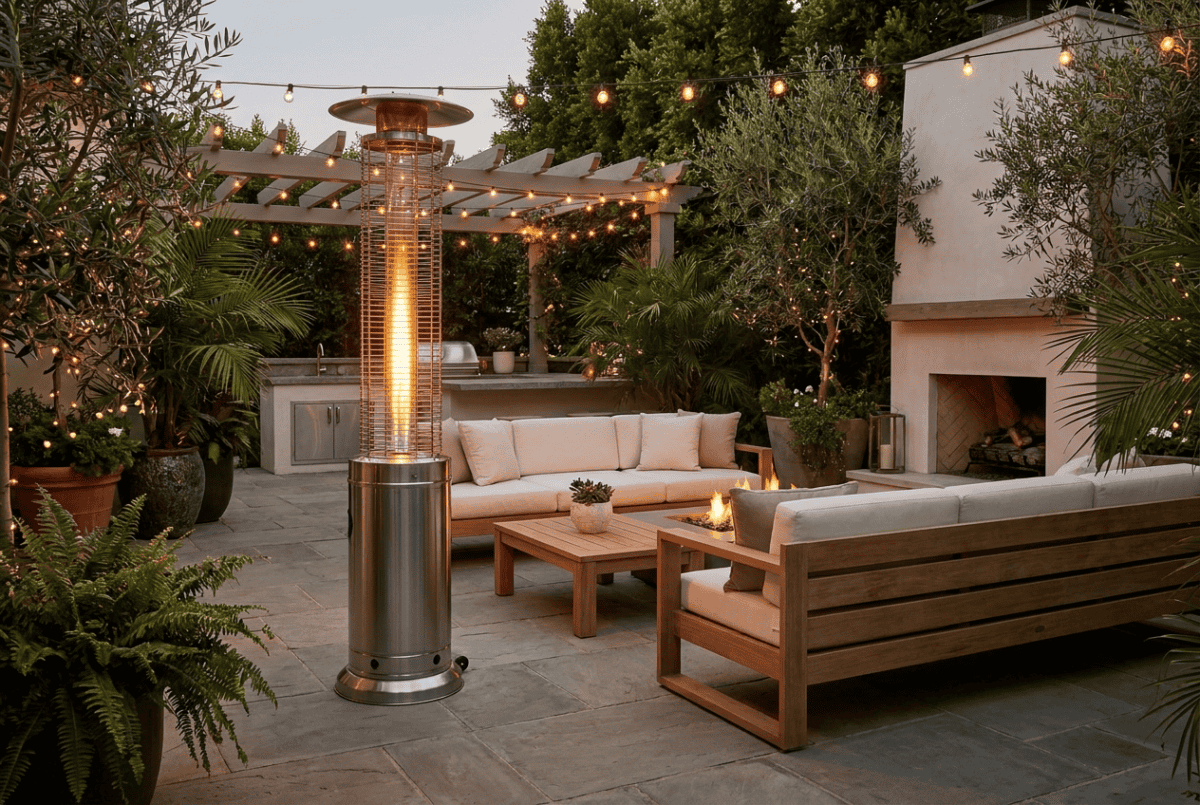
A patio heater is an outdoor heating appliance that uses radiant heat — infrared energy that warms people and objects directly rather than heating the air — to make patios, decks, and porches comfortable in cold weather. The three main types are propane (high output, best for open spaces), electric infrared (cheaper to run, safe for covered and enclosed areas), and natural gas (permanent, low running cost). Choosing the right one comes down to your space, your climate, and how you buy fuel.
This guide is the hub for everything we cover on patio heaters at Outdoor Space Accents: how they work, the types and fuels, how to size one, what it costs to run, safety and clearances, and maintenance. Each section links to a deeper article so you can go as far down the rabbit hole as you need.
Last Updated: July 2026 | Will Montgomery has spent years researching, comparing, and living with propane, electric, and infrared patio heaters.
How Patio Heaters Work
Almost every patio heater works by radiant heat. Instead of warming the surrounding air the way a furnace does — which is pointless outdoors, where the warm air immediately drifts away — a patio heater emits infrared energy that travels in straight lines and warms whatever it lands on: your skin, your clothes, the table, the chairs. That is why you feel warm standing near one even on a breezy night, and why the heat seems to disappear the moment you step out of its line of sight.
This radiant principle explains most of what confuses first-time buyers. It is why a heater feels weaker in the wind (moving air strips heat off surfaces), why reflectors and directional heads matter so much (they aim the energy where you want it), and why a modest-wattage electric infrared unit can outperform a big propane heater in a small, enclosed space where its beam is trapped and focused. If you have ever wondered whether these things actually keep you warm, we tackle that head-on in do patio heaters really keep you warm.
Types of Patio Heaters
Patio heaters come in a handful of distinct form factors, and the right shape matters as much as the fuel. Here are the main ones.
Freestanding (tower) patio heaters
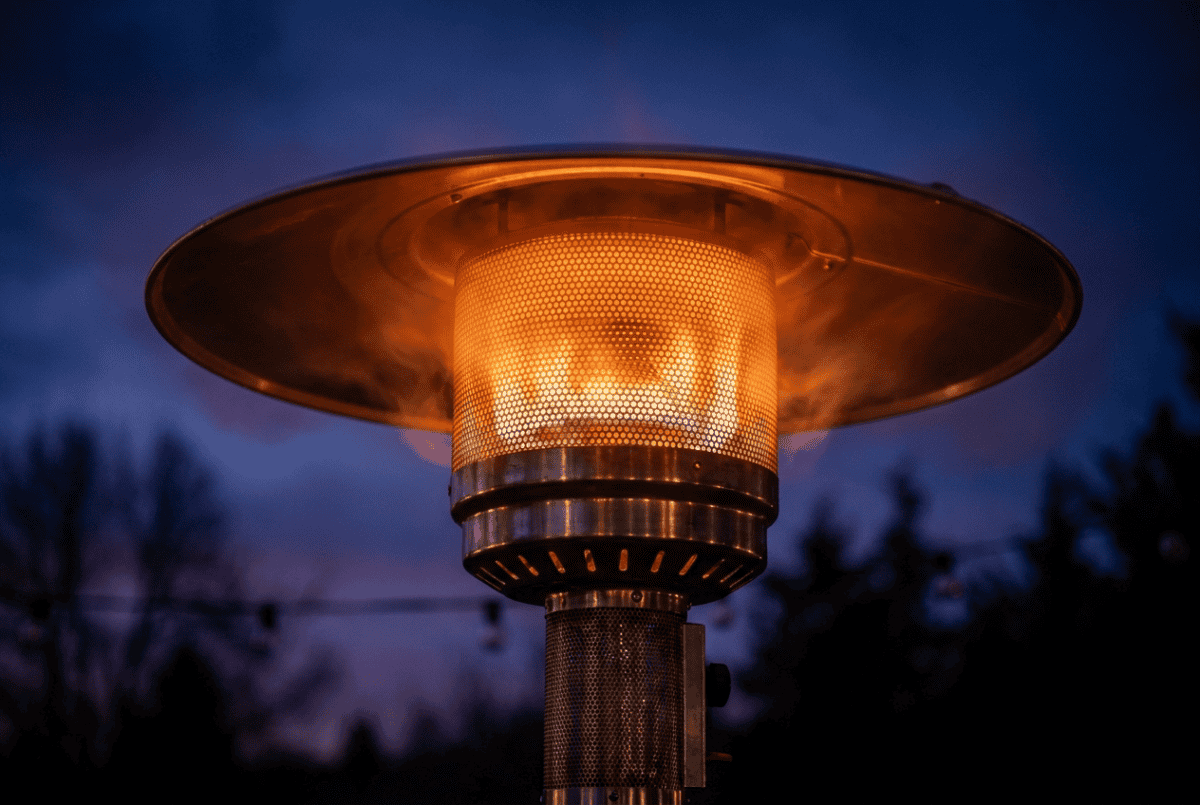
The classic tall “mushroom” or pyramid heater you see at restaurants. Freestanding propane models are the workhorses of the category — usually around 40,000 BTUs, they anchor a seating group on an open patio and need no wiring. They are the default pick for most backyards.
Tabletop patio heaters
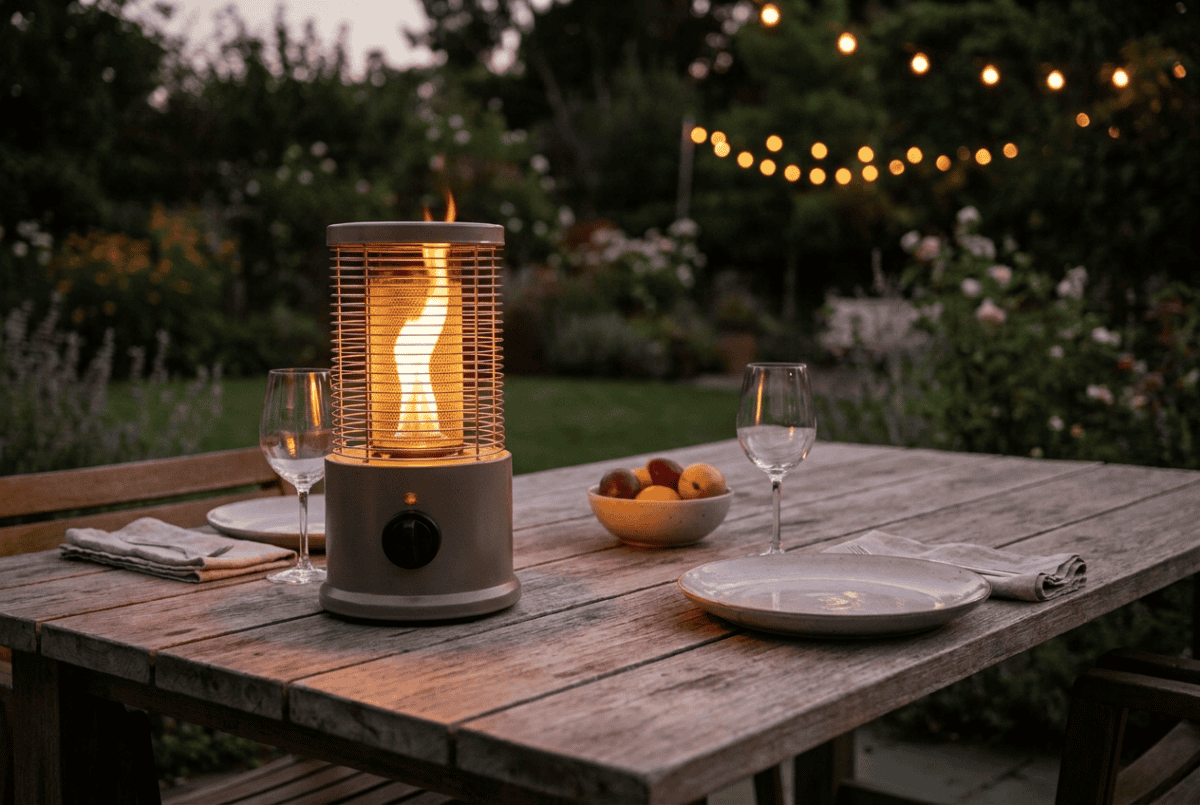
Smaller versions that sit on a table or the ground, running on 1-lb canisters or a small tank. They are portable and great for a bistro set or a chilly dinner for two, but they do not have the reach to warm a whole patio. Think of them as personal heaters.
Electric infrared heaters
Powered by a standard outlet, these beam infrared heat with no flame and no fuel to store. They shine on covered patios, porches, three-season rooms, and balconies, where their directional heat is trapped and where an open flame would be unsafe. They are also the cheapest type to run. See our picks in best electric patio heaters.
Wall-mounted and hanging heaters
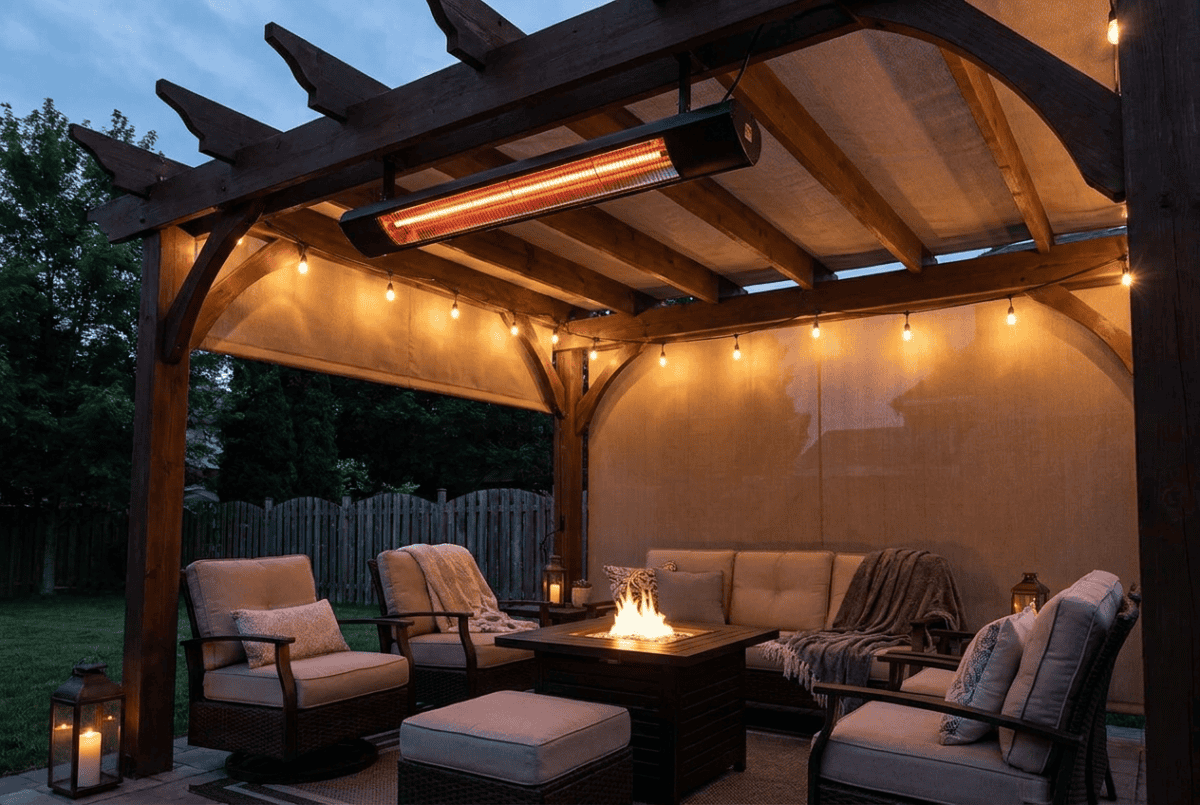
Electric infrared units that mount to a wall or ceiling to save floor space — ideal for small patios, balconies, and covered areas where a freestanding tower would be in the way. They aim heat downward and outward over a defined zone.
Natural gas heaters
Permanently plumbed into a home’s gas line. They cost more to install but have the lowest running cost and never need a tank refill. They suit homeowners who want a fixed, always-on heater for a specific spot.
Different heater styles perform differently in the real world — we break down which shapes actually deliver in patio heater styles and shapes.
Propane vs. Electric vs. Natural Gas: Choosing a Fuel
From experience: The trick with electric is the circuit. A standard 120V outlet is good for about 15 amps — call it roughly 5,000 BTUs of heat — and if you run the heater on max, you don’t want anything else pulling from that same circuit or you’ll trip the breaker. So before you plug in, figure out whether that outlet is on its own circuit and what else shares it. The easy way is to flip the breaker off and see what dies. Or grab a circuit breaker finder from Home Depot or Lowe’s — plug the transmitter into the outlet, run the sensor down the breaker panel, and it tells you exactly which breaker feeds it. And the old tried-and-true still works: just keep clicking breakers until you find the one.
Fuel type is the single biggest decision, because it drives cost, output, and where you can safely use the heater.
Propane delivers the most heat — a typical freestanding unit puts out 40,000 BTUs — and needs no wiring, so it is the best choice for large, open, uncovered patios and decks. The trade-offs are refilling tanks and a higher running cost. Electric infrared costs far less per hour, has no open flame, and is safe in covered or enclosed spaces, but it produces less raw heat and needs an outlet. Natural gas has the lowest running cost and never needs refilling, but requires professional installation and a fixed location.
We put the two most common options head-to-head in electric vs. propane patio heater, and if cost is your deciding factor, our cost to run a patio heater breakdown has the real per-hour numbers (propane runs roughly $1.15–$2.00/hour; electric infrared about $0.28/hour).
How to Choose a Patio Heater for Your Space
Match the heater to where you will actually use it:
- Open backyard patio or large deck: a freestanding propane heater (or two, spaced apart) for its high output and wind resistance.
- Covered patio, porch, or three-season room: electric infrared — safer with no flame, cheaper to run, and its directional heat is trapped by the roof.
- Apartment balcony or small rented space: a compact electric or wall-mounted infrared heater; check your lease and local fire code, since many buildings prohibit propane and open flames. See best patio heaters for options across categories.
- Composite or wood deck: mind the surface — we cover whether patio heaters are safe on composite decks.
What Size Patio Heater Do You Need?
As a rule of thumb, plan for about 20 BTUs per square foot of the area you actually sit in, and step up to 30–40 BTUs per square foot for open or cold spaces. A standard 40,000-BTU freestanding heater covers a circle roughly 10 to 20 feet across — about 150 to 300 square feet of usable warmth — which is enough for a typical four-to-six-person seating group. For electric heaters, convert watts to BTUs by multiplying watts by 3.412, so a 1,500-watt infrared unit puts out around 5,100 BTUs, ideal for a tighter covered zone. Our full patio heater BTU sizing guide has the coverage chart and step-by-step method.
What Does It Cost to Run a Patio Heater?
Running cost depends on fuel and how you buy it. A 40,000-BTU propane heater burns about 0.44 gallons of propane per hour, which works out to roughly $1.15 to $2.00 per hour depending on whether you buy bulk propane or refill 20-lb tanks. A 1,500-watt electric infrared heater uses 1.5 kWh per hour — about $0.28 at the current U.S. average electricity rate. Electric wins on cost per hour; propane wins on raw heat for big, open spaces. A full 20-lb propane tank lasts roughly 10 hours on high, and you can dig into that in how long a propane tank lasts on a patio heater.
Patio Heater Safety and Clearances
Patio heaters are safe when used correctly, but they demand respect because they combine high heat (and, for gas models, an open flame) with an outdoor setting. The core rules: keep the heater on a stable, level surface; maintain the manufacturer’s specified clearance from walls, ceilings, umbrellas, and anything flammable; never use a propane or natural gas heater indoors or in an unventilated space; and always let it cool before moving or covering it.
Clearance is the rule people most often get wrong, especially under umbrellas and covered patios. We lay out the specifics in patio heater clearance requirements and give a broader checklist in patio heater safety tips. For gas units specifically, propane patio heater safety tips covers tank handling and leak checks.
Maintenance and Troubleshooting
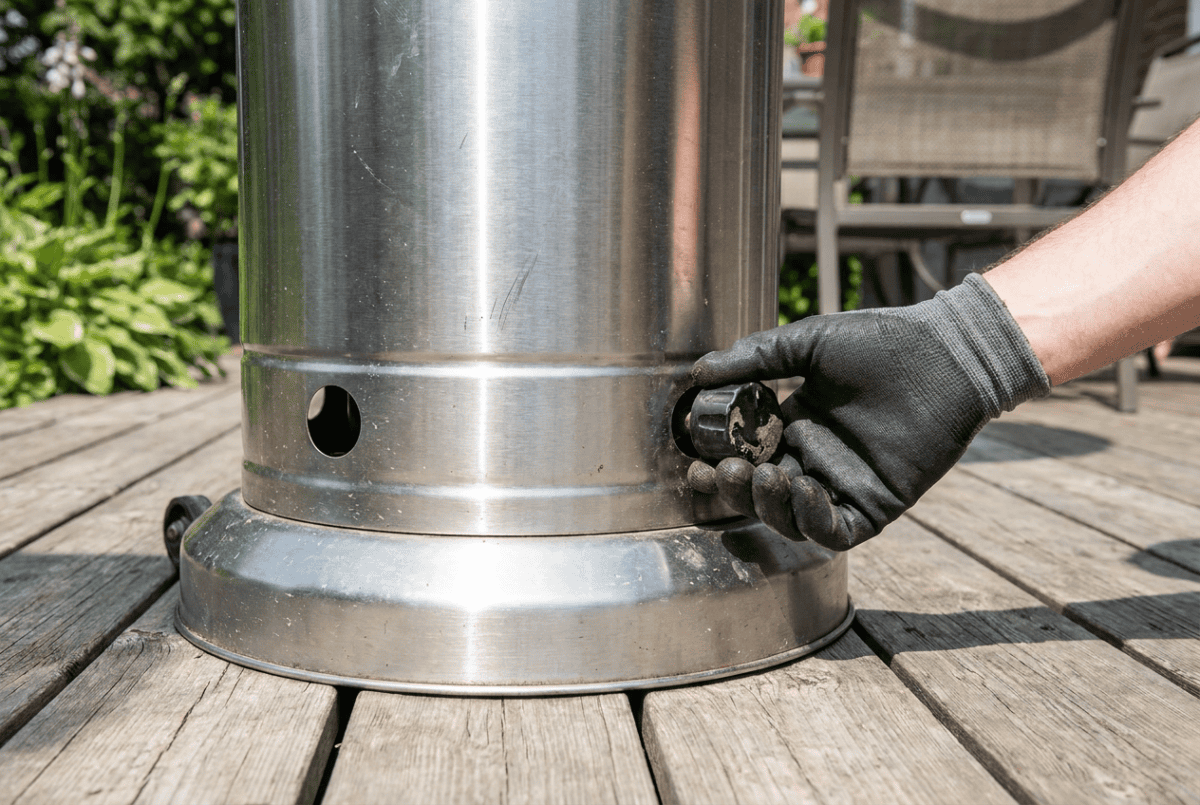
A little upkeep keeps a patio heater lighting reliably and lasting for years. For propane heaters, the most common failure is a dirty or faulty thermocouple — the safety sensor that shuts off gas if the flame goes out. If your heater lights and then dies after a few seconds, that is usually the culprit; here is how to clean a thermocouple. If the igniter fails, you can still light a patio heater manually with a long lighter.
Beyond that: store the heater covered and out of the weather in the off-season, keep the burner and emitter screen clean, check hoses and connections for cracks or leaks before each season, and swap the tank in a ventilated outdoor spot. Small details, like whether bolt-on reflectors actually work or why some heaters run loud, come up often enough that we have dedicated answers.
The Best Patio Heaters by Category
Once you know the type and size you want, our review guides do the product legwork. Start with the overall best patio heaters roundup for picks across every category. For a specific fuel, go to best electric patio heaters or best propane patio heaters. And if you like to see individual models tested, we have hands-on write-ups like the Fire Sense patio heater review, the Hiland HLDS01-WCGT review, and the AmazonBasics commercial heater review.
Frequently Asked Questions
What is the best type of patio heater?
Match the type to your space: freestanding propane heaters win for large, open patios thanks to their high heat output, electric infrared heaters are best for covered patios, porches, and balconies because they are safe with no open flame and cheaper to run, and natural gas is best for a permanent, low-cost heater in a fixed spot.
Are patio heaters worth it?
For most people who use their outdoor space in cool weather, yes. A patio heater can add two or three months of comfortable use to a patio each year, extending the season into fall and starting it earlier in spring. The value depends on how often you would actually sit outside if it were warmer, and choosing a heater sized correctly for your space so it does the job without wasting fuel.
How much does a patio heater cost to run?
A 40,000-BTU propane patio heater costs roughly $1.15 to $2.00 per hour depending on how you buy propane, while a 1,500-watt electric infrared heater costs about $0.28 per hour at the U.S. average electricity rate. Electric is far cheaper per hour, but propane produces much more heat for open spaces.
Are patio heaters safe to use under a covered patio?
Electric infrared heaters are generally safe under a covered patio as long as you follow the clearance in the manual. Propane and natural gas heaters need much more caution because they produce combustion gases and an open flame; they require adequate ventilation and greater overhead clearance, and should never be used in an enclosed space. Always check the manufacturer’s clearance specs first.
Can you use a patio heater on a wood or composite deck?
Yes, with care. Place the heater on a stable, level part of the deck, use a heat-resistant pad if the manufacturer recommends one, and keep it away from railings and furniture. Composite decking has its own heat considerations, which we cover in our dedicated article on patio heaters and composite decks.
Why does my patio heater keep going out?
Usually a dirty or misaligned thermocouple — the safety sensor that shuts off the gas when it cannot detect a flame. Cleaning or realigning it fixes it in most cases.
Key Takeaways
- Patio heaters use radiant infrared heat that warms people and objects, not the air.
- The three fuels are propane (high output, open spaces), electric infrared (cheap, safe for covered areas), and natural gas (permanent, lowest running cost).
- Size with ~20 BTU per square foot; a 40,000-BTU unit covers ~150–300 sq ft.
- Running cost: ~$1.15–$2.00/hr propane, ~$0.28/hr electric.
- Respect clearances and never run gas heaters in enclosed spaces.
Written by Will Montgomery for Outdoor Space Accents. This pillar guide is updated as we publish new patio heater articles — bookmark it as your starting point.
Will Montgomery pairs an engineer’s eye with hands-on experience heating real patios, breaking down how each type performs on heat, cost, and safety — so you can match the right patio heater to your space with confidence.