

Electric patio heaters let you enjoy outdoor spaces year-round without dealing with propane tanks or open flames. These plug-and-play units deliver instant warmth at the flip of a switch, making them safer and easier to use than gas alternatives. The best electric patio heaters combine powerful infrared heating technology, weatherproof construction, and adjustable heat settings to create comfortable outdoor environments even on chilly evenings.
Last Updated: May 2026 | Will Montgomery has spent years evaluating outdoor living and heating products for patios, decks, and backyard setups. The product picks below are based on wattage performance data, IP ratings, safety certifications, and verified owner reviews.

Modern electric heaters have come a long way from basic models. Today’s top options like the Dr. Infrared portable electric model 1500W and Bromic Tungsten Smart-Heat deliver efficient warmth while using clean energy. Many electric patio heaters now feature remote controls, timers, and multiple power settings for complete comfort control.
Choosing the right heater depends on your space size, mounting preferences, and heating needs. Wall-mounted units save floor space while freestanding models like the Nfccra Tower offer portability. Understanding how different heater types work and what features matter most will help you find the perfect match for your patio, deck, or outdoor dining area.
Key Takeaways
- Electric patio heaters use infrared technology to provide instant, efficient warmth without flames or fuel refills
- Top models in 2026 offer weatherproof designs, adjustable heat settings, and convenient remote control operation
- Proper placement and regular maintenance extend heater lifespan while maximizing heating coverage for outdoor spaces
Standout Electric Outdoor Heater Types and How They Work
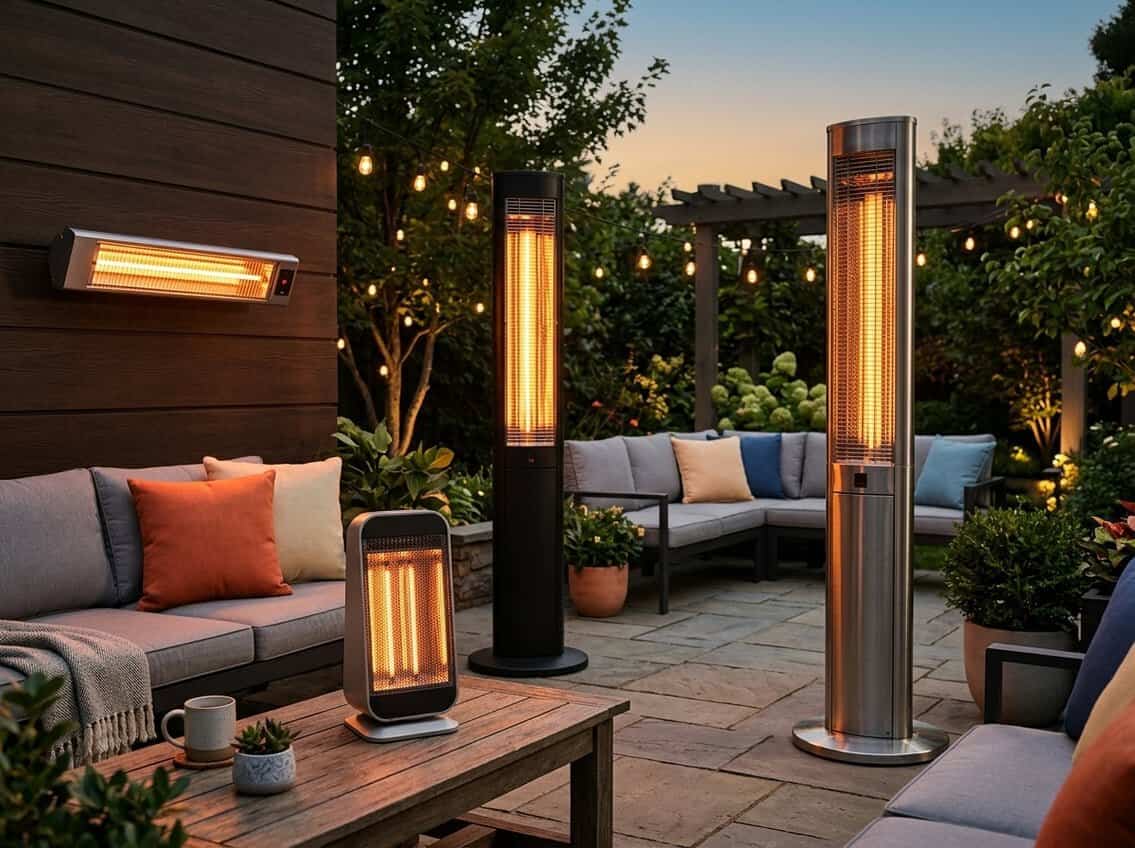
Electric outdoor heaters come in two main designs that work differently. Infrared models heat people and objects directly through electromagnetic waves, while wall mounted units save floor space and provide overhead warmth.
Infrared Patio Heater Mechanics and Benefits
An infrared patio heater works by converting electricity into electromagnetic radiation that travels through the air without warming it. The infrared waves heat solid objects and people they touch, similar to how the sun warms your skin on a cold day.
Key Performance Advantages:
- Heat delivery in 1-2 seconds after turning on
- Wind doesn’t blow the warmth away
- Energy efficiency of 85-90% compared to gas heaters
- No fuel storage or refills needed
The Dr. Infrared portable electric model uses carbon fiber heating elements with a 90% reflective aluminum backing to direct heat where needed. This 1500W model operates on standard household current and mounts permanently to walls or ceilings.
Modern infrared technology converts nearly all electricity into usable heat. The Bromic Tungsten Smart-Heat Electric Patio Heater features directional heating that focuses warmth on specific zones rather than wasting energy heating empty space. Higher-end models like the Dr. Infrared DR-239 include multiple heat settings between 900W and 1500W for temperature control.
Wall Mounted Patio Heater Features
A wall mounted patio heater installs 8-10 feet above ground level and directs heat downward across seating areas. These units eliminate tripping hazards and free up valuable floor space on patios and decks.
Installation Requirements:
- Access to 120V or 240V electrical outlet
- Wall that supports 15-25 pounds
- Clearance of 24 inches from combustible materials
- Weather-resistant mounting hardware
The Nfccra Tower Electric Patio Heater offers dual-mounting capability for both wall and ceiling installation. Most wall units include remote controls that operate from 15-20 feet away with timer functions for automatic shutoff.
Weather resistance ratings matter for outdoor durability. Look for IP55 or IP65 ratings that protect against water jets and dust. Aluminum housing resists rust better than powder-coated steel in humid climates.
From experience: The reason we went with an electric heater over the dining area was practical — no bulky unit blocking sightlines across the table, and no propane smell near the food. It mounts overhead, stays out of the way, and on a calm night it does the job well.
Top Picks for Electric Patio Heaters in 2026
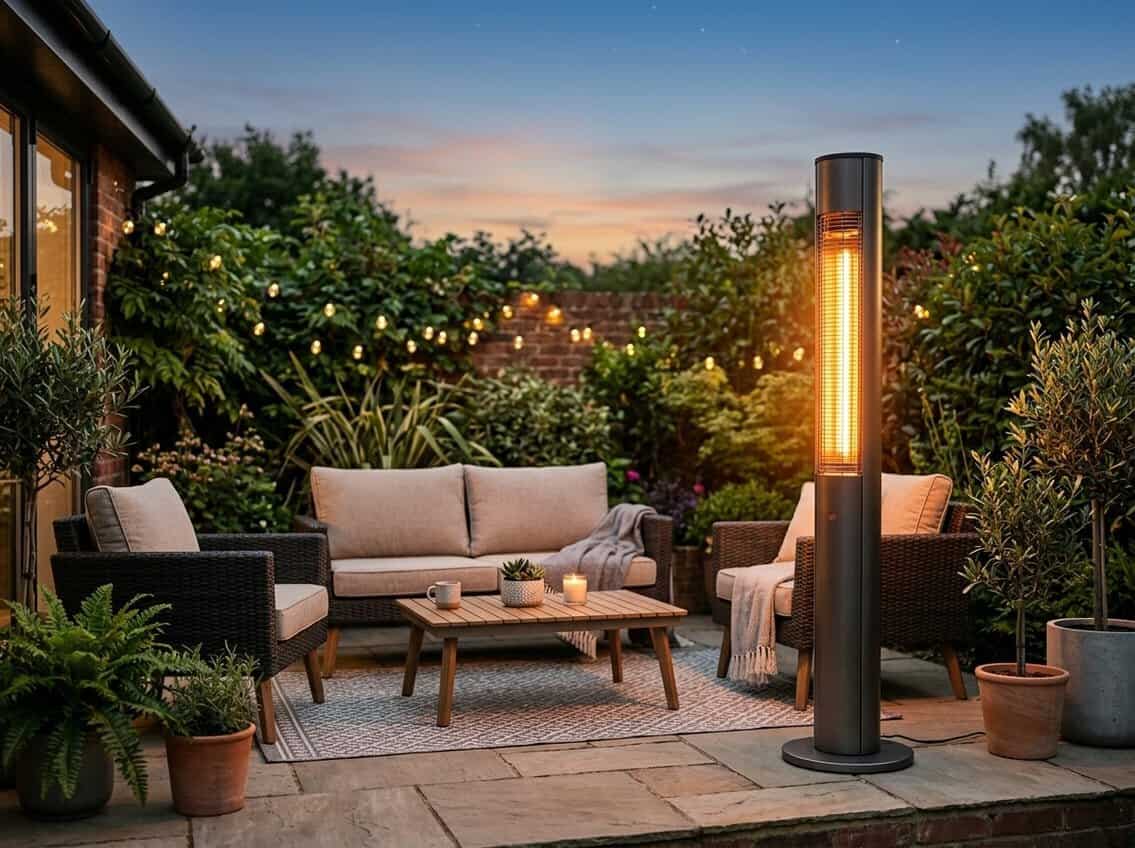
The best electric patio heaters in 2026 combine infrared heating technology with smart features and durable construction. Wall-mounted models offer space-saving solutions, while freestanding units provide flexibility for different patio configurations and sizes.
Leading Infrared Patio Heater Models
The Dr. Infrared Dr. Infrared portable electric model 1500W Electric Patio Heater stands out as a top infrared patio heater choice for its carbon heating element that delivers instant warmth. This model heats up to 150 square feet and includes three power settings for temperature control.
The Dr. Infrared DR-239 Electric Patio Heater steps up the output to 3000W for larger covered spaces and commercial patios. It runs on 220-240V and includes a remote control for convenient power adjustments.
The Bromic Tungsten Smart-Heat Electric Patio Heater represents premium infrared technology with directional heating capabilities. Its low-glare design makes it ideal for dining areas where bright lights would be distracting.
Key Infrared Features:
- Instant heat without warm-up time
- 90-95% energy efficiency ratings
- No fumes or emissions
- Direct warmth to people and objects
Best Wall Mounted Patio Heater Options
Wall-mounted electric heaters save valuable floor space while providing consistent overhead heating. The Briza 1500W mounts to ceilings or walls with included hardware and features an IP55 weatherproof rating.
These units typically offer three heat settings ranging from 600W to 1500W. The WEWARM model includes IP65 protection against dust and water, making it suitable for exposed outdoor locations.
Installation requires an outdoor-rated electrical outlet within reach of the power cord. Most models include mounting brackets and can be angled to direct heat where needed most.
Wall Mount Advantages:
- Keeps floor space clear
- Out of reach from children and pets
- Even heat distribution from above
- Permanent installation option
Best Electric Outdoor Heaters for Different Patio Sizes
Small patios under 100 square feet work well with tabletop models or single 1500W units. The Nfccra Tower Electric Patio Heater suits compact spaces with its vertical design that heats approximately 120 square feet.
Medium patios from 100-200 square feet need electric outdoor heaters with oscillation features or multiple heat zones. Models with 60-degree oscillation distribute warmth more evenly across larger areas.
Large patios over 200 square feet require multiple heating units or high-output models rated for extended coverage. Positioning two 1500W heaters at opposite ends creates overlapping heat zones for complete coverage.
Sizing Guidelines:
| Patio Size | Heater Output | Number of Units |
|---|---|---|
| Under 100 sq ft | 1500W | 1 unit |
| 100-200 sq ft | 1500W with oscillation | 1-2 units |
| Over 200 sq ft | 1500W | 2-3 units |
Essential Features to Consider When Choosing a Patio Heater
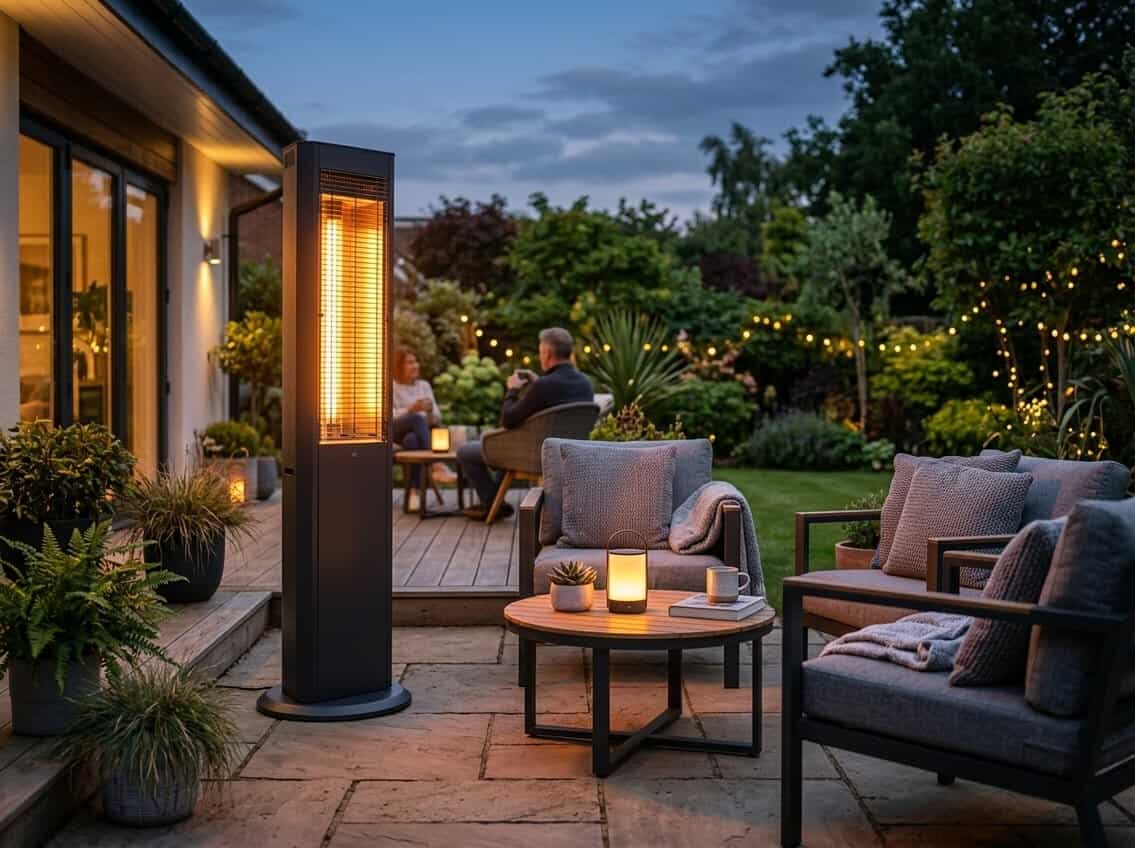
The right electric patio heater depends on heat coverage for your space, straightforward installation, proper safety ratings, and control options that match your lifestyle. Understanding these core features helps narrow down which models deliver real performance versus empty promises.
Heating Efficiency and Coverage
Heat output determines how much warmth a unit produces and how far that warmth extends. Most electric patio heaters generate around 5,000 BTUs, which works well for small patios or covered areas. The heat range typically spans 5 to 15 feet depending on the model and weather conditions.
Infrared heating technology provides immediate warmth compared to traditional heating methods. The Dr. Infrared portable electric model 1500W Electric Patio Heater uses infrared elements to deliver fast heat in spaces like garages or enclosed patios. Coverage area matters more than raw wattage in many cases.
Key factors affecting heating performance:
- Outdoor temperature and wind conditions
- Covered versus open-air placement
- Distance from the heat source
- Wall barriers that trap warmth
Electric outdoor heater units work best in temperatures between 50-60°F. Below 40°F, even powerful models struggle to maintain comfort in open spaces.
Ease of Installation and Setup
Assembly time varies from 10 minutes to over an hour depending on the model type. Freestanding tower heaters like the Nfccra Tower Electric Patio Heater typically require basic tools and two people for safe assembly. Most manufacturers include instructions, though some units arrive without clear guidance.
Wall mounted patio heater options need permanent installation with brackets and proper mounting hardware. The Dr. Infrared DR-239 Electric Patio Heater mounts to walls but requires planning since it becomes hot during operation and cannot be moved until cool. These units need placement near electrical outlets since extension cords often void warranties.
Tabletop models offer the simplest setup with minimal or no assembly required. They just need a stable surface and access to power. Consider cord length and placement before purchase to avoid tripping hazards.
Safety Standards and Certifications
Third-party certifications verify that heaters meet specific safety requirements. Look for ETL or UL certification on any model before purchasing, as these certifications are standard on quality patio heaters.
IP ratings indicate protection levels against dust and moisture. The rating includes two numbers where the first measures solid particle protection (0-6) and the second measures liquid protection (0-9). An IP rating ending in 4 or higher suits outdoor use. The Bromic Tungsten Smart-Heat Electric Patio Heater carries an IP rating suitable for permanent outdoor installation.
Tip-over protection automatically shuts off power if the unit falls or tilts beyond safe angles. Overheat protection turns the heater off when internal temperatures reach unsafe levels. Both features add important safety layers but don’t eliminate the need for supervision during operation.
Smart Controls and Convenience Features
Remote controls let users adjust temperature settings and power without walking to the unit. Most remotes operate heat levels and on/off functions from 10-15 feet away. The Dr. Infrared portable electric model includes a remote, though users must supply their own batteries.
Adjustable heat settings provide flexibility for different weather conditions and distances from the heater. Three-level controls (low, medium, high) are common and more useful than single-setting models. Some users find the highest settings too intense at close range.
Timer functions allow automatic shut-off after set periods, adding safety and energy savings. 24-hour programmable timers offer the most control for regular usage patterns. Built-in thermostats maintain consistent temperatures by cycling power on and off as needed, though this feature appears mainly on premium models.
Installation and Placement Strategies
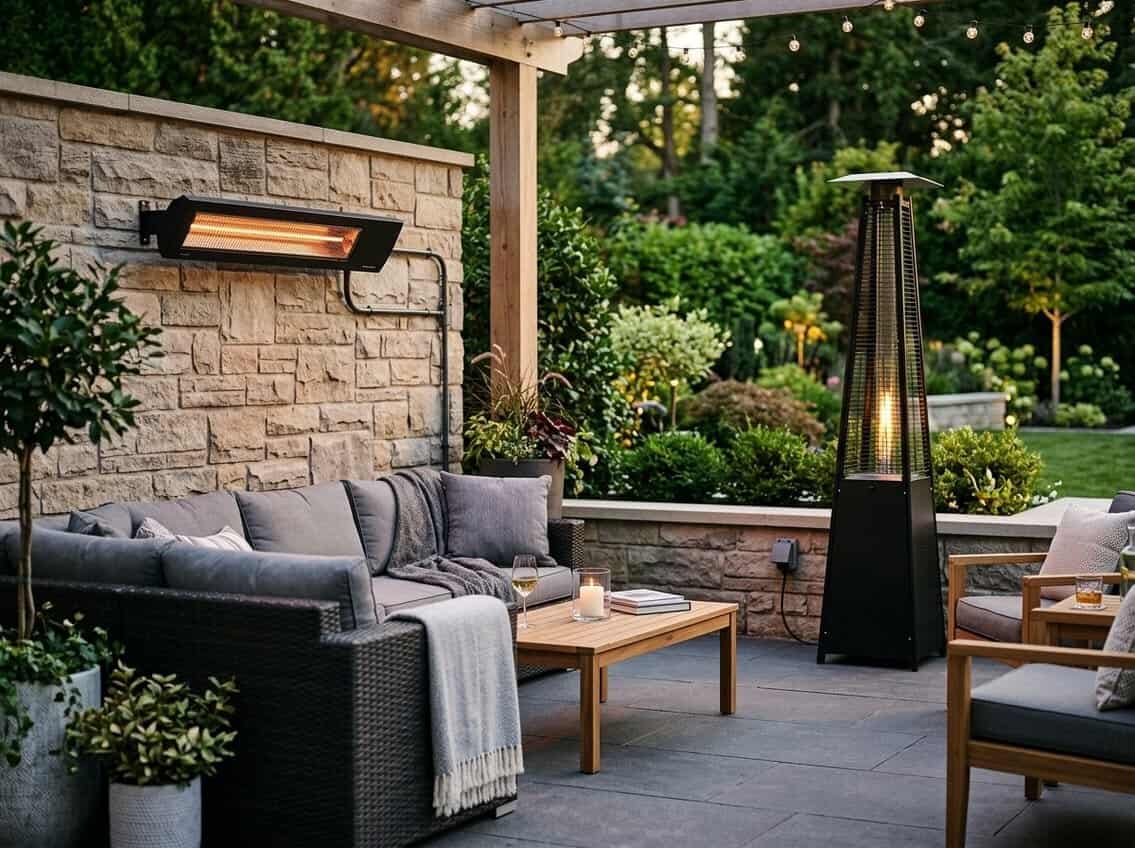
Proper heater placement affects both heating efficiency and safety in outdoor spaces. Electric models require specific mounting heights and clearances, while electrical connections must meet outdoor safety standards.
Optimal Placement for Infrared and Wall Mounted Heaters
Ceiling-mounted electric heaters work best when installed at least 8 feet above the floor surface. This height ensures proper heat distribution while maintaining safe clearances. The Dr. Infrared portable electric model 1500W Electric Patio Heater performs well at standard mounting heights for covered patios.
Wall mounted patio heater units need different positioning. These heaters should be placed at least 6 feet above the floor and angled between 15-45 degrees depending on the model. The Dr. Infrared DR-239 Electric Patio Heater offers adjustable mounting brackets for optimal heat direction.
Infrared patio heater models like the Bromic Tungsten Smart-Heat Electric Patio Heater deliver directional heat that works best when aimed at seating areas. Wall-mounting heaters on walls or structures requires support for loads between 16-22 pounds.
Freestanding models such as the Nfccra Tower Electric Patio Heater need 3 feet of clearance on all sides. Keep any electric outdoor heater at least 5 feet away from combustible materials including awnings, umbrellas, and furniture.
Outdoor Electrical Safety Tips
All electric outdoor heater installations require GFCI-protected outlets rated for outdoor use. These outlets prevent electrical shock in wet conditions. Standard indoor outlets lack proper weatherproofing and create serious hazards.
Extension cords should never be used with patio heaters. Direct outlet connection prevents voltage drops and overheating risks. If an outlet location isn’t convenient, a licensed electrician should install a new weatherproof receptacle.
Check the heater’s amp rating before plugging it in. Most 1500W models draw 12.5 amps, while 3000W units need dedicated 20-amp circuits. Overloaded circuits trip breakers or cause fire hazards.
Inspect power cords for damage before each use. Frayed wires or cracked insulation require immediate replacement. Store heaters indoors during extreme weather to protect electrical components from moisture damage.
Maintenance and Longevity of Electric Patio Heaters
Regular cleaning and proper storage extend the life of electric patio heaters, while knowing how to address common problems keeps them running efficiently through many seasons.
Routine Cleaning and Storage Recommendations
Electric patio heaters need cleaning every few weeks during active use to maintain peak performance. Dust and debris accumulate on heating elements and reflectors, reducing heat output by up to 20 percent over time.
Before cleaning, unplug the unit and let it cool completely. Wipe down the exterior with a damp cloth and mild soap. For heating elements, use a soft brush or compressed air to remove dust buildup. The reflector panels on models like the Dr. Infrared portable electric model 1500W Electric Patio Heater should be cleaned with a non-abrasive cleaner to maintain their reflective properties.
Store electric outdoor heaters indoors during extended periods of non-use. Even weather-resistant models benefit from indoor storage. Remove any detachable parts and clean them separately. For wall mounted patio heater units like the Bromic Tungsten Smart-Heat Electric Patio Heater, cover the heating element with a protective cover if indoor storage isn’t possible.
Check power cords for fraying or damage before each season. Replace damaged cords immediately to prevent safety hazards.
Troubleshooting Common Issues
Most electric patio heater problems stem from three common causes: power supply issues, overheating protection activation, or faulty heating elements.
If the heater won’t turn on, check the outlet with another device and inspect the circuit breaker. Models like the Nfccra Tower Electric Patio Heater have built-in circuit protection that may need resetting after a power surge.
When a heater shuts off unexpectedly, the automatic overheat protection likely activated. Let the unit cool for 30 minutes before restarting. Clean any blocked vents or air intakes that may cause overheating.
Uneven heating often indicates a dirty heating element or reflector. Follow the cleaning steps above to restore full performance. If the Dr. Infrared DR-239 Electric Patio Heater produces less heat after cleaning, the heating element may need replacement.
Remote controls that stop working usually just need fresh batteries. If problems persist, try resetting the unit by unplugging it for 60 seconds.
Frequently Asked Questions
Electric patio heaters require matching wattage to space size, prioritizing IP ratings for weather protection, and selecting mounting styles based on available space. Most patios need 1500W units for 100-150 square feet, while screened porches work well with standard 110-volt models.
How do you choose the right electric patio heater for your outdoor space?
The right electric patio heater depends on coverage area, mounting options, and exposure to weather. A small patio under 100 square feet works well with compact tower models, while larger areas benefit from oscillating units or multiple fixed heaters.
Wall-mounted heaters save floor space and work best for permanent installations. Freestanding models offer flexibility for renters or people who rearrange furniture frequently.
Consider whether the heater will sit under a roof or face direct rain. Testing shows that IPX5 ratings handle rain while IP65 ratings withstand pressure washing, making them better for fully exposed locations.
What wattage and heat output do you need to warm a typical patio area effectively?
Most residential patios require 1500W heaters to maintain comfortable temperatures in cool weather. This wattage effectively heats 100-150 square feet in calm conditions.
The Dr. Infrared portable electric model 1500W Electric Patio Heater delivers sufficient output for standard outdoor seating areas. Larger spaces may need multiple units or higher wattage commercial models like the Bromic Tungsten Smart-Heat Electric Patio Heater.
Oscillating heaters extend coverage to 200+ square feet by distributing heat across a wider pattern. The Nfccra Tower Electric Patio Heater uses this approach to eliminate cold spots in social seating arrangements.
Which safety features matter most for outdoor electric patio heaters?
Tip-over switches and overheat protection are essential safety features for any outdoor heater. These mechanisms shut off power within seconds if the unit falls or internal components exceed safe temperatures.
ETL or UL certification indicates the heater passed independent safety testing. Look for automatic shutoff that triggers within 30 seconds of tipping and heating elements that cool quickly after power loss.
Grounded plugs and waterproof ratings prevent electrical hazards in wet conditions. The Dr. Infrared DR-239 Electric Patio Heater includes multiple safety certifications suitable for family environments with children or pets.
Are wall-mounted or ceiling-mounted electric patio heaters better than freestanding models?
Wall-mounted and ceiling-mounted heaters work better for permanent installations where floor space is limited. They eliminate tripping hazards and provide consistent heat distribution from elevated positions.
Freestanding models offer portability for people who move between different outdoor areas or cannot drill into rental properties. Tower designs fit between furniture and allow easy repositioning based on seating arrangements.
Wall mounts require drilling but eliminate tip-over risks in high-traffic areas. Installation typically takes 30 minutes with basic tools and stud mounting or toggle bolts for secure attachment.
What should you look for in a weatherproof electric patio heater for year-round outdoor use?
The IP rating determines how well a heater withstands weather exposure. The first digit indicates dust protection while the second digit shows water resistance levels.
IPX4 handles splashing water from any direction. IPX5 withstands water jets and works for covered patios. IP65 provides complete dust protection plus resistance to low-pressure water jets.
IP65-rated models survive pressure washing and year-round exposure to rain, making them ideal for uncovered decks. Corrosion-resistant materials like powder-coated aluminum extend lifespan in humid climates.
Can a 110-volt outdoor electric heater provide enough heat for a screened porch?
A 110-volt heater running at 1500W provides adequate warmth for most screened porches. The enclosed nature of screened spaces helps retain heat better than fully open patios.
Standard household circuits supply 110-120 volts, making these heaters simple to install without electrical upgrades. A 1500W heater draws 12.5 amps, which most 15-amp circuits handle without issues.
Infrared models work particularly well in screened porches because they heat objects and people directly rather than warming air that escapes through screen openings. Avoid running other high-draw appliances on the same circuit to prevent breaker trips during operation.
Will Montgomery brings an engineer’s eye and hands-on experience with electric infrared heaters to pick the best of 2026 — judged on warmth, coverage, and running cost — so you get one that actually keeps you warm.