

This post contains affiliate links. We may earn a commission if you purchase through our links, at no extra cost to you.
Quick Answer: How to Hang Outdoor String Lights With No Trees
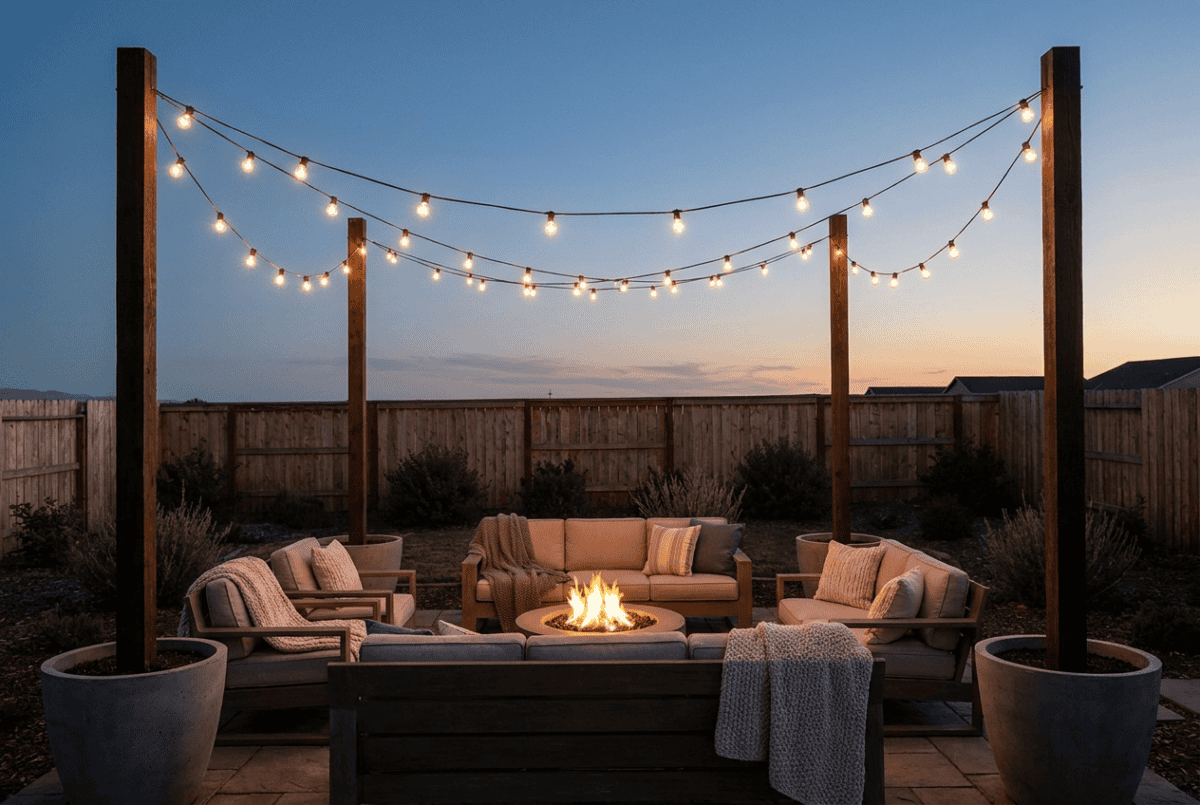
To hang outdoor string lights without trees, create your own anchor points: mount tall poles in planters, umbrella stands, or a deck railing, and run a stainless steel guide wire between them for the lights to hang from. For renters or no-drill setups, use these no-damage options — poles in weighted planter buckets, adhesive utility hooks on walls and posts, gutter or fence clips, and tension between existing structures. Always hang the wire first, then clip the lights to it so they stay straight and take the strain off the bulbs.
Last Updated: July 2026 | Will Montgomery has spent years hanging outdoor string lights across patios, pergolas, and open yards with no trees to rely on.
What You’ll Need
The secret to string lights that look professional and stay up is a support wire — the lights themselves shouldn’t carry the tension. Here’s the basic kit:
- String lights — outdoor-rated (wet or damp per your setup), enough length plus 10–15% slack.
- Stainless steel guide wire (or vinyl-coated cable) to span between anchor points.
- Anchor hardware — screw hooks and turnbuckles for a permanent install, or adhesive hooks, clips, and poles for no-drill.
- Poles or stands if you have no walls or posts — 8–10 ft poles set in planters, umbrella bases, or railing mounts.
- Zip ties or light clips to attach the string to the guide wire.
How to Hang String Lights Without Trees (Step by Step)
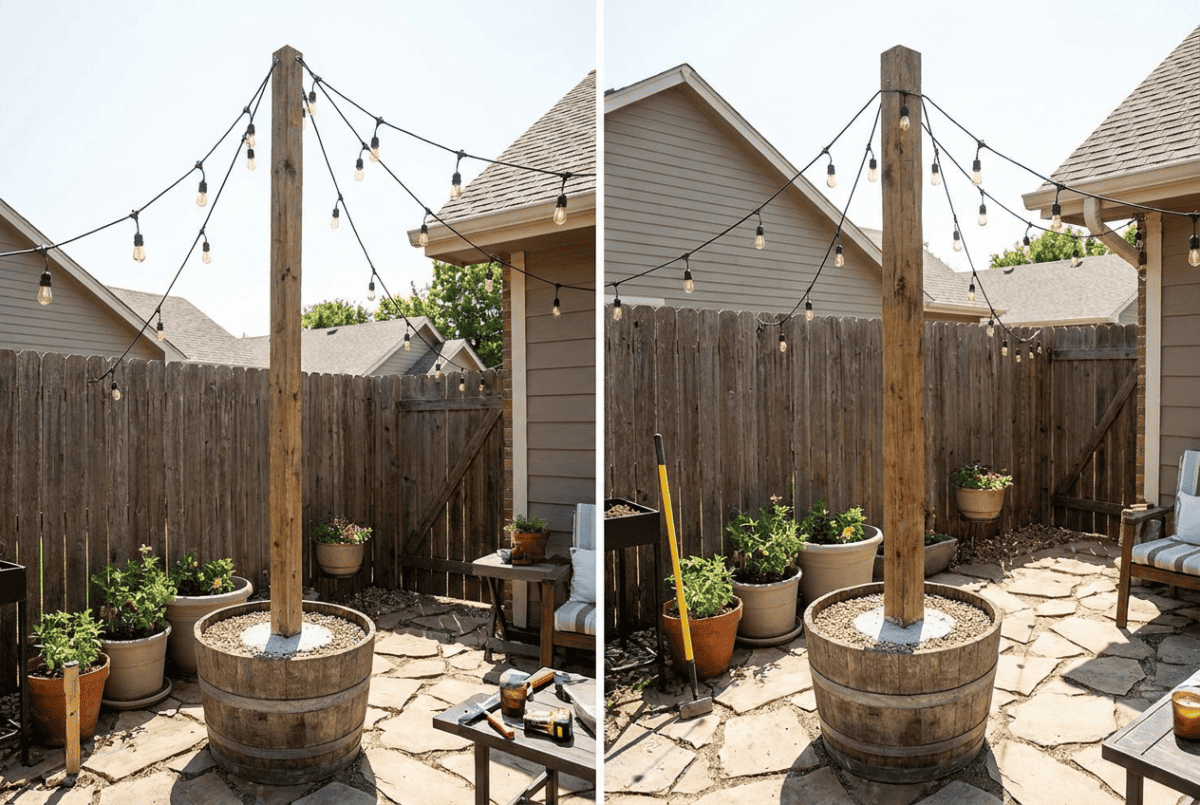
From experience: I always have something to wrap lights around, but my son didn’t — so he built his own posts and it came out great. He bought big plastic planters (his were from Sam’s Club), stood a 4×4 post in each one, and filled it with mixed concrete — a bag of Sakrete or Quikrete from Home Depot or Lowe’s — to lock the post in. Eight-foot 4x4s were all he needed, spaced about 10–15 feet apart. He screwed small eyelet hooks near the top of each post and strung the lights across like normal — the 120-volt kind you run a cord to and plug in. Two nice bonuses: you can plant real or fake flowers around the top of the concrete to dress up the base, and because the posts aren’t sunk into the ground, you can slide them around to get the spacing right and take up any slack — so you’re never fighting the exact length of your light string.
- Plan your layout. Decide where the lights will span — straight across, zig-zag, or around the perimeter. Mark your anchor points and measure so you buy enough string plus slack.
- Create anchor points. No trees means making your own: mount poles in weighted planters or umbrella stands, attach railing-mount pole holders to a deck, or fix hooks to the house wall, a fence, or a pergola. You want a solid anchor at each end and at any turn.
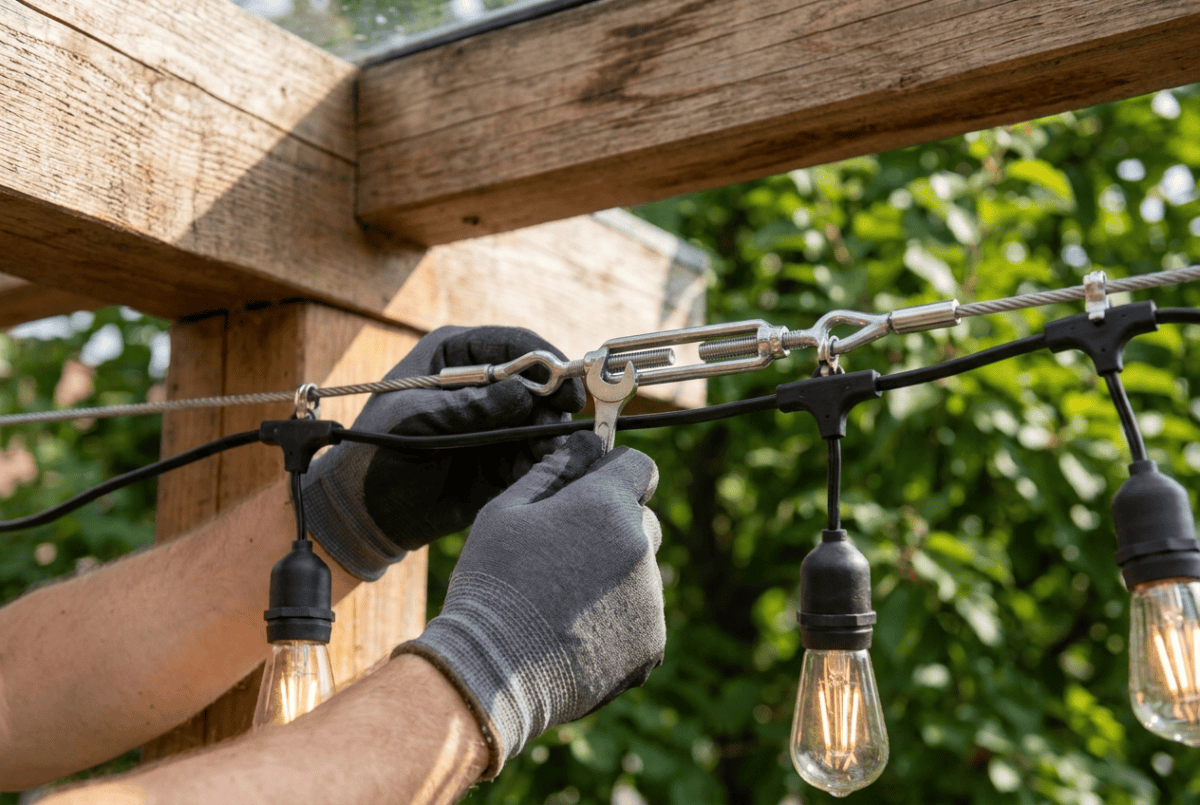
- Run a guide wire. String stainless steel cable between your anchors and pull it taut with a turnbuckle. This wire — not the lights — carries the load, so your bulbs won’t sag or strain.
- Add gentle slack. A slight, even droop (about 10–15% more length than the straight-line distance) looks intentional and relieves tension. Too tight looks stiff; too loose looks messy.
- Attach the lights to the wire. Clip or zip-tie the string to the guide wire every foot or so, following its curve. Work from one anchor to the other so the bulbs stay evenly spaced.
- Plug in and secure the excess. Route the cord to a GFCI-protected outlet, coil and tie off any extra length, and put the lights on a timer or smart plug so they come on at dusk.
No-Drill and Renter-Friendly Options
If you can’t drill into walls or posts, you have several no-damage ways to hang string lights:
- Poles in planters. Set 8–10 ft poles into large planters filled with concrete, sand, or gravel (or a dedicated planter-pole base). Movable, no holes, and they double as garden features.
- Umbrella stands. A heavy patio umbrella base holds a pole perfectly — a cheap, sturdy anchor you may already own.
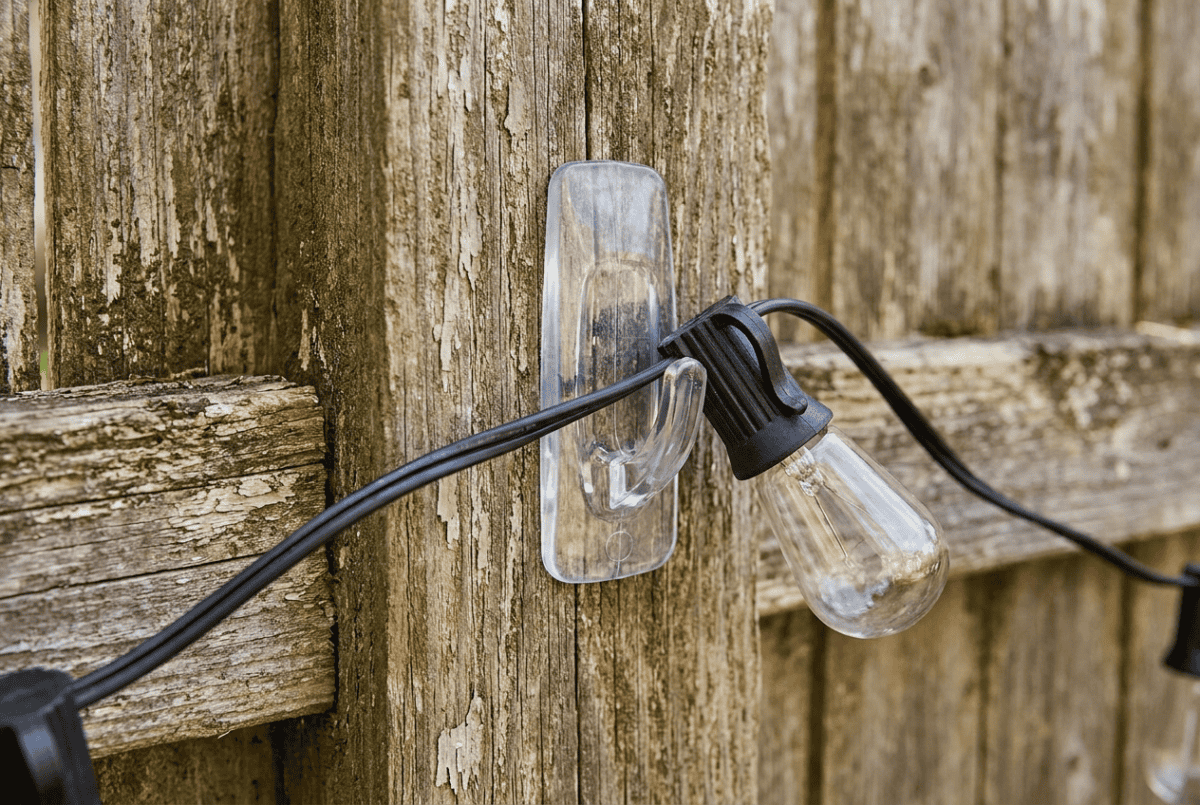
- Adhesive utility hooks. Outdoor-rated stick-on hooks hold light strings on walls, posts, and soffits without a single hole. Choose ones rated for the weight and clean the surface first.
- Gutter and fence clips. Snap-on gutter hooks and fence clips give you anchor points along the roofline or fence with zero tools.
- Railing mounts. Clamp-on pole holders attach to a deck railing and hold a vertical pole — ideal for renters who can’t touch the structure.
These are the same tricks we recommend throughout our lighting coverage. For the bigger plan, see the backyard lighting complete guide and our backyard lighting ideas.
Tips for String Lights That Last
A few details separate lights that survive a season from lights that don’t. Use outdoor-rated strings and match the rating to exposure — wet-rated for open spans, damp-rated under cover. Leave that gentle slack so wind and temperature swings don’t snap a taut line. Connect no more strings end-to-end than the manufacturer allows, or you’ll overload the first plug. And put everything on a GFCI outlet with a timer. If bugs are a concern near your seating, our guides on whether string lights attract bugs and bug-friendly bulb colors can help you choose the right bulbs.
Frequently Asked Questions
How do you hang string lights outside without trees?
Create your own anchor points. Set 8–10 foot poles into weighted planters or umbrella stands, or mount pole holders to a deck railing, then run a taut stainless steel guide wire between them and clip the lights to the wire. This gives you sturdy support anywhere, even in the middle of an open patio with nothing to attach to.
How do you hang string lights without drilling holes?
Use no-damage anchors: outdoor adhesive utility hooks on walls and posts, snap-on gutter or fence clips along the roofline or fence, and poles set in planters or umbrella bases for open areas. Railing-mount pole holders also work for renters, giving you a solid anchor without touching the structure.
Do you need a wire to hang string lights?
For any span longer than a few feet, yes — a stainless steel guide wire is strongly recommended. It carries the tension so the light string and bulbs don’t sag or strain, keeps the line straight, and lets you add the right amount of decorative slack. Hang the wire first, then clip the lights to it.
How much slack should string lights have?
Aim for a gentle, even droop of about 10–15% more length than the straight-line distance between anchors. That relaxed curve looks intentional and, more importantly, relieves tension so wind and temperature changes don’t stress the wire or bulbs. Pulling the line drum-tight is the most common mistake.
Can string lights get rained on?
Outdoor-rated string lights can, but match the rating to the exposure. Use wet-rated lights for open spans exposed to rain and damp-rated lights only under cover like a pergola or porch roof. Always plug them into a GFCI-protected outlet, and never use indoor-only string lights outside.
Key Takeaways
- No trees? Make anchor points — poles in planters or umbrella stands, railing mounts, or wall hooks.
- Run a taut stainless guide wire and clip the lights to it — the wire carries the load, not the bulbs.
- Leave a 10–15% gentle droop for looks and to relieve tension.
- No-drill options: adhesive hooks, gutter/fence clips, planter poles.
- Use outdoor-rated lights on a GFCI outlet with a timer.
Written by Will Montgomery for Outdoor Space Accents. Always use outdoor-rated lights and GFCI-protected outlets, and follow the manufacturer’s limit on connected strings.
Will Montgomery draws on hands-on outdoor-lighting experience to show how to hang string lights without trees — the poles, wire, and anchors that hold — so you get a pro-looking canopy on any patio.