

This post contains affiliate links. We may earn a commission if you purchase through our links, at no extra cost to you.
Quick Answer: What Is Backyard Lighting?
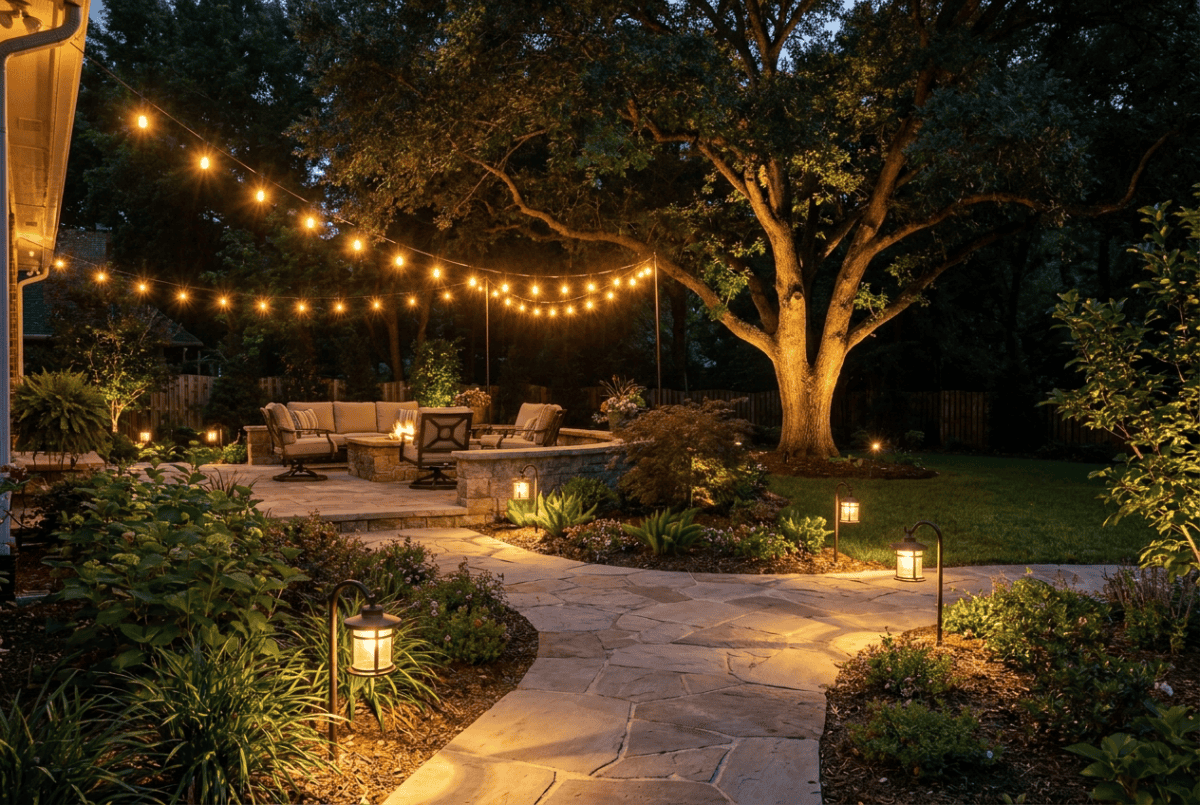
Backyard lighting is the layered use of outdoor light — ambient, task, and accent — to make a yard usable and beautiful after dark. Good backyard lighting combines three layers: ambient light (string lights, post lights) for overall glow, task light (path and step lights) for safe walking, and accent light (spotlights, uplighting) to highlight trees, features, and architecture. You can power it with solar, low-voltage wired, or standard-voltage systems. The secret to a professional look is layering several soft sources rather than one bright floodlight.
This is the hub for everything we cover on outdoor lighting at Outdoor Space Accents: the layers, the fixture types, solar vs. wired, how bright to go, safety, and ideas by area. Each section links to a deeper guide.
Last Updated: July 2026 | Will Montgomery has spent years planning and installing backyard and landscape lighting setups.
The Three Layers of Backyard Lighting
Professional landscape designers never rely on a single light. They build in three layers, and copying that structure is the fastest way to make a yard look intentional instead of harsh.
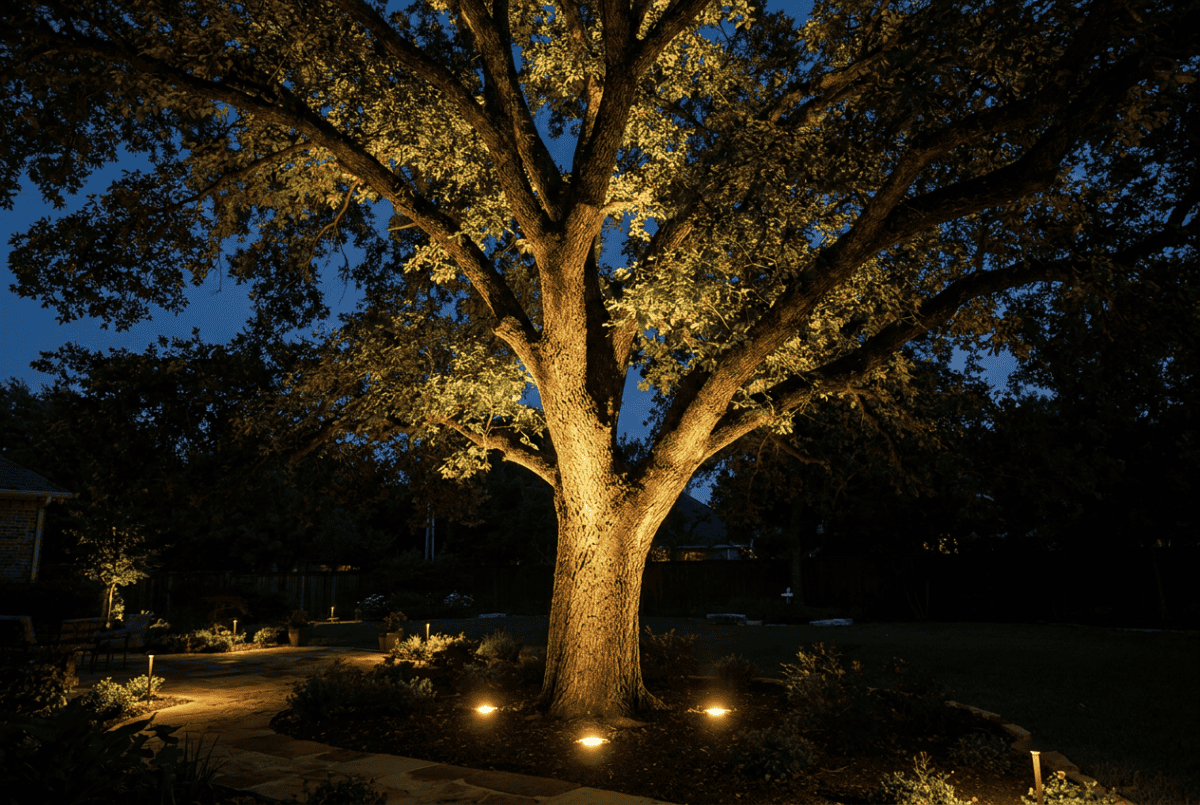
Ambient lighting is the base glow that fills the space — string lights over a patio, post lights, or a few well-placed lanterns. It sets the mood and lets people see each other’s faces. Task lighting is functional: path lights along a walkway, step lights on stairs, and brighter light near a grill or outdoor kitchen so you can work safely. Accent lighting is the drama — uplighting a tree, grazing a stone wall, or spotlighting a water feature to create depth and focal points. Layer all three and even a small yard feels designed. For a room-by-room walkthrough of ideas, see our backyard lighting ideas guide.
Types of Backyard Lighting Fixtures
String lights
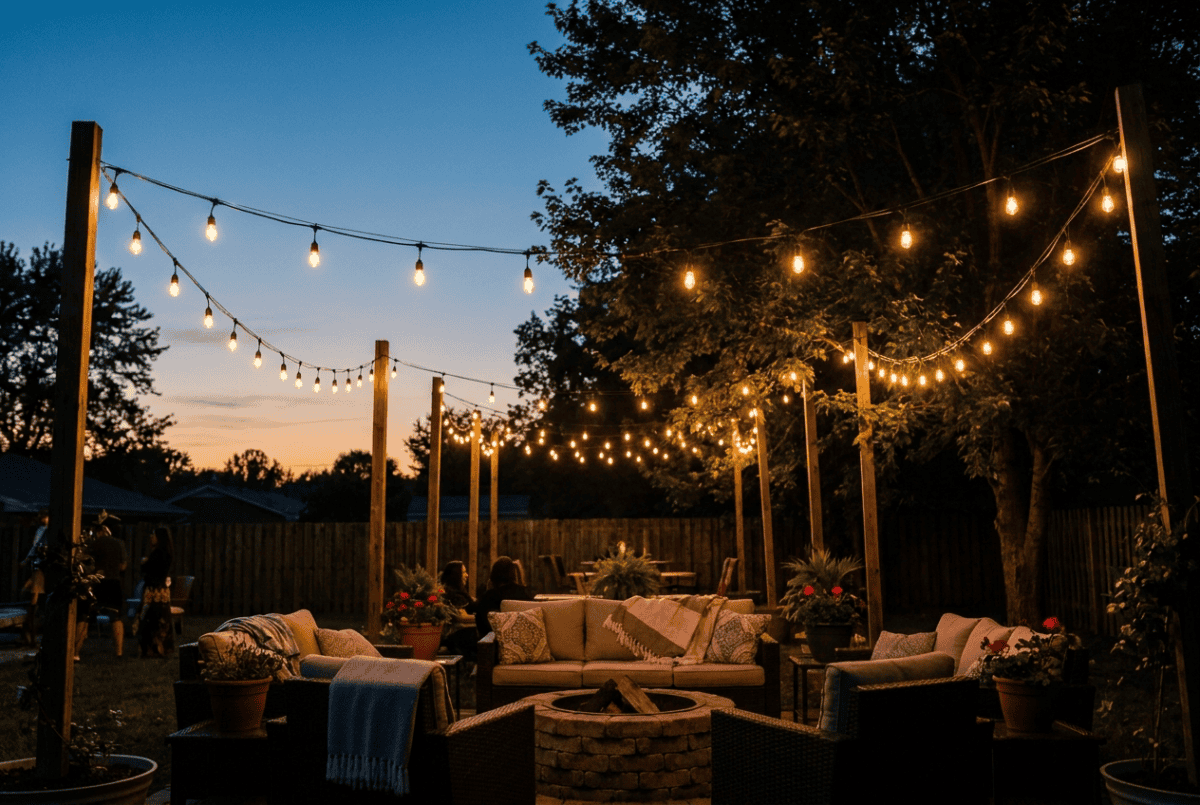
The workhorse of ambient patio lighting — warm, cafe-style bulbs strung overhead for instant atmosphere. They’re the single highest-impact upgrade for a patio. If you have no trees or posts to hang them from, we cover the fix in how to hang outdoor string lights. If you want that ambiance year-round without restringing anything, permanent RGBIC lighting is the upgrade path — see our guide to whether permanent RGBIC lights are worth it versus string lights.
Path and walkway lights
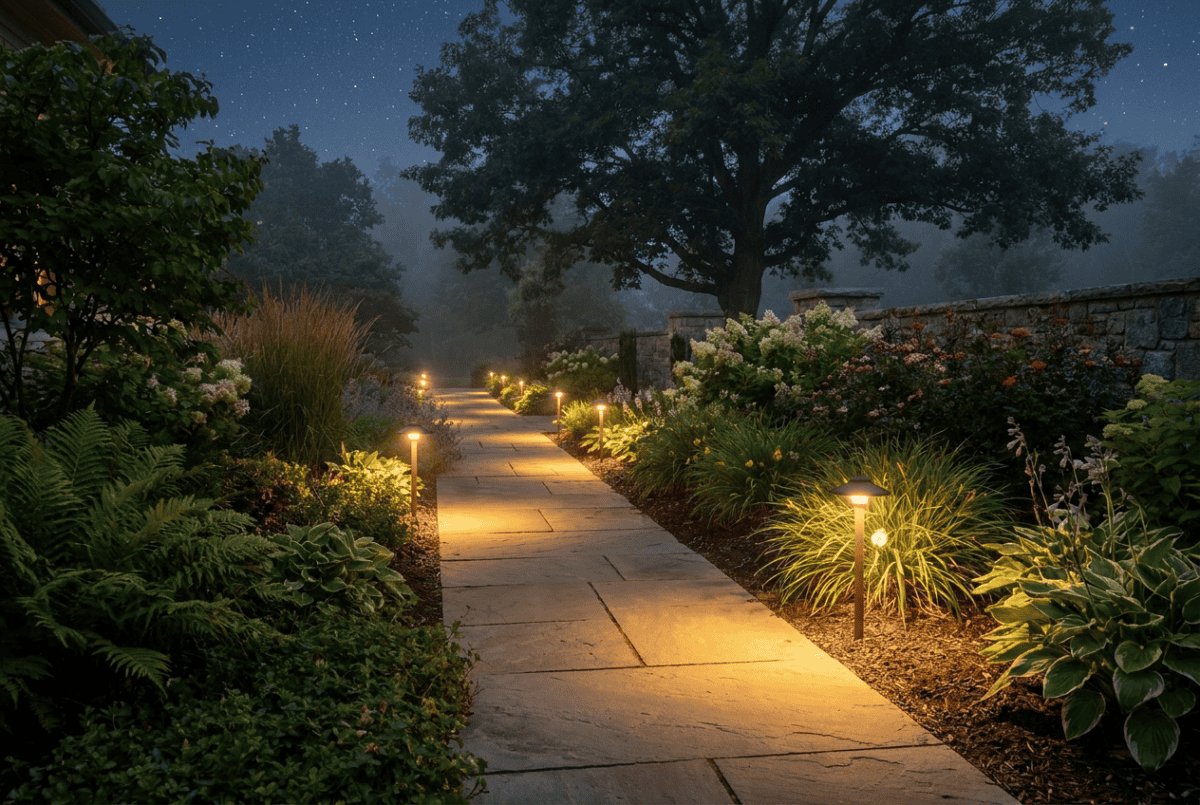
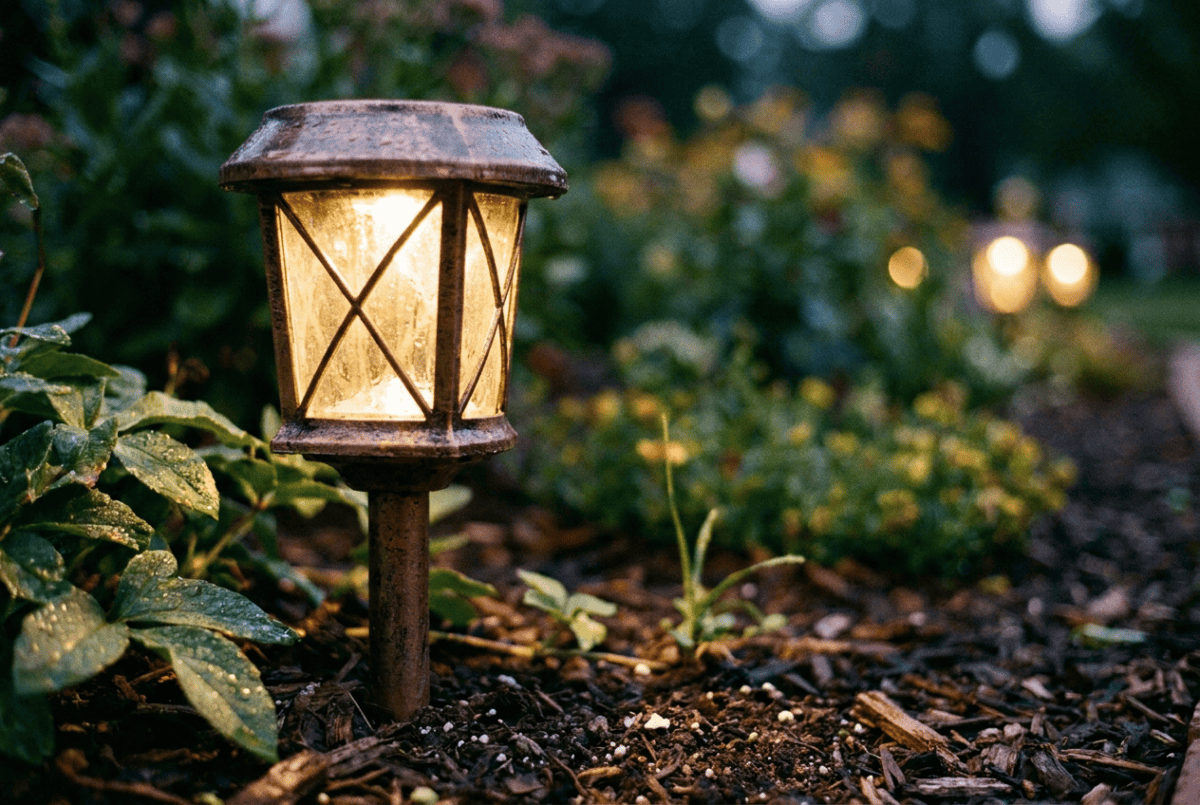
Low fixtures that line walkways and garden beds for safe footing and a welcoming look. Solar path lights are the easiest entry point; wired low-voltage kits are brighter and more reliable.
Spotlights and uplighting
Directional fixtures aimed up at trees, walls, or architecture to create accent and depth. This is what makes a yard look like a hotel courtyard rather than a parking lot.
Deck and step lights
Small recessed or surface-mounted lights built into stairs, railings, and deck posts for safety and a polished finish. We break down all three deck lighting types — post cap, stair riser, and recessed — with real costs in our deck lighting guide.
Solar and security lighting
Solar lights need no wiring and install in minutes; motion-sensor security lights cover entries and dark corners. Both have their place in a complete plan.
Solar vs. Wired Low-Voltage Lighting
From experience: For landscape lighting I lean solar, since we get sun a big part of the day. I like that you just mount them on a fence or stick them in the ground — no wires to run or bury — and when one quits, you pop it out and replace it.
The biggest decision is how you power it. Solar lights are the simplest — no wiring, no running cost, and you can move them anytime — but they’re dimmer, depend on sun exposure, and fade as batteries age. Low-voltage wired systems (12-volt, run off a transformer) are brighter, more consistent, and last for years, at the cost of a more involved install. As a rule: use solar for quick accent and path lighting in sunny spots, and low-voltage wired for permanent, reliable ambient and accent lighting you want to look great every night. Our best solar lights for backyard guide covers the solar picks worth buying.
How Bright Should Backyard Lighting Be?
Outdoor lighting is about atmosphere, not floodlighting, so less is usually more. As rough targets: path lights need only about 20–40 lumens each to mark a walkway; string and ambient lights work well around 40–100 lumens per bulb; accent spotlights for trees run 50–300 lumens depending on the size of what you’re lighting; and a task area like a grill wants a brighter 100–300+ lumens. Warm white (2700K) light flatters a yard and feels inviting, while cooler light reads harsh outdoors. The most common mistake is going too bright and washing out the ambiance you were trying to create.
Backyard Lighting Safety
Outdoor lighting mixes electricity and weather, so a few rules matter. Use only fixtures and bulbs rated for outdoor use, and match the rating to the exposure — damp-rated for covered areas, wet-rated for anywhere exposed to rain. We break down the difference in wet or damp rated outdoor lights. Plug outdoor lighting into GFCI-protected outlets, keep low-voltage transformers off the ground and out of standing water, and don’t overload a circuit. If you’re running landscape lighting into wet soil, our guide on whether landscape lighting is safe from shock covers the grounding and burial basics.
Common String Light Questions
From experience: For string lights I like the normal plug-into-the-wall AC kind — LED with plastic bulbs, safe, and you buy them in lengths like 25 or 30 feet and just link more together as you need, since it’s all off the one string. One thing to watch: a lot of the cheap sets are wired like old-time Christmas lights — to save money they run the bulbs in a low-voltage series loop (say ten little 12-volt bulbs in one circuit) instead of full 120-volt bulbs, so the day one bulb burns out, that whole run of ten goes dark. I’d rather pay for the line-voltage LED strings where a dead bulb doesn’t take the rest with it.
String lights generate more questions than any other fixture, so we’ve answered the big ones in their own guides. Wondering if they’ll draw insects? See do patio string lights attract bugs and which bulb colors attract fewer bugs. Want to dim them for mood? Check whether you can use a dimmer on patio string lights. Worried about breakage? We cover whether string light bulbs are plastic or glass.
How to Plan Your Backyard Lighting
Here’s the process we use to light a yard from scratch:
- Map your zones. Walk the yard at dusk and note where you sit, walk, cook, and gather. Those are your lighting targets.
- Start with ambient. Hang string lights or set post lights over the main gathering area first — it delivers the biggest visual payoff.
- Add task lighting for safety. Light every path, step, and level change so no one trips in the dark.
- Layer in accents last. Uplight one or two trees or features to add depth. Resist the urge to light everything.
- Choose your power source per zone. Solar for quick, sunny accents; low-voltage wired for the ambient and accent lighting you want reliable every night.
- Keep it warm and dim-friendly. Use 2700K warm bulbs and put ambient lighting on a dimmer or timer for control.
Frequently Asked Questions
What is the best type of backyard lighting?
Layer several types rather than pick one: ambient string lights for overall glow, path and step lights for safe walking, and a few accent spotlights to highlight trees or features. Layered soft light looks far better than one bright floodlight.
Are solar or wired backyard lights better?
Solar lights are best for easy, no-wiring path and accent lighting in sunny spots, with no running cost. Wired low-voltage lights are brighter, more consistent, and longer-lasting, making them the better choice for permanent ambient and accent lighting. Many yards use both — solar for convenience, wired for reliability.
How many lumens do I need for backyard lighting?
Less than most people expect: path lights need only 20–40 lumens each, string and ambient lights 40–100 lumens per bulb, accent spotlights 50–300, and task areas like a grill over 100. Keep the light warm at 2700K.
Is backyard lighting safe in the rain?
Yes, if you use the right fixtures. Choose wet-rated fixtures for anywhere exposed to rain and damp-rated ones for covered areas, plug into GFCI-protected outlets, and keep transformers out of standing water. Using indoor or unrated lights outdoors is the main safety mistake to avoid.
How do I light a backyard on a budget?
Start with the highest-impact, lowest-cost layer: warm-white string lights over your main seating area. Add a set of solar path lights for safety, and one or two solar spotlights to accent a tree. That three-part combination delivers a designed look for very little money, and you can expand with wired lighting later.
Key Takeaways
- Great backyard lighting layers ambient, task, and accent light.
- Use solar for easy path/accent lighting, low-voltage wired for reliable permanent lighting.
- Keep it warm (2700K) and soft — atmosphere beats brightness.
- Match fixture ratings to exposure: damp-rated covered, wet-rated exposed.
- Start with string lights over the seating area for the biggest payoff.
Written by Will Montgomery for Outdoor Space Accents. This pillar guide is updated as we publish new lighting articles — bookmark it as your starting point.
Will Montgomery brings an engineer’s eye and hands-on experience lighting real backyards, focusing on the layering, brightness, and fixtures that actually transform a space — so you can plan yours without guesswork.