

This post contains affiliate links. We may earn a commission if you purchase through our links, at no extra cost to you.
Quick Answer: Why Your Patio Heater Won’t Stay Lit
If your propane patio heater lights and then shuts off after a few seconds, the cause is almost always a dirty or misaligned thermocouple — the safety sensor that cuts the gas when it doesn’t detect a flame. Other common causes are a low or empty propane tank, a tripped anti-tilt safety switch, air in the gas line after a refill, a clogged pilot orifice, or wind blowing out the pilot. Work through the steps below in order and most heaters are back on within 15 minutes.
Last Updated: July 2026 | Will Montgomery has spent years diagnosing and fixing propane patio heaters that won’t stay lit.
The Most Common Cause: The Thermocouple
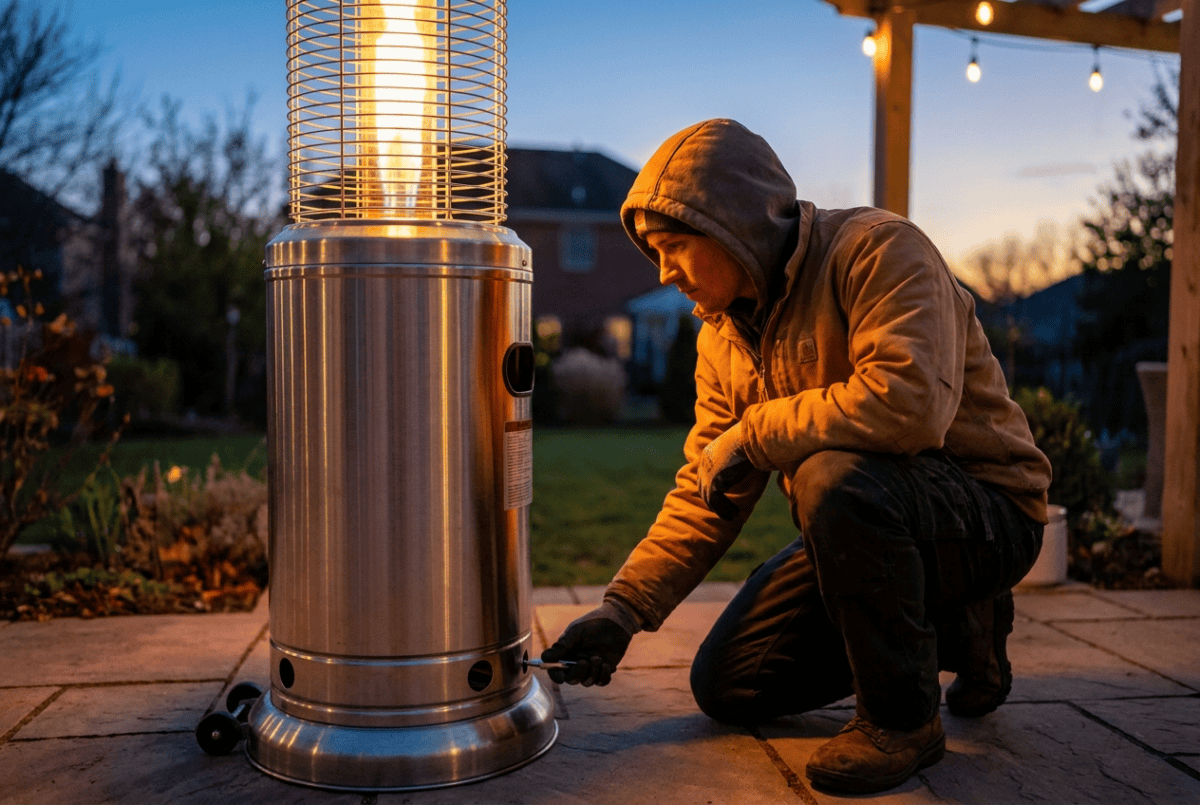
From experience: There are really two different problems here. If it won’t light at all, it’s usually just dirty — carbon and gunk build up around the burner and it needs a cleaning. To get a stubborn one going, you can lift the head up slightly and reach in with a long extended-pole candle lighter, but be careful and light it promptly so gas doesn’t have time to pool; having a second person (one works the knob, one lights it) makes it safer. If it lights but won’t stay lit, that’s almost always the thermocouple. They’re cheap, and they carbon up too, so the easiest first move is to make sure it’s clean and that the flame is actually touching it. Like anything running on propane or natural gas, if the thermocouple thinks the flame is out it safely shuts the gas off on purpose, so gas isn’t left escaping.
Here’s what’s happening when your heater lights but won’t stay lit: you press and hold the control knob, the pilot lights, but the moment you let go, it dies. That release is the tell. While you hold the knob, gas flows manually. When you release it, the heater relies on the thermocouple — a small metal probe sitting in the pilot flame — to confirm a flame is present and keep the gas valve open. If that probe is dirty, bent away from the flame, or worn out, it never gets hot enough to signal “flame is on,” so the safety valve snaps shut and the heater goes out.
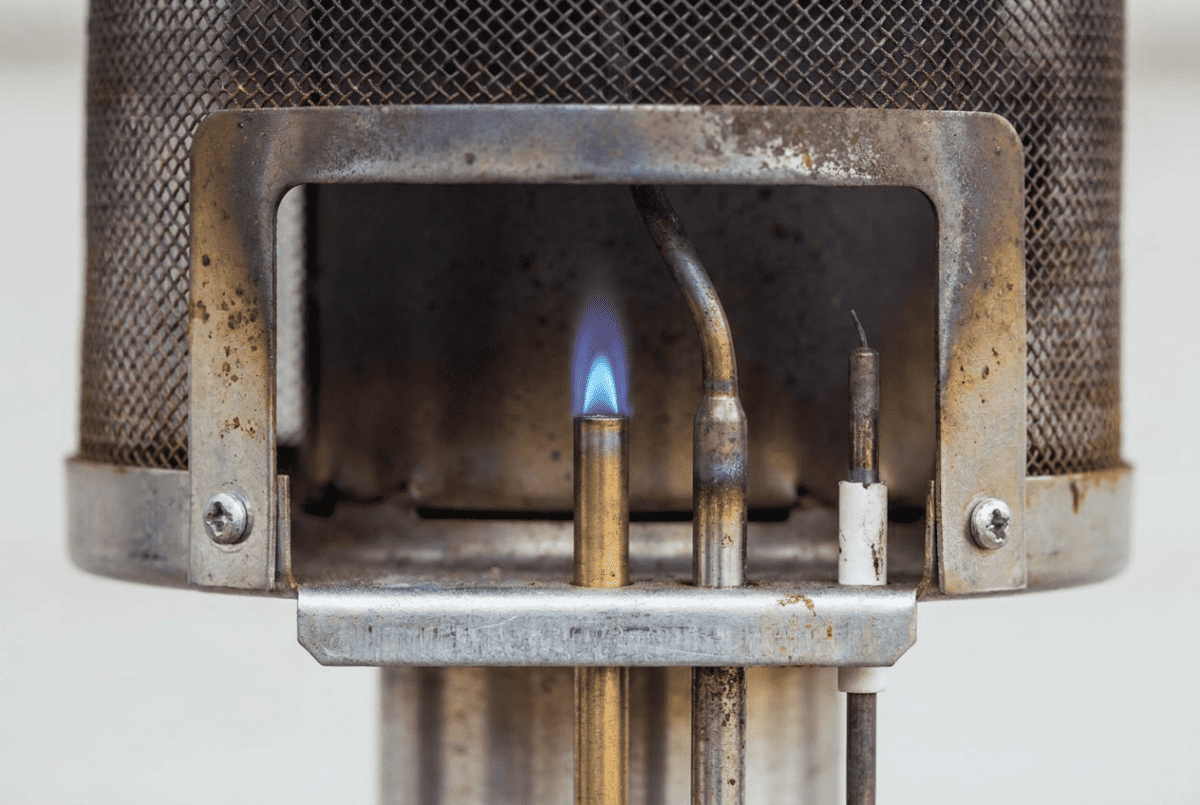
The good news: a dirty thermocouple is the easiest and cheapest fix in the whole category. Our step-by-step how to clean a thermocouple guide walks through it, but the short version is in the steps below.
How to Fix a Patio Heater That Won’t Stay Lit (Step by Step)
Do these in order — stop as soon as the heater stays lit.
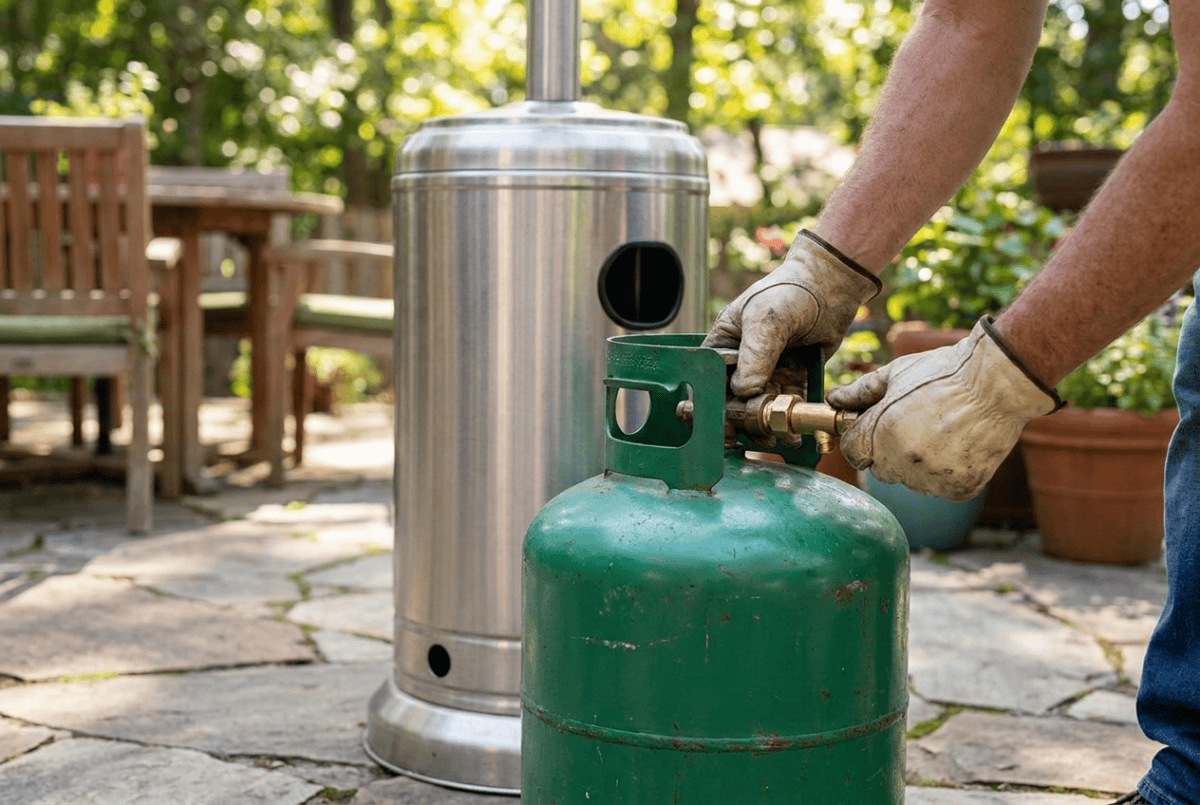
- Check the propane level. A nearly empty tank, or one so full it triggers the overfill valve, can starve the pilot. Swap in a known-good, properly filled tank before anything else. Also confirm the tank valve is fully open.
- Reset the anti-tilt switch. Most heaters have a tip-over safety switch that cuts gas if the unit isn’t upright. Set the heater on level ground and give it a moment — if it was bumped or leaning, it may simply need to sit level and be relit.
- Purge air from the line. After a tank swap, air in the hose makes the pilot sputter and die. Hold the pilot/ignition knob down for a full 30–60 seconds after the pilot lights to push the air through before releasing.
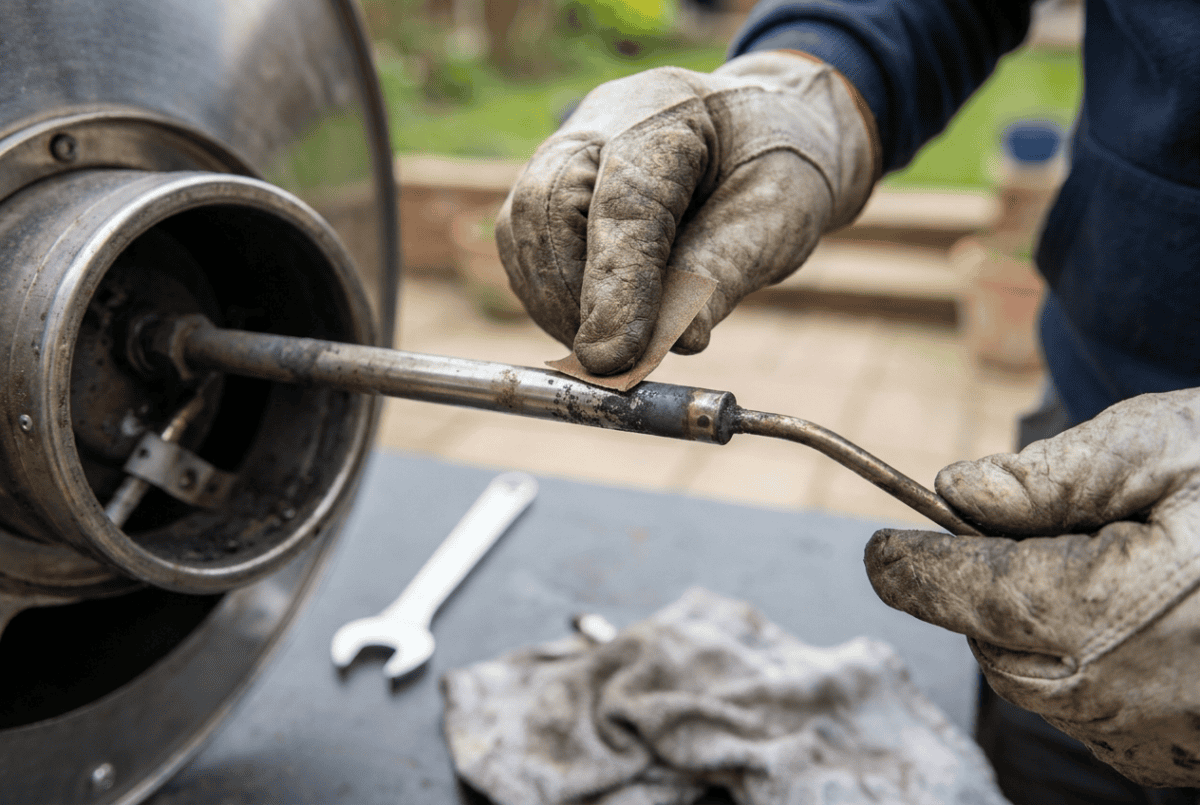
- Clean the thermocouple. Turn off the gas, let it cool, and gently rub the thermocouple tip with fine sandpaper or an emery cloth to remove soot and corrosion. Wipe it clean. This alone fixes most “won’t stay lit” heaters.
- Reposition the thermocouple. The tip must sit in the pilot flame, not beside it. If it’s bent away, carefully nudge it back so the flame wraps around the tip.
- Clear the pilot orifice. A weak, yellow, or flickering pilot suggests a clogged orifice (spiders love these). Clean it with a thin wire or compressed air so the pilot burns a strong, steady blue.
- Block the wind. If it only dies outdoors in a breeze, wind is blowing out the pilot. Move the heater to a sheltered spot or add a windbreak, and try again.
If It Still Won’t Stay Lit
If you’ve cleaned and repositioned the thermocouple and the heater still won’t hold a flame, the thermocouple itself may be worn out — they’re an inexpensive, universal replacement part available online or at hardware stores, and they swap out with a wrench in a few minutes. A persistently weak pilot after cleaning can also point to a failing gas regulator, which is the next part to replace. And if the igniter clicks but won’t spark, you can still get the heater running by lighting it manually — see how to light a patio heater manually with a long lighter.
For a full tune-up and to prevent this next season, our patio heaters explained hub covers maintenance, and patio heater safety tips covers safe relighting. If your unit is old and parts are hard to find, it may be time to browse the best patio heaters.
Frequently Asked Questions
Why does my patio heater turn off after a few seconds?
The usual cause is a dirty or misaligned thermocouple. When you release the control knob, the heater depends on the thermocouple to sense the pilot flame and keep the gas valve open. If it’s coated in soot or bent out of the flame, it never signals “flame present,” and the safety valve shuts the heater off. Cleaning or repositioning it fixes most cases.
How do I know if my thermocouple is bad?
If the pilot lights while you hold the knob but dies every time you release it — even after cleaning the thermocouple tip and confirming it sits in the flame — the thermocouple is likely worn out. It’s a cheap, universal part that replaces in a few minutes with a wrench.
Can a low propane tank cause a patio heater to shut off?
Yes. A nearly empty tank can’t maintain enough pressure to keep the pilot and burner lit, and an overfilled tank can trip its safety valve. Swap in a properly filled tank and make sure the valve is fully open before troubleshooting further.
Why does my patio heater keep going out in the wind?
Wind can blow out the pilot flame, which then trips the thermocouple safety and shuts the heater off. Move the heater to a more sheltered location, add a windbreak or screen, and relight it. This is a placement problem, not a broken heater.
How do I purge air from my patio heater after refilling the tank?
After connecting a fresh tank, open the valve, start the ignition, and hold the pilot knob down for a full 30 to 60 seconds after the pilot catches. This pushes trapped air out of the hose so a steady stream of propane reaches the pilot before you release the knob.
Key Takeaways
- The #1 cause of a heater that won’t stay lit is a dirty or misaligned thermocouple — clean it and make sure it sits in the flame.
- Check the propane level, anti-tilt switch, and air in the line after a refill.
- Hold the pilot knob 30–60 seconds after lighting to purge air.
- A worn thermocouple is a cheap, quick replacement part.
- If it only dies in the breeze, it’s wind — shelter the heater.
Written by Will Montgomery for Outdoor Space Accents. Always turn off the gas and let the heater cool before cleaning or servicing any part.
Will Montgomery brings an engineer’s eye and hands-on repair experience to this troubleshooting guide — the real reasons a patio heater won’t stay lit and how to fix each — so you can get yours running again.