

This post contains affiliate links. We may earn a commission if you purchase through our links, at no extra cost to you.
Quick Answer: The Best Deck Storage Box for 2026
The Rubbermaid Extra-Large 134-Gallon Deck Box is the best all-around deck storage box for 2026. It is durable, weatherproof resin with the capacity to swallow a full set of cushions, pool toys, and yard tools. If you want a box that doubles as a bench, the Suncast 73-Gallon Deck Box with Seat is the better pick, and if you are storing gear on a small patio or balcony, the Suncast 22-Gallon box fits where larger boxes will not.
All five picks below use UV-stabilized resin construction, which is the single biggest factor in whether a deck box survives five winters or cracks after one. We explain why further down, along with the mold and drainage issues that ruin cheaper boxes.
Last updated: August 2026.
Last Updated: August 2026 | Will Montgomery has bought, assembled, and weather-tested resin deck boxes on his own patio through summer storms and winter freezes.
Best Deck Storage Boxes Compared
| Product | Capacity | Material | Doubles as Seating | Best For |
|---|---|---|---|---|
| Rubbermaid Extra-Large Deck Box | 134 gal | Resin | No | Best overall / largest single box |
| Suncast 73-Gallon Deck Box | 73 gal | Resin | Yes | Best value + seating |
| Suncast 22-Gallon Deck Box | 22 gal | Resin | Yes | Small patios and balconies |
| Keter Java XL Deck Box | 230 gal | Resin | No | Largest capacity / whole-yard storage |
| Keter Solana Deck Box | 60 gal | Resin | Yes | Premium fit and finish |
Why a Good Deck Box Matters More Than It Looks
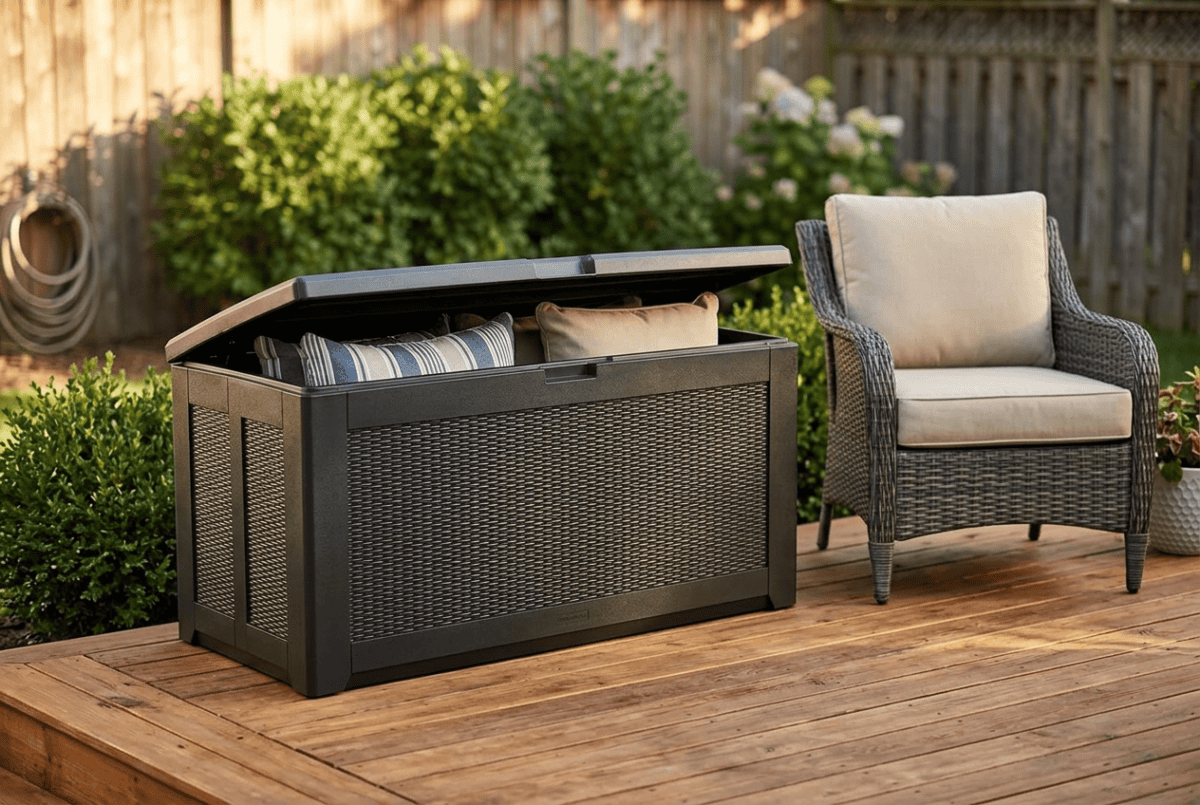
A deck box is the one piece of outdoor storage that is actually outdoors year-round, through rain, snow, and full sun, so the material and drainage design matter more than the price tag. Cheap boxes crack within a season, and even good ones develop mold at the base if they do not ventilate or drain properly. Every box below uses UV-stabilized resin, which resists cracking, fading, and rust in a way painted metal and thin plastic cannot. Buyers consistently report the same two failure modes with budget boxes: a lid that warps or cracks after a few freeze-thaw cycles, and mildew that builds up where the box sits flush against wet decking. Both are solvable by paying attention to material and base design, not just capacity and price.
The Best Deck Storage Boxes for 2026
1. Rubbermaid Extra-Large 134-Gallon Deck Box – Best Overall
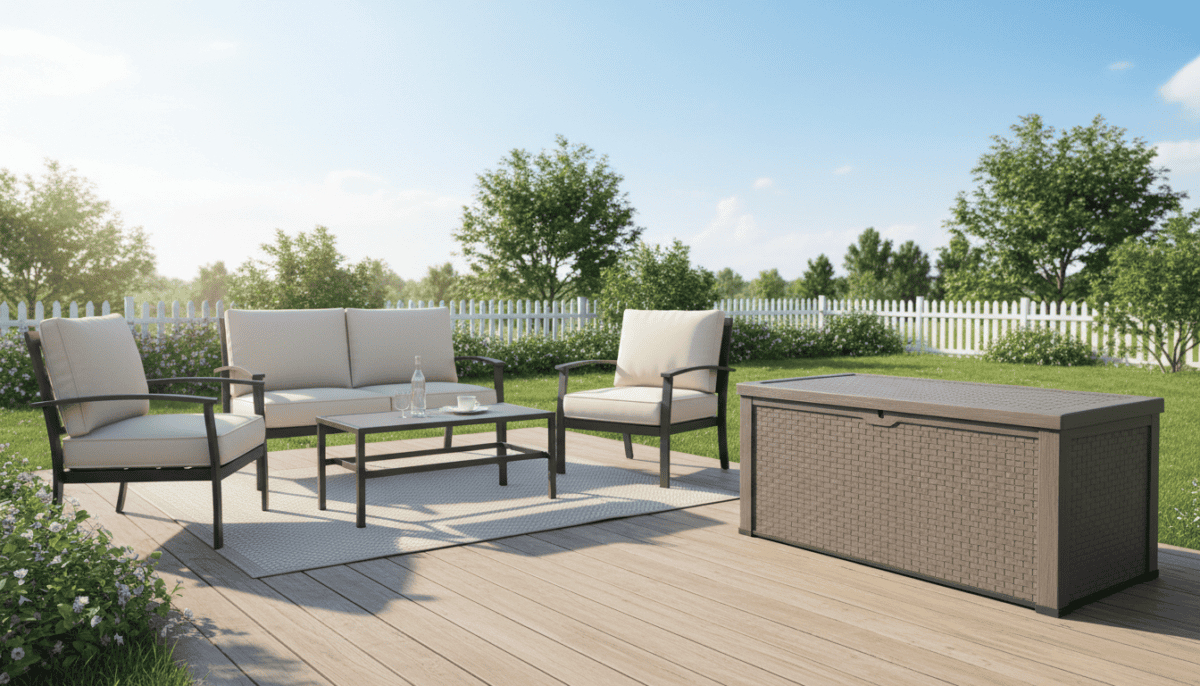
The Rubbermaid Extra-Large is the box we would point most people to first. At 134 gallons, it swallows a full set of patio cushions, garden tools, and pool floats with room to spare, and the weatherproof resin shell keeps everything inside dry through winter storage.
Pros: Huge capacity, weatherproof seal, resin will not rust or rot. Cons: Not designed for seating; large footprint needs real deck space. Check price on Amazon .
.
2. Suncast 73-Gallon Deck Box with Seat – Best Value
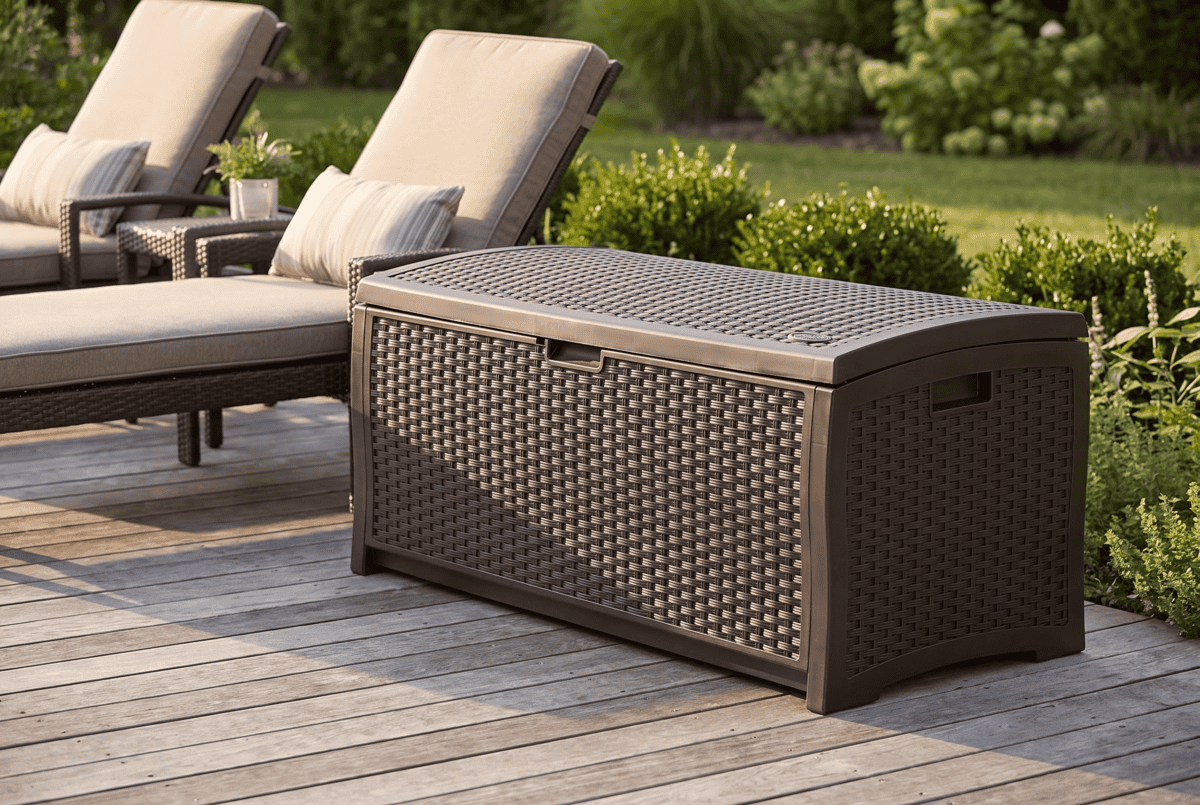
The Suncast 73-gallon box is the best all-around value pick. It holds a solid amount of gear, doubles as extra bench seating for cookouts, and assembles in under 30 minutes without tools.
Pros: Doubles as seating, easy tool-free assembly, strong lid hinge. Cons: Smaller capacity than the Rubbermaid or Keter Java. Check price on Amazon.
3. Suncast 22-Gallon Deck Box – Best for Small Spaces
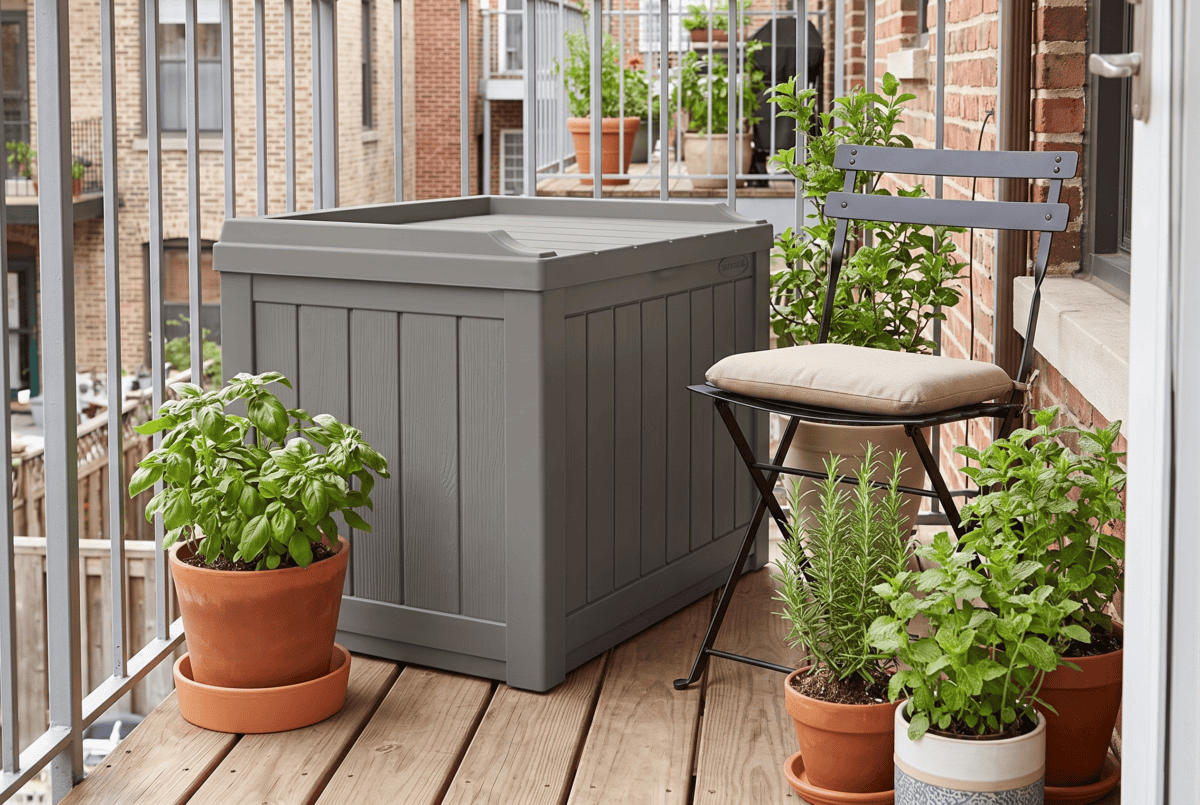
For apartment patios and small balconies, the 22-gallon Suncast is sized to fit where the bigger boxes simply will not. It is compact enough to tuck into a corner and still doubles as a small bench or side table.
Pros: Fits small balconies and patios, lightweight, doubles as a seat or side table. Cons: Limited capacity, cushions for more than one or two chairs will not fit. Check price on Amazon.
4. Keter Java 230-Gallon XL Deck Box – Best for Large-Capacity Storage
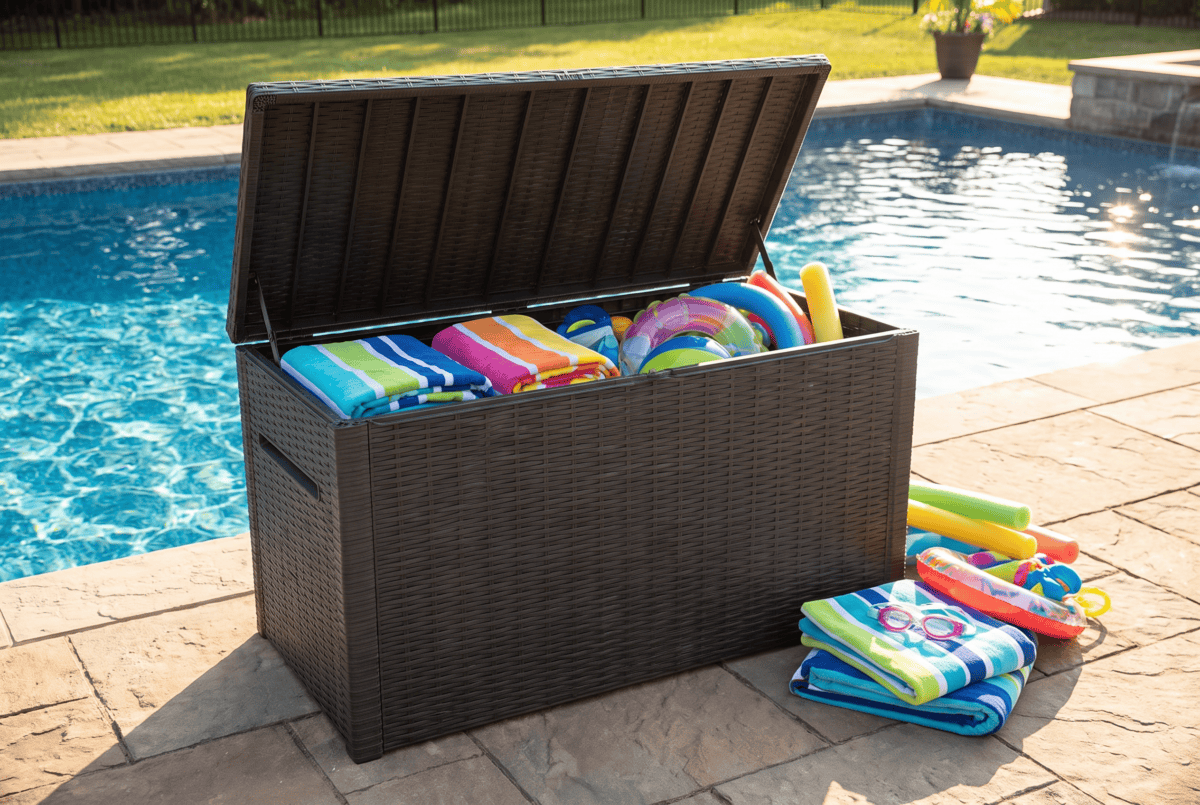
If you are storing gear for a whole backyard, pool equipment, all your cushions, a full set of garden tools, the Keter Java’s 230-gallon capacity is the largest on this list. Budget extra time for assembly; it is a bigger build than the others.
Pros: Largest capacity here, weather-resistant resin, raised base helps drainage. Cons: Assembly takes longer and some buyers report fit issues with the lid hinge. Check price on Amazon.
5. Keter Solana 70-Gallon Deck Box – Best Premium Pick
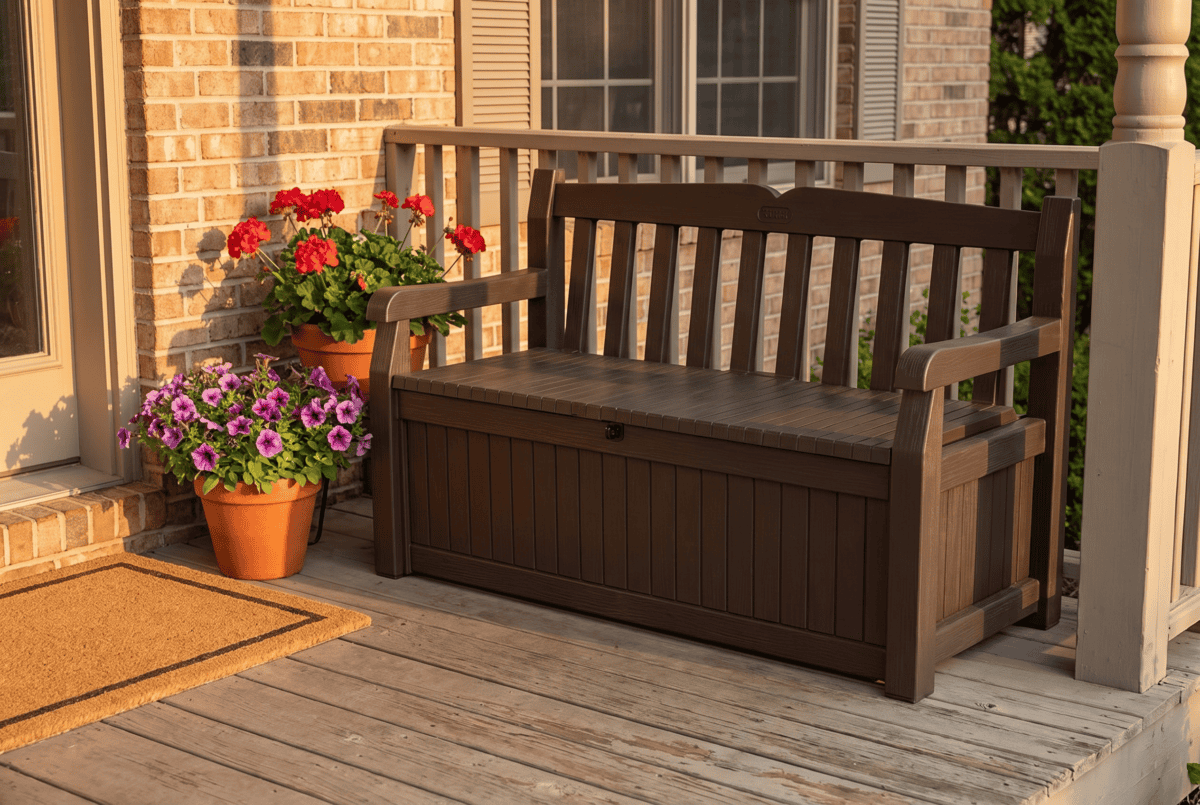
The Keter Solana trades some capacity for the best fit-and-finish on this list: tighter panel seams, a more secure lid, and a look that reads more like furniture than a storage bin.
Pros: Best build quality and finish, doubles as seating, secure locking lid. Cons: Costs more per gallon of storage than the Suncast or Rubbermaid options. Check price on Amazon.
How to Choose a Deck Storage Box
Picking the right deck box comes down to five things, in this order of importance.
- Material first. UV-stabilized resin is the standard. It will not rust like painted metal or crack like thin plastic after a winter outside.
- Check for a raised or ventilated base. Boxes that sit flush on wet decking trap moisture underneath, which is where mold and mildew start. A raised base or drainage channel lets water and air move.
- Match capacity to what you are actually storing. Measure your cushions and tools before you buy; it is the single most common return reason.
- Decide if you need seating. Boxes rated for seating have a reinforced lid. Do not sit on a box that is not rated for it.
- Look at the lid seal. A tight-fitting or gasketed lid keeps rain out far better than a simple flat lid.
Where to Put Your Deck Box
Placement affects both drainage and how long the box lasts. Setting a deck box directly on grass traps moisture and sunlight underneath, which can kill the grass in as little as one to two weeks and also holds moisture against the bottom of the box itself. A paver, a few inches of gravel, or a simple plastic base pad solves both problems at once: it keeps the lawn alive underneath and keeps the box’s own base ventilated. On a wood deck, leave a small gap between the box and the railing or house wall so air can circulate on all sides, and avoid low spots where rainwater naturally pools after a storm.
From experience: We run two big Keter boxes — one at least 150 gallons — and I like them, but they do eat space, and the lids only close right when the box sits dead level. I leveled one on mulch and snuck a board under a corner of the other because our brick patio wasn’t level.
Deck Box Sizing: How Much Capacity Do You Actually Need
Capacity is the number buyers get wrong most often, usually by underestimating how much space cushions actually take up once they are off the furniture. Use this as a rough starting point, then measure your own cushions and gear before you commit to a size.
| What You’re Storing | Recommended Capacity |
|---|---|
| 2-4 chair cushions only | 20-30 gallons |
| Small patio set cushions + a few tools | 40-60 gallons |
| Full patio set cushions + garden tools or pool toys | 60-130 gallons |
| Whole-yard equipment: pool gear, all cushions, tools, toys | 150-230+ gallons |
A common mistake is sizing a box around the furniture set alone and forgetting seasonal extras like pool noodles, garden hoses, or holiday decorations that also need a dry home in the off-season. If you are between two sizes, size up. An oversized deck box is a minor inconvenience; an undersized one means buying a second box within a year.
How to Clean and Maintain a Deck Box
Resin deck boxes need very little upkeep, but the small amount they do need is what determines whether one lasts 3 years or 10.
- Wipe down the interior every few months, especially the bottom corners where condensation and dust settle into a paste over time.
- Check the drainage or ventilation points (if the model has them) at the start of each season and clear out any leaves, dirt, or debris blocking airflow.
- Lubricate the lid hinge once a year with a silicone-based spray, not oil-based, which can attract dust and gum up over time.
- Avoid pressure-washing directly at the seams. A garden hose and a soft brush clean resin just as well without forcing water into joints.
- Elevate the box slightly with a paver or plastic base pad if it does not already have feet, so the bottom panel never sits in standing water.
How much should you spend on a deck box?
Small boxes under 30 gallons typically run $40 to $80. Mid-size 60 to 100 gallon boxes, including most seating models, run $100 to $200. Large 130 to 230+ gallon boxes run $200 to $400 depending on brand and features like locking lids or seating capacity. Paying more within a brand usually buys a tighter seal and reinforced seating, not just extra gallons.
Frequently Asked Questions
What is the best material for an outdoor deck box?
UV-stabilized resin is the best material for a deck box left outside year-round. It resists cracking in cold weather, will not rust like metal, and does not fade as fast as untreated plastic. All five boxes on this list use resin construction.
How do I stop my deck box from getting moldy?
Choose a box with a raised or ventilated base so it does not sit flush on wet decking, and wipe out the inside a few times a season, especially near the bottom edges where condensation collects. Avoid placing the box somewhere it collects standing water after rain.
Can a deck box be left outside all winter?
Yes, resin deck boxes are designed to stay outside year-round, including through snow and freezing temperatures. UV-stabilized resin from brands like Keter, Suncast, and Rubbermaid typically lasts 5 to 10 years before showing real wear.
How big of a deck box do I need?
For a couple of chair cushions and small tools, a 20 to 30 gallon box is enough. For a full patio set’s cushions plus garden tools or pool gear, plan on 60 to 130 gallons, and for whole-yard equipment storage, look at 200-plus gallon options like the Keter Java.
Is it safe to sit on a deck box?
Only if it is specifically rated for seating; most deck box listings will say so directly. Boxes built for seating have a reinforced lid and hinge. Sitting on a non-seating box can crack the lid or damage the hinge over time.
Will a deck box kill the grass underneath it?
Yes, if it sits directly on grass for more than a week or two, the lack of light and trapped moisture will kill the grass beneath it. Setting the box on a paver, gravel pad, or plastic base protects the lawn and improves airflow under the box at the same time.
Key Takeaways
- Best overall: Rubbermaid Extra-Large 134-Gallon Deck Box.
- Best value and seating: Suncast 73-Gallon Deck Box with Seat.
- Best for small spaces: Suncast 22-Gallon Deck Box.
- UV-stabilized resin is the material that actually matters; it is what separates a box that lasts 5-10 years from one that cracks after one winter.
- A raised or ventilated base is the fix for the number one complaint: mold and mildew at the base of the box.
Not sure a deck box solves your space problem? Read our Deck Box Buying Guide for sizing help, or check whether a deck box will kill your grass before you place one directly on the lawn.
Written by Will Montgomery for Outdoor Space Accents.
Will is a hands-on homeowner who has bought, assembled, and weather-tested resin deck boxes on his own patio through summer storms, winter freezes, and one stubbornly unlevel brick patio.