

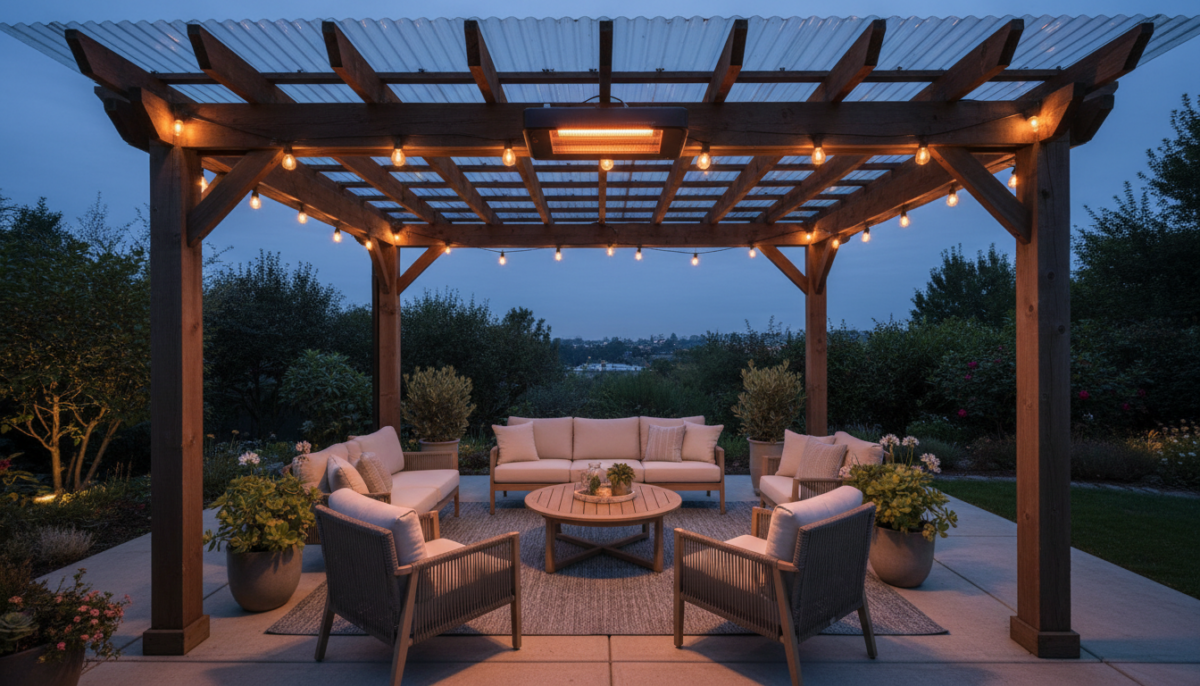
Quick answer: Yes — you can safely use a patio heater under a pergola, awning, or covered patio if you respect the clearances and pick the right type. Electric infrared is the safest choice under any cover because it produces no flame and no fumes. Gas heaters (propane or natural gas) can be used under an open-sided cover with good airflow, but need far more clearance — typically 2–3 feet from the ceiling and up to 6 feet if the structure is combustible. Never run a gas heater in a fully enclosed space.
A covered patio is where you actually want the heat — it’s the shady, breezy spot that turns cold first. The good news is that “covered” and “safe” aren’t mutually exclusive. The trick is matching the heater type to how enclosed your space really is, and keeping enough air gap above and around the unit. Here’s how we think about it before firing anything up under a roof.
A covered patio is any outdoor space with a roof or overhead structure — a pergola, gazebo, or solid roof — where trapped heat and reduced airflow raise the clearance and ventilation requirements for a patio heater.
Last Updated: August 2026 | Will Montgomery has spent years installing and testing outdoor patio heaters under pergolas, gazebos, and covered patios, and knows the clearance and airflow tradeoffs that keep a covered space safe.
The two things that make a covered space risky
Two hazards matter under a cover: heat against combustible material (wood beams, fabric shades, low ceilings) and combustion fumes with nowhere to go. Electric infrared heaters eliminate the second one entirely — there’s no flame and no carbon monoxide. Gas heaters produce real heat at the burner and exhaust gases, so they demand more clearance and real ventilation. Get those two variables right and a covered patio is perfectly safe to heat.
Clearance by heater type
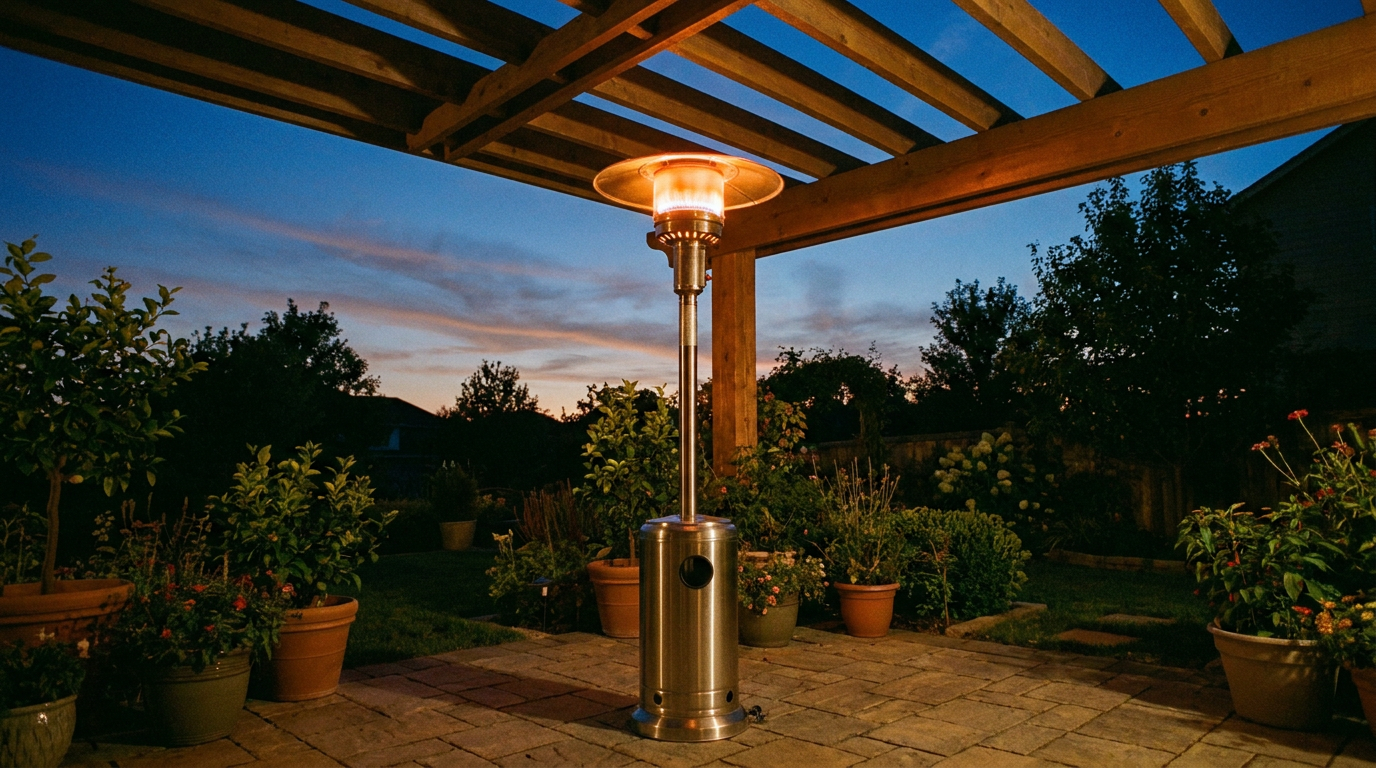
These are general starting points. Your specific model’s manual always wins — manufacturers list exact minimum clearances, and they vary.
| Heater type | Overhead clearance | Side clearance | Enclosed OK? |
|---|---|---|---|
| Electric infrared (mounted) | 12–24 in. | ~18 in. | Yes, with clearance |
| Electric infrared (freestanding) | 18–36 in. | ~24 in. | Yes, with clearance |
| Propane / natural gas | 24–36 in. (up to 6 ft if combustible) | 2–3 ft | No — open sides only |
Notice how much more room gas heaters need. That’s the flame and exhaust talking. If your pergola has low beams or a solid roof, a tall freestanding propane heater is usually the wrong tool — a properly mounted electric infrared unit gives you the heat without the fume and fire risk.
Electric vs. gas under a cover
From experience: At my own place I put the infrared electric heater under the covered pavilion and kept the propane patio heaters outside in the open air. Why risk it?
Electric infrared: the covered-patio default
Infrared electric heaters warm people and objects directly rather than heating the air, so they’re ideal under a roof where warm air would otherwise drift off. No flame, no combustion byproducts, and mounted versions tuck up against a beam or ceiling out of the way. For most pergolas and covered patios, this is what we’d install.
Gas heaters: open-sided only
Propane and natural-gas heaters are fine under an open-sided structure — a pergola with no walls, an open awning, a carport-style cover — where fumes dissipate freely. They are not safe in enclosed or partly enclosed spaces like a screened porch, a tent, or a garage. Carbon monoxide is odorless and can build up fast in a still, closed area.
Pergola vs. solid roof vs. gazebo
- Open pergola (slatted top, no walls): Best-case scenario. Plenty of airflow. Electric infrared mounts beautifully to the beams; a gas heater is fine too with clearance.
- Solid-roof covered patio, open sides: Watch overhead clearance to the ceiling. Mounted electric infrared is ideal; a freestanding gas heater needs a tall enough ceiling to hit its clearance number.
- Gazebo or screened enclosure: Treat as enclosed. Electric only. No gas heaters.
- Fabric or canvas cover: Keep any heat source well away from the fabric — textiles ignite. Electric infrared with generous clearance, or nothing.
A quick safety checklist
- Read your model’s manual and match or exceed its stated clearances.
- Keep the heater away from beams, rafters, string lights, and fabric shades.
- Use gas heaters only where at least one side is fully open.
- Put a carbon-monoxide detector nearby if you ever run gas under a partial cover.
- Make sure freestanding units are on level ground with a working tip-over cutoff.
- Never leave any heater running unattended or overnight.
Our recommendation: For a pergola or covered patio, mount an electric infrared heater to the ceiling or a beam. You get directed warmth, zero fumes, no floor space used, and the easiest path to meeting clearance. Save gas heaters for fully open patios.
Frequently asked questions
Can I use a propane patio heater under a pergola?
Yes, under an open-sided pergola with good airflow and 2–3 feet of overhead clearance (up to 6 feet if the beams are combustible). Do not use propane under an enclosed gazebo or screened porch.
How far should a patio heater be from the ceiling?
Electric infrared units typically need 12–24 inches overhead; gas heaters need 24–36 inches or more. Always confirm the exact figure in your model’s manual, since it varies by wattage and design.
Are electric patio heaters safe indoors or in enclosed spaces?
Electric infrared heaters produce no fumes, so they’re far safer in enclosed areas than gas — but you still need clearance from walls, ceilings, and anything flammable, and the unit must be rated for the space.
Will a patio heater set my pergola on fire?
Not if you honor clearances. Fires happen when heaters sit too close to wood beams, fabric shades, or string lights. Keep the required air gap and keep combustibles out of the heat path.
What about carbon monoxide?
Only gas heaters produce carbon monoxide. In open-sided spaces it dissipates safely. In enclosed spaces it can accumulate to dangerous levels, which is why gas heaters are open-air only and electric is the enclosed-space choice.
What’s the best heater for a small covered balcony?
A wall- or ceiling-mounted electric infrared heater. It’s flame-free, space-saving, and safe for tight covered areas — see our best patio heaters for apartments and balconies guide.
New to choosing a heater? Our pillar guide, Patio Heaters Explained, covers types, sizing, and safety, and our electric vs. propane comparison helps you pick the right fuel for a covered space.