

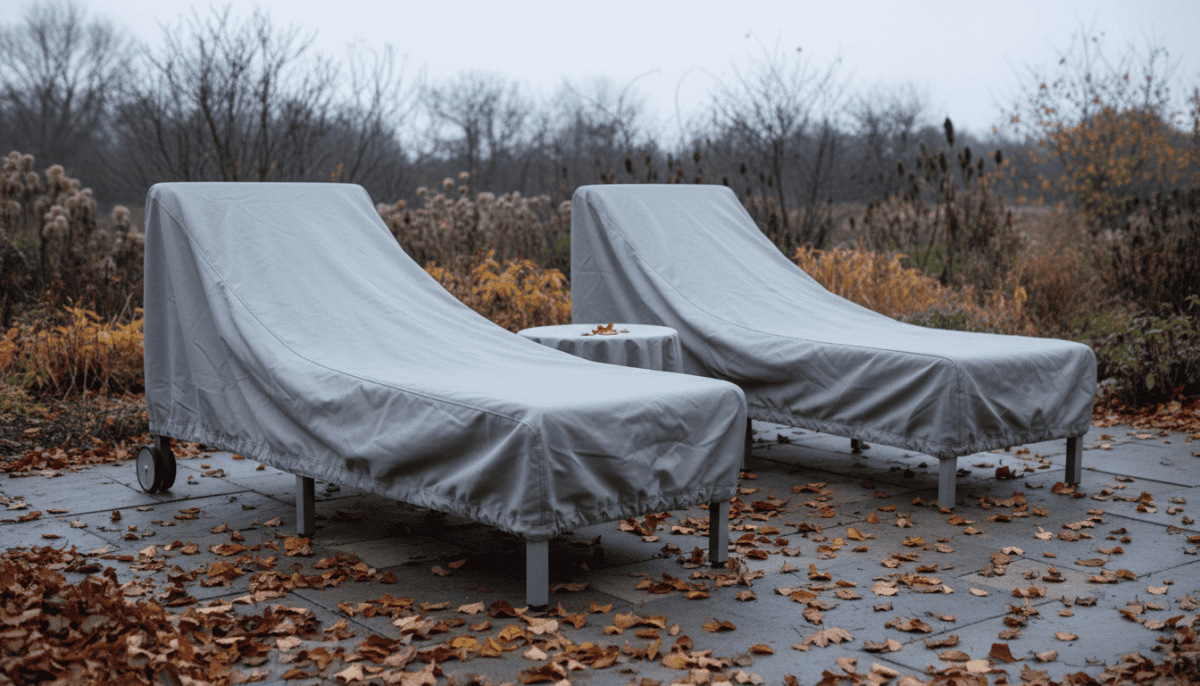
Quick Answer: Protect patio furniture from rust and winter damage by cleaning and fully drying every piece before storing it, waxing or oiling metal frames, raising furniture off the ground, and using breathable covers instead of sealed tarps. Store cushions indoors — their foam holds moisture and mildews within days if left outside.
Fade from UV exposure is one kind of damage — rust and winter moisture are a completely different problem, and they’re the ones that actually shorten a furniture set’s lifespan. Metal frames corrode from trapped moisture, wicker gets brittle in freeze-thaw cycles, and wood warps if it sits wet against the deck all winter. The fix is mostly prevention: clean, dry, protect, and store correctly before the cold hits. For fade-specific damage, see our guide on what causes outdoor furniture to fade and break down.
Winterizing patio furniture means cleaning, fully drying, sealing, elevating, and covering each piece so trapped moisture cannot rust metal, warp wood, or mildew cushions during the cold months.
Last Updated: September 2026 | Will Montgomery is an electro-mechanical engineer and hands-on homeowner who winterizes the metal and wicker furniture he and his wife Kim use for backyard events — and whose powder-coated bistro set is currently losing its fight with rust.
By Material: What Each One Needs
| Material | Main Winter Risk | Protection Steps |
|---|---|---|
| Metal (wrought iron, steel) | Rust from moisture | Clean, dry fully, apply paste wax or metal sealant, cover |
| Aluminum | Minimal — naturally rust-resistant | Clean and cover; lowest-maintenance option |
| Wicker / rattan (synthetic) | Cracking in freeze-thaw cycles | Store indoors or under cover; avoid stacking |
| Wood (teak, cedar, pine) | Warping, graying, mildew | Clean, apply sealant/oil, elevate off wet ground |
| Cushions / fabric | Mold and mildew in the foam | Bring indoors — never leave out over winter |
The 5-Step Winter Prep Process
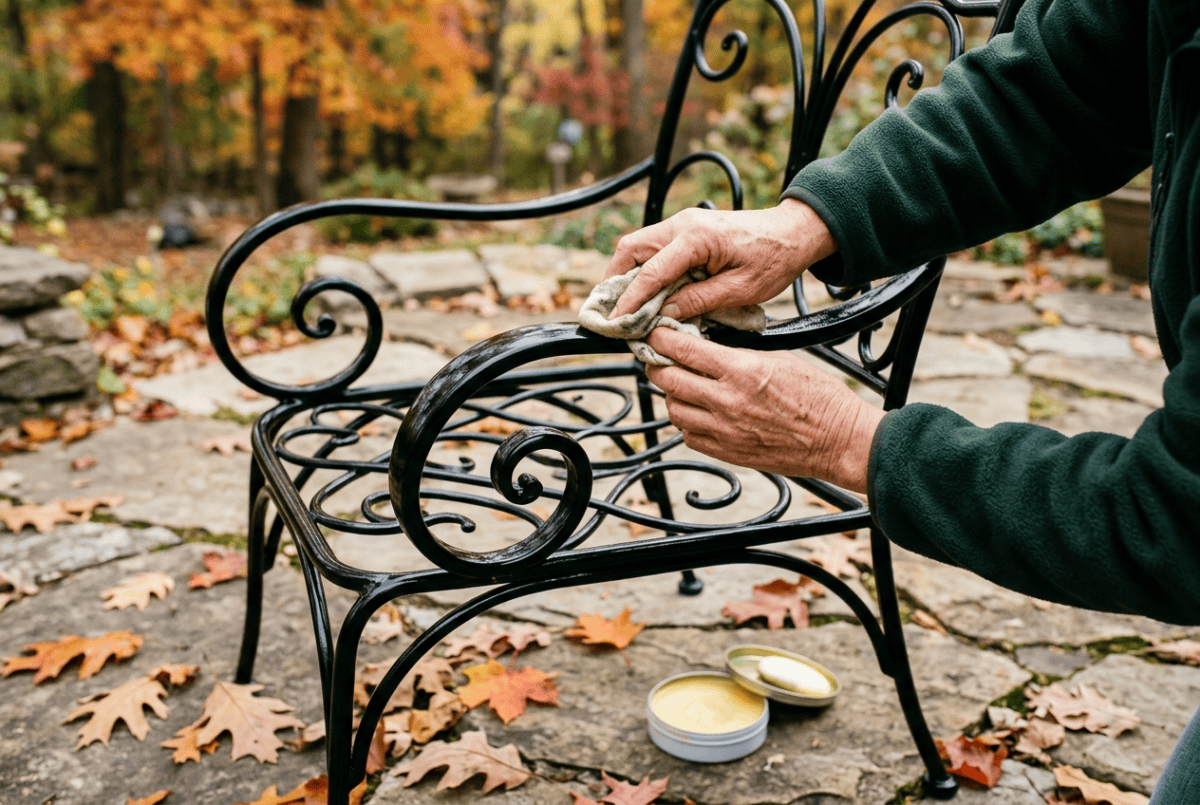
- Clean everything first. Wash frames with mild soap and water, scrub off any surface rust with fine sandpaper, and remove dirt and pollen buildup that holds moisture against the material.
- Let it fully air dry. Don’t cover or store anything damp — trapped moisture under a cover is worse than leaving it exposed. Give pieces at least a full dry day before the next step.
- Treat metal frames. Apply a coat of automotive paste wax or a metal-specific outdoor sealant to create a water-repellent barrier. For wrought iron with active rust spots, use a rust-neutralizing primer first.
- Elevate off the ground. Raise furniture 2–4 inches on blocks, feet, or pavers so water can’t wick up into wood legs or pool under metal bases.
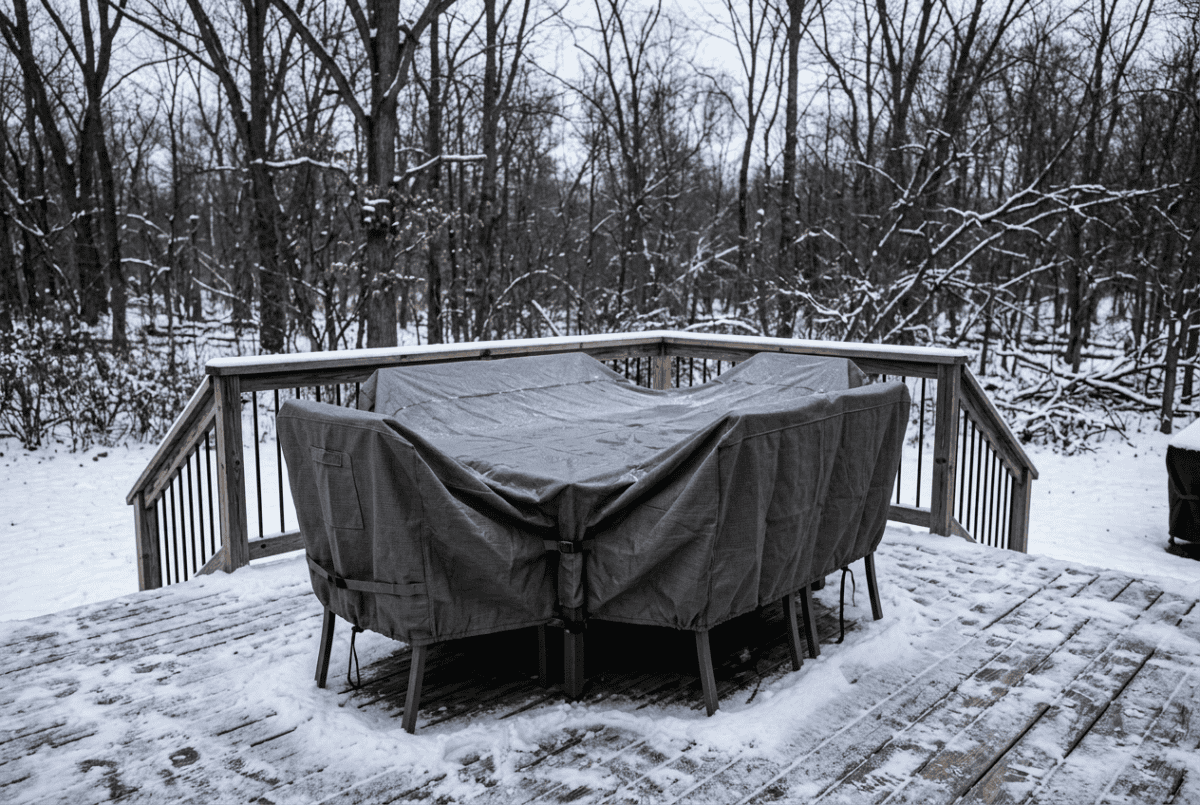
- Cover or store properly. Use breathable, vented covers — not sealed plastic tarps — so condensation escapes instead of pooling against the frame. If you have garage or shed space, storing indoors is always the safest option.
What we actually use for step 3: Meguiar’s Gold Class Carnauba Plus Paste Wax (11 oz, about $16) on painted or powder-coated frames, and Rust-Oleum Rust Reformer spray on wrought iron with active rust spots before it gets waxed. For step 5, a vented cover like the Enzeno 110 x 82 x 28-inch Patio Furniture Cover with air vents (about $22) fits a full dining set and lets condensation escape; a pack of 1.5-inch wrought-iron furniture glides keeps chair legs from sitting in standing water.
From experience: even powder-coated wrought iron isn’t immune — on our bistro set, moisture got under the coating, froze, and flaked pieces off, and now it’s rusting. Waxing is the same logic as waxing a car: it displaces moisture and keeps chips from starting. It’s on my list for the bistro set this fall, which is exactly why it’s step 3 above and not an afterthought.
Cushions and Fabric: Always Bring Them In
Direct answer: cushion foam holds water and starts growing mildew within days of a rain if left outside — there’s no cover that reliably prevents this, so cushions, pillows, and fabric umbrellas should always come inside for winter, ideally in a dry closet, bin, or garage shelf, not a damp shed.
- Wash removable covers before storing to prevent set-in mildew stains.
- Let cushions fully air dry in the sun before packing them away.
- Use breathable storage bins, not fully sealed plastic totes, if storing in a garage.
Common Mistakes That Cause Winter Damage
- Covering wet furniture: sealing in moisture is worse than leaving it exposed to open air.
- Using sealed plastic tarps instead of breathable covers: tarps trap condensation against the frame and accelerate rust.
- Leaving cushions outside “just for a season”: mildew sets in within days of the first rain, not months.
- Stacking wicker or resin pieces: uneven weight in freezing temps can crack synthetic wicker.
- Skipping the wax/sealant step on metal: bare metal left uncovered rusts fast once winter humidity sets in.
Bottom line: clean it, dry it completely, wax or seal metal and wood, elevate everything off the ground, and always bring cushions inside. That combination prevents nearly every rust, warp, and mildew complaint we hear about each spring.
Frequently Asked Questions
Can I leave metal patio furniture outside all winter?
Aluminum can generally stay outside year-round with a cover since it resists rust naturally. Wrought iron and steel are safer stored indoors or heavily protected with wax and a breathable cover.
What’s the best cover material for winter storage?
Breathable, vented polyester covers are best — they block rain while letting condensation escape. Avoid solid vinyl or plastic tarps, which trap moisture against the furniture.
How do I remove rust from patio furniture before winter?
Sand the rusted area with fine-grit sandpaper down to bare metal, wipe clean, and apply a rust-inhibiting primer and matching outdoor paint, or use a rust converter product for small spots.
Do I need to store cushions indoors every winter?
Yes. Cushion foam absorbs moisture and mildews within days of exposure to rain, and no cover fully prevents this. Bring them inside to a dry space.
Is wax or oil better for protecting metal furniture?
Paste wax (like automotive wax) works well on painted or powder-coated metal. For wrought iron with exposed metal, a rust-inhibiting sealant or primer is more effective than wax alone.
The Takeaway
Winter damage to patio furniture is almost always preventable — it comes down to cleaning, drying, sealing, and storing correctly before the cold and wet set in. For help choosing furniture that holds up better long-term, see our outdoor furniture materials comparison and cushion cover replacement guide.
Will Montgomery is an electro-mechanical engineer and hands-on homeowner who winterizes the metal and wicker furniture he and his wife Kim use for backyard events — and whose powder-coated bistro set is currently losing its fight with rust.