

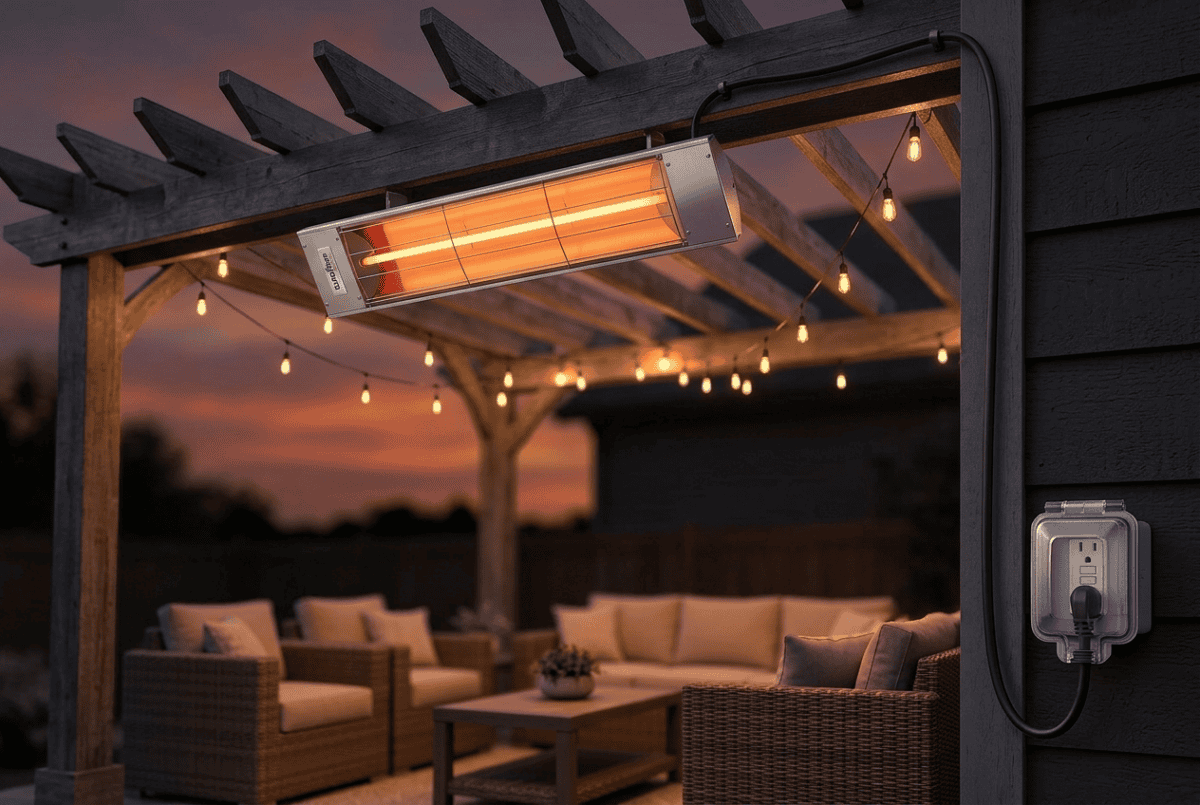
Quick Answer: Yes — under the 2020/2023 National Electrical Code (NEC 210.8(F)), any outdoor outlet rated 50 amps or less at a dwelling needs GFCI protection, and that includes the circuit feeding a plug-in electric patio heater. A 1500-watt heater needs at least a 15-amp GFCI-protected circuit (20-amp dedicated is safer); larger 240-volt units from 3,000–6,000 watts need a 15–30 amp GFCI breaker sized to their amp draw, not just their wattage.
If you just unboxed a new electric patio heater and it’s tripping the outlet the second you plug it in, you’re not doing anything wrong — you’re running into how ground-fault protection is supposed to work outdoors. In my experience, outdoor GFCI outlets can be finicky — moisture alone is often enough to create the small milliamp difference that trips them, even when nothing’s actually wrong with the heater. Here’s what’s actually required, how to size the breaker correctly, and why that trip might not mean anything is broken.
Why Electric Patio Heaters Need GFCI Protection
The requirement isn’t specific to heaters — it’s specific to being outdoors. NEC Section 210.8(F), added in the 2020 code cycle and carried into 2023, requires GFCI protection for all outdoor outlets 50 amps or less at one- and two-family dwellings. A patio heater plugged into an exterior receptacle falls squarely under that rule, whether the receptacle itself is a GFCI outlet or it’s protected upstream by a GFCI breaker in the panel.
The logic is simple: outdoor circuits are exposed to moisture, and a heating element pulling several amps through a damp connection is exactly the failure mode GFCI protection exists to catch. It’s a safety requirement, not a heater defect — but it does mean every plug-in electric patio heater on your patio needs to run through GFCI protection somewhere in the circuit.
GFCI Outlet vs. GFCI Breaker — Which Do You Need?
Both satisfy the code requirement; they just protect the circuit at different points.
- GFCI outlet (receptacle): The ground-fault sensor lives in the outlet itself. This is the standard option for a single exterior receptacle feeding a plug-in heater — cheaper to install and easy for an electrician to swap in.
- GFCI breaker: The sensor lives in the panel and protects the entire circuit, including any outlets downstream. This is usually what you’ll see on larger 240-volt hardwired heaters, or when a single circuit feeds multiple outdoor outlets.
For a single plug-in heater, a dedicated 20-amp GFCI outlet like the Leviton GFWT2-W Slim GFCI Weather-Resistant Outlet (20A, self-testing, weather- and tamper-resistant, about $18) covers the 1,500-1,800 watt heater range in the table below.
For a single plug-in patio heater on its own exterior outlet, a GFCI outlet is normally enough. If your heater is hardwired or shares a circuit with other outdoor loads, a GFCI breaker at the panel is the more common (and often required) approach.
Breaker and Circuit Sizing by Heater Wattage
Amp draw is what determines breaker size — not wattage on its own, and not the heater’s price tag. Here’s how the most common electric patio heater sizes break down:
| Heater Wattage | Voltage | Amp Draw | Minimum Breaker | Recommended Circuit |
|---|---|---|---|---|
| 1,500W | 120V | 12.5A | 15A | 20A dedicated |
| 1,800W | 120V | 15A | 20A | 20A dedicated |
| 3,000W | 240V | 12.5A | 15A | 20A dedicated |
| 4,000W | 240V | 16.7A | 20A | 25–30A dedicated |
| 6,000W | 240V | 25A | 30A | 30A dedicated |
Two rules of thumb worth remembering: a continuous load like a patio heater should only use 80% of a breaker’s rating (that’s why a 15A draw gets bumped to a 20A breaker), and 120-volt plug-in heaters should always run on their own dedicated circuit — not shared with landscape lighting, an outdoor fridge, or a pool pump.
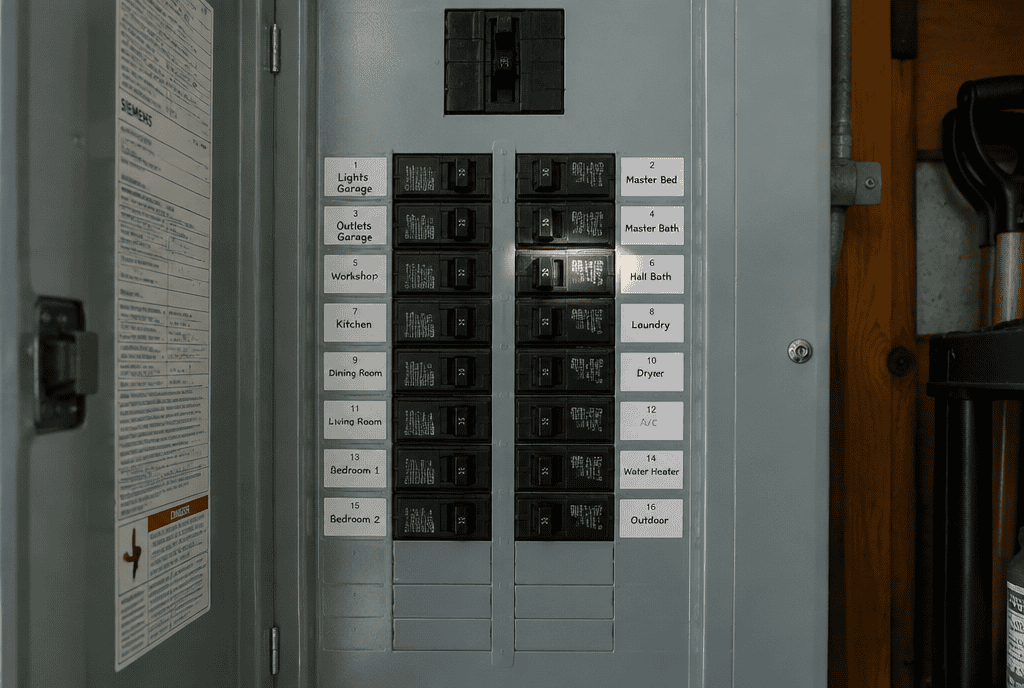
How to Check What Circuit You Actually Have
- Look at the outlet itself — if it has “Test” and “Reset” buttons, it’s a GFCI outlet protecting that circuit locally.
- If the outlet is a standard receptacle, go to your panel and look for a breaker labeled with a “Test” button (that’s a GFCI breaker) tied to that circuit’s label.
- Use a plug-in outlet tester (under $15 at any hardware store) to confirm the outlet is wired correctly and grounded before you rely on it for a heater.
- Check the breaker’s amperage rating against your heater’s nameplate amp draw (printed on the heater or in the manual) — not just the wattage.
- If you don’t find GFCI protection anywhere in the circuit, that’s a job for a licensed electrician, not a DIY breaker swap — outdoor GFCI work involves grounding checks most homeowners aren’t equipped to verify.
A dedicated tester makes this a two-minute check instead of a guess — the Klein Tools 80077 Voltage Test Kit (3-piece: non-contact voltage pen, GFCI outlet tester, and AC/DC tester, about $40) covers steps 1 through 3 above in one kit.
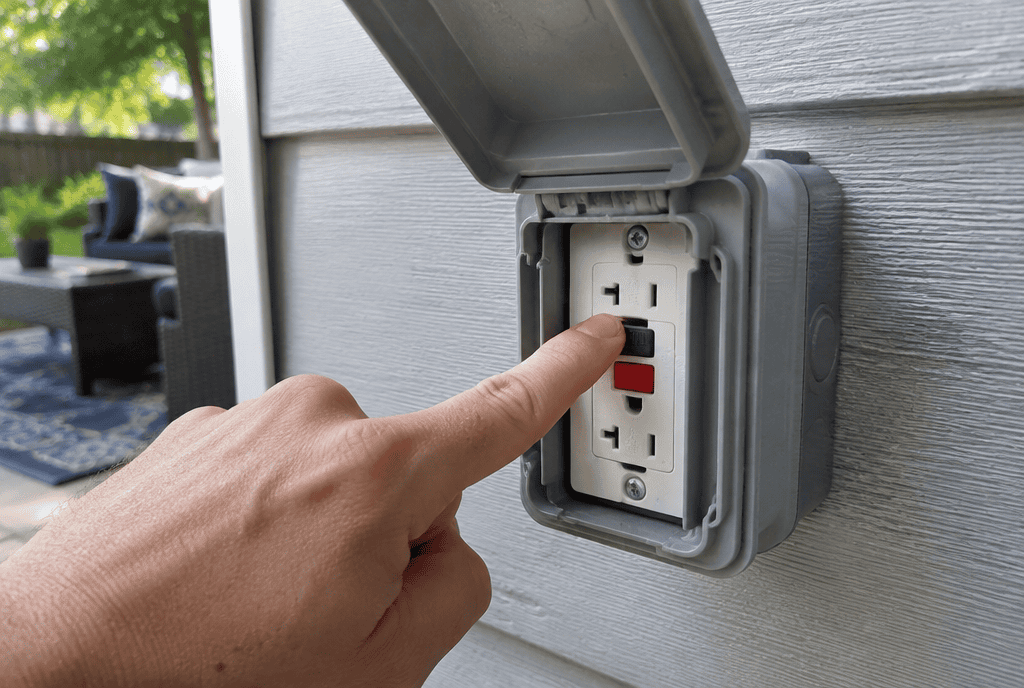
Why Your Patio Heater Keeps Tripping the GFCI
A trip doesn’t always mean the heater is dangerous — but it’s not something to just reset and ignore either. The most common causes, in order of how often I actually see them:
- Moisture in the heating element or cord: Most common with a heater that’s been stored outside or left uncovered. Let it dry out fully before testing again.
- Inrush current on startup: Resistive heating elements draw a brief surge when powering on, and older or more sensitive GFCIs can misread that as a fault.
- A shared neutral wire: If the heater’s circuit shares a neutral with another circuit downstream, the GFCI will see an imbalance and trip — this is a wiring issue, not a heater issue.
- An undersized circuit: If the breaker is sized right at the heater’s max draw with no headroom, normal operation can nuisance-trip it. This is why the 80% continuous-load rule in the table above matters.
- An actual ground fault in the heater: If it trips every single time, on a circuit you’ve confirmed is correctly sized and dry, stop using the heater and have it inspected — this is the scenario the GFCI exists to catch.
Do Hardwired Patio Heaters Need GFCI Protection Too?

Yes. NEC 210.8(F) covers outdoor outlets, and most jurisdictions and manufacturers extend the same GFCI requirement to hardwired 240-volt heaters mounted on a patio, pergola, or exterior wall. For a hardwired unit, that protection almost always comes from a GFCI breaker at the panel rather than an outlet, since there’s no receptacle to protect locally. If you’re having a ceiling-mount or wall-mount heater hardwired, this is a standard line item on the electrician’s quote — worth confirming it’s included rather than assumed.
Bottom line: Every electric patio heater — plug-in or hardwired — needs GFCI protection on its circuit under current code. Size the breaker to the heater’s actual amp draw with 20% headroom for continuous use, keep it on its own dedicated circuit, and treat repeated trips as a signal to check moisture and wiring before assuming the heater is broken.
Code adoption varies by city and county, so if you’re having new outdoor circuits run, confirm which NEC edition your local permitting office enforces — some areas are still a code cycle or two behind 2020/2023.
Frequently Asked Questions
Does my electric patio heater need a GFCI outlet?
Yes — if it plugs into or is wired to an outdoor circuit at your home, NEC 210.8(F) requires GFCI protection on that circuit, either at the outlet or at the breaker.
What size breaker does a 1,500-watt patio heater need?
A 1,500-watt, 120-volt heater draws about 12.5 amps, so it needs at least a 15-amp breaker — a dedicated 20-amp circuit gives more headroom and avoids nuisance trips.
Why does my patio heater keep tripping the GFCI?
The most common causes are moisture in the cord or element, startup inrush current, a shared neutral wire, or an undersized circuit with no headroom. If it trips every time on a dry, correctly sized circuit, have the heater inspected.
Can I plug a patio heater into a regular outdoor outlet?
Only if that outlet is GFCI-protected, either as a GFCI receptacle or through a GFCI breaker upstream. A standard, unprotected outdoor outlet doesn’t meet code for this use.
What’s the difference between a GFCI outlet and a GFCI breaker for a heater circuit?
A GFCI outlet protects just that receptacle; a GFCI breaker protects the entire circuit from the panel down, including any outlets wired downstream. Single plug-in heaters usually just need a GFCI outlet — hardwired units typically use a GFCI breaker.
Do hardwired patio heaters need GFCI protection too?
Yes. Hardwired 240-volt patio heaters need GFCI protection just like plug-in units — it’s just supplied by a GFCI breaker at the panel instead of a GFCI outlet, since there’s no receptacle involved.
Explore More on Patio Heaters
- Patio Heaters Explained: Types, Sizing, Safety & Running Cost
- What Size Patio Heater Do I Need? BTU Sizing Guide
- Best Electric Patio Heaters of 2026
- How Much Does It Cost to Run a Patio Heater?
From experience: I don’t just eyeball an 80% rule of thumb — I follow the code directly, like installing a 15-amp-rated outlet on a 20-amp circuit for the extra headroom. For the GFCI hardware itself, I typically stick with Leviton — it’s held up reliably outdoors for me.
Will Montgomery is an electro-mechanical engineer who wires and troubleshoots the outdoor circuits at his own home, including the patio heater circuit he sized himself.