

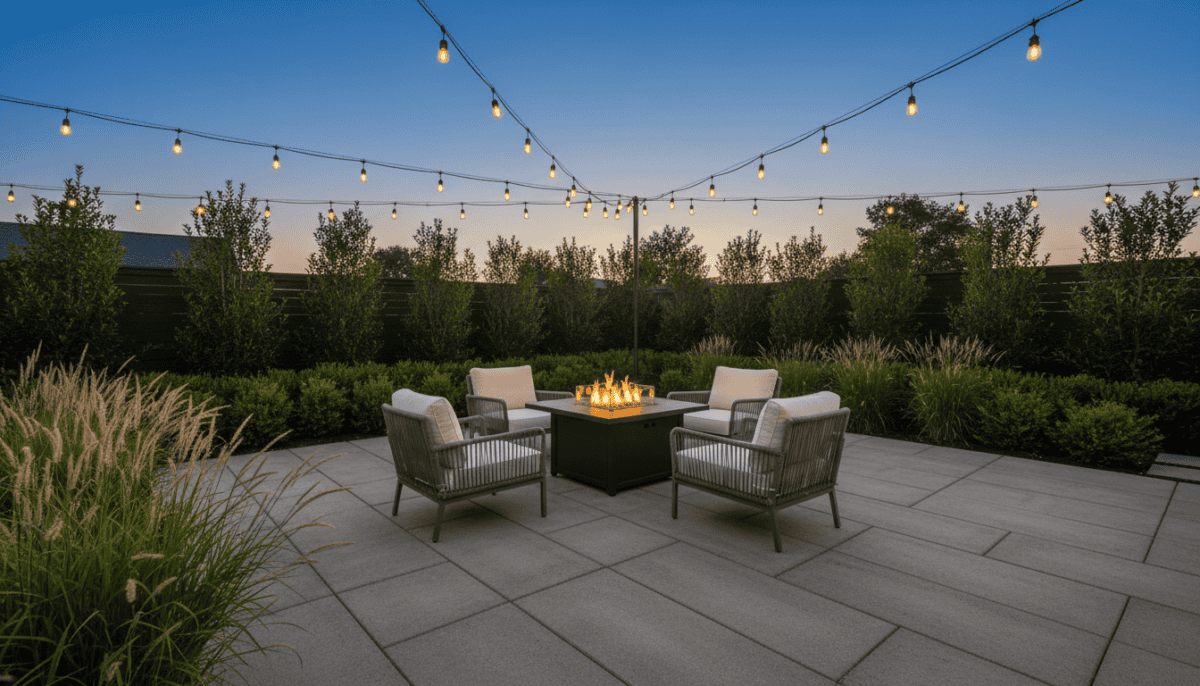
Quick Answer: Choose a fire pit table if you want a gas-only, low-maintenance centerpiece that doubles as a place to set drinks — most HOAs and covered patios require this format anyway. Choose a standalone fire pit if you want more radiant heat, the option to burn wood, and a lower price tag. Most small-to-mid patios do better with a fire table; large open backyards get more value from a standalone pit.
We get this question constantly at Outdoor Space Accents: should you buy a fire pit table or a standalone fire pit? Both put flame in your backyard, but they solve different problems. A fire pit table is furniture first and fire feature second — it gives you a tabletop rim for drinks and food while a gas burner sits in the middle. A standalone fire pit is the opposite: it’s built purely around the flame, with seating arranged around it like a campfire. The right choice comes down to your fuel preference, your patio size, your local fire codes, and how you actually plan to use the space.
Last Updated: September 2026 | Will Montgomery is an electro-mechanical engineer and hands-on homeowner who has run both a propane fire table and a wood-burning pit on the patio he and his wife Kim use for backyard get-togethers.
Fire Pit Table vs. Standalone Fire Pit: Fast Comparison
Bottom line: fire tables win on convenience, code compliance, and small-space function. Standalone pits win on heat output, fuel flexibility, and price. Here’s how they stack up side by side.
| Factor | Fire Pit Table | Standalone Fire Pit |
|---|---|---|
| Fuel type | Propane or natural gas only | Wood, propane, or natural gas |
| Typical cost | $300–$1,200 | $100–$700 |
| Heat output | 30,000–65,000 BTU (moderate, even) | Higher radiant heat, especially wood-burning |
| Usable surface | Yes — doubles as a table | No — flame-only footprint |
| Smoke & ash | None (gas-only) | Yes, if wood-burning |
| HOA / covered patio friendly | Usually yes | Often restricted (wood) or banned under cover |
| Best for | Small-to-mid patios, entertaining, code-restricted areas | Large yards, campfire feel, budget buyers |
What a Fire Pit Table Actually Gets You
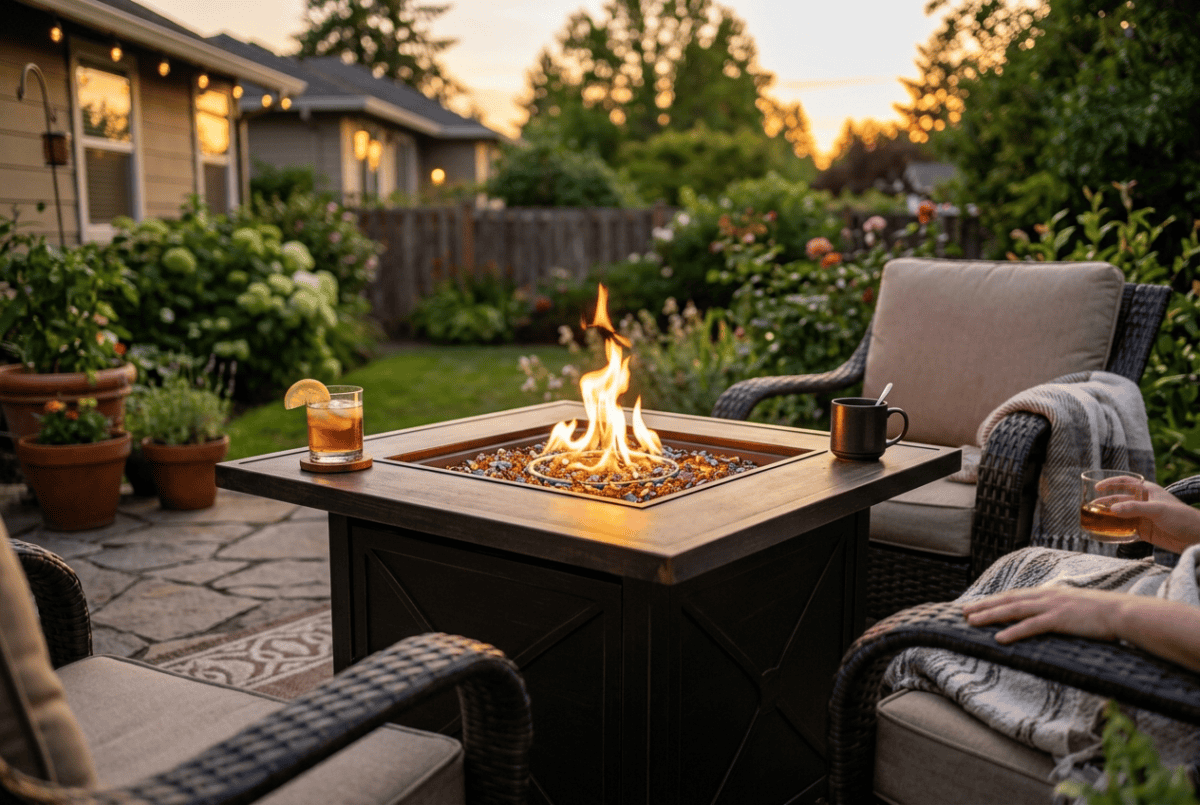
A fire pit table earns its footprint by doing double duty as furniture. Instead of a bare flame ring taking up patio real estate, you get a rim wide enough to set down a drink, a plate, or your feet. Because fire tables run on propane or natural gas, there’s no wood smoke clinging to your clothes, no sparks landing on the deck, and no ash to sweep up the next morning — you turn a knob, and the flame is out.
A good example of the format is the Ciays 32-Inch Square Propane Fire Pit Table — 50,000 BTU, CSA-listed steel, around $220, with a lid that turns it back into a plain table when the burner is off. That is the size and spec most mid-size patios actually need.
- Code and lease friendly: gas fire tables are the only open-flame format most HOAs, apartment complexes, and covered-patio setups allow — see our guide on whether heat sources are safe under a covered patio for the same clearance logic applied to fire features.
- Consistent heat, lower flare-up risk: gas burners produce steady, even heat instead of the unpredictable flare-ups of a wood fire.
- Smaller footprint, bigger function: a 40-inch square fire table replaces both a coffee table and a fire feature, which matters most on a condo balcony or a compact patio.
- Higher upfront cost: the trade-off is price — quality fire tables with real materials (cast aluminum, faux-wood fire glass, weather-resistant frames) run $500 and up.
What a Standalone Fire Pit Actually Gets You
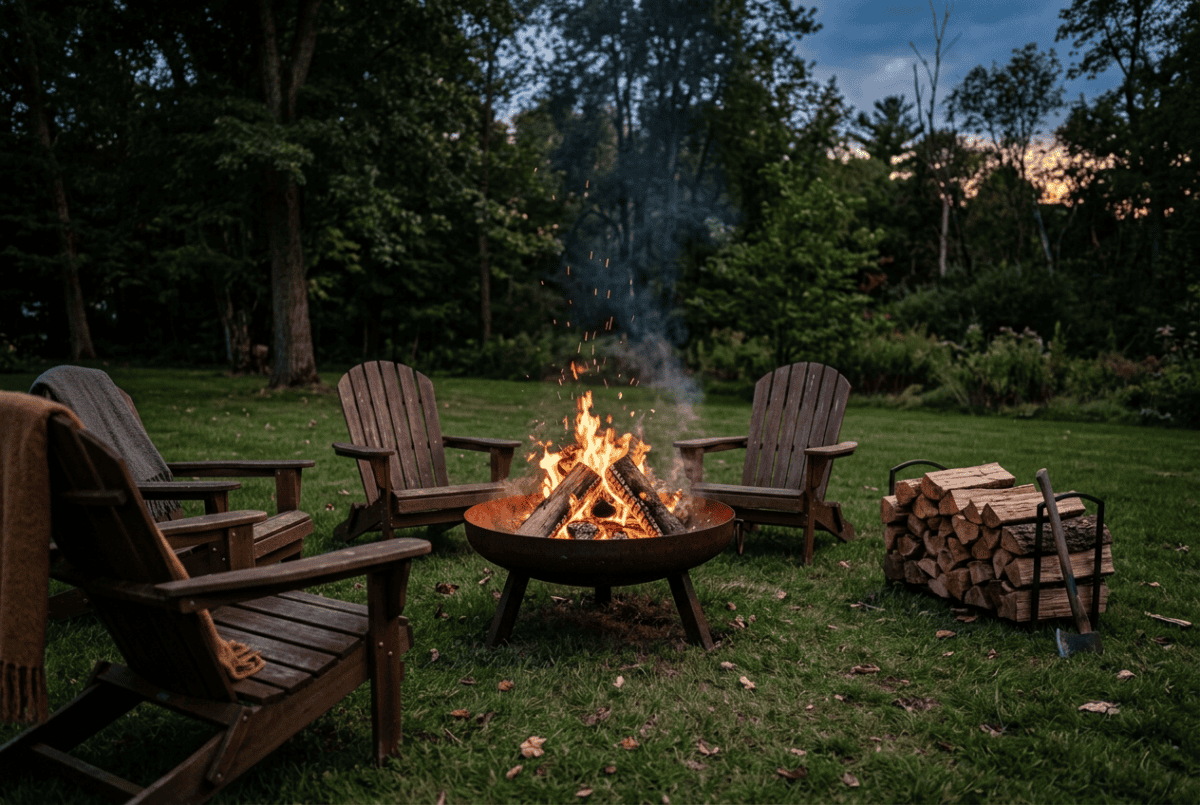
A standalone fire pit is built for one job: fire. That singular focus is exactly why it costs less and throws more heat. Wood-burning pits in particular put out significantly more radiant warmth than a gas burner buried under decorative rock, which matters if you’re trying to heat a group sitting six feet back on a cold night.
If you want the wood-burning version without the smoke complaints, the Solo Stove Bonfire (19.5-inch, stainless steel, about $270) is the benchmark standalone pit — its double-wall airflow burns most of the smoke off, but it is still a bare flame with no tabletop.
From experience: our wood-burning pit never went on the patio — it lives in a sand circle out in the yard. For a quick, nothing-planned evening we light the propane table almost every time: it’s fast, and there’s no worrying about putting it out or waiting for it to burn down. The one thing the wood pit still wins is marshmallows — real embers make better s’mores than a gas flame ever will.
- Fuel flexibility: burn wood for the classic campfire smell and crackle, or drop in a gas insert later if your city restricts open burning — our propane-to-natural-gas conversion guide covers switching fuel types on an existing pit.
- Lower entry price: a solid steel bowl-style fire pit starts around $100–$200, well under most fire tables.
- More radiant heat: open flame and larger fuel beds throw more usable warmth, especially important in colder climates or late-season use.
- No built-in surface: you’ll want a side table nearby for drinks, since the pit itself isn’t load-bearing.
- Check local codes first: many municipalities restrict or ban open wood burning; confirm before you buy — see our deck and patio clearance guide for setback rules that apply to both formats.
Heat Output, Head to Head
Gas fire tables typically run 30,000 to 65,000 BTU, which is plenty to take the chill off a group sitting close, but that heat is contained and directional — it radiates mostly upward and outward from the burner pan. A wood-burning standalone pit doesn’t have a BTU rating because the fuel load varies, but in practice an open wood fire throws noticeably more heat over a wider radius, which is why campers and rural backyard owners still favor it. If heat output is your top priority and you’re not fighting an HOA rule, the standalone wood pit wins. If ambiance and convenience matter more than maximum warmth, the gas table wins.
Cost Breakdown
Budget is often the deciding factor, so here’s what you’ll actually spend once fuel and accessories are included.
| Item | Fire Pit Table | Standalone Fire Pit |
|---|---|---|
| Unit price (entry level) | $300–$450 | $100–$200 |
| Unit price (mid-range) | $500–$900 | $250–$450 |
| Fuel cost (per season) | ~$60–$120 in propane | Free (scrap wood) to $150 (bundled wood) or ~$80 propane insert |
| Cover / accessories | $30–$60 | $20–$40 |
How to Decide: 4 Questions to Ask Yourself
- Do you live under an HOA or rent an apartment/condo? If yes, a gas fire table is almost always the only permitted option.
- Is the fire feature going on a covered patio or wood deck? Gas tables are generally the safer, code-compliant choice there — wood-burning pits need open sky and more clearance.
- Do you want it to double as usable furniture? If your patio is small, a fire table replaces a side table and gives you back square footage.
- Is maximum heat or lowest price the priority? A standalone wood pit wins on both fronts if code allows it.
Bottom line: if you’re not sure, default to a gas fire pit table. It’s the format most likely to be allowed wherever you live, it needs the least maintenance, and it earns its keep as furniture. Reserve a standalone fire pit for a larger, open backyard where you want maximum heat and don’t mind the ash cleanup.
Frequently Asked Questions
Is a fire pit table safe on a wood deck?
Yes, as long as it’s a gas model with a heat shield and you follow the manufacturer’s clearance distance from railings and siding — typically at least 3 feet. Wood-burning pits are riskier on a wood deck because of sparks and radiant heat scorching.
Which is cheaper to run, propane or wood?
Scrap or seasoned firewood is usually cheaper per use than propane, but bundled store-bought firewood can cost more than propane over a season. Propane averages about $3–$5 per hour of burn time on a mid-size fire table.
Can I convert a wood fire pit to gas later?
Yes, with a gas conversion kit and fire glass or lava rock. It’s a common upgrade path if local rules change or you get tired of ash cleanup — see our guide on converting fuel types for the general process.
Do fire pit tables put out enough heat for a real winter night?
A 55,000+ BTU fire table will comfortably warm a group sitting within 3–4 feet, but it won’t heat an area the way a wood bonfire does. Pair it with a patio heater if you’re entertaining on colder nights.
Are fire pit tables hard to maintain?
No — wipe down the tabletop, check the burner for debris a few times a season, and cover it when not in use. There’s no ash or creosote to deal with like a wood-burning pit.
The Takeaway
There’s no universally “better” option — only the better fit for your patio, your budget, and your local rules. Gas fire tables win on convenience, safety compliance, and small-space function. Standalone fire pits win on heat, fuel flexibility, and upfront cost. If you’re still weighing options, check out our fire pit table buying guide and our best smokeless fire pits review to see specific models in both categories before you buy.
Will Montgomery is an electro-mechanical engineer and hands-on homeowner who has run both a propane fire table and a wood-burning pit on the patio he and his wife Kim use for backyard get-togethers.