

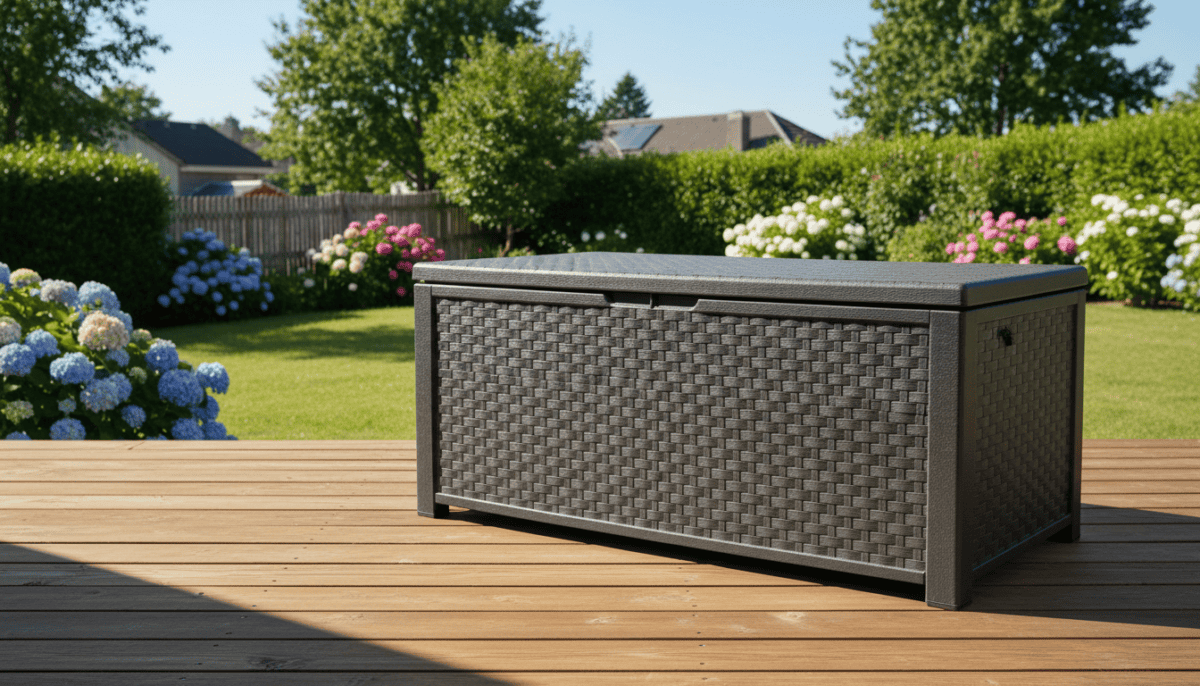
Quick Answer: Stop deck box rust and mold by elevating the box off wet decking on feet or a base, cracking the lid or adding vents so trapped moisture can escape, and choosing resin or aluminum over painted steel or particleboard. Ventilation and drainage — not the material alone — are what actually prevent the mildew smell and rust rings most owners complain about.
If your deck box smells musty, has a rust ring on the bottom, or grows mildew along the seams, the cause is almost always trapped moisture, not a “bad” box. Water pools under the base, condensation forms inside on temperature swings, and with no airflow it never fully dries. Here’s how to fix it — and how to prevent it from the start if you’re shopping for a new box. If you’re deciding whether to buy at all, see our deck box buying guide and best deck storage boxes review first.
A deck box is a lidded outdoor storage chest — usually resin, aluminum, or painted steel — that sits on a deck or patio to hold cushions, tools, and toys; its two enemies are standing water underneath and sealed-in humidity.
Last Updated: September 2026 | Will Montgomery is an electro-mechanical engineer and hands-on homeowner who keeps a resin deck box on the patio where he and his wife Kim store cushions between backyard events — and who keeps his own box up on bed-frame risers so air can move underneath.
Why Deck Boxes Rust and Mold in the First Place
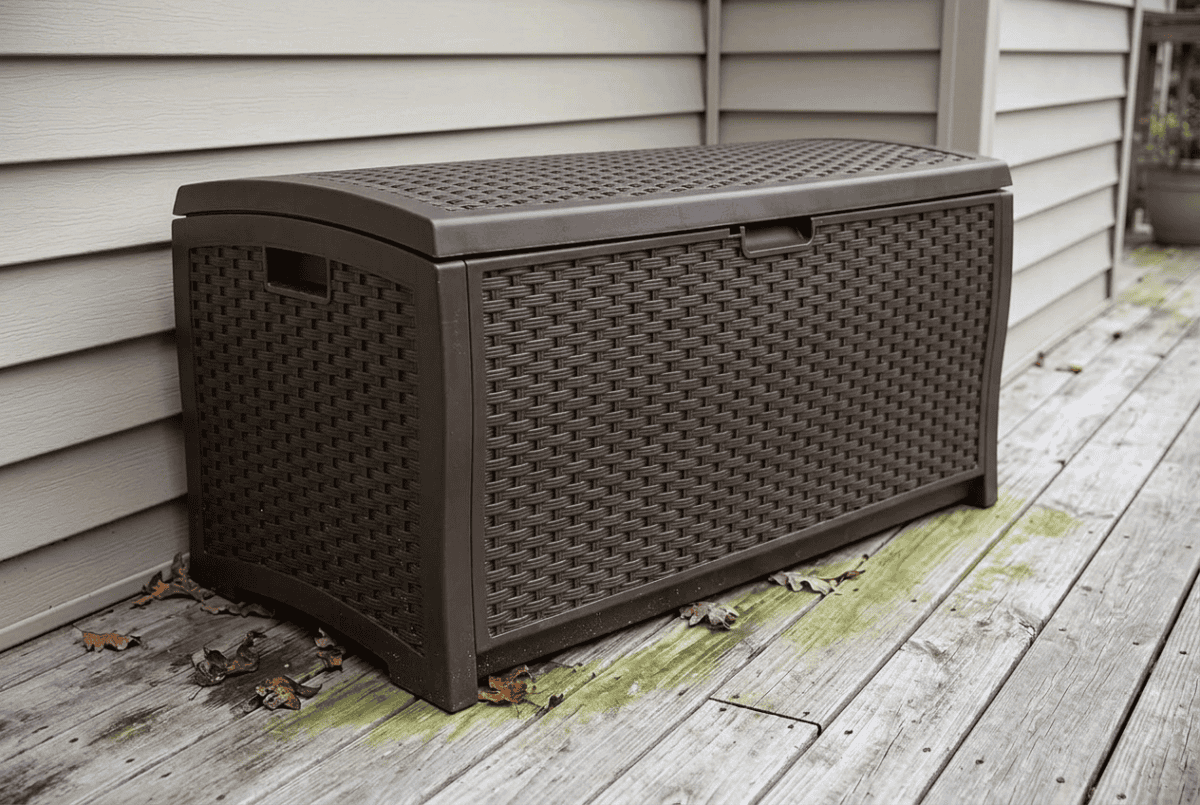
Direct answer: deck boxes trap moisture because they sit flat on wet decking, have poor or no ventilation, and get sealed shut right after rain — the combination of standing water, no airflow, and organic debris (leaves, pollen, dirt) is exactly what mold needs to grow and what rusts painted metal from the inside out.
- No elevation: a box sitting flush on the deck traps water underneath every time it rains, and that moisture wicks upward.
- Sealed lids: an airtight lid keeps water out but also keeps condensation in — the box becomes a greenhouse for mildew.
- Painted or cheap metal: once the coating chips, exposed metal rusts fast in a damp, enclosed space.
- Debris buildup: leaves and dirt blown into the base hold moisture against the box longer than bare decking would.
How to Stop It: 5 Fixes
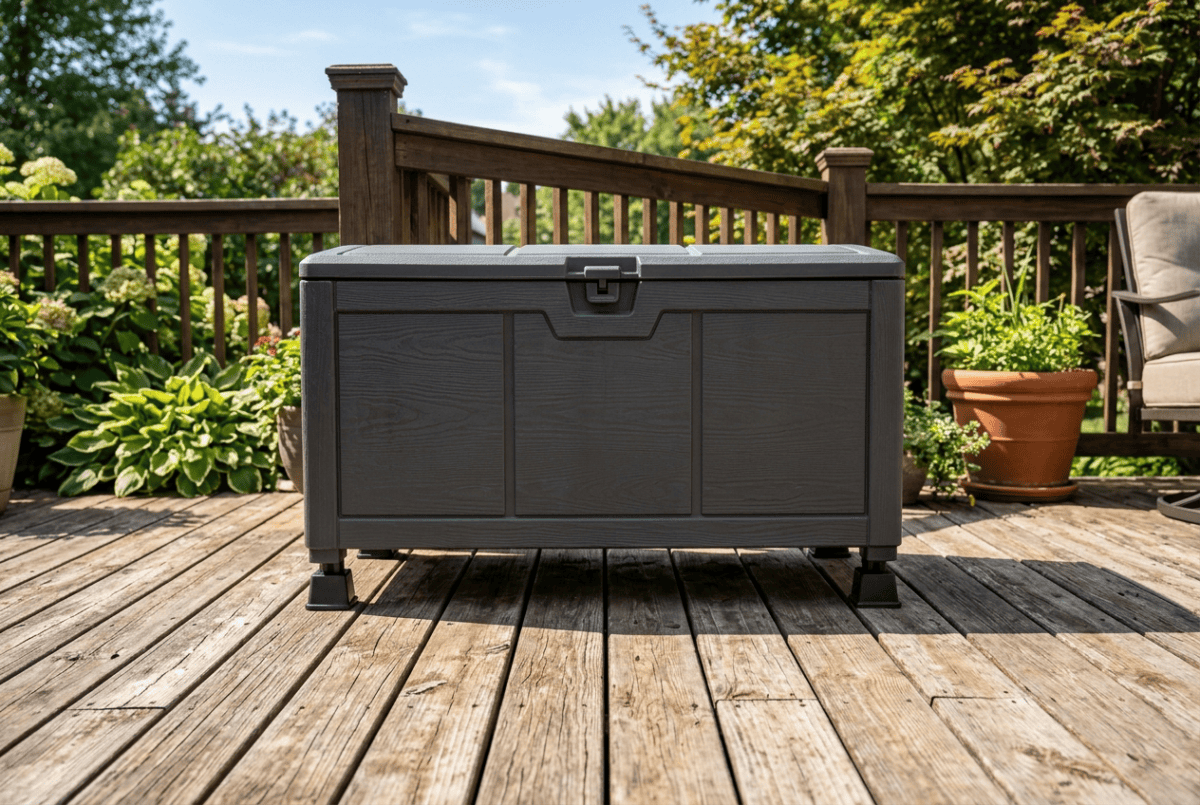
- Elevate the box. Set it on plastic feet, deck blocks, or a paver base so air and water can move underneath instead of pooling against the bottom. Even a 1–2 inch gap makes a real difference.
- Add or open ventilation. Many boxes have small vent slots built in — make sure they’re not blocked. If yours doesn’t have any, drill a few small holes low on the sides (below where contents sit) so air can circulate without letting rain in.
- Crack the lid after rain. If a box got wet inside, prop the lid open for a few hours on a dry day to let trapped humidity escape before sealing it back up.
- Use a moisture absorber. Silica gel packs or a small container of activated charcoal inside the box will pull ambient moisture out of the air and meaningfully cut down on mildew smell.
- Choose the right material going forward. Resin and aluminum don’t rust and resist mold better than painted steel or untreated wood — worth factoring in on your next purchase.
For the moisture absorber, a hanging DampRid 16-oz Hanging Moisture Absorber (3-pack, about $12) clipped inside the lid pulls humidity out of the box for roughly 60 days per bag and is easier to check than loose silica packets.
From experience: if what you store is light, bed-frame risers under the corners work well — they lift the box enough to get air moving underneath without buying anything made for the job.
Material Comparison: What Resists Rust & Mold Best
| Material | Rust Risk | Mold Risk | Notes |
|---|---|---|---|
| Resin / polypropylene | None | Low (with ventilation) | Best all-around choice; won’t corrode |
| Aluminum | Very low | Low | Lightweight, durable, more expensive |
| Painted steel | High once coating chips | Moderate | Cheapest option but shortest lifespan outdoors |
| Untreated / painted wood | N/A | High | Needs regular sealing; prone to swelling and mildew |
Already Have Rust or Mold? Here’s the Fix
- For rust: sand the affected area with fine-grit sandpaper down to bare metal, wipe clean, then apply a rust-inhibiting primer and matching outdoor paint. For small spots, a rust converter product works without sanding.
- For mold or mildew: scrub with a mix of water and mild dish soap or a diluted vinegar solution, rinse thoroughly, and let the box dry completely in the sun with the lid open before storing anything back inside.
- For persistent musty smell: after cleaning, leave a box of baking soda or a few silica packs inside for a week with the lid cracked.
On a painted steel box, Rust-Oleum Stops Rust Rust Reformer spray (about $9) converts light surface rust to a paintable black coating without sanding to bare metal — spray it, let it cure, then top-coat with an outdoor enamel that matches the box.
Bottom line: elevate it, ventilate it, and choose resin or aluminum over painted steel — those three moves solve rust and mold in almost every deck box complaint we’ve seen. See our note on deck boxes and grass placement if you’re setting one directly on the lawn instead of a deck.
Frequently Asked Questions
Why does my deck box smell musty even when it’s not visibly wet?
Trapped humidity from temperature swings can cause mildew growth you can’t always see. Add ventilation and a moisture absorber like silica gel to fix the smell.
Is resin or metal better for a deck box?
Resin is the better choice for rust and mold resistance since it can’t corrode and handles moisture better than painted steel, which rusts once the coating chips.
Should I drill holes in my deck box for ventilation?
Yes, if it doesn’t already have vents — a few small holes low on the sides let air circulate without letting rain in, and this single fix prevents most mildew problems.
Can I set a deck box directly on grass or dirt?
You can, but elevate it on a paver base or feet first — direct ground contact holds moisture against the bottom and increases both rust and mold risk.
How often should I clean out a deck box?
Twice a year — at the start and end of the outdoor season — is enough to catch moisture buildup and debris before it causes lasting damage.
The Takeaway
Rust and mold in a deck box almost always come down to trapped moisture, not a defective product. Elevate it, ventilate it, and pick the right material next time you shop — see our best rust-proof deck storage boxes for models built with this in mind.
Will Montgomery is an electro-mechanical engineer and hands-on homeowner who keeps a resin deck box on the patio where he and his wife Kim store cushions between backyard events — and who keeps his own box up on bed-frame risers so air can move underneath.