

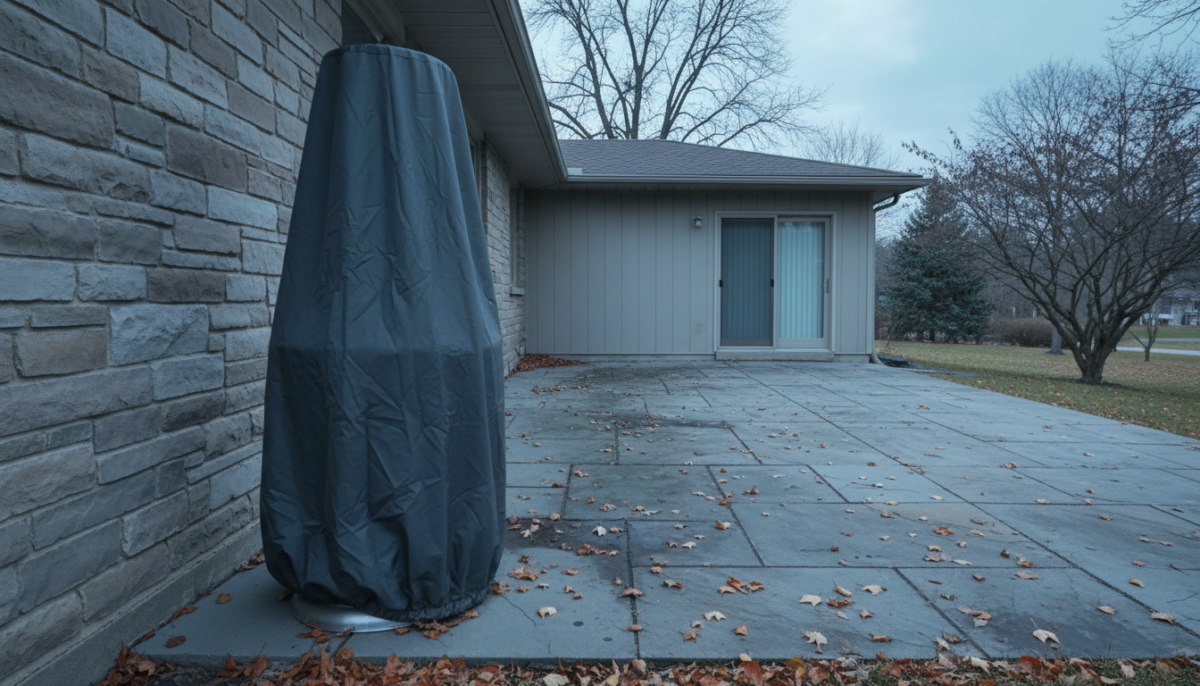
Quick Answer: To winterize a patio heater, disconnect and empty the propane tank (store it outside, upright, in a ventilated spot — never indoors), clean the burner and reflector with a dry or lightly damp cloth, cover the heater with a weatherproof cover, and store it upright in a dry garage or shed. Electric heaters just need a wipe-down, a dry cover, and indoor storage if possible. Done right, this takes about 20 minutes and adds years to the heater’s life.
Every fall we get the same question from readers: “Can I just leave my patio heater outside all winter?” You can, but you’ll shorten its life and risk a stuck regulator or a rusted-out burner by spring. Here’s the exact process we use to put a heater away right — and get it running again next season without a fight.
Winterizing a patio heater is the process of shutting down, cleaning, and protecting the unit and its fuel supply so moisture, rust, and insects can’t damage it during off-season storage.
Last Updated: August 2026 | Will Montgomery has stored and maintained propane and electric patio heaters through multiple winters.
Before You Start: Know Your Heater Type
Propane and electric heaters need different levels of care. Propane heaters have a fuel source that requires separate, careful storage — electric heaters just need protection from moisture and dust. If you’re not sure which safety issues matter most for your model, our patio heater guide breaks down the types.
How to Winterize a Propane Patio Heater: Step by Step
- Turn off and disconnect the tank. Shut the heater off, let it cool completely, then disconnect the propane tank from the regulator. Never store a heater with the tank still attached — the connection deteriorates over months of sitting.
- Check for leaks before you put it away. Mix dish soap and water, brush it on the hose and fittings, and watch for bubbles while the tank is briefly connected. Bubbles mean a leak — replace that part before next season, not after.
- Clean the burner and reflector. Wipe down the burner head, reflector hood, and body with a dry or lightly damp cloth. Don’t power-wash it — water forced into the burner assembly causes rust and clogs next season.
- Check for pests. Spiders and wasps love to nest in burner tubes over winter. Look for small webs, mud dauber nests, or droppings, and clear them out now so you’re not troubleshooting a clogged burner in spring.
- Store the tank separately, outside. Keep the propane tank upright, outdoors, in a shaded, ventilated spot away from the house, dryer vents, or any ignition source. Never store it in a garage, shed, or basement.
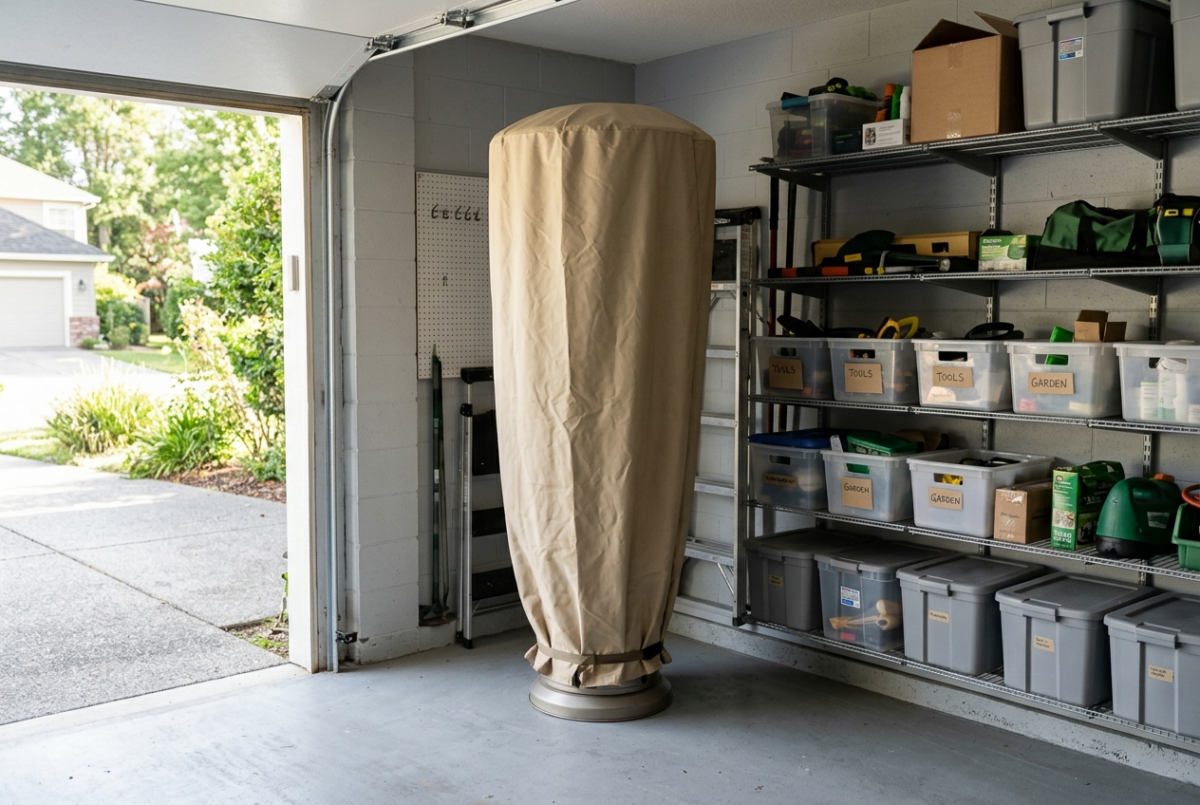
- Cover and store the heater body. Use a weatherproof cover (or move the heater into a garage/shed) and store it upright on a flat, dry surface.
How to Winterize an Electric Patio Heater
Electric heaters skip the fuel-storage risk entirely, which makes this part quick:
- Unplug the heater and let any heating elements cool fully
- Wipe down the housing and reflector — no water directly on the heating element or wiring
- Coil and secure the power cord loosely (tight coils stress the cord over time)
- Store indoors if possible — a garage, shed, or covered porch. If it has to stay outside, use a rated weatherproof cover and keep it off bare ground
When you plug it back in come spring, test that the GFCI outlet still trips correctly before leaving the heater running unattended — see our GFCI outlet and breaker sizing guide if it won’t reset or keeps tripping.
Where to Store It: Dos and Don’ts
| Storage Question | Recommendation |
|---|---|
| Where should the propane tank go? | Outside, upright, ventilated, away from the house |
| Can the tank go in the garage? | No — propane tanks should never be stored in an enclosed space |
| Where should the heater body go? | Dry garage, shed, or covered area, upright, off the ground if possible |
| Can it stay outside year-round? | Only with a quality weatherproof cover — expect a shorter lifespan and more corrosion risk |
| What temperature range is safe for propane tanks? | Roughly -40°F to 120°F outdoors is fine; avoid direct summer sun on a full tank |
Spring Startup: What to Check Before Firing It Back Up
From experience: My heaters spend the winter in the garage, but the propane tanks stay outside on the grill cart — just never in direct sunlight. On my older heaters, spiders loved building webs inside the burner tubes over the off-season, so that’s the first thing I check before spring startup.
When you pull the heater back out next spring, don’t just reconnect and light it. Inspect the hose and fittings for cracks or dry rot from sitting all winter, re-run the soapy water leak test, check the burner for any pests that moved in despite your cleaning, and confirm the regulator isn’t stuck (a common issue after months of disuse). If your heater keeps sputtering or won’t hold a flame after storage, our troubleshooting guide walks through the most common fixes.
Frequently Asked Questions
Can I leave my propane patio heater outside all winter?
You can with a quality weatherproof cover, but it will corrode faster and the regulator is more likely to stick from moisture and freeze-thaw cycles. Disconnecting the tank and storing the heater body under cover in a garage or shed will roughly double the useful life of most heaters.
Should I store a full or empty propane tank?
Either is technically fine for storage, but many owners prefer to use up or safely transfer remaining propane before winter so they’re not storing a full tank for months. If you do store it full, keep it upright, outside, and away from ignition sources exactly the same as an empty one.
Do I need to cover an electric patio heater in winter?
Yes, if it’s staying outside. Moisture is the main enemy of the heating element and internal wiring, so a rated weatherproof cover — or better, indoor storage — prevents the most common winter failure: a corroded element that won’t heat evenly next season.
Why won’t my patio heater light after winter storage?
The most common culprits are a clogged burner (often from pests or dust), a stuck regulator from disuse, or a loose connection after reassembly. Run the soapy-water leak check first, then work through our full won’t-stay-lit troubleshooting guide.
How often should I inspect the hose and fittings?
Check them at both winterizing and spring startup — twice a year minimum. Replace any hose or fitting that shows cracking, chafing, or rust; most regulators last around 10 years but should be replaced sooner if damaged.
Key Takeaways
- Disconnect the propane tank and store it outside, upright, and ventilated — never indoors
- Clean the burner and check for pest nests before covering the heater for winter
- Store the heater body upright, under cover, in a dry garage or shed for the longest lifespan
- Run a soapy-water leak check both before winter storage and again at spring startup
For clearance and placement rules once you bring it back out, see our patio heater clearance guide, and if you’re shopping for a replacement, check our best patio heaters of 2026 roundup.