
Quick Answer: Permanent outdoor lighting systems (Govee, Trimlight, and similar RGBIC track-mount lights) cost $2,500–$6,000 professionally installed or $300–$800 as a DIY kit, run app-controlled color scenes year-round, and pay for themselves versus string lights in about 6-8 years of replacement costs. If you want color-changing effects for holidays plus everyday ambient lighting without re-hanging anything each season, they’re worth it. If you just want warm ambiance a few months a year, seasonal string lights remain the cheaper, simpler choice.
Permanent outdoor lighting is the fastest-growing category we’ve seen hit the backyard-lighting space in years — and it’s easy to see why once you watch a roofline shift from warm white to deep purple with a tap on your phone. But “permanent” is doing a lot of work in that name, and the price tag is a real jump from a $40 string of bulbs. Here’s what these systems actually are, what they cost installed versus DIY, and where they genuinely beat — or lose to — traditional string lights.
What “Permanent Outdoor Lighting” Actually Means
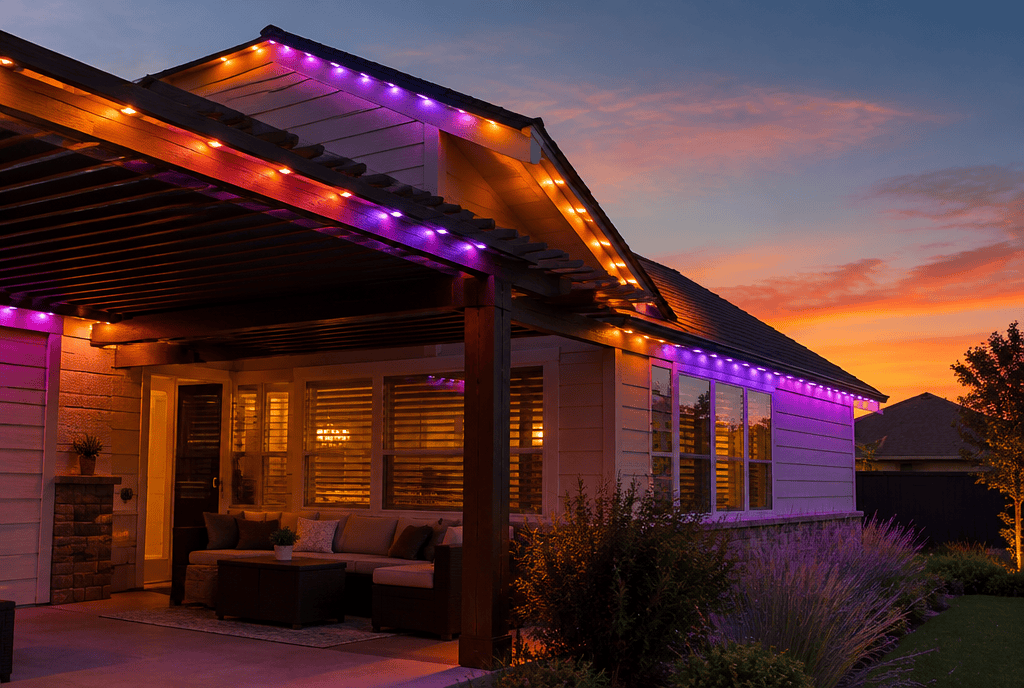
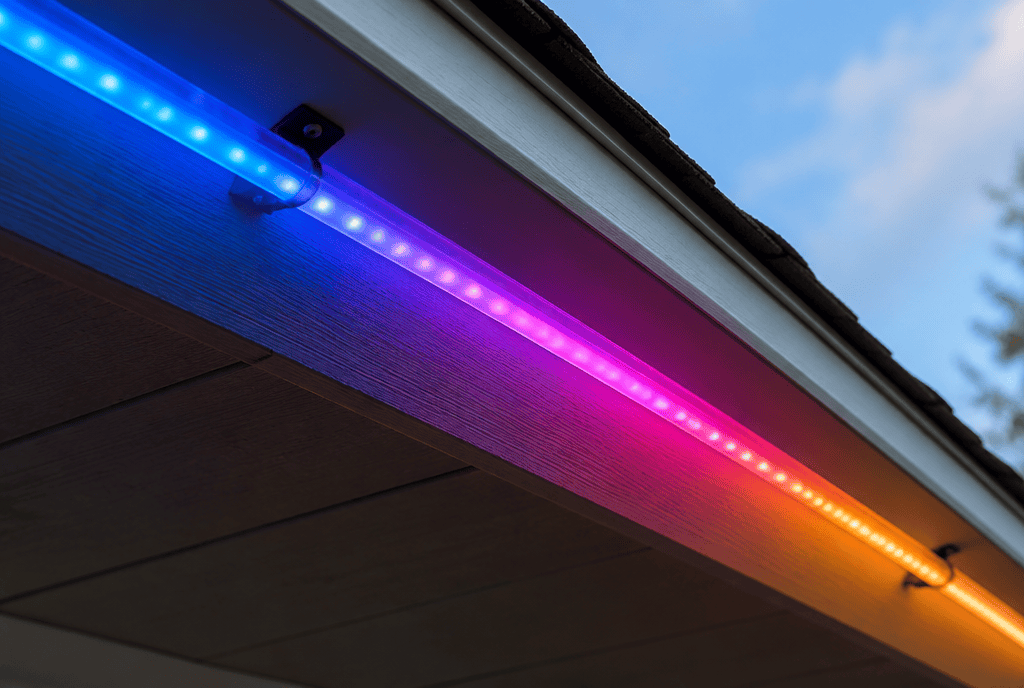
Permanent outdoor lighting refers to individually addressable LED light channels mounted along your roofline, fascia, or eaves — usually inside a track or clip system designed to stay outside year-round. Brands like Govee (Permanent Outdoor Lights / Prism line) and professionally installed systems like Trimlight use RGBIC LEDs, meaning each small segment of the strip can show a different color at the same time. That’s what makes the smooth color gradients and animated “chase” effects possible — a plain RGB strip can only show one color across the whole strip at once.
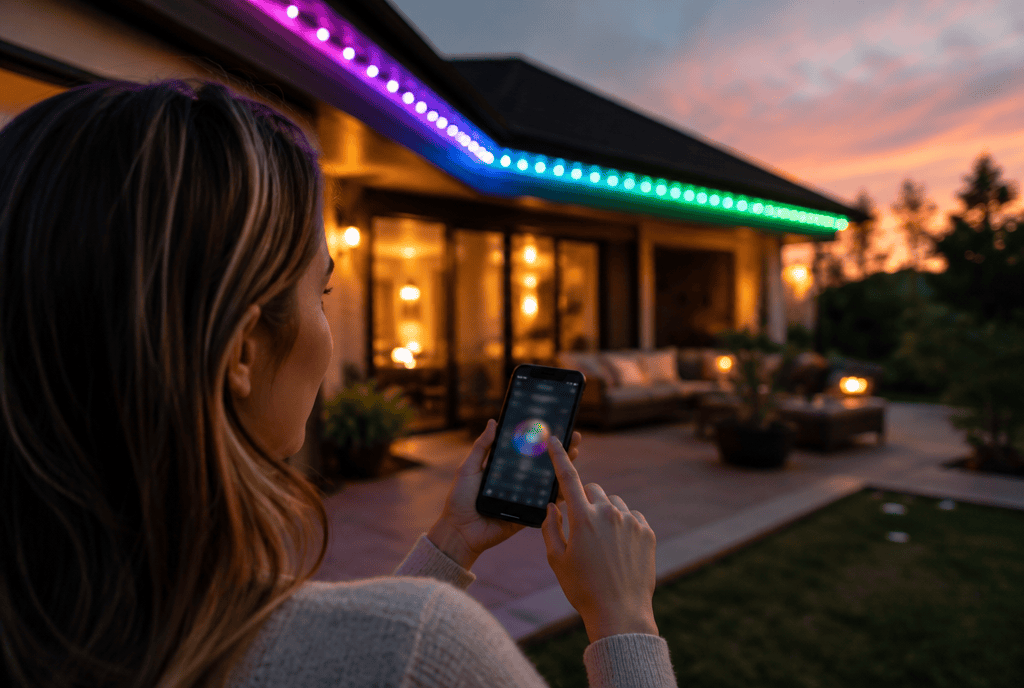
These systems are controlled entirely through a phone app, most support voice control through Alexa or Google Assistant, and most include dozens of preset scenes plus music-sync modes. They’re rated IP65–IP67 for weather resistance and are built to handle temperature swings from well below freezing up to around 140°F, with lifespans in the 30,000–50,000 hour range — call it 8-10+ years of typical nightly use.
Permanent Lighting vs. Seasonal String Lights: Cost Comparison
| Seasonal String Lights | Permanent RGBIC Lighting | |
|---|---|---|
| Upfront cost | $50–$300 per string | $300–$800 DIY kit / $2,500–$6,000 professionally installed |
| Installation | DIY, 1-2 hours, done every season | DIY clip system (weekend project) or licensed installer |
| Color range | Fixed color, usually warm white or multicolor | 16 million colors, gradients, animated scenes |
| App / voice control | Rare, usually a basic remote | Standard on nearly every model |
| Typical lifespan | 2-3 seasons before replacement | 8-10+ years |
| 10-year cost estimate | $400-$900 (repeated replacement) | $300-$800 one-time (DIY) or $2,500-$6,000 (installed) |
The math only favors permanent lighting long-term if you’re comparing the DIY kit price against years of restringing lights, or if you genuinely want them lit up as ambient lighting most nights of the year rather than just during the holidays. A professionally installed system rarely “pays for itself” against string lights on cost alone — the case for it is convenience, resale appeal, and year-round use, not pure savings.
Can You Install Permanent Outdoor Lights Yourself?
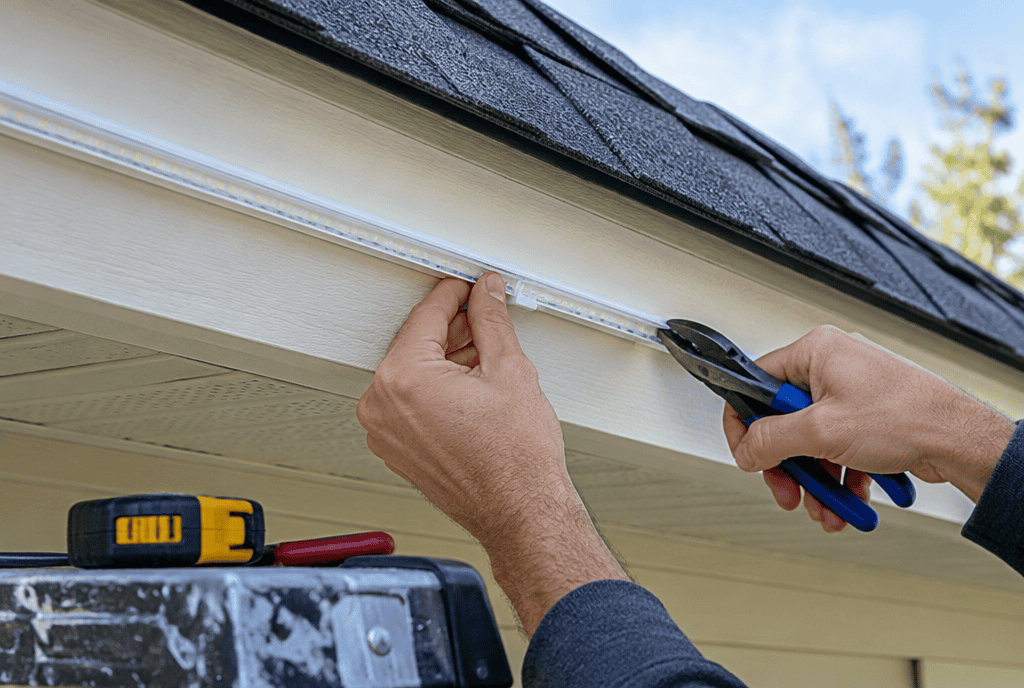
Yes, for the DIY kits (Govee and similar brands) — this is a realistic weekend project for most homeowners. The light channel clips onto your gutter, fascia board, or roofline edge with included brackets or adhesive clips, and it plugs into a standard GFCI-protected outdoor outlet. No electrician required for a plug-in kit.
- DIY clip kits: Plug-and-play, no wiring, mounts with clips or adhesive. Best for renters (check your lease first) and homeowners who want to try the category before committing to a full install.
- Professionally installed systems: Often hardwired, run through a dedicated outdoor circuit, and mounted with a more permanent track system meant to disappear into your roofline year-round. This is the route if you want it invisible during the day and want it wired in rather than plugged into an outlet.
One real installation note: adhesive-clip systems can degrade faster in high-heat, high-UV climates — if you’re in the Sun Belt, look for a kit with mechanical brackets rather than adhesive-only mounting, or budget for occasionally re-securing a clip that’s popped loose.
Do Permanent RGBIC Lights Use a Lot of Electricity?
Not really. Most permanent LED lighting systems draw somewhere in the range of a few watts per foot — a 100-foot run typically pulls well under 100 watts total, comparable to a couple of traditional incandescent bulbs. Running one nightly, even for several hours, adds only a few dollars a month to a typical electric bill. The real cost consideration isn’t the electricity — it’s the upfront hardware and, for a professional install, the labor.
Where String Lights Still Win
Permanent lighting isn’t the right call for every backyard. Traditional string lights still make more sense if:
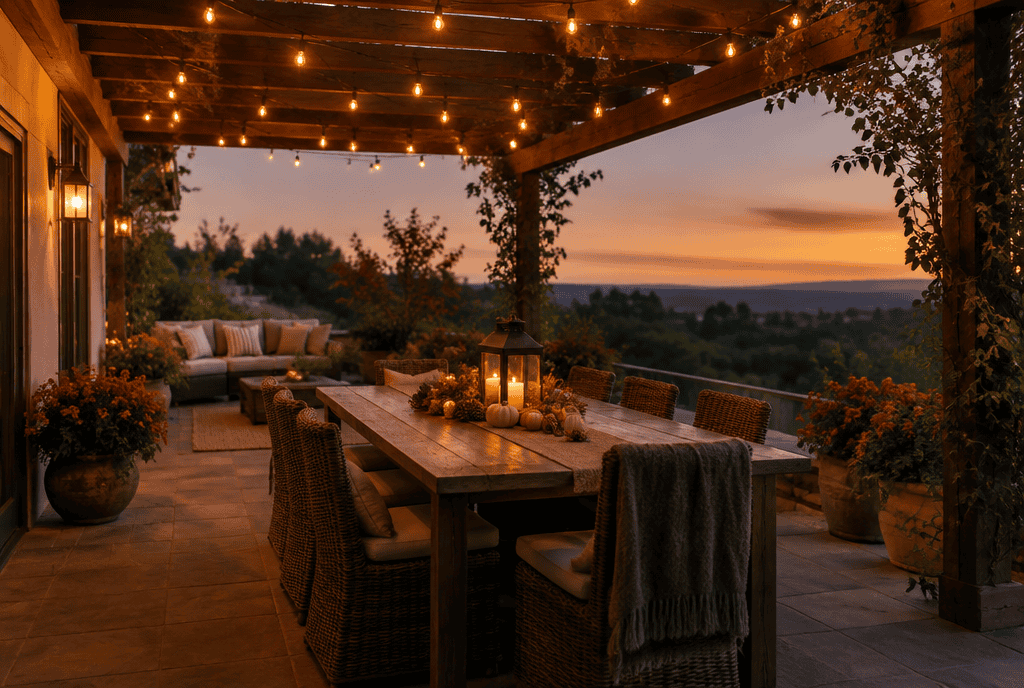
- You want warm ambiance over a specific area — a pergola, dining table, or fence line — rather than lighting the whole roofline.
- You’re renting and can’t mount anything permanent to the structure (see our renter-friendly string light guide below).
- You only decorate seasonally and don’t want color-changing effects running year-round.
- Budget is the deciding factor — a $60 string of warm-white lights still beats a $300+ permanent kit for simple ambiance.
For that lower-budget route, a 48-foot set like the Enbrighten Vintage Outdoor String Lights (24 shatterproof bulbs, 2700K warm white, weatherproof, about $113) is a commercial-grade option that still installs in an afternoon.
DIY Kits vs. Professionally Installed Systems: Which Type Should You Buy?
Not every “permanent outdoor lighting” product is built the same way, and the two main categories serve different homeowners.
- Consumer DIY kits (Govee and similar): Plug into a standard GFCI outlet, mount with adhesive clips or simple brackets, and are controlled through a consumer app. These are the right choice if you want to try the category, you’re comfortable doing your own install, or you’re renting and need something reversible.
- Professionally installed systems (Trimlight and similar): Usually hardwired into a dedicated circuit, mounted with a channel system designed to disappear into the roofline permanently, and often bundled with a warranty that covers the install itself, not just the hardware. These make more sense for a long-term home you plan to stay in, especially if resale appeal or a fully invisible daytime look matters to you.
An example DIY kit: the Govee Permanent Outdoor Lights 2 (100 feet, RGBIC with 100 modes, IP67 waterproof, about $280) covers most standard rooflines in a single run and controls through the Govee app.
From experience: A set like this made it through a full season without issue. The one thing I wouldn’t shortcut again is the install — mechanically fasten the channel instead of trusting the adhesive alone, and keep the controller itself protected from the weather rather than leaving it fully exposed.
Warranty length is worth checking closely before you buy either way — some budget DIY kits only carry a 1-year warranty, which is short given the multi-year payback period the category is often sold on. A longer warranty (2-3 years or more) is a meaningful signal of build quality, especially for anything mounted outside in direct sun and weather year-round.
What to Check Before You Buy
- IP rating: Look for at least IP65 on the light strip and IP65 on the control box/power supply — these are separate ratings and both matter since the control box is usually mounted outside too.
- Mounting method: Mechanical clips or brackets hold up better long-term than adhesive-only mounting, especially in high-heat or high-UV climates where adhesive can soften and let a section sag or pop loose.
- App reliability: Read recent reviews specifically about app connectivity — this is the most common complaint category across every brand in this space, more than the LEDs themselves failing.
- Total run length: Measure your roofline or fascia run before buying; kits are sold by length, and running out mid-installation means an extra order and a visible seam in the effect.
- Local electrical code: If you’re going the hardwired route, the circuit still needs to meet the same outdoor GFCI requirements as any other exterior outlet — confirm this is included in a professional installer’s quote.
Bottom line: Permanent RGBIC lighting is worth it if you want app-controlled color and scenes running year-round and don’t mind the upfront cost — DIY kits make this realistic without an electrician. If you just want warm evening ambiance a few months a year, stick with string lights; the case for going permanent is convenience and versatility, not upfront savings.
Frequently Asked Questions
What is permanent outdoor lighting?
It’s a track- or clip-mounted LED light system installed along your roofline, fascia, or eaves that stays outside year-round and is controlled by an app rather than being restrung each season.
How much does permanent outdoor lighting cost?
DIY kits run $300-$800 for a typical home. Professionally installed systems run $2,500-$6,000 or more, usually priced at $20-$40 per linear foot depending on roofline complexity.
Can I install permanent outdoor lights myself?
Yes, DIY clip-mount kits like Govee’s Permanent Outdoor Lights plug into a standard GFCI-protected outdoor outlet and mount with included clips or brackets — no electrician needed. Hardwired professional systems do require a licensed installer.
Are RGBIC permanent lights worth it over regular string lights?
If you want year-round color-changing ambiance and app control, yes. If you only want warm seasonal ambiance over a small area like a pergola or dining table, traditional string lights are cheaper and simpler.
Do permanent outdoor lights use a lot of electricity?
No. A typical 100-foot run draws well under 100 watts total, adding only a few dollars a month even with nightly use — comparable to a couple of incandescent bulbs.
How long do permanent outdoor LED lights last?
Most quality systems are rated for 30,000-50,000 hours, which works out to roughly 8-10+ years of typical nightly use before the LEDs noticeably dim.
Explore More on Backyard Lighting
- Backyard Lighting: The Complete Guide for Every Space
- How to Hang Outdoor String Lights (No Trees, Renter-Friendly)
- How Many Lumens Do You Need for Patio & Backyard Lighting?
- Best Low-Voltage Landscape Lighting Kits for 2026
- Deck Lighting Guide: Post Cap, Stair Riser, and Recessed Lights Compared
Will Montgomery is an electro-mechanical engineer expanding his own outdoor space, weighing permanent vs. string lighting for the backyard events he and his wife Kim host.